
News
Cabinet approves signing of two conventions to facilitate nuclear power here

By Rathindra Kuruwita
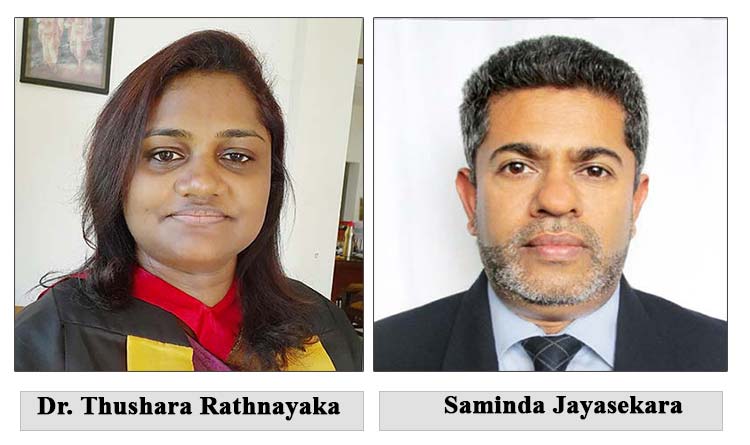
The Cabinet of Ministers has approved the signing of the Vienna Convention on Civil Liability for Nuclear Damage and Convention on Supplementary Compensation for Nuclear Damage, Saminda Jayasekara, Chairman at the Sri Lanka Atomic Energy Regulatory Council said recently at an event organized by the Institution of Engineers, Sri Lanka.
The Convention on Supplementary Compensation (CSC) aims at establishing a minimum national compensation amount and at further increasing the amount of compensation through public funds to be made available by the Contracting Parties should the national amount be insufficient to compensate for the damage caused by a nuclear incident.
The Vienna Convention on Civil Liability aims at harmonizing the national law of the Contracting Parties by establishing some minimum standards to provide financial protection against damage resulting from certain peaceful uses of nuclear energy.
However, the Cabinet has not approved the signing of the Paris Convention on Third Party Liability in the Field of Nuclear Energy and the Joint Protocol Relating to the Application of the Vienna Convention and the Paris Convention, Jayasekara said.
Jayasekara mentioned that western European countries could only be enticed to build nuclear power plants in Sri Lanka only if Sri Lanka signs Paris Convention.
“If we are not a part of those conventions western European countries won’t come to Sri Lanka,” he said.
Meanwhile, Malinda Ranaweera, scientific officer at the Sri Lanka Atomic Energy Board said that nuclear energy is becoming popular in Asia. China, Japan, and South Korea are leading the way in Asia, he said. India, Bangladesh, and Pakistan too have nuclear power plants.
“In Asia there is a big nuclear renaissance. China has 59 reactors with several others under construction, South Korea has 28, and Japan has 33. India has 19 reactors and is constructing eight more,” he said.
Sri Lanka is in a decision making phase with the Cabinet recently approving nuclear as an energy option, he said.
SMRs can also be coupled with solar and wind power, he added.
He added that Sri Lanka needs about 400 megawatts of electricity per day when the Colombo Port City Project is complete. The power should be cheap in order to attract foreign investments, Ranaweera said. If the metropolitan light railway system is implemented it will need an additional 200 megawatts, he added.
Ranaweera said another 200 megawatts will be needed if the government converts the conventional train system into an electrified train system.
“All these need cheap power,” he said.
Sri Lanka has been considering nuclear power since 1974, Ranaweera said. In 2010 Cabinet approval was given to conduct a pre-feasibility study to consider a nuclear power programme in the country, he said.
“In February 2024 the Cabinet of Ministers approved “to take the strategic and knowledgeable decision to forward the electricity generation using nuclear power in Sri Lanka as a safe, clean, green, reliable and affordable energy source,” he said.
It takes about 15 years to complete a nuclear power plant project from scratch and Sri Lanka should get to work on it immediately, Dr. Thushara Rathnayake, senior lecturer, Department of Electrical Engineering, University of Moratuwa said.
Nuclear is a clean energy source with a high output from a single plant, she said.
“This is a highly safe medium, and it is economical. The generation cost is highly dependent on capital cost (about 60 percent), the fuel cost is about 20 percent from the generation cost. Although the capital cost is high, lifetime cost is low and the introduction of carbon taxes would make nuclear energy more economical.”
Rathnayake said that public acceptance would be one of the largest challenges in establishing a nuclear power plant in Sri Lanka. However, compared to other power sources, nuclear power is safer. The country can also suffer a huge economic loss, if we build a conventional large reactor and the plant is not operated throughout the life cycle.
“If you look at the capital cost of nuclear power, generated for a conventional large reactor, it’s about 7,000 US dollars per kilowatt hour. Cost of coal is about 4,000 dollars. But if you consider the health, social and environmental costs, the capital cost is almost equal to nuclear energy. However, nuclear power has a capacity factor of about 94 percent. Other intermittent sources like wind and solar have a low-capacity factor. So, if we calculate the levelized cost of energy, nuclear is very much cost competitive to other power sources,” she said.
Rathnayake added that if the government decides to go for a large nuclear reactor, it will have to incur a large capital investment. So Small Modular Reactors (SMRs), i.e., less than 300 MWs, should interest Sri Lanka more.
“Currently four SMRs, in advanced stages of construction, are being built in Argentina, China and Russia. The capital costs are also low. I said the capital cost of nuclear power is about 7,000 US dollars per kilowatt hour, but for an SMR the cost is about 2,900 dollars. It also only takes 1.5 years to construct, compared to five years taken to build a conventional large reactor,” she said.
Nuclear power also uses the least amount of land to generate a megawatt hour of electricity, she said. This is about 1.3 square metres per megawatt hour.
“SMRs suit smaller grids like ours. We can also think about offshore in-built SMRs, which are cheaper, less risky and we won’t have to worry about handling Spent Nuclear Fuel,” she said.











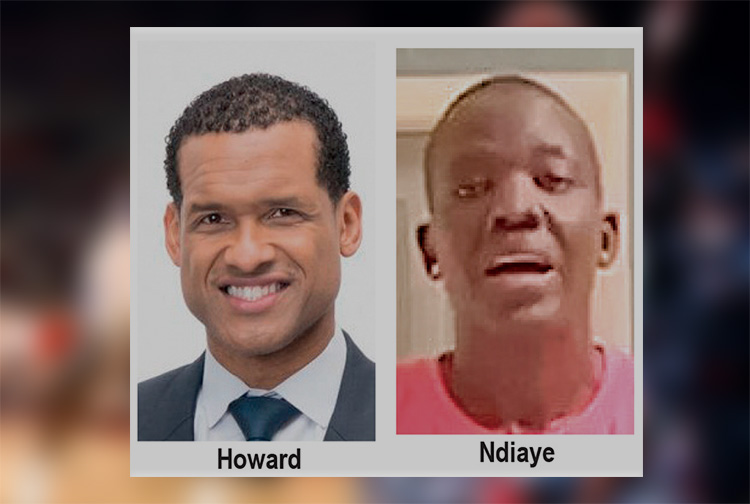
The U.S. Embassy in Colombo welcomed the U.S. Sports Envoys to Sri Lanka, former National Basketball Association (NBA) and Women’s National Basketball Association (WNBA) players Stephen Howard and Astou Ndiaye, from June 8 through 14.
The Public Diplomacy section of the U.S. Embassy said that it would launch a weeklong basketball program intended to harness the unifying power of sports, made possible through collaboration with Foundation of Goodness and IImpact Hoop Lab.
While in Sri Lanka, Howard and Ndiaye, both retired professional basketball players, will conduct a weeklong program, Hoops for Hope: Bridging Borders through Basketball. The Sports Envoys will lead basketball clinics and exhibition matches and engage in leadership sessions in Colombo and Southern Province for youth aged 14-18 from Northern, Uva, Eastern and Western Provinces, offering skills and leadership training both on and off the court. The U.S. Envoys will also share their expertise with the Sri Lanka Basketball Federation, national coaches, and players, furthering the development of basketball in the country. Beyond the clinics, they will collaborate with Sri Lankan schoolchildren to take part in a community service project in the Colombo area.
“We are so proud to welcome Stephen and Astou as our Sports Envoys to Sri Lanka, to build on the strong people-to-people connections between the United States and Sri Lanka,” said U.S. Ambassador Julie Chung. “The lessons that will be shared by our Sports Envoys – communication, teamwork, resilience, inclusion, and conflict resolution – are essential for leadership development, community building, equality, and peace. The U.S. Sports Envoy program is a testament to our belief that sports can be a powerful tool in promoting peace and unity.”
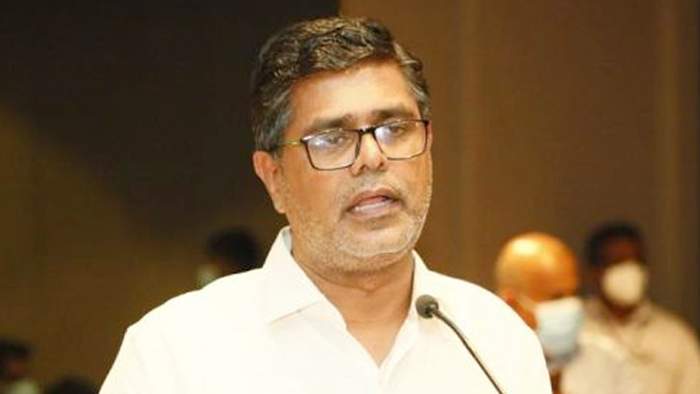
SJB Colombo District MP Mujibur Rahuman in parliament demanded to know from the government the reasons for CEB suspending the leave of all its employees until further notice from Thursday.
MP Rahuman said that the CEB has got an acting General Manager anew and the latter yesterday morning issued a circular suspending leave of all CEB employees with immediate effect until further notice.
“We demand that Minister Kanchana Wijesekera should explain this to the House. This circular was issued while this debate on the new Electricity Amendment Bill was pending. There are many who oppose this Bill. The Minister must tell parliament the reason for the urge to cancel the leave of CEB employees,” the MP said.However, Speaker Mahinda Yapa Abeywardena prevented Minister Wijesekera responding to the query and said that the matter raised by MP Rahuman was not relevant.
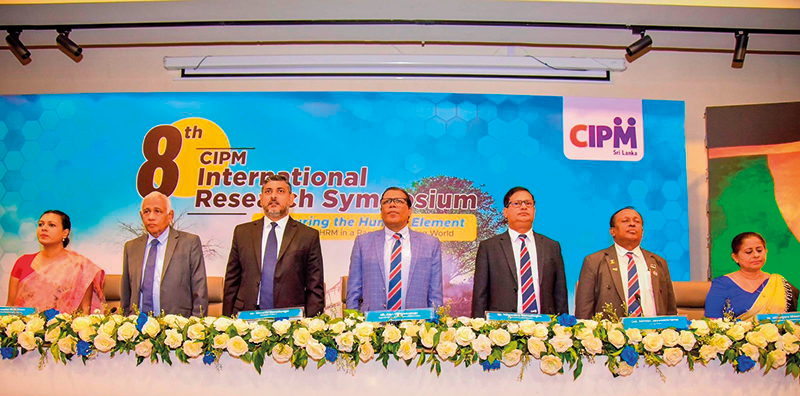
The Chartered Institute of Personnel Management (CIPM) successfully concluded the 8th Annual CIPM Symposium, which took place on 31st May 2024. Themed “Nurturing the Human Element—Redefining HRM in a Rapidly Changing World,” the symposium underscored the pivotal role of human resource management (HRM) in today’s dynamic global landscape. Since its inception in 1959, CIPM has been dedicated to advancing the HR profession through education, professional development, and advocacy, solidifying its position as Sri Lanka’s leading professional body for HRM.
Ken Vijayakumar, the President of the CIPM, graced the occasion as the chief guest. The symposium commenced with the welcome address by the Chairperson, Prof. Arosha Adikaram, followed by the Web Launch of the Symposium Proceedings and Abstract Book by the CIPM President. The event featured distinguished addresses, including a speech by Chief Guest Ken Vijayakumar, President of CIPM, and an address by Guest of Honor Shakthi Ranatunga, Chief Operating Officer of MAS Holdings Pvt. Ltd., Sri Lanka.
The symposium also featured an inspiring keynote address by Prof. Mario Fernando, Professor of Management and Director of the Centre for Cross Cultural Management (CCCM) at the University of Wollongong, Australia.
Vote of Thanks of the inauguration session was delivered by Dr. Dillanjani Weeratunga, Symposium Co-chair.
The symposium served as a comprehensive platform for researchers to present their findings across a wide range of critical topics in HRM. These included Cultural Diversity and Inclusion, Talent Development and Retention, Ethical Leadership and Corporate Social Responsibility, Adapting to Technological Advancements, Mental Health and Well-being at Work, Global Workforce Challenges, Employee Empowerment, and Reskilling and Upskilling.
The plenary session was led by Prof. Wasantha Rajapakse. Certificates were awarded to the best paper presenters during the valedictory session, followed by a vote of thanks delivered by Kamani Perera, Manager of Research and Development.
The annual symposium of CIPM was a truly inclusive event, attracting a diverse audience that spanned undergraduates, graduates, working professionals, research scholars and lecturers. This widespread interest highlights the symposium’s significance in the field of HRM, offering a unique opportunity for everyone to network and learn from scholarly brains.The CIPM International Research Symposium was sponsored by Hambantota International Port, Sri Lanka Institute of Information Technology (SLIIT), E B Creasy & Co. PLC, and Print Xcel Company.



US sports envoys to Lanka to champion youth development

Rahuman questions sudden cancellation of leave of CEB employees


