
Features
A senior cop remembers April 1971

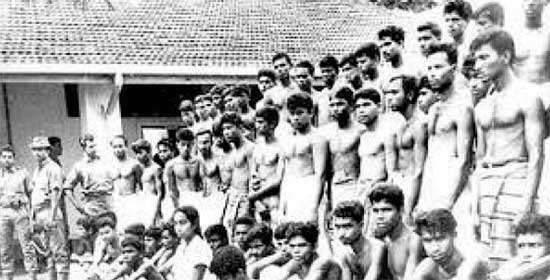
(Excerpted from the memoirs of Senior DIG (Retd.) Edward Gunawardena)
A few months after the SLFP-led United Front Alliance headed by Mrs. Sirima Bandaranaike was elected in 1970, information started trickling in that the JVP was planning an uprising against the government. Cells were formed island-wide and clandestine indoctrination classes conducted by trained cadres. Simultaneously there was a spate of bank robberies and thefts of guns from households were reported to the police from all parts of the island. Unidentified youths were collecting empty cigarette and condensed milk tins, bottles, spent bulbs and cutting pieces of barbed wire from fences to make hand bombs and Molotov cocktails. Instances of bombs being tested even in the Peradeniya campus came to light.
By January 1971 the threat became real and the police began making arrests. Rohana Wijeweera, the leader of the movement, was arrested with an accomplice Kelly Senanayake at Amparai and detained at the Magazine prison. In the villages the common talk was that a ‘Che Guevera’ movement has started. Unknown youth moving about in villages were being referred to as ‘Che Gueveras.’ Police intelligence briefed the government of the developing ‘Naxalite’ like situation and action was taken to alert all police stations.
At the end of March 1971 there was specific information that the first targets would be the police stations. The attacks were to be carried out simultaneously on a particular day at a given time. With heightened police activity, the JVP ‘attack groups’ were pressurized to put their plan into effect hurriedly despite Wijeweera being incarcerated.
Synchronizing the attacks was a problem for the JVP. Mobile phones were not available then and the leaders had to resort to coded messages in newspapers. Police intelligence was able to crack their codes without much difficulty. It came to light that all police stations would come under attack at midnight on of April 5. The plan was to fire with guns at the station, and throw hand bombs and Molotov cocktails so that the policemen would run away or be killed. The attackers were to rush in and seize all the firearms in the stations.
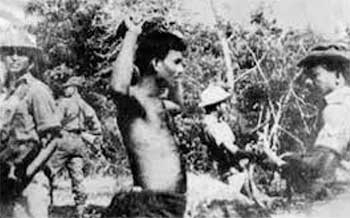 The Police were ordered to be on full alert on this day. On April 4, in addition to my duties as the Director, Police Planning and Research I was acting for Mr. P. L. Munidasa, SP as the Personal Assistant to Mr.Stanley Senanayake the IGP. At about 4 p.m. an urgent radio message addressed to the IGP was opened by me. The message was alarming. The Wellawaya Police station had been attacked and the OIC Inspector Jayasekera had received gunshot injuries, a PC killed and several injured. The police had fought back bravely and not abandoned the station.
As soon as the IGP was informed, he reacted calmly. He summoned all the senior officers present at Headquarters briefed them and ordered that all police stations including the Field Force Headquarters, the Training School and Police Headquarters itself be placed on full alert with immediate effect. Among the officers present I distinctly remember DIGs S.S. Joseph and T.B. Werapitiya. All police officers irrespective of rank were to be armed and issued with adequate ammunition. This task was entrusted to ASP M.D. Perera of Field Force Headquarters who was in charge of the armoury. I too was issued with a Sterling Sub-machine gun.
During this time I was living in Battaramulla with my wife and year old child in my father’s house. My brothers, Owen and Aelian, who were unmarried were also living there. My wife and I with the child occupied a fairly large room in which an official telephone had been installed. We had decided to live here as I had started building a house on the same ancestral property; and it is in this house that we have lived since 1971. 1 had an official car, a new Austin A40 which I drove as I had not been able to find a suitable police driver. Apart from the telephone, I had a walkie-talkie and was in constant communication with the Police Command Room and the IGP.
On the night of April 4 as there was nothing significant happening except for radio messages from police stations asking for additional strength, weapons and ammunition, I was permitted by the IGP to get back home. I telephoned the Welikada and Talangama police stations and was informed that the stations were being guarded and the areas were quiet. At about 10 p.m. I reached home safely and slept soundly. But something strange happened which to date remains a mystery. At about 3.30 a.m. (on the April 5) my telephone rang. The caller in a very authoritative voice said, “This is Capt. Gajanayake from Temple Trees, the Prime Minister wants you immediately.”
I hurriedly got into my uniform and woke up my wife and told her about the call. Just then it occurred to me that I should call Temple Trees. There was an operations room already functioning there and Mr. Felix Dias Bandaranaike had taken control of the situation. When I called, it was answered by my friend and colleague Mr. Cyril Herath. He assured me that I was not required at Temple Trees and that there was no person there by the name of Capt. Gajanayake. Much against the wishes of my wife, my father and brothers, dressed in a sarong and shirt and armed with my revolver I walked down the road for about half a kilometer. But there was none on the road at that time of the night.
By next night disturbing messages were coming to Police Headquarters from all over the Island. A large number of police stations had been attacked and police officers killed and injured. SP Navaratnam and Inspector Thomasz had been shot at on the road in Elpitiya and the latter had succumbed to the injuries. A number of Estate Superintendents had been shot dead. Trees were cut and electricity posts brought down. Desperate messages were pouring in from several Districts stating that administration had come to a standstill. The Kegalle, Kurunegala, Galle and Anuradhapura Districts were the worst affected. The least damage was in areas where the police had taken the offensive. In Colombo although the police stations were not attacked there was panic. With the possibility of water mains being damaged tube wells were hurriedly sunk at Temple Trees. General Attygalle, the Army Commander, had taken over the security of the Prime Minister and Temple Trees.
Talangama Police station that policed Battaramulla was guarded by the people of the area. Even my brothers spent the nights there armed with my father’s shotgun. IP Terrence Perera who was shot dead by the JVP in 1987 was the OIC. The excellent reputation he had in the area made ordinary folk flock to the station and take up positions to defend it if it was attacked. Some of the people of Battaramulla who were regularly there whose names I can remember and who are still living are K.C. Perera, W.A.C. Perera, Jayasiri, Victor Henry, Lionel Caldera and P.P. de Silva among others. Incidentally Brigadier Prasanna de Silva one of the heroes of the recently concluded war against the LTTE is a son of P.P. de Silva.
There were also those who gave assistance in the form of food and drink for all those who had gone to the aid of the police. The late Edward Rupasinghe a prominent businessman of Battaramulla, supplied large quantities of bread and short eats from the Westown Bakery which he owned. However as the attacks on police stations and state property became more and more intense, the SP Nugegoda T.S. Bongso decided to close down the Talangama Police Station and withdraw all the officers to the Mirihana Headquarters Station. This move made it unsafe for me to live in Battaramulla and travel to Police Headquarters.
The late Mr. Tiny Seneviratne SP and his charming wife readily accommodated us in their official quarters at Keppetipola Mawatha. The late Mr. K.B. Ratnayake had also left his Anuradhapura residence to live with the Seneviratnes. KBR and Tiny were good friends. During this time in the midst of all the disheartening news from all directions there were a few bright spots I have not forgotten. These were messages from Amparai, Kurunegala and Mawanella.
At Amparai the ASP in charge A.S. Seneviratne on information received that a busload of armed insurgents were on the way to attack the police station in broad daylight had hurriedly evacuated the station and got men with arms to hide behind trees and bushes having placed a few dummy policemen near the reserve table that was visible as one entered the station. As the busload of insurgents turned into the police station premises a hail of gunfire had been directed at it. About 20 insurgents had been killed and the bus set ablaze.
In Kurunegala the Pothuhera police station had been overrun and occupied by insurgents. Mr. Leo Perera who was ASP Kurunegala had approached the station with a party in mufti unnoticed by the insurgents, taken them by surprise and shot six of them dead. The police station had been reestablished immediately after.
In Mawanella and Aranayake the insurgents held complete sway. Two youths had visited the house of a retired school master on the outskirts of Mawanella town and demanded his gun. He had gone in, and loaded his double barrel gun and come out on the pretext of handing it over to the two youths he had shot them both dead discharging both barrels. The schoolmaster and his family had taken their belongings, got into a lorry and immediately left the area.
With the joint operations Room at Temple Trees under Minister Felix Dias Bandaranaike assisted by the Service Chiefs, the IGP and several senior public servants functioning fully the offensive against the insurgents began to work successfully. Units from the Army, Navy and the Air Force were actively assisting the police in all parts of the Island particularly in making arrests. Helicopters with pilots provided by India and Pakistan were being extensively used by officials and senior officers of the Armed Services and the Police for urgent travel.
On the night of April 10 or 11, I had finished my work at Police Headquarters and returned at about 10 p.m. to Keppetipola Mawatha. During the day my wife had been able to find a police jeep to be sent to Battaramulla to fetch a substantial supply of jak fruits, manioc and coconuts from our garden. The Seneviratnes took immense pleasure in feeding all and sundry who visited their home.
At about 10 p.m. I received a call from the IGP requesting me to take over Kurunegala Division the following morning. He told me that a helicopter would be ready for me at Parsons Road Air Force Grounds at 5.30 a.m. According to him the insurgents were still active in the area; the SP Mr. A. Mahendran was on sick leave and Mr. Leo Perera ASP was bravely handling the situation almost single handed. Although the assignment did not bother me much, my wife was noticeably concerned. Mrs. Seneviratne an ardent Catholic gave me a miniature medal of St. Anthony assuring me that the Saint will protect me from harm.
The helicopter took off at the crack of dawn. It was piloted by a young Flt.. Lieutenant from the SLAF and I was the only passenger. I have forgotten the name of this pilot. He was a pleasant guy who kept conversing with me all the way. He told me that he had flown to Anuradhapura and Deniyaya the previous day and in both those areas the insurgents were on the run and the security forces were on top.
Having been cloistered at Police Headquarters always peeking out of windows with a weapon in the ready or reading messages of deaths of police officers and the successes of insurgents, a feeling of relief overtook me on the flight. In fact I began to look forward to some action and this did not take long to come.
As the helicopter landed I was met by ASP Leo Perera who was a contemporary of mine at Peradeniya. There were several other police officers and also two officers of the Air Force. The latter were there to go to Colombo in the same aircraft. I carried only a travel bag with the minimum of clothes.
My first task was to address the officers gathered at the Police Station. I praised them for facing the situation bravely. Their only complaint was that they were short of ammunition. I suggested to Leo that as far as possible shotguns be used instead of 303 rifles. An officer was dispatched immediately to get as many guns as possible from the Kachcheri and the production room of the court house.
ASP M.D. Perera of Field Force Headquarters who was contacted on radio undertook to airlift 15 boxes of SG and No. four 12-bore cartridges. All the officers present were pleased as they all agreed that shotguns were more effective. The families of police officers too had left their quarters and barracks and taken up residence in different sections of the station. Most importantly their morale was high. Leo Perera had led them admirably.
At about 10 a.m. after partaking of a kiribath and lunumiris breakfast with the men I left for my office, that of the SP Kurunegala. I was very happy when Inspector Subramaniam was assigned to me. He was known to me and he appeared to be pleased with the task. He was a loyal and cheerful type. I chose a Land Rover with a removable canvas top for my use and also a sergeant and two constables with rifles. Subramaniam and I had Sterling sub-machine guns. These officers were to be with me at all times. In the afternoon I was able to obtain two double barrel Webley & Scott shotguns with about 10 No. four cartridges. There were several beds also already in place in the office. Telephoning my wife was no problem as I enjoyed the privilege of priority calls.
I had lunch with Inspector Subramaniam and my escort in the office. The rice and curry lunch had been sent from the Police Station mess. After a late lunch and a brief post lunch rest the four of us dressed in mufti set off in the Land Rover driven by a police driver. IP Subramaniam carried a Stirling sub-machine gun and the sergeant and PC 303 rifles. A loaded double barrel gun lay on the floor board of the Land Rover. After visiting the Potuhera and Mawathagama stations and patrolling the town area we returned to our base. Subramaniam also made arrangements with a boutique in town for some egg hoppers to be delivered to us at 8 p.m.
A little excitement was to come soon. After refreshing ourselves and having eaten the egg hoppers we visited the station. At about 9.45 p.m. I was having a discussion with a few officers in the office of the OIC Crimes when we heard two minor explosions and somebody screaming that the station was being attacked. Armed officers took up positions according to instructions. I ordered that the station lights be put off. An Inspector armed with a loaded shotgun, a few constables and I crawled to the rear of the building. Bombs were being thrown from the direction of a clump of plantain trees. A small tin with the fuse still burning fell close to where we were.
A PC jumped forward and doused the fuse throwing a wet gunny bag on the object. Two more similar objects fell thrown from the same direction. The same PC rushed forward and removed the burning fuses with his hands. As the objects were coming from about the identical place, I grabbed the shotgun and discharged both barrels in that direction simultaneously. The ‘bombing’ stopped thereafter. Two armed mobile patrols were sent out to the roads to look for any suspects. But the roads were empty. At about 11 p.m. the lights were put on and the station resumed its activities.
To say the least these ‘bombs’ were crude and primitive. In each of these we found a large ‘batta’ cracker the fuse of which came out of a hole in the lid of a cigarette tin. Round the ‘batta’ was a layer of tightly compressed fibres akin to the fibres in a squirrels nest. On the outer side of the compressed fibre were barbs cut off barbed wire and rusted nails. A thousand of such ‘bombs’ could not have matched the destructive force of a modern hand grenade. This state of unpreparedness was perhaps the foremost reason why the insurrection fizzled out early.
More action was to follow that same night. After my escort of three officers and I had retired to bed in the SP’s office, a few minutes after midnight the Sergeant guarding a large transformer on the Wariyapola Road with two other constables started calling me on the walkie talkie in a desperate tone. He sounded very excited and told me that shots were being heard close to the guard point. I instructed him to take up position a reasonable distance away from the transformer where there were no lights and shoot at sight any person or persons approaching the transformer. I also assured him that I would be at the guard post with an armed party in the quickest possible time.
IP Subramaniam and the other two officers were eager to join me. I got the driver to remove the hood cloth of the Land Rover. Whilst the sergeant who was armed with a rifle occupied the front seat alongside the driver, Subramaniam and I armed with two double barrel guns loaded with No. four cartridges took up a standing position with the guns resting on the first bar of the hood. The two PCs were to observe either side of the road. Prior to leaving I radioed the Police station to inform the Airforce operations room about my movements and not to have any foot patrols in the vicinity of the transformer.
There were no vehicles or any pedestrians on the way to the transformer. About a hundred meters to go we noticed a group of about eight to 10 dressed in shorts getting on to the road from the shrub. The distance was about 50 to 75 meters. The driver instinctively slowed down. The shining butts of two to three guns made us react instantly. I whispered to Subramaniam when I say ‘Fire’ to pull both triggers one after the other. We fired simultaneously and the Sergeant and PCs also fired their rifles.
Once the smoke cleared we noticed that the group had vanished.
As we approached the spot with the headlights on we noticed three shot guns scattered about the place. On closer examination there was blood all over and a man lay fallen groaning in pain. Beside him was a cloth bag which contained six cigarette tin hand bombs. Two live cartridges were also found. In two of the guns the spent cartridges were stuck as the ejectors were not working. The other gun was loaded with a ball cartridge which had not been fired. Having collected the guns, the bag containing the bombs and some rubber slippers that had been left behind. We proceeded on our mission to the transformer having radioed the guard Sergeant that we were close by.
As we approached the transformer the Guard Sergeant and the 2 PCs came out of the darkness to greet us. They were visibly relieved. But when the Sergeant told us that several shots were heard even 15 minutes before we arrived, I explained to them what had happened on the way. The Sergeant’s immediate response was, “They must be the rascals who were hovering about the village. They are some rowdies from outside this area who are pretending to be Che Guevaras”.
After reassuring them we left. On the way we stopped at the place where the shooting occurred. The man who was on the ground groaning in pain was not there.
Having snatched a couple of hours of sleep, at about 9 a.m. I drove with the escort to the Kurunegala Convent to call on the Co-ordinating officer Wing Commander Weeratne. A charming man, he received me cordially. He looked completely relaxed, dressed only in a shirt and sarong. He introduced me to several other senior officers of the Airforce and Army who were billeted in that spacious rectangular hall. One of the officers to whom I was introduced was Major Tony Gabriel the eminent cancer surgeon. A volunteer, he had been mobilized. I was also told that a bed was reserved for me. But I politely told him that I preferred to operate from my office. Wing Commander Weeratne also told me that he would be leaving to Colombo on the following day and the arrangement approved by Temple Trees was for the SP to act whenever the Co-ordinating officer was out of Kurunegala.
I joined the Co-ordinating officer and others at breakfast – string hoppers, kirihodi and pol sambol and left for the Police Station soon after. The escort was also well looked after. Weeratne and Tony Gabriel became good friends of mine. Sadly they are both not among the living today. After the meeting with the Co-ordinating officer we visited the Potuhera Police Station. Blood stains were clearly visible still and the walls and furniture were riddled with bullet and pellet marks. The officers looked cheerful and well settled. They were all full of praise for the exemplary courage shown by ASP Leo Perera in destroying the insurgents and other riffraff who were occupying the station and for re-establishing it quickly. One officer even went to the extent of suggesting that a brass plaque be installed mentioning the feat of Mr. Leo Perera.
When we returned to Kurunegala the officers were having lunch at the Station. The time was about 1.30 p.m. We too joined. Leo Perera was also there. He had tried several times to look me up but had failed. I complimented him for the excellent work done and told him that the high morale of the Kurunegala police was solely due to his leadership. He smiled in acknowledgment. But I noticed that he was not all that happy. He had a worried look on his face.
At about this time a serious incident had taken place giving the indication that insurgents were still active in the area. An Aiforce platoon (flight) on a recce in the outskirts of the town had come across a group of insurgents in a wooded area. The surprised group had surrendered with a few shot guns. An airman noticing one stray insurgent who was taking cover behind a bush had challenged him to surrender. The insurgent had instantly fired a shot at the airman who had dropped dead. The attacker had been shot dead in return by another airman.
At about 3 p.m. an Airforce vehicle drew up at the police station with a load of nine young men who had been arrested. They had deposited the two dead bodies at the hospital mortuary. All those under arrest were boys in their teens dressed in blue shorts and shirts. They had all been badly beaten up. I cautioned the airmen not to beat them further and took them into police custody. They had bleeding wounds which were washed and attended to by several policemen as they were all innocent looking children.
On questioning they confessed that they were retreating from the Warakapola area and their destination was the Ritigala jungles in Anuradhapura. They had these instructions from their high command. At this time, as if from nowhere appeared two young foreign journalists, a man and a woman. One was from the Washington Post and the other, the young woman from the Christian Science Monitor. Apart from taking photographs they too asked various questions.
The boys had their mouths and teeth were badly stained. They had been chewing tender leaves to get over their hunger. According to them they had been taught various ways to survive in the jungle. They had been told to eat apart from fruits and berries and tender leaves even creatures such as lizards and snakes; and insects particularly termites and earthworms. The nine young men were provided bathing facilities and a meal of buns and plantains; and locked up with about five more insurgent suspects to be sent to the rehabilitation camp that had been established at the Sri Jayawardenapura University premises. This was to be done on the following day in a hired van under a police escort.
At the police station I received a call from the Wariyapola police to say that six young men with gunshot injuries had got admitted to the Wariyapola hospital. They had told the police that they had been shot by a group of insurgents on the Wariyapola-Kurunegala road and had been able to reach the hospital in the trailer of a hand tractor. I immediately guessed that they could be the insurgents who were shot near the transformer. I explained to the OIC Wariyapola that they were a group of insurgents and to keep them in police custody.
In the evening I received a call from the IGP that he would be arriving in Kurunegala at 8 a.m. accompanied by General Attygalle. He told me that they wanted to have a chat with Leo Perera. I immediately informed Leo and told him to remain in office or at the Police Station in the morning.
By that time I had come to know that several Kurunegala SLFP lawyers had made some serious complaints against the ASP. Leo having received credible information that some of these lawyers were in league with insurgent leaders had not only questioned and cautioned them but even got their houses searched. One special reason for these lawyers to be aggrieved was because three of the insurgents shot dead by Leo when he recaptured the Potuhera Police Station had been local criminals who had been associating closely with them.
When the IGP arrived with the General I met them and brought them to my office. Wing Commander Weeratne, the Co-ordinating officer was also present to meet them. He had made arrangements for an armed escort of airmen to accompany the IGP and the General wherever they went. The undisclosed mission of the two top men was to take Leo back to Colombo with them. The IGP had been pressurized by Minister Felix Dias Bandaranaike to transfer the ASP, but the IGP had decided not to displease and discourage a young officer by making him feel that he had been punished. The IGP was more than conscious of the fact that the ASP had done an excellent job in quelling the insurgency in the Kurunegala District.
Leo was in my office. He was cheerful, calm and collected. The IGP and General Attygalle spoke to him cordially. Over a cup of tea the four of us discussed the happenings in the country. After a few minutes the General turned to Leo and said, “Leo, you have been working very hard. You need some rest and you must come along with us to Colombo”. Leo smiled, looked down and calmly responded, “Sir, thank you for the compliment, but let me say that this is not the time to rest, there’s plenty of work to be done”. He then went on to explain the underhand manner in which three lawyers, mentioning their names, who pretended to be great supporters of the government were acting. He went on to emphasize that he even had proof how they were hand in glove with insurgents and local criminals.
The IGP and Attygalle were conspicuously silent. After a few moments Leo spoke again. He said: ” If I come with you now, all these rascals will think that I was arrested and taken to Colombo. I will come to Police Headquarters on my own. Shall drive down this afternoon”.
Soon after the IGP and General Attygalle had left, at about 11 a.m. a high level team of investigators arrived from Colombo. This team consisted of Kenneth Seveniratne, Director of Public Prosecutions; Francis Pietersz, Director of Establishments and Cyril Herath, Director of Intelligence. Their mission was to carry out a general investigation into the happenings in Kurunegala. They were all my friends; my task was to give them whatever assistance they required. They were billeted with the Airforce and worked mainly from my office. They visited several places including the Kurunegala, Potuhera and Mawathagama police stations; and the Rest House which had been the meeting place and ‘watering hole’ of some of the lawyers during the height of the troubles. Many lawyers and several police officers were also questioned by them. They completed their assignment after about a week and left for Colombo.
Significantly they had not been able to find evidence of any wrongdoing by ASP Leo Perera. Before long I too was recalled to Colombo and asked to resume duties as the Director of Police Planning & Research. From this position too I was able to make useful contributions to the rehabilitation effort and particularly the fair and equitable distribution of the Terrorist Victim’s Fund.



by Dr Gotabhya Ranasinghe
Senior Consultant Cardiologist
National Hospital Sri Lanka
When we sought a meeting with Hon Dr. Ramesh Pathirana, Minister of Health, he graciously cleared his busy schedule to accommodate us. Renowned for his attentive listening and deep understanding, Minister Pathirana is dedicated to advancing the health sector. His openness and transparency exemplify the qualities of an exemplary politician and minister.
Dr. Palitha Mahipala, the current Health Secretary, demonstrates both commendable enthusiasm and unwavering support. This combination of attributes makes him a highly compatible colleague for the esteemed Minister of Health.
Our discussion centered on a project that has been in the works for the past 30 years, one that no other minister had managed to advance.
Minister Pathirana, however, recognized the project’s significance and its potential to revolutionize care for heart patients.
The project involves the construction of a state-of-the-art facility at the premises of the National Hospital Colombo. The project’s location within the premises of the National Hospital underscores its importance and relevance to the healthcare infrastructure of the nation.
This facility will include a cardiology building and a tertiary care center, equipped with the latest technology to handle and treat all types of heart-related conditions and surgeries.
Securing funding was a major milestone for this initiative. Minister Pathirana successfully obtained approval for a $40 billion loan from the Asian Development Bank. With the funding in place, the foundation stone is scheduled to be laid in September this year, and construction will begin in January 2025.
This project guarantees a consistent and uninterrupted supply of stents and related medications for heart patients. As a result, patients will have timely access to essential medical supplies during their treatment and recovery. By securing these critical resources, the project aims to enhance patient outcomes, minimize treatment delays, and maintain the highest standards of cardiac care.
Upon its fruition, this monumental building will serve as a beacon of hope and healing, symbolizing the unwavering dedication to improving patient outcomes and fostering a healthier society.We anticipate a future marked by significant progress and positive outcomes in Sri Lanka’s cardiovascular treatment landscape within the foreseeable timeframe.

by Fr. Emmanuel Fernando, OMI
Jesuit Fr. Aloysius Pieris (affectionately called Fr. Aloy) celebrated his 90th birthday on April 9, 2024 and I, as the editor of our Oblate Journal, THE MISSIONARY OBLATE had gone to press by that time. Immediately I decided to publish an article, appreciating the untiring selfless services he continues to offer for inter-Faith dialogue, the renewal of the Catholic Church, his concern for the poor and the suffering Sri Lankan masses and to me, the present writer.
It was in 1988, when I was appointed Director of the Oblate Scholastics at Ampitiya by the then Oblate Provincial Fr. Anselm Silva, that I came to know Fr. Aloy more closely. Knowing well his expertise in matters spiritual, theological, Indological and pastoral, and with the collaborative spirit of my companion-formators, our Oblate Scholastics were sent to Tulana, the Research and Encounter Centre, Kelaniya, of which he is the Founder-Director, for ‘exposure-programmes’ on matters spiritual, biblical, theological and pastoral. Some of these dimensions according to my view and that of my companion-formators, were not available at the National Seminary, Ampitiya.
Ever since that time, our Oblate formators/ accompaniers at the Oblate Scholasticate, Ampitiya , have continued to send our Oblate Scholastics to Tulana Centre for deepening their insights and convictions regarding matters needed to serve the people in today’s context. Fr. Aloy also had tried very enthusiastically with the Oblate team headed by Frs. Oswald Firth and Clement Waidyasekara to begin a Theologate, directed by the Religious Congregations in Sri Lanka, for the contextual formation/ accompaniment of their members. It should very well be a desired goal of the Leaders / Provincials of the Religious Congregations.
Besides being a formator/accompanier at the Oblate Scholasticate, I was entrusted also with the task of editing and publishing our Oblate journal, ‘The Missionary Oblate’. To maintain the quality of the journal I continue to depend on Fr. Aloy for his thought-provoking and stimulating articles on Biblical Spirituality, Biblical Theology and Ecclesiology. I am very grateful to him for his generous assistance. Of late, his writings on renewal of the Church, initiated by Pope St. John XX111 and continued by Pope Francis through the Synodal path, published in our Oblate journal, enable our readers to focus their attention also on the needed renewal in the Catholic Church in Sri Lanka. Fr. Aloy appreciated very much the Synodal path adopted by the Jesuit Pope Francis for the renewal of the Church, rooted very much on prayerful discernment. In my Religious and presbyteral life, Fr.Aloy continues to be my spiritual animator / guide and ongoing formator / acccompanier.
Fr. Aloysius Pieris, BA Hons (Lond), LPh (SHC, India), STL (PFT, Naples), PhD (SLU/VC), ThD (Tilburg), D.Ltt (KU), has been one of the eminent Asian theologians well recognized internationally and one who has lectured and held visiting chairs in many universities both in the West and in the East. Many members of Religious Congregations from Asian countries have benefited from his lectures and guidance in the East Asian Pastoral Institute (EAPI) in Manila, Philippines. He had been a Theologian consulted by the Federation of Asian Bishops’ Conferences for many years. During his professorship at the Gregorian University in Rome, he was called to be a member of a special group of advisers on other religions consulted by Pope Paul VI.
Fr. Aloy is the author of more than 30 books and well over 500 Research Papers. Some of his books and articles have been translated and published in several countries. Among those books, one can find the following: 1) The Genesis of an Asian Theology of Liberation (An Autobiographical Excursus on the Art of Theologising in Asia, 2) An Asian Theology of Liberation, 3) Providential Timeliness of Vatican 11 (a long-overdue halt to a scandalous millennium, 4) Give Vatican 11 a chance, 5) Leadership in the Church, 6) Relishing our faith in working for justice (Themes for study and discussion), 7) A Message meant mainly, not exclusively for Jesuits (Background information necessary for helping Francis renew the Church), 8) Lent in Lanka (Reflections and Resolutions, 9) Love meets wisdom (A Christian Experience of Buddhism, 10) Fire and Water 11) God’s Reign for God’s poor, 12) Our Unhiddden Agenda (How we Jesuits work, pray and form our men). He is also the Editor of two journals, Vagdevi, Journal of Religious Reflection and Dialogue, New Series.
Fr. Aloy has a BA in Pali and Sanskrit from the University of London and a Ph.D in Buddhist Philosophy from the University of Sri Lankan, Vidyodaya Campus. On Nov. 23, 2019, he was awarded the prestigious honorary Doctorate of Literature (D.Litt) by the Chancellor of the University of Kelaniya, the Most Venerable Welamitiyawe Dharmakirthi Sri Kusala Dhamma Thera.
Fr. Aloy continues to be a promoter of Gospel values and virtues. Justice as a constitutive dimension of love and social concern for the downtrodden masses are very much noted in his life and work. He had very much appreciated the commitment of the late Fr. Joseph (Joe) Fernando, the National Director of the Social and Economic Centre (SEDEC) for the poor.
In Sri Lanka, a few religious Congregations – the Good Shepherd Sisters, the Christian Brothers, the Marist Brothers and the Oblates – have invited him to animate their members especially during their Provincial Congresses, Chapters and International Conferences. The mainline Christian Churches also have sought his advice and followed his seminars. I, for one, regret very much, that the Sri Lankan authorities of the Catholic Church –today’s Hierarchy—- have not sought Fr.
Aloy’s expertise for the renewal of the Catholic Church in Sri Lanka and thus have not benefited from the immense store of wisdom and insight that he can offer to our local Church while the Sri Lankan bishops who governed the Catholic church in the immediate aftermath of the Second Vatican Council (Edmund Fernando OMI, Anthony de Saram, Leo Nanayakkara OSB, Frank Marcus Fernando, Paul Perera,) visited him and consulted him on many matters. Among the Tamil Bishops, Bishop Rayappu Joseph was keeping close contact with him and Bishop J. Deogupillai hosted him and his team visiting him after the horrible Black July massacre of Tamils.
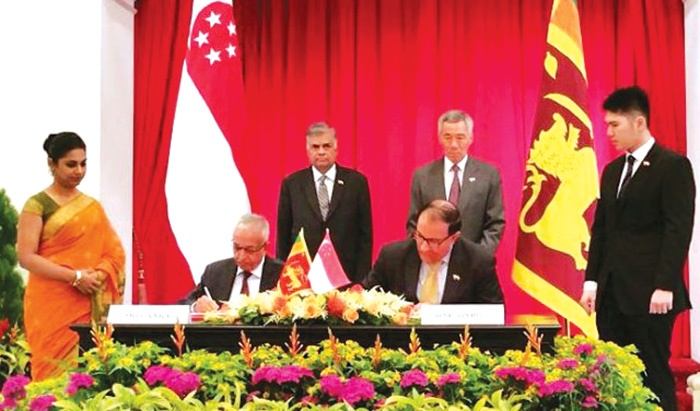
Sri Lanka-Singapore Free Trade Agreement
By Gomi Senadhira
senadhiragomi@gmail.com
“You might tell fairy tales, but the progress of a country cannot be achieved through such narratives. A country cannot be developed by making false promises. The country moved backward because of the electoral promises made by political parties throughout time. We have witnessed that the ultimate result of this is the country becoming bankrupt. Unfortunately, many segments of the population have not come to realize this yet.” – President Ranil Wickremesinghe, 2024 Budget speech
Any Sri Lankan would agree with the above words of President Wickremesinghe on the false promises our politicians and officials make and the fairy tales they narrate which bankrupted this country. So, to understand this, let’s look at one such fairy tale with lots of false promises; Ranil Wickremesinghe’s greatest achievement in the area of international trade and investment promotion during the Yahapalana period, Sri Lanka-Singapore Free Trade Agreement (SLSFTA).
It is appropriate and timely to do it now as Finance Minister Wickremesinghe has just presented to parliament a bill on the National Policy on Economic Transformation which includes the establishment of an Office for International Trade and the Sri Lanka Institute of Economics and International Trade.
Was SLSFTA a “Cleverly negotiated Free Trade Agreement” as stated by the (former) Minister of Development Strategies and International Trade Malik Samarawickrama during the Parliamentary Debate on the SLSFTA in July 2018, or a colossal blunder covered up with lies, false promises, and fairy tales? After SLSFTA was signed there were a number of fairy tales published on this agreement by the Ministry of Development Strategies and International, Institute of Policy Studies, and others.
However, for this article, I would like to limit my comments to the speech by Minister Samarawickrama during the Parliamentary Debate, and the two most important areas in the agreement which were covered up with lies, fairy tales, and false promises, namely: revenue loss for Sri Lanka and Investment from Singapore. On the other important area, “Waste products dumping” I do not want to comment here as I have written extensively on the issue.
1. The revenue loss
During the Parliamentary Debate in July 2018, Minister Samarawickrama stated “…. let me reiterate that this FTA with Singapore has been very cleverly negotiated by us…. The liberalisation programme under this FTA has been carefully designed to have the least impact on domestic industry and revenue collection. We have included all revenue sensitive items in the negative list of items which will not be subject to removal of tariff. Therefore, 97.8% revenue from Customs duty is protected. Our tariff liberalisation will take place over a period of 12-15 years! In fact, the revenue earned through tariffs on goods imported from Singapore last year was Rs. 35 billion.
The revenue loss for over the next 15 years due to the FTA is only Rs. 733 million– which when annualised, on average, is just Rs. 51 million. That is just 0.14% per year! So anyone who claims the Singapore FTA causes revenue loss to the Government cannot do basic arithmetic! Mr. Speaker, in conclusion, I call on my fellow members of this House – don’t mislead the public with baseless criticism that is not grounded in facts. Don’t look at petty politics and use these issues for your own political survival.”
I was surprised to read the minister’s speech because an article published in January 2018 in “The Straits Times“, based on information released by the Singaporean Negotiators stated, “…. With the FTA, tariff savings for Singapore exports are estimated to hit $10 million annually“.
As the annual tariff savings (that is the revenue loss for Sri Lanka) calculated by the Singaporean Negotiators, Singaporean $ 10 million (Sri Lankan rupees 1,200 million in 2018) was way above the rupees’ 733 million revenue loss for 15 years estimated by the Sri Lankan negotiators, it was clear to any observer that one of the parties to the agreement had not done the basic arithmetic!
Six years later, according to a report published by “The Morning” newspaper, speaking at the Committee on Public Finance (COPF) on 7th May 2024, Mr Samarawickrama’s chief trade negotiator K.J. Weerasinghehad had admitted “…. that forecasted revenue loss for the Government of Sri Lanka through the Singapore FTA is Rs. 450 million in 2023 and Rs. 1.3 billion in 2024.”
If these numbers are correct, as tariff liberalisation under the SLSFTA has just started, we will pass Rs 2 billion very soon. Then, the question is how Sri Lanka’s trade negotiators made such a colossal blunder. Didn’t they do their basic arithmetic? If they didn’t know how to do basic arithmetic they should have at least done their basic readings. For example, the headline of the article published in The Straits Times in January 2018 was “Singapore, Sri Lanka sign FTA, annual savings of $10m expected”.
Anyway, as Sri Lanka’s chief negotiator reiterated at the COPF meeting that “…. since 99% of the tariffs in Singapore have zero rates of duty, Sri Lanka has agreed on 80% tariff liberalisation over a period of 15 years while expecting Singapore investments to address the imbalance in trade,” let’s turn towards investment.
Investment from Singapore
In July 2018, speaking during the Parliamentary Debate on the FTA this is what Minister Malik Samarawickrama stated on investment from Singapore, “Already, thanks to this FTA, in just the past two-and-a-half months since the agreement came into effect we have received a proposal from Singapore for investment amounting to $ 14.8 billion in an oil refinery for export of petroleum products. In addition, we have proposals for a steel manufacturing plant for exports ($ 1 billion investment), flour milling plant ($ 50 million), sugar refinery ($ 200 million). This adds up to more than $ 16.05 billion in the pipeline on these projects alone.
And all of these projects will create thousands of more jobs for our people. In principle approval has already been granted by the BOI and the investors are awaiting the release of land the environmental approvals to commence the project.
I request the Opposition and those with vested interests to change their narrow-minded thinking and join us to develop our country. We must always look at what is best for the whole community, not just the few who may oppose. We owe it to our people to courageously take decisions that will change their lives for the better.”
According to the media report I quoted earlier, speaking at the Committee on Public Finance (COPF) Chief Negotiator Weerasinghe has admitted that Sri Lanka was not happy with overall Singapore investments that have come in the past few years in return for the trade liberalisation under the Singapore-Sri Lanka Free Trade Agreement. He has added that between 2021 and 2023 the total investment from Singapore had been around $162 million!
What happened to those projects worth $16 billion negotiated, thanks to the SLSFTA, in just the two-and-a-half months after the agreement came into effect and approved by the BOI? I do not know about the steel manufacturing plant for exports ($ 1 billion investment), flour milling plant ($ 50 million) and sugar refinery ($ 200 million).
However, story of the multibillion-dollar investment in the Petroleum Refinery unfolded in a manner that would qualify it as the best fairy tale with false promises presented by our politicians and the officials, prior to 2019 elections.
Though many Sri Lankans got to know, through the media which repeatedly highlighted a plethora of issues surrounding the project and the questionable credentials of the Singaporean investor, the construction work on the Mirrijiwela Oil Refinery along with the cement factory began on the24th of March 2019 with a bang and Minister Ranil Wickremesinghe and his ministers along with the foreign and local dignitaries laid the foundation stones.
That was few months before the 2019 Presidential elections. Inaugurating the construction work Prime Minister Ranil Wickremesinghe said the projects will create thousands of job opportunities in the area and surrounding districts.
The oil refinery, which was to be built over 200 acres of land, with the capacity to refine 200,000 barrels of crude oil per day, was to generate US$7 billion of exports and create 1,500 direct and 3,000 indirect jobs. The construction of the refinery was to be completed in 44 months. Four years later, in August 2023 the Cabinet of Ministers approved the proposal presented by President Ranil Wickremesinghe to cancel the agreement with the investors of the refinery as the project has not been implemented! Can they explain to the country how much money was wasted to produce that fairy tale?
It is obvious that the President, ministers, and officials had made huge blunders and had deliberately misled the public and the parliament on the revenue loss and potential investment from SLSFTA with fairy tales and false promises.
As the president himself said, a country cannot be developed by making false promises or with fairy tales and these false promises and fairy tales had bankrupted the country. “Unfortunately, many segments of the population have not come to realize this yet”.
(The writer, a specialist and an activist on trade and development issues . )



US sports envoys to Lanka to champion youth development

Rahuman questions sudden cancellation of leave of CEB employees


