
News
19A: Key changes necessary but consensus on several provisions – SLPP lawmaker

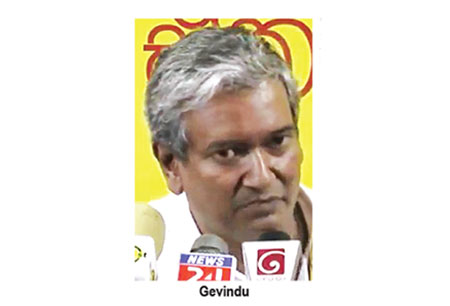
‘We received two mandates to enact a new Constitution’
By Shamindra Ferdinando
SLPP National List member Gevindu Cumaratunga strongly pushed for a new Constitution instead of bringing in the 20th Amendment in place of 19th Amendment enacted at the onset of UNP-SLFP administration in 2015.
Addressing a media briefing at the Sri Sambuddajayanthi Viharaya and meeting organized in Kandy also on Sunday (30), Cumaratunga emphasized that Gotabaya Rajapaksa and the SLPP received overwhelming mandate at the 2019 presidential and 2020 general election, respectively, to enact a new Constitution.
The leader of civil society group Yuthukama dealt with the 13th, 16th and the 19th Amendments as well as the Proportional Representation (PR) system introduced by the then President JR Jayewardene. In addition to one NL slot, Yuthukama Kalutara district candidate Anupa Pasquel entered parliament.
The ideal solution would be to either abolish/do away with inimical provisions in those amendments, Cumaratunga said, underscoring the responsibility on their part to realize the mandates received at the presidential and parliamentary polls.
Cumaratunga said that the 13th Amendment undermined the country’s unitary status whereas the 16th imposed restrictions on the use of Sinhala language in the North and East and the 19th caused anarchy. Therefore, tangible measures should be taken to abolish/amendment/rectify shortcomings without further delay, he said.
Cumaratunga pointed out how the National Joint Committee (NJC), in a statement issued recently explained the need to address all problematic matters without focusing only on the 19th Amendment. Referring to a statement issued by the Buddasasana Karyasadaka Mandalaya on August 25, 2020, Cumaratunga emphasized that the 19th Amendment wasn’t the only cause for continuing political turmoil and instability.
Therefore, the government should seriously look into concerns expressed by those who really believed in a total constitutional overhaul, Cumaratunga said. The civil society activist acknowledged that an influential section of the government pushed for the 20th Amendment in place of 19th Amendment as enactment of a new Constitution would take time. Cumaratunga said that those who preferred the 20th instead of the 19th Amendment were of the view a new Constitution couldn’t be enacted without public consultations.
Lawmaker Cumaratunga questioned the need to engage in fresh public consultations as the previous government conducted quite large scale countrywide operation in that regard. The procedure included a comprehensive report put out by the Public Representations Committee on Constitutional Reforms and the parliamentary process spearheaded by Premier Ranil Wickremesinghe, as the Chairman of the Steering Committee of the Constitutional Assembly.
The first meeting of the Constitutional Assembly took place on April 5, 2016.
The Yuthukama leader said that the high profile constitutional reforms process that had been undertaken by the previous government was in the public domain. Those who had campaigned for that constitutional reforms process were routed thrice at the 2018 Feb Local Government poll, 2019 Nov presidential and 2020 August general election, Cumuratunga said.
Now that the SLPP had secured a near two-thirds majority and the required support could be obtained from friendly political parties, the government could go for a referendum. Such a course of action would allow the government to achieve its objective without having to go before the Supreme Court.
Cumaratunga said that consensus could be reached on some provisions in the 19th Amendment. Pointing out that the SLPP government was agreeable to the two term limit on an executive president and the restriction of presidential term to a five-year period, Cumaratunga said that Yuthukama, too, believed those provisions should be retained.
Far reaching change required pertaining to the 19th Amendment was the provision that deprived the elected President to hold ministerial portfolios, MP Cumaratunga said. Emphasizing that Article 4 where the sovereignty of the people was dealt with, specified as follows in Sub Article 4b: “The executive power of the People, including the defence of Sri Lanka, shall be exercised by the President of the Republic elected by the People,” Cumaratunga said all obstacles should cleared for the President to take over the defence portfolio.
Lawmaker Cumaratunga said that it would be better to specify that the President should hold the defence portfolio.
MP Cumaratunga said that the provision that denied the President the right to dissolve parliament one year after the general election, too, should be amended. In terms of the 19th Amendment, the President received the right to dissolve parliament only after the House completed four and half years.
The former government amended the provision that dealt with the President’s power to dissolve parliament in spite of the Supreme Court previously ruling that such a change should be subjected to a referendum, Cumaratunga said. The civil society activist pointed out how President Sirisena struggled to cope up with treasury bond scams allegedly perpetrated by the UNP as he lacked the constitutional power to intervene.
Commenting on the provision that deprived anyone below the age of 35 contesting the presidency, Cumaratunga said that the particular stipulation should be retained. The MP said that he didn’t see any reason why a person at such a young age should contest the presidency.
Cumaratunga also discussed the continuing controversy over amending the constitutional provision that prevented dual citizens from seeking public office. The National List MP said that he would like to discuss the matter taking into consideration Basil Rajapaksa’s dual citizenship (US and Sri Lanka), former Central Bank Governor and now fugitive Singaporean Arjuna Mahendran and President Gotabaya Rajapaksa giving up his US citizenship to be eligible to contest 2019 presidential election.
Lawmaker Cumaratunga said that having left the country soon after the 2015 change of government Basil Rajapaksa could have stayed in the US. Instead, the former SLFP National Organizer returned in April 2015 after the then government initiated investigations, Cumaratunga said. The police arrested and remanded him and he underwent hardship but remained committed for a political role, the MP said. If all dual citizens were prepared to face investigations the way Basil Rajapaksa did, there was no need for the provision to prevent dual citizens from holding public office, Cumaratunga said.
However, Arjuna Mahendran fleeing the country was evidence that dual citizens/foreign citizens shouldn’t be accommodated unless they accepted sole Sri Lankan citizenship, he said.
Cumaratunga said that President Gotabaya Rajapaksa had set an example by giving up his US citizenship to serve the country. The lawmaker said that Gotabaya Rajapaksa, in his capacity as the wartime Defence Secretary played a significant role while being a US citizen.
The MP said that the stipulation that the President and members of parliament should only be Sri Lankans could be extended to other higher level categories.
Lawmaker Cumaratunga declared his firm support to the Independent Commissions while calling for proper procedures to be followed in making appointments to Independent Commissions. Pointing out that the previous government blundered by accommodating TNA leader R. Sampanthan as the Opposition Leader to enable him to sit in the Constitutional Council, Cumaratunga alleged that was done to manipulate the process.
Of the 10 member Constitutional Council, five are appointed in agreement between the Prime Minister and the Opposition Leader.
If the Joint Opposition was given the Opposition Leader’s Post, the whole process wouldn’t have gone awry, Cumaratunga said.
He said that Premier Mahinda Rajapaksa and Opposition Leader Sajith Premadasa could choose five persons to ensure the proper functioning of the Constitutional Council. The MP said that the need was to rectify the Constitutional Council and the Commissions not to abolish them. Cumaratunga proposed that the President could choose from persons recommended by the Constitutional Council. The President should also receive the constitutional authority to remove those appointed, the MP said.
Cumaratunga said that the SLPP should be sensitive to the sentiments of those who brought the party to power. The lawmaker warned that political parties and the government could no longer continue as if public sentiments didn’t matter. “Look at what happened to the UNP. The UNP was reduced from 107 to 55 (SJB 54 + UNP 1), TNA 16 to 10 and the JVP 6 to 3,” Cumaratunga said, adding that those treacherous civil society elements were taught an unforgettable lesson.
Quoting statements issued by the Buddasasana Karyasadaka Mandalaya as well as the NJC, MP Cumaratunga strongly suggested that much delayed Provincial Council elections shouldn’t be held as the very basis of the system undermined the country’s unitary status or in other words was contrary to President Gotabaya Rajapaksa’s ‘One Country, One Law’ concept.



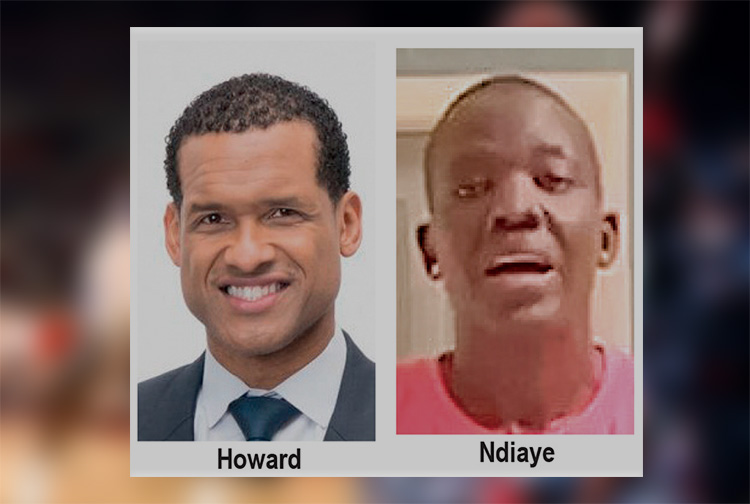
The U.S. Embassy in Colombo welcomed the U.S. Sports Envoys to Sri Lanka, former National Basketball Association (NBA) and Women’s National Basketball Association (WNBA) players Stephen Howard and Astou Ndiaye, from June 8 through 14.
The Public Diplomacy section of the U.S. Embassy said that it would launch a weeklong basketball program intended to harness the unifying power of sports, made possible through collaboration with Foundation of Goodness and IImpact Hoop Lab.
While in Sri Lanka, Howard and Ndiaye, both retired professional basketball players, will conduct a weeklong program, Hoops for Hope: Bridging Borders through Basketball. The Sports Envoys will lead basketball clinics and exhibition matches and engage in leadership sessions in Colombo and Southern Province for youth aged 14-18 from Northern, Uva, Eastern and Western Provinces, offering skills and leadership training both on and off the court. The U.S. Envoys will also share their expertise with the Sri Lanka Basketball Federation, national coaches, and players, furthering the development of basketball in the country. Beyond the clinics, they will collaborate with Sri Lankan schoolchildren to take part in a community service project in the Colombo area.
“We are so proud to welcome Stephen and Astou as our Sports Envoys to Sri Lanka, to build on the strong people-to-people connections between the United States and Sri Lanka,” said U.S. Ambassador Julie Chung. “The lessons that will be shared by our Sports Envoys – communication, teamwork, resilience, inclusion, and conflict resolution – are essential for leadership development, community building, equality, and peace. The U.S. Sports Envoy program is a testament to our belief that sports can be a powerful tool in promoting peace and unity.”
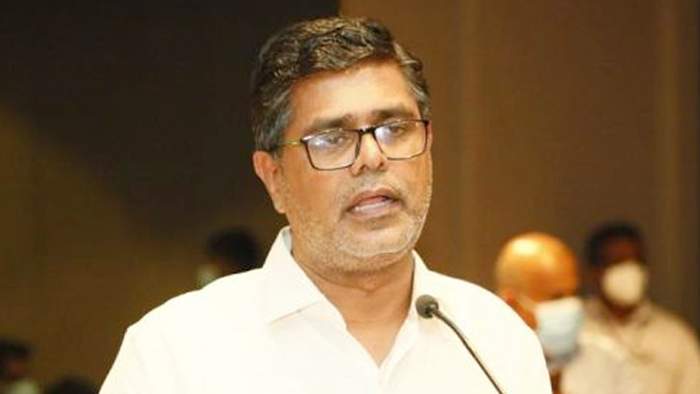
SJB Colombo District MP Mujibur Rahuman in parliament demanded to know from the government the reasons for CEB suspending the leave of all its employees until further notice from Thursday.
MP Rahuman said that the CEB has got an acting General Manager anew and the latter yesterday morning issued a circular suspending leave of all CEB employees with immediate effect until further notice.
“We demand that Minister Kanchana Wijesekera should explain this to the House. This circular was issued while this debate on the new Electricity Amendment Bill was pending. There are many who oppose this Bill. The Minister must tell parliament the reason for the urge to cancel the leave of CEB employees,” the MP said.However, Speaker Mahinda Yapa Abeywardena prevented Minister Wijesekera responding to the query and said that the matter raised by MP Rahuman was not relevant.
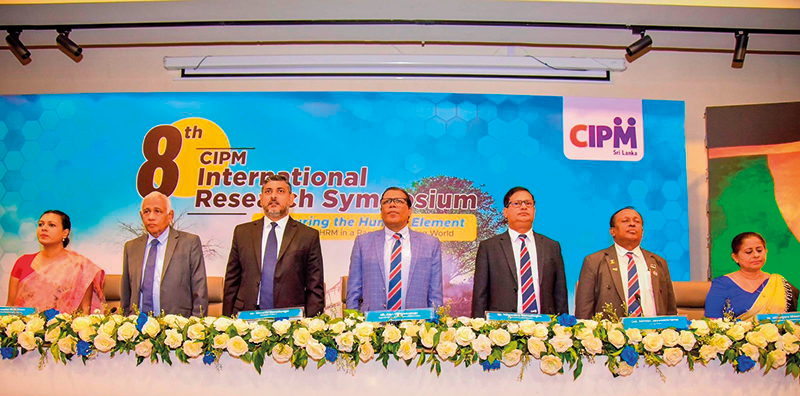
The Chartered Institute of Personnel Management (CIPM) successfully concluded the 8th Annual CIPM Symposium, which took place on 31st May 2024. Themed “Nurturing the Human Element—Redefining HRM in a Rapidly Changing World,” the symposium underscored the pivotal role of human resource management (HRM) in today’s dynamic global landscape. Since its inception in 1959, CIPM has been dedicated to advancing the HR profession through education, professional development, and advocacy, solidifying its position as Sri Lanka’s leading professional body for HRM.
Ken Vijayakumar, the President of the CIPM, graced the occasion as the chief guest. The symposium commenced with the welcome address by the Chairperson, Prof. Arosha Adikaram, followed by the Web Launch of the Symposium Proceedings and Abstract Book by the CIPM President. The event featured distinguished addresses, including a speech by Chief Guest Ken Vijayakumar, President of CIPM, and an address by Guest of Honor Shakthi Ranatunga, Chief Operating Officer of MAS Holdings Pvt. Ltd., Sri Lanka.
The symposium also featured an inspiring keynote address by Prof. Mario Fernando, Professor of Management and Director of the Centre for Cross Cultural Management (CCCM) at the University of Wollongong, Australia.
Vote of Thanks of the inauguration session was delivered by Dr. Dillanjani Weeratunga, Symposium Co-chair.
The symposium served as a comprehensive platform for researchers to present their findings across a wide range of critical topics in HRM. These included Cultural Diversity and Inclusion, Talent Development and Retention, Ethical Leadership and Corporate Social Responsibility, Adapting to Technological Advancements, Mental Health and Well-being at Work, Global Workforce Challenges, Employee Empowerment, and Reskilling and Upskilling.
The plenary session was led by Prof. Wasantha Rajapakse. Certificates were awarded to the best paper presenters during the valedictory session, followed by a vote of thanks delivered by Kamani Perera, Manager of Research and Development.
The annual symposium of CIPM was a truly inclusive event, attracting a diverse audience that spanned undergraduates, graduates, working professionals, research scholars and lecturers. This widespread interest highlights the symposium’s significance in the field of HRM, offering a unique opportunity for everyone to network and learn from scholarly brains.The CIPM International Research Symposium was sponsored by Hambantota International Port, Sri Lanka Institute of Information Technology (SLIIT), E B Creasy & Co. PLC, and Print Xcel Company.



US sports envoys to Lanka to champion youth development

Rahuman questions sudden cancellation of leave of CEB employees


