Features
Yogarani Thevathasan, a woman of jokes and laughter

I first met Yogarani Thevathasan, who died recently at age 94, over 60 years ago. She would surely have been one of oldest journalists alive when she passed away in Colombo in May. I believe only Vijita Fernando, who’ll be 95 later this year, and a good friend of colleague of Yogarani at Lake House, survives. A many times award winning journalist, equally facile in Sinhala and English. Vijita even published a new book not so long ago and remains accessible on the phone even today.
But I digress. Following her death, Yogarani’s doctor daughter, Nandika Doble, has published a collection of her mother’s writings, collected from old news-clips winch Yogarani had squirreled away. While all her clips had not survived the vagaries of time, many of them that have are bound for the delectation family and friends. These can evoke the smiles and laughter Yogarani provoked with her sometimes salacious stories in the vast newsroom hosting the Observer (including the Sunday Observer) Janatha and Silumina.
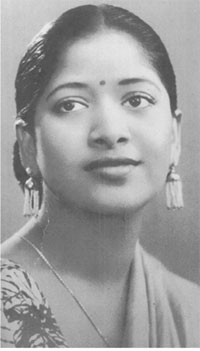

To go back to the beginning, I was a 19-year old teenager awaiting my university entrance examination results (I well knew I would fail but my parents didn’t) who was taken on as a ‘stringer’ to the old Ceylon Observer, once among the oldest English newspapers published in South Asia. I was paid what was called a “reimbursement of out-of-pocket expense” allowance of Rs. 100 a month. Yogarani was on the Observer sub-editors’ desk at that time – a very long table with a separate desk at its head where the Chief Sub-Editor Kanaks (the highly skilled Kanagaratnam) presided.
In those days Yogarani looked almost as attractive as she does in the kella kaley photograph illustrating this obituary; a little more buxom perhaps. She was an effervescent bubbling personality, always smiling and ever ready for a joke. I remember she subbed the first feature article I wrote on Colombo’s Gas Works Street, to be published in the Observer. She asked me a question or two to clarify what I had laboriously typed after spending time on the street talking to people and interviewing the boss of the Colombo Gas and Water Company.
I was too young and new then to join the knot of journos around Yogarani listening to her jokes and yarns, related with her eyes twinkling and laughter bubbling out of her. They evoked ripples of laughter and sometimes loud guffaws. I heard some of them secondhand later, and there are some that are totally unpublishable!
Leafing through the collection of Yogarani’s published features, there’s one from the then Ceylon Daily News about the Royal-Thomian match when a Royalist among a group of invaders on Ladies College on the ‘Big Match’ day had even kissed the venerable girls’ school principal. I have heard that story in my time at Royal but must confess that I wasn’t a witness. Reading the relevant news clip, I don’t think Yogarani actually saw the kissing, but she certainly experience an occasion when an invading school boy touched each of the girls in a class with a flower and left after a parting pat on the head of the flabbergasted teacher.
Her career in journalism, first at Lake House and then in England extended for over 40 years. Her daughter says she had kept the clips in numerous files. Yogarani’s husband, Dr. Victor Thevathasan and she decided in their middle age to emigrate to the UK with their two children. This has obviously not been their intention in their early years because she and her husband built a palatial house for their family in a highly residential area off Jawatte Road, a home I know well as one of my cousins now owns and lives in it.
The aforementioned Vijita Fernando, reviewing Yogarani’s book, Ink On My Fingers published in 2004
says that two decades of journalism in the Observer and the Daily News followed by a spell with Thomson Newspapers in Wales had left quite a lot of ink on Yogarani’s fingers. “The last 30 years away from her native Sri Lanka and a completely different atmosphere of journalism in England had sharpened her memories of her journalistic life here in her native country,” Vijita had said in the review.
“But it is not the seesaw of political upheavals that she recalls in her book……it is rather the foibles of men and women, mainly women, who enlivened her life in Colombo-7 all those years ago. Recalling those she portrayed in her column in the Observer, signed Ciao, one can still hear her hearty (sometimes vicious) laughter and her unfailing ability to see the humour in the most trying situation – domestic, journalistic or international.”
Yogarani, as Vijita says, “certainly can tell a story.” I’ve seen that both in her humorous columns as well as more serious topics including one she wrote which, if I remember right, was published in the Daily News after the Tsunami hit. There her keen powers of observation, her nose for a story and the warmth of her personality was clearly evident. Unfortunately that clip is not in the lot that Nandika had collected but there’s one on Jaffna “where red onions abound and life is slow.”
After her husband’s death and her two children had qualified a doctors in the UK, Yogarani returned to her roots here for the last lap of her life. I met her a couple of times when she was here, at the homes of her friends, and we were able to relish the nostalgia of the old days on the Ceylon Observer when Yogarani once claimed she was chased round the table by the boss!
Manik de Silva