
News
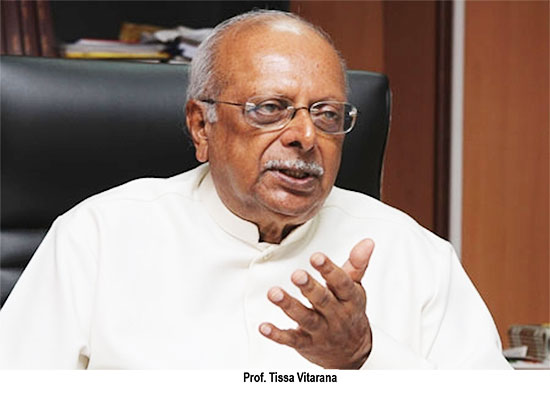
Will America be able to achieve its sinister objectives in Sri Lanka? Prof.Tissa Vitarana

One recollects that the UNP-led “Yahapalanaya” Government was on the verge of signing the MCC and SOFA agreements with the US Government after having signed the periodic ACSA agreement. The latter was signed at regular intervals to enable military exercises to be conducted in Sri Lanka and to receive military assistance from the USA. This was renewed at regular intervals and therefore it was a routine, but the MCC and SOFA agreements are new developments. These were a result of the only American military base in the Indian Ocean rim located at Diego Garcia being given back to the country that it belong to, the Mauritius, by virtue of a verdict given by the International Criminal Court (ICC). According to the MCC agreement the strip of land extending from Colombo and Katunayake to Trincomalee harbour was to be given to the USA to construct a means of rapid transport (rail and road) and the door would also be open for American companies to freely operate within our country. This would naturally lead to domination of our economy as well. The SOFA agreement would enable any American soldier in uniform with gun in hand to enter our country bringing any type of arms as luggage. Sri Lankan Customs would not be able to even examine them, leave alone charging any duty. The US Army personnel would have full use of all Ports and Airports and right to enter any of our Government premises at any time. In other words Sri Lanka would become a virtual colony of the USA and its military base. But these two agreements could not be signed because of the defeat of the “Yahapalanaya’’ Government at the Presidential and General Elections.
It was generally accepted that the present Government would not sign the two agreements and that the danger was passed. But a series of events should make us reconsider whether this danger may be forced upon us in the near future. The Sri Lankan economy has been run down to the lowest level in its history since independence. 60% of families are living below the poverty line and the level of malnutrition has grown to 18.3%(an MRI survey about 7 months ago). Many families have only one meal and that too without adequate nutrition. Children are suffering badly. I regret my proposal to give highest priority to feeding those who are hungry made to the higher authorities has been ignored.
A major cause for the above situation is the high cost of living. It has soared due to Covid 19 virus epidemic on top of the global economic crisis. But what is surprising is that the Government has allowed the traders to fix the price without any control or justification. To make matters worse the Government has not intervened to bring down the cost of living by measures that have succeeded in the past. For example during the Coalition Government of 1970-75 which strengthened the cooperative system thereby linking producer cooperatives with consumer cooperatives, so that essentials were available at a reasonable price without any profit. This was supported by the Food Control Department and the Marketing Department which also directly bought from the producer and delivered through sales outlets to the consumer, only adding on the actual cost. There was no profiteering. Automatically the traders too had to bring their prices down as well.
The people are suffering due to unwise decisions (e.g. the fertilizer problem which has badly affected the farmers). The major blunder has been the dollar crisis which has led to shortages of imported items that have affected all layers of society as well as the many industries that depend on imported inputs. The lack of fuel, gas, imported food and medicines has led to shortages resulting in long queues and to disruption of the whole transport system. Many people have lost their jobs as a result. This dollar crisis has led to our Foreign Reserves falling from US dollars 8 billion to less than 1 billion. The rating agencies such as Fitch and Moody have dropped Sri Lanka to the lowest level, a single C, as being on the verge of bankruptcy. Our importers are badly affected as the Letters of Credit (LC’s) are no longer accepted, so that orders are only acted on when dollars are directly paid to the suppliers. This means a delay of several months even if dollars are sent. But the reality is that the importers are unable to get dollars from local banks. Our foreign debt is said to have reached 52 billion US dollars and the annual payment for interest etc. (debt servicing) is in the region of US dollars 6 billion per year. The Government has not made use up to now of the various methods that are available to escape from this situation. For example re-structuring the economy by negotiating a moratorium on the debt payments. For instance it is possible to negotiate for a postponement of the annual debt servicing for a period of about 5 years. This would save us about 30 billion dollars starting from the next payment due in June this year. This money can be used to provide the people’s needs from abroad and also develop the economy. A very surprising feature is that no serious effort is being made to have such an arrangement with our main creditor, China.
Instead we are now signing an agreement with the IMF and a begging mission has gone to Washington, USA. This will only make matters worse as in addition to getting into deeper debt we are likely to be subject to their conditions which include the neoliberal policy of unlimited imports. The main cause of our dollar crisis is the fact that the Government when it began to be faced with the emerging dollar crisis failed to severely restrict the imports (which cost more than twice our export earnings) to narrow the adverse foreign trade gap. There should have been strict banning of the import of all non-essentials so that the outflow of the dollars would be minimized. There should have been more support to the organizations that I set up to promote the SMEs, like the 243 Vidatha Centers, to provide technology to support SMEs, one in each administrative division around the country. In the 5 years that I was Minister of Science and Technology the outcome had been the development of 231,000 SMEs. To support large scale industry as well as the SMEs, I set up a Nano Technology Centre in Homagama (which happens to be the 18th Nano Technology Centre in the world, which even India had not done). While the Government talks of cutting down imports and promoting local industries, there has been no serious attempt to promote this technology transfer mechanism.
The complaint of many Ministers that various decisions are taken without their knowledge suggest that there is a section of the bureaucracy, possibly supported by some politicians, who are controlling the Economy according to a plan determined by the USA to disrupt our economy to the point where we may be forced to accept any terms and even sign the MCC and SOFA agreements. The fact that both the Executive President and the former Finance Minister are American citizens further complicates the situation. Thus the proposal to set up an Interim Government for a period of 6-8 months to restore the economy and stabilize the social and economic situation in the country, if done effectively, as proposed by the group of 11 decedent political parties may provide a way out. But this will not be easy and certainly it would need a firm hand and the active support of the people.



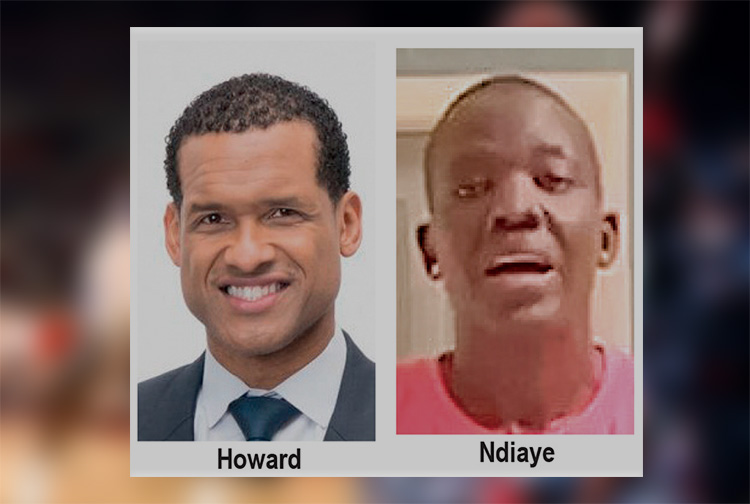
The U.S. Embassy in Colombo welcomed the U.S. Sports Envoys to Sri Lanka, former National Basketball Association (NBA) and Women’s National Basketball Association (WNBA) players Stephen Howard and Astou Ndiaye, from June 8 through 14.
The Public Diplomacy section of the U.S. Embassy said that it would launch a weeklong basketball program intended to harness the unifying power of sports, made possible through collaboration with Foundation of Goodness and IImpact Hoop Lab.
While in Sri Lanka, Howard and Ndiaye, both retired professional basketball players, will conduct a weeklong program, Hoops for Hope: Bridging Borders through Basketball. The Sports Envoys will lead basketball clinics and exhibition matches and engage in leadership sessions in Colombo and Southern Province for youth aged 14-18 from Northern, Uva, Eastern and Western Provinces, offering skills and leadership training both on and off the court. The U.S. Envoys will also share their expertise with the Sri Lanka Basketball Federation, national coaches, and players, furthering the development of basketball in the country. Beyond the clinics, they will collaborate with Sri Lankan schoolchildren to take part in a community service project in the Colombo area.
“We are so proud to welcome Stephen and Astou as our Sports Envoys to Sri Lanka, to build on the strong people-to-people connections between the United States and Sri Lanka,” said U.S. Ambassador Julie Chung. “The lessons that will be shared by our Sports Envoys – communication, teamwork, resilience, inclusion, and conflict resolution – are essential for leadership development, community building, equality, and peace. The U.S. Sports Envoy program is a testament to our belief that sports can be a powerful tool in promoting peace and unity.”
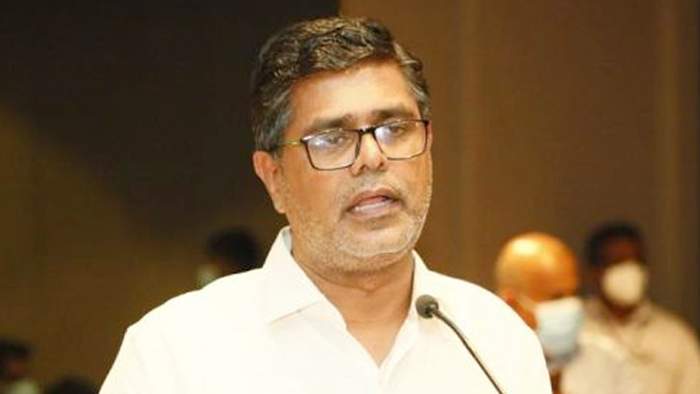
SJB Colombo District MP Mujibur Rahuman in parliament demanded to know from the government the reasons for CEB suspending the leave of all its employees until further notice from Thursday.
MP Rahuman said that the CEB has got an acting General Manager anew and the latter yesterday morning issued a circular suspending leave of all CEB employees with immediate effect until further notice.
“We demand that Minister Kanchana Wijesekera should explain this to the House. This circular was issued while this debate on the new Electricity Amendment Bill was pending. There are many who oppose this Bill. The Minister must tell parliament the reason for the urge to cancel the leave of CEB employees,” the MP said.However, Speaker Mahinda Yapa Abeywardena prevented Minister Wijesekera responding to the query and said that the matter raised by MP Rahuman was not relevant.
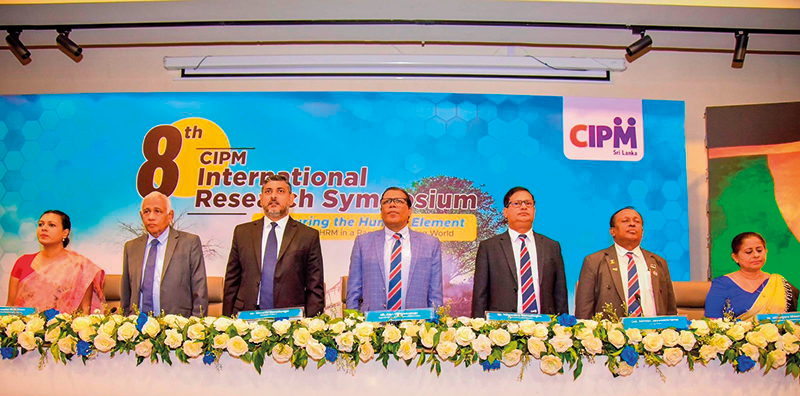
The Chartered Institute of Personnel Management (CIPM) successfully concluded the 8th Annual CIPM Symposium, which took place on 31st May 2024. Themed “Nurturing the Human Element—Redefining HRM in a Rapidly Changing World,” the symposium underscored the pivotal role of human resource management (HRM) in today’s dynamic global landscape. Since its inception in 1959, CIPM has been dedicated to advancing the HR profession through education, professional development, and advocacy, solidifying its position as Sri Lanka’s leading professional body for HRM.
Ken Vijayakumar, the President of the CIPM, graced the occasion as the chief guest. The symposium commenced with the welcome address by the Chairperson, Prof. Arosha Adikaram, followed by the Web Launch of the Symposium Proceedings and Abstract Book by the CIPM President. The event featured distinguished addresses, including a speech by Chief Guest Ken Vijayakumar, President of CIPM, and an address by Guest of Honor Shakthi Ranatunga, Chief Operating Officer of MAS Holdings Pvt. Ltd., Sri Lanka.
The symposium also featured an inspiring keynote address by Prof. Mario Fernando, Professor of Management and Director of the Centre for Cross Cultural Management (CCCM) at the University of Wollongong, Australia.
Vote of Thanks of the inauguration session was delivered by Dr. Dillanjani Weeratunga, Symposium Co-chair.
The symposium served as a comprehensive platform for researchers to present their findings across a wide range of critical topics in HRM. These included Cultural Diversity and Inclusion, Talent Development and Retention, Ethical Leadership and Corporate Social Responsibility, Adapting to Technological Advancements, Mental Health and Well-being at Work, Global Workforce Challenges, Employee Empowerment, and Reskilling and Upskilling.
The plenary session was led by Prof. Wasantha Rajapakse. Certificates were awarded to the best paper presenters during the valedictory session, followed by a vote of thanks delivered by Kamani Perera, Manager of Research and Development.
The annual symposium of CIPM was a truly inclusive event, attracting a diverse audience that spanned undergraduates, graduates, working professionals, research scholars and lecturers. This widespread interest highlights the symposium’s significance in the field of HRM, offering a unique opportunity for everyone to network and learn from scholarly brains.The CIPM International Research Symposium was sponsored by Hambantota International Port, Sri Lanka Institute of Information Technology (SLIIT), E B Creasy & Co. PLC, and Print Xcel Company.



US sports envoys to Lanka to champion youth development

Rahuman questions sudden cancellation of leave of CEB employees


