
News
Wide ranging rackets benefiting CEB engineers


By Ifham Nizam
The Ceylon Electricity Board implements most of its power transmission and distribution infrastructure development projects like the construction of new transmission lines, transmission and distribution substations, etc., using loan funds obtained from international lending agencies such as the Asian Development Bank (ADB) and Japan International Cooperation Agency (JICA).
These “concessionary” loans are guaranteed by the government, and projects funded by those loan packages are implemented through specially set up project management units (PMUs).
Engineers attached to PMUs are given special facilities and monetary incentives on the understanding that they will work outside normal working hours and weekends to complete their projects on time and within the allocated budget.CEB often justifies these projects for priority financing citing “great national importance” and the critical needs to improve the power transmission and distribution infrastructure of the country.
Almost all of these project titles carry the words like “green energy”, “clean energy”, “green power”, etc., signifying these investments are primarily aimed at using renewable energy.
However, according to a senior official of the Ministry of Power & Energy, these projects are seldom completed within the given time period or budget. Because of this reason not only the expected benefits of these investments are often lost to the country, but the government incurs heavy losses by way of commitment fees paid to lending agencies.
Once project funds are committed through a loan agreement, the government has to pay this fee to the lending agency, generally computed as a percentage of the loan amount or the “commitment amount”. It is a significant burden to the government, especially in a situation where there is a severe shortage of foreign currency.
If the loan funds are disbursed within the original term of the loan, this “front end fee” is charged at a lower percentage. Hence, when CEB does not complete projects in time, the government ends up paying a higher commitment fee, and is also forced to seek an extension to the original loan disbursement period, thus incurring further costs.
Even more disturbing than long delays in project completion is that some completed projects have turned out to be wasteful investments of foreign funds given to the country.It is understood that the former CEB Chairman M. M. C. Ferdinando had questioned why the new 132kV transmission line between Ambalangoda and Galle, which was completed in 2017 at a cost of Rs. 1,500 million, remained unserviceable to date.
The Sunday Island understands that CEB’s System Control Center is able to switch on this transmission line only when the Samanalawewa Hydropower Plant is running at full capacity.This project had been billed by CEB’s transmission planners as a high-priority investment and solution for the serious transmission bottlenecks in the southern network of the country. Southern areas had been experiencing serious transmission capacity restrictions for decades.It is understood that the CEB General Manager has responded to the Chairman’s inquiry by stating that the commissioning of several new transmission lines that are presently under construction would make the Ambalangoda-Galle transmission line operational.
The 220kV transmission line from Pannipitiya to Polpitiya via Padukka is another example of a costly planning blunder by the CEB. Construction of this long transmission line commenced in 2015 but was delayed owing to many problems, including public protests and court cases filed by some landowners.However, when this ADB-funded project was eventually completed in late 2021 (after a delay of over five years), it has been discovered the power flows in the wrong direction when the line is switched on, causing overloading of the Pannipitiya substation.Hence, this transmission line also remains idle presently. It is understood that CEB planners have explained that power would flow in the right direction once several other transmission lines (being constructed under different loan packages, and already delayed by many years) are completed.
The then CEB General Manager taking part in a national television discussion following the countrywide power outage on August 17, 2020, explained that the unavailability of this critical transmission line was a major contributing factor to CEB’s inability to restore supply for many hours.Another example of colossal waste of funds is the transmission substation at Kappalthurai in the eastern province that has cost the country over Rs. 2,500 million of ADB loan funds. Since there is no high demand for electricity or no future growth in demand in the area, this installation will be idle for the foreseeable future.
According to CEB employees, the existing Trincomalee substation, which is situated about 11 km from this new substation, has ample capacity to serve the electricity demand in the area for many years to come. In the meantime, CEB has made a large investment in increasing the capacity of the Trincomalee substation as well.It is also understood that CEB’s Projects Division has been maintaining several non-functional PMUs for years, spending large sums of money on rented project offices and large project staff, even when no funding has been secured for relevant projects.
CEB employees complain that project directors and their engineers attached to these “white elephants” are allowed to enjoy all benefits, including project allowance (an additional amount equal to one-third of monthly salary) and luxury SUVs because most of them hold important positions in the powerful CEB engineers’ union.They claim that the CEB management never holds to account any project manager responsible for long delays, but they are allowed to continue to enjoy all the perks. According to a senior engineer who works as a consultant on project-related work, this guarantee of “job security” acts as a strong incentive for the project engineers to prolong their projects.CEB employees believe another reason for this lackadaisical attitude of CEB top management is that foreign-funded projects have long been a steady source of luxury vehicles for CEB engineers.
Most vehicles used by top CEB engineers including the General Manager have been provided under different foreign-funded projects, as the existing government guidelines will not allow the purchase of such high-end SUVs having large engine capacity including premium European makes like Audi and Mercedes Benz for government officials.CEB employees complain that the Ministry of Power & Energy generally turns a blind eye to these irregularities mainly because the majority of project managers and their project engineers are top officials of the powerful engineers’ union.
They allege that even the Public Utilities Commission of Sri Lanka (PUCSL,) which has the legal obligation to ensure CEB will not make unnecessary or wasteful investments in its transmission infrastructure, has never questioned CEB regarding assets that are idling for many years after spending billions of rupees of public money.








The U.S. Embassy in Colombo welcomed the U.S. Sports Envoys to Sri Lanka, former National Basketball Association (NBA) and Women’s National Basketball Association (WNBA) players Stephen Howard and Astou Ndiaye, from June 8 through 14.
The Public Diplomacy section of the U.S. Embassy said that it would launch a weeklong basketball program intended to harness the unifying power of sports, made possible through collaboration with Foundation of Goodness and IImpact Hoop Lab.
While in Sri Lanka, Howard and Ndiaye, both retired professional basketball players, will conduct a weeklong program, Hoops for Hope: Bridging Borders through Basketball. The Sports Envoys will lead basketball clinics and exhibition matches and engage in leadership sessions in Colombo and Southern Province for youth aged 14-18 from Northern, Uva, Eastern and Western Provinces, offering skills and leadership training both on and off the court. The U.S. Envoys will also share their expertise with the Sri Lanka Basketball Federation, national coaches, and players, furthering the development of basketball in the country. Beyond the clinics, they will collaborate with Sri Lankan schoolchildren to take part in a community service project in the Colombo area.
“We are so proud to welcome Stephen and Astou as our Sports Envoys to Sri Lanka, to build on the strong people-to-people connections between the United States and Sri Lanka,” said U.S. Ambassador Julie Chung. “The lessons that will be shared by our Sports Envoys – communication, teamwork, resilience, inclusion, and conflict resolution – are essential for leadership development, community building, equality, and peace. The U.S. Sports Envoy program is a testament to our belief that sports can be a powerful tool in promoting peace and unity.”
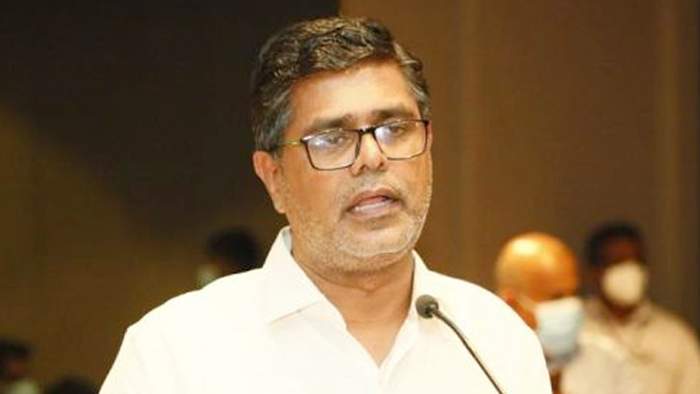
SJB Colombo District MP Mujibur Rahuman in parliament demanded to know from the government the reasons for CEB suspending the leave of all its employees until further notice from Thursday.
MP Rahuman said that the CEB has got an acting General Manager anew and the latter yesterday morning issued a circular suspending leave of all CEB employees with immediate effect until further notice.
“We demand that Minister Kanchana Wijesekera should explain this to the House. This circular was issued while this debate on the new Electricity Amendment Bill was pending. There are many who oppose this Bill. The Minister must tell parliament the reason for the urge to cancel the leave of CEB employees,” the MP said.However, Speaker Mahinda Yapa Abeywardena prevented Minister Wijesekera responding to the query and said that the matter raised by MP Rahuman was not relevant.
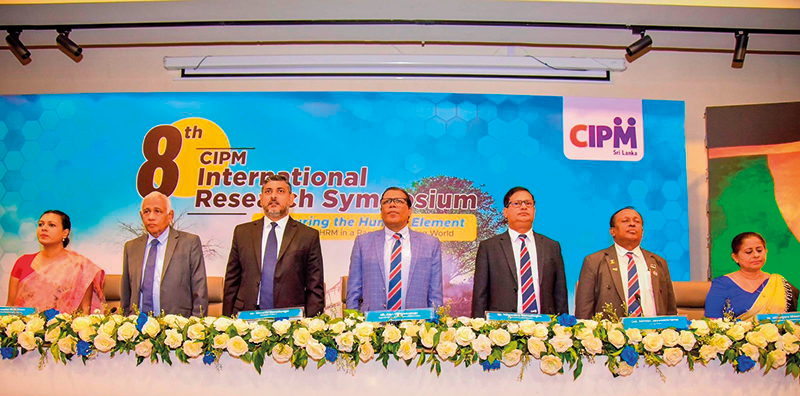
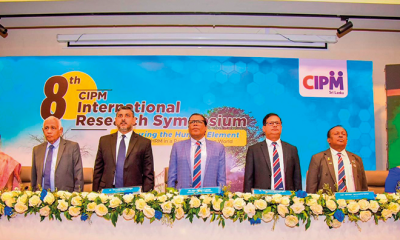
The Chartered Institute of Personnel Management (CIPM) successfully concluded the 8th Annual CIPM Symposium, which took place on 31st May 2024. Themed “Nurturing the Human Element—Redefining HRM in a Rapidly Changing World,” the symposium underscored the pivotal role of human resource management (HRM) in today’s dynamic global landscape. Since its inception in 1959, CIPM has been dedicated to advancing the HR profession through education, professional development, and advocacy, solidifying its position as Sri Lanka’s leading professional body for HRM.
Ken Vijayakumar, the President of the CIPM, graced the occasion as the chief guest. The symposium commenced with the welcome address by the Chairperson, Prof. Arosha Adikaram, followed by the Web Launch of the Symposium Proceedings and Abstract Book by the CIPM President. The event featured distinguished addresses, including a speech by Chief Guest Ken Vijayakumar, President of CIPM, and an address by Guest of Honor Shakthi Ranatunga, Chief Operating Officer of MAS Holdings Pvt. Ltd., Sri Lanka.
The symposium also featured an inspiring keynote address by Prof. Mario Fernando, Professor of Management and Director of the Centre for Cross Cultural Management (CCCM) at the University of Wollongong, Australia.
Vote of Thanks of the inauguration session was delivered by Dr. Dillanjani Weeratunga, Symposium Co-chair.
The symposium served as a comprehensive platform for researchers to present their findings across a wide range of critical topics in HRM. These included Cultural Diversity and Inclusion, Talent Development and Retention, Ethical Leadership and Corporate Social Responsibility, Adapting to Technological Advancements, Mental Health and Well-being at Work, Global Workforce Challenges, Employee Empowerment, and Reskilling and Upskilling.
The plenary session was led by Prof. Wasantha Rajapakse. Certificates were awarded to the best paper presenters during the valedictory session, followed by a vote of thanks delivered by Kamani Perera, Manager of Research and Development.
The annual symposium of CIPM was a truly inclusive event, attracting a diverse audience that spanned undergraduates, graduates, working professionals, research scholars and lecturers. This widespread interest highlights the symposium’s significance in the field of HRM, offering a unique opportunity for everyone to network and learn from scholarly brains.The CIPM International Research Symposium was sponsored by Hambantota International Port, Sri Lanka Institute of Information Technology (SLIIT), E B Creasy & Co. PLC, and Print Xcel Company.



US sports envoys to Lanka to champion youth development

Rahuman questions sudden cancellation of leave of CEB employees


