
News
Why Lanka’s collapse looms large over Bangladesh

It’s the politics, stupid. A cocktail of dynastic rule, cronyism and debt-fuelled vanity projects, to be precise.
(AL Jazeera)
Dubbed by pundits as a development “miracle”, Bangladesh is slated for graduation from the status of “Least Developed Country” to “Developing Country” by 2026.Yet, suddenly, the nation finds itself battling comparisons with Sri Lanka, which has just experienced an economic free-fall. Bangladeshi mainstream media and social media are flooded with speculations about the country’s impending collapse like its fellow South Asian nation.
Everyone from the prime minister’s office and groups of eminent economists to the American ambassador in Dhaka has chimed in to argue why they believe Bangladesh is still far removed from a Sri Lanka-like cataclysmic implosion.They may be only partly right.
Bangladesh’s GDP is about the size of the Pakistani and Sri Lankan economies combined. Bangladesh’s foreign currency reserves are $39bn, more than twice the $18bn of those two neighbours together. According to the finance ministry, Bangladesh’s total debt-to-GDP ratio stands at just over 31 percent, compared with 119 percent for Sri Lanka. Bangladesh has a higher per capita GDP than India and is outperforming other major South Asian nations in key socioeconomic metrics.
Given the above backdrop, why are Bangladeshis concerned about their country sliding, like Sri Lanka, into an economic collapse?
The answer lies not so much in economic statistics but in three key similarities between the countries that may have evaded the eyes of some external experts. These are: authoritarianism under dynastic rule; corruption and cronyism; and debt-fuelled vanity projects.
Like the Rajapaksa family, the Sri Lankan political dynasty that steered the country into its recent wilderness of despair, Bangladesh has been ruled for the past 14 years by the Awami League party, led by the family of Prime Minister Sheikh Hasina. While the Rajapaksas were at least democratically elected several times – including as recently as in 2019 – Hasina returned to power in 2018 via an election where the country’s security apparatus allegedly stuffed ballot boxes the night prior to the vote. The ruling Awami League won 96 percent of the seats, a result as lopsided as is usually the case for the rulers of North Korea, Syria, and Cambodia.
Over the years, both the Rajapaksas and the Sheikh family have drawn their political legitimacy from their much-fabled wartime leadership. In 2009, then-President Mahinda Rajapaksa and his brother, defence minister Gotabaya Rajapaksa, were in charge when the Sri Lankan government decisively vanquished the Tamil Tiger guerilla fighters in Sri Lanka’s decades-old civil war. Likewise, Hasina’s father, Sheikh Mujibur Rehman, led Bangladesh’s war of independence against Pakistan half a century ago.
Selling their family’s wartime bravado to their impoverished and nationalistic audience, both the Sheikhs and Rajapaksas established de-facto fiefdoms, where almost every living member of their respective clans got positions of power.
The Rajapaksas ran Sri Lanka like a “family firm”. Before the brothers’ rule crumbled last month, Gotabaya was president, Mahinda prime minister and their third brother Basil was a cabinet minister. Their children also held ministerial positions – all simultaneously.
Prime Minister Sheikh Hasina’s family in Bangladesh has followed a similar template, though less formally. Her daughter Saima Wazed, seen by many as her heir-apparent, attends state functions and meetings with her mother. Sajeeb Wazed, the expatriate son of the prime minister, enjoys the title of ICT adviser, with de-facto oversight of the country’s lucrative digital technology transformation. The prime minister’s sister Rehana, nephews, nieces, cousins and their children are entrusted with key responsibilities ranging from managing propaganda organisations, diplomatic and donor relationships, military affairs, parliamentary memberships and running business conglomerates.
Such control over the state machinery and private businesses invariably breeds autocracy and disrespect towards public opinion and political opponents. That, in turn, spawns rampant corruption and cronyism. That’s what happened with the Rajapaksas in Sri Lanka, where protesters found opulence in the presidential palace at variance with the dire conditions of the country. That is also the reality in Bangladesh under the Sheikh family.
What about vanity projects?
The Rajapaksas built a $1bn port that rarely saw any ships, a $210m airport where hardly any planes landed and a 35,000-seat cricket stadium bearing Mahinda Rajapaksa’s name that seldom hosted any games. These are the poster children of Sri Lanka’s debt-funded excesses that sank the nation.
Bangladeshis are now busy comparing their own white elephants with Sri Lanka’s. While the government has introduced austerity measures, including power rationing, and police have fired upon – and even killed – those protesting against price hikes, Bangladesh is going ahead with the construction of a $140m cricket stadium bearing the prime minister’s name.
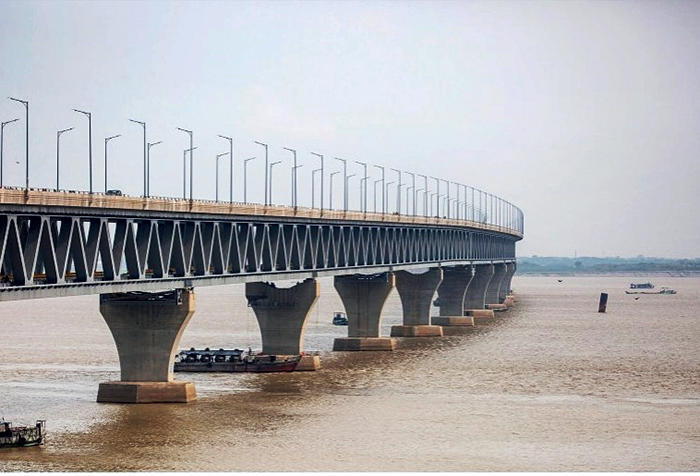
The Hasina government is busy constructing several multibillion-dollar mega projects, including a $12bn nuclear power plant in Rooppur, which is significantly more expensive than similar projects in other countries. When the World Bank declined to fund Bangladesh’s recently completed Padma Bridge, citing corruption, Bangladesh self-funded and completed the 6km (3.7-mile) long bridge after spending three times the initial budget ($3.8bn vs $1.2bn).
Within about a month of opening the Padma Bridge amid much jubilation, the country frantically wrote letters to the International Monetary Fund, World Bank and Asian Development Bank for loans to keep the economy afloat amid a balance of payment crisis due to rising oil prices.
It is possible the government acted prudently by pre-emptively talking to the lenders of last resorts. After all, the Bangladesh government must have seen in Sri Lanka what economic stress can do when an autocrat’s grand bargain of “less democracy, more development” fails.
Yet it is hardly surprising that the people of Bangladesh see eerie parallels with Sri Lanka, as the contrast between their dwindling personal finances and the corruption-prone vanity projects becomes sharper. Seeing the collapse of Sri Lanka’s debt-driven, dynastic authoritarianism, the Bangladeshis are not irrational in their worry: “Are we next?”



The U.S. Embassy in Colombo welcomed the U.S. Sports Envoys to Sri Lanka, former National Basketball Association (NBA) and Women’s National Basketball Association (WNBA) players Stephen Howard and Astou Ndiaye, from June 8 through 14.
The Public Diplomacy section of the U.S. Embassy said that it would launch a weeklong basketball program intended to harness the unifying power of sports, made possible through collaboration with Foundation of Goodness and IImpact Hoop Lab.
While in Sri Lanka, Howard and Ndiaye, both retired professional basketball players, will conduct a weeklong program, Hoops for Hope: Bridging Borders through Basketball. The Sports Envoys will lead basketball clinics and exhibition matches and engage in leadership sessions in Colombo and Southern Province for youth aged 14-18 from Northern, Uva, Eastern and Western Provinces, offering skills and leadership training both on and off the court. The U.S. Envoys will also share their expertise with the Sri Lanka Basketball Federation, national coaches, and players, furthering the development of basketball in the country. Beyond the clinics, they will collaborate with Sri Lankan schoolchildren to take part in a community service project in the Colombo area.
“We are so proud to welcome Stephen and Astou as our Sports Envoys to Sri Lanka, to build on the strong people-to-people connections between the United States and Sri Lanka,” said U.S. Ambassador Julie Chung. “The lessons that will be shared by our Sports Envoys – communication, teamwork, resilience, inclusion, and conflict resolution – are essential for leadership development, community building, equality, and peace. The U.S. Sports Envoy program is a testament to our belief that sports can be a powerful tool in promoting peace and unity.”
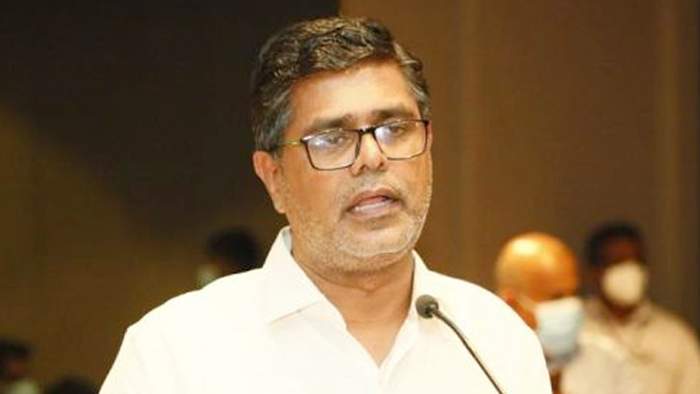
SJB Colombo District MP Mujibur Rahuman in parliament demanded to know from the government the reasons for CEB suspending the leave of all its employees until further notice from Thursday.
MP Rahuman said that the CEB has got an acting General Manager anew and the latter yesterday morning issued a circular suspending leave of all CEB employees with immediate effect until further notice.
“We demand that Minister Kanchana Wijesekera should explain this to the House. This circular was issued while this debate on the new Electricity Amendment Bill was pending. There are many who oppose this Bill. The Minister must tell parliament the reason for the urge to cancel the leave of CEB employees,” the MP said.However, Speaker Mahinda Yapa Abeywardena prevented Minister Wijesekera responding to the query and said that the matter raised by MP Rahuman was not relevant.
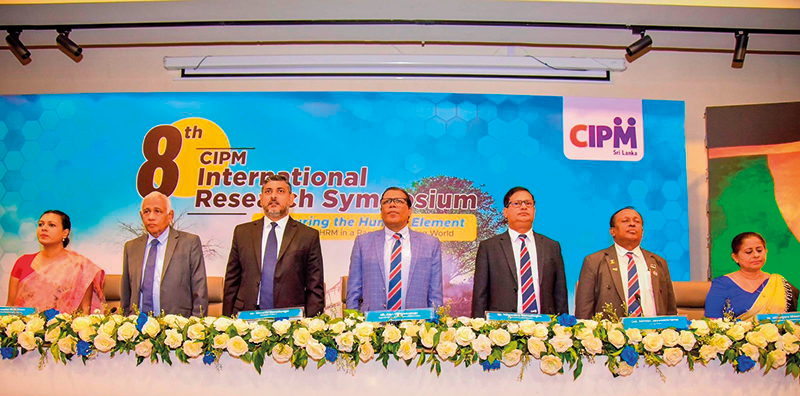
The Chartered Institute of Personnel Management (CIPM) successfully concluded the 8th Annual CIPM Symposium, which took place on 31st May 2024. Themed “Nurturing the Human Element—Redefining HRM in a Rapidly Changing World,” the symposium underscored the pivotal role of human resource management (HRM) in today’s dynamic global landscape. Since its inception in 1959, CIPM has been dedicated to advancing the HR profession through education, professional development, and advocacy, solidifying its position as Sri Lanka’s leading professional body for HRM.
Ken Vijayakumar, the President of the CIPM, graced the occasion as the chief guest. The symposium commenced with the welcome address by the Chairperson, Prof. Arosha Adikaram, followed by the Web Launch of the Symposium Proceedings and Abstract Book by the CIPM President. The event featured distinguished addresses, including a speech by Chief Guest Ken Vijayakumar, President of CIPM, and an address by Guest of Honor Shakthi Ranatunga, Chief Operating Officer of MAS Holdings Pvt. Ltd., Sri Lanka.
The symposium also featured an inspiring keynote address by Prof. Mario Fernando, Professor of Management and Director of the Centre for Cross Cultural Management (CCCM) at the University of Wollongong, Australia.
Vote of Thanks of the inauguration session was delivered by Dr. Dillanjani Weeratunga, Symposium Co-chair.
The symposium served as a comprehensive platform for researchers to present their findings across a wide range of critical topics in HRM. These included Cultural Diversity and Inclusion, Talent Development and Retention, Ethical Leadership and Corporate Social Responsibility, Adapting to Technological Advancements, Mental Health and Well-being at Work, Global Workforce Challenges, Employee Empowerment, and Reskilling and Upskilling.
The plenary session was led by Prof. Wasantha Rajapakse. Certificates were awarded to the best paper presenters during the valedictory session, followed by a vote of thanks delivered by Kamani Perera, Manager of Research and Development.
The annual symposium of CIPM was a truly inclusive event, attracting a diverse audience that spanned undergraduates, graduates, working professionals, research scholars and lecturers. This widespread interest highlights the symposium’s significance in the field of HRM, offering a unique opportunity for everyone to network and learn from scholarly brains.The CIPM International Research Symposium was sponsored by Hambantota International Port, Sri Lanka Institute of Information Technology (SLIIT), E B Creasy & Co. PLC, and Print Xcel Company.



US sports envoys to Lanka to champion youth development

Rahuman questions sudden cancellation of leave of CEB employees


