
News
UNICEF urges to put children’s needs first in tackling current crisis in Lanka


Cautioning that Sri Lanka is facing a crisis that risks taking a significant toll on children, the UNICEF said as the Government of Sri Lanka and partners work to resolve the current crises, the needs of children must come first and their right to education, health, food and protection safeguarded.
The UNICEF Sri Lanka in an op-ed article given below said as the situation evolves, it is crucial that Government efforts include closely monitoring the impact on Sri Lanka’s youngest citizens—the future of the country, but currently the most vulnerable.
In tackling the current crisis in Sri Lanka, put children’s needs first
Article 3(1) of the United Nations Convention on the Rights of the Child (CRC) states that, “ln all actions concerning children the best interest of the child shall be a primary consideration”
This simply means that when adults make decisions, they should think about how their decisions will affect children. All adults should do what is best for children; not what is best for themselves. Adults include parents, caregivers and Government decision-makers.
The CRC adopted on 20th November 1989 is an important agreement by countries who have promised to protect children’s rights. Sri Lanka was among the first countries to sign the CRC in 1990 and ratified it in 1991.
In partnership with UNICEF, the Government of Sri Lanka has over the years made significant strides in improving the health, education and protection of children across the island: from achieving Universal Child Immunization (1989), to establishing the National Child Protection Authority (1998) to providing decades of crucial relief in the wake of devastating conflict and natural disasters.
But now we face a crisis that risks taking a significant toll on children.
Although the exact impact of the current crisis on children is yet to be established, like in any crises, children are often the worst affected when access to adequate food, education, health and protection services are disrupted.
17-year-old Jithmini recently told UNICEF, “my school in Colombo had to close before the end of the term. I was not able to go to school because there was no fuel. I am worried about what will happen next. I just need fuel for my school van.”
12-year-old Senuni added, “my little sister cries in the night because it is too hot. No electricity and no generator. Even I can’t sleep peacefully. We all wake up tired in the morning and feel sick all day.”
Distressing testimonies from children continue to come in as the crisis takes its toll on their schools, health centres and their access to nutritious food. This is even more worrying in a country where poverty has been aggravated by the COVID-19 pandemic. According to the recent Multidimensional Poverty in Sri Lanka, more than four out of every ten (42.2%) children under the age of five lack at least two basic rights.
The combined burden of poverty, COVID-19 and the current crisis disproportionately affects children, especially the most vulnerable girls and boys, with far reaching consequences for the future of the future of Sri Lanka.
As the Government of Sri Lanka and partners work to resolve the current crises, the needs of children must come first and their right to education, health, food and protection safeguarded.
UNICEF is recommending the following to ensure children do not bear the brunt of the crisis:
Firstly, when making decisions on children, they must be listened to and their views taken seriously. The responsibility falls on the Government and all adults to give children the opportunity to meaningfully voice their own concerns and participate in matters that affect their futures. In doing so, children must not be manipulated and all fundamental guarantees for the protection of children must remain applicable, at all times.
Protect the education of children to avoid further learning losses. COVID-19 has already wreaked havoc on the schooling of children globally, including here in Sri Lanka. Sri Lanka was among the countries with the longest school closures experienced in the world. The disruption caused by the pandemic has resulted in widening inequalities and learning losses that threaten to reverse and, in the worst case, completely erase the gains made over the past decades. With the current power-cuts in the country, home-based online learning is even more difficult for children and adolescents. Even before the pandemic, the most marginalized children were being left behind. It is therefore crucial that the Government of Sri Lanka prioritizes the continued operation of schools for in-person learning.
Cushion social protection systems on which the most vulnerable depend, including the voucher for pregnant and lactating mothers. For many such women, the voucher is a lifeline, enabling them to afford some of their basic needs. This, together with continuous maternity services and provision of vitamin supplements for children between 6 -24 months, are crucial to prevent another crisis among these vulnerable groups.
Guarantee access to all other essential services for children, including health and clean water. Reported shortages of essential medicines should concern all of us. Water taps could as well run dry due to lack of electricity or fuel for pumps. Communities often turn to unsafe water sources when clean water is unavailable, making them susceptible to common diseases. Coupled with a shortage of medicines, this can be a recipe for disaster for Sri Lanka’s children.
As the situation evolves, it is crucial that Government efforts include closely monitoring the impact on Sri Lanka’s youngest citizens—the future of the country, but currently the most vulnerable.
Sri Lanka has demonstrated a good example in tackling complex crises before, including most recently the COVID-19 pandemic. UNICEF firmly believes that Sri Lanka can turn things around by investing where it matters most – in safeguarding the rights of its children.
Now is the time.




The U.S. Embassy in Colombo welcomed the U.S. Sports Envoys to Sri Lanka, former National Basketball Association (NBA) and Women’s National Basketball Association (WNBA) players Stephen Howard and Astou Ndiaye, from June 8 through 14.
The Public Diplomacy section of the U.S. Embassy said that it would launch a weeklong basketball program intended to harness the unifying power of sports, made possible through collaboration with Foundation of Goodness and IImpact Hoop Lab.
While in Sri Lanka, Howard and Ndiaye, both retired professional basketball players, will conduct a weeklong program, Hoops for Hope: Bridging Borders through Basketball. The Sports Envoys will lead basketball clinics and exhibition matches and engage in leadership sessions in Colombo and Southern Province for youth aged 14-18 from Northern, Uva, Eastern and Western Provinces, offering skills and leadership training both on and off the court. The U.S. Envoys will also share their expertise with the Sri Lanka Basketball Federation, national coaches, and players, furthering the development of basketball in the country. Beyond the clinics, they will collaborate with Sri Lankan schoolchildren to take part in a community service project in the Colombo area.
“We are so proud to welcome Stephen and Astou as our Sports Envoys to Sri Lanka, to build on the strong people-to-people connections between the United States and Sri Lanka,” said U.S. Ambassador Julie Chung. “The lessons that will be shared by our Sports Envoys – communication, teamwork, resilience, inclusion, and conflict resolution – are essential for leadership development, community building, equality, and peace. The U.S. Sports Envoy program is a testament to our belief that sports can be a powerful tool in promoting peace and unity.”
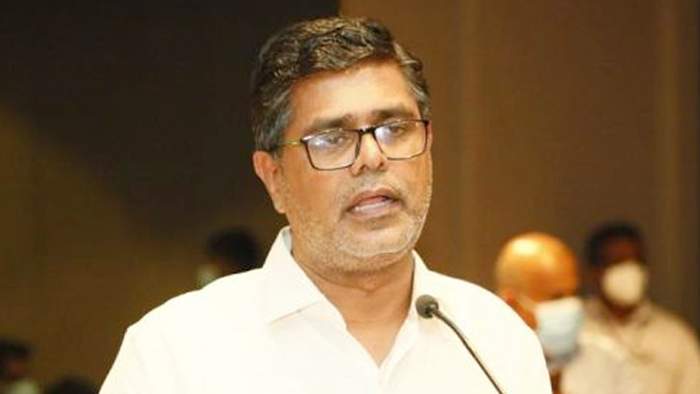
SJB Colombo District MP Mujibur Rahuman in parliament demanded to know from the government the reasons for CEB suspending the leave of all its employees until further notice from Thursday.
MP Rahuman said that the CEB has got an acting General Manager anew and the latter yesterday morning issued a circular suspending leave of all CEB employees with immediate effect until further notice.
“We demand that Minister Kanchana Wijesekera should explain this to the House. This circular was issued while this debate on the new Electricity Amendment Bill was pending. There are many who oppose this Bill. The Minister must tell parliament the reason for the urge to cancel the leave of CEB employees,” the MP said.However, Speaker Mahinda Yapa Abeywardena prevented Minister Wijesekera responding to the query and said that the matter raised by MP Rahuman was not relevant.
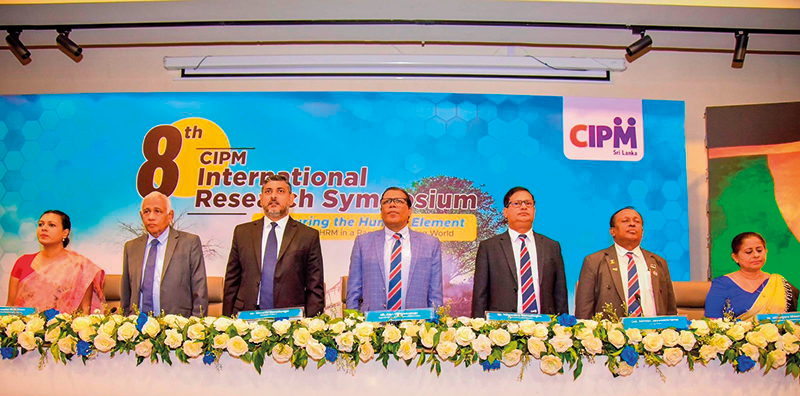
The Chartered Institute of Personnel Management (CIPM) successfully concluded the 8th Annual CIPM Symposium, which took place on 31st May 2024. Themed “Nurturing the Human Element—Redefining HRM in a Rapidly Changing World,” the symposium underscored the pivotal role of human resource management (HRM) in today’s dynamic global landscape. Since its inception in 1959, CIPM has been dedicated to advancing the HR profession through education, professional development, and advocacy, solidifying its position as Sri Lanka’s leading professional body for HRM.
Ken Vijayakumar, the President of the CIPM, graced the occasion as the chief guest. The symposium commenced with the welcome address by the Chairperson, Prof. Arosha Adikaram, followed by the Web Launch of the Symposium Proceedings and Abstract Book by the CIPM President. The event featured distinguished addresses, including a speech by Chief Guest Ken Vijayakumar, President of CIPM, and an address by Guest of Honor Shakthi Ranatunga, Chief Operating Officer of MAS Holdings Pvt. Ltd., Sri Lanka.
The symposium also featured an inspiring keynote address by Prof. Mario Fernando, Professor of Management and Director of the Centre for Cross Cultural Management (CCCM) at the University of Wollongong, Australia.
Vote of Thanks of the inauguration session was delivered by Dr. Dillanjani Weeratunga, Symposium Co-chair.
The symposium served as a comprehensive platform for researchers to present their findings across a wide range of critical topics in HRM. These included Cultural Diversity and Inclusion, Talent Development and Retention, Ethical Leadership and Corporate Social Responsibility, Adapting to Technological Advancements, Mental Health and Well-being at Work, Global Workforce Challenges, Employee Empowerment, and Reskilling and Upskilling.
The plenary session was led by Prof. Wasantha Rajapakse. Certificates were awarded to the best paper presenters during the valedictory session, followed by a vote of thanks delivered by Kamani Perera, Manager of Research and Development.
The annual symposium of CIPM was a truly inclusive event, attracting a diverse audience that spanned undergraduates, graduates, working professionals, research scholars and lecturers. This widespread interest highlights the symposium’s significance in the field of HRM, offering a unique opportunity for everyone to network and learn from scholarly brains.The CIPM International Research Symposium was sponsored by Hambantota International Port, Sri Lanka Institute of Information Technology (SLIIT), E B Creasy & Co. PLC, and Print Xcel Company.



US sports envoys to Lanka to champion youth development

Rahuman questions sudden cancellation of leave of CEB employees


