
News
UN Women’s project boosts community role of females here

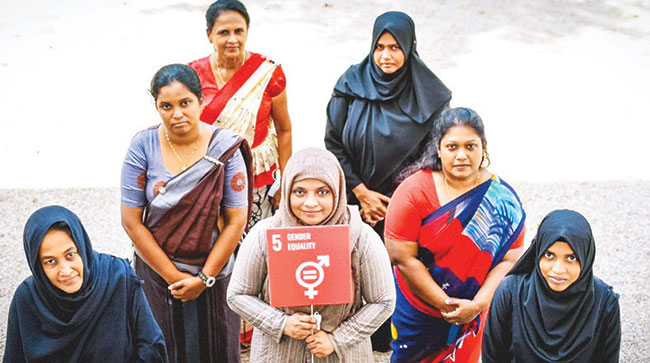
Lankan women carry the main burden of household work, and therefore they have knowledge and influence that could be channeled to improve community waste management, which is not only harming health and the environment but also causing disputes between different communities, says Asia and the Pacific branch of the UN Women.
The government’s Time-Use Survey of 2017 found that women spend 27.6 per cent more time than men doing housework each day. Yet while women are the ones handling all the household waste, they barely have a voice when it comes to deciding how to manage waste in the larger community.
In Sri Lanka, the local government councils have the primary responsibility for collecting and disposing of waste within their areas. But historically, very few women have held seats on these bodies because of institutional and structural barriers, and gender stereotypes such as that politics is unsuitable for women or that women should just stay at home.
Before the last local elections, in 2018, women held only 1.9 per cent of these seats. A new 25 percent quota for female representation boosted that number, though today, women still hold only 23.7 per cent of seats.
To address the problem of women’s representation and environmental management, UN Women, United Nations Office for Project Services, and Chrysalis, a local non-governmental organisation, are jointly implementing a project called Promoting Women’s Engagement in Effective Solid Waste Management. The 2020-2021 project, funded by the United Nations Peacebuilding Fund, is expected to directly benefit about 4,000 people in Puttalam and Mannar districts along the country’s western coast. Most people in these districts work in fisheries and in agriculture.
“Through this project, we are working with women to ensure their voices are heard and that they are fully involved in making decisions that impact them, their households and communities,” said Ramaaya Salgado, Country Focal Point at UN Women Sri Lanka. “Solid waste management was identified as the main community issue that this project addresses, but we are building their capacities so that this whole-of-community approach can be replicated in addressing other conflicts and community issues as well.”
Because improper waste disposal harms health, the environment and inter-communal relations, the project brings communities together to develop sustainable solutions for their shared environment — with women at the forefront of that process.
In April 2020, the project organized a series of local-level dialogues in which about 350 elected officials, public officials, women community leaders, members of civil society groups, religious leaders, young people and others in Puttalam and Mannar discussed common issues and solutions to waste management.
UN Women and Chrysalis then gave the dialogue participants training on collective leadership, peace-building and non-violent conflict resolution.
Earlier this month, UN Women organized two town hall meetings that connected local authorities and women community leaders with experts in solid waste management, including environmental and civil engineers, local government officials and environmental activists. The broader aim was to get more women into leadership positions and adopt best practices on solid waste management.
The women participating in the UN Women project include Kaweeda Manohari, 48, a member of the Chilaw Municipal Council in Puttalam, and Dilushani Fernando, a social worker and community leader in Puttalam.
“Recently, I had to be a mediator to a conflict between two parties,” Manohari said. “Since it was fresh in my mind, I was able to use some of the techniques I learned at our training to help the two parties arrive at a compromise and push for a legal solution to their issue.”
Fernando said: “I learned a lot about waste segregation and the economic benefits of upcycling while reducing waste. Now I always think twice before throwing away something. I use it to create something new instead. This is what I hope to teach young children in my community.”



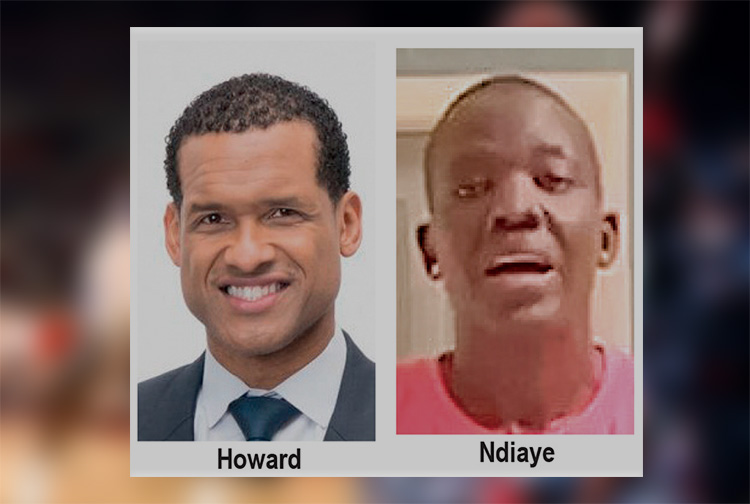
The U.S. Embassy in Colombo welcomed the U.S. Sports Envoys to Sri Lanka, former National Basketball Association (NBA) and Women’s National Basketball Association (WNBA) players Stephen Howard and Astou Ndiaye, from June 8 through 14.
The Public Diplomacy section of the U.S. Embassy said that it would launch a weeklong basketball program intended to harness the unifying power of sports, made possible through collaboration with Foundation of Goodness and IImpact Hoop Lab.
While in Sri Lanka, Howard and Ndiaye, both retired professional basketball players, will conduct a weeklong program, Hoops for Hope: Bridging Borders through Basketball. The Sports Envoys will lead basketball clinics and exhibition matches and engage in leadership sessions in Colombo and Southern Province for youth aged 14-18 from Northern, Uva, Eastern and Western Provinces, offering skills and leadership training both on and off the court. The U.S. Envoys will also share their expertise with the Sri Lanka Basketball Federation, national coaches, and players, furthering the development of basketball in the country. Beyond the clinics, they will collaborate with Sri Lankan schoolchildren to take part in a community service project in the Colombo area.
“We are so proud to welcome Stephen and Astou as our Sports Envoys to Sri Lanka, to build on the strong people-to-people connections between the United States and Sri Lanka,” said U.S. Ambassador Julie Chung. “The lessons that will be shared by our Sports Envoys – communication, teamwork, resilience, inclusion, and conflict resolution – are essential for leadership development, community building, equality, and peace. The U.S. Sports Envoy program is a testament to our belief that sports can be a powerful tool in promoting peace and unity.”
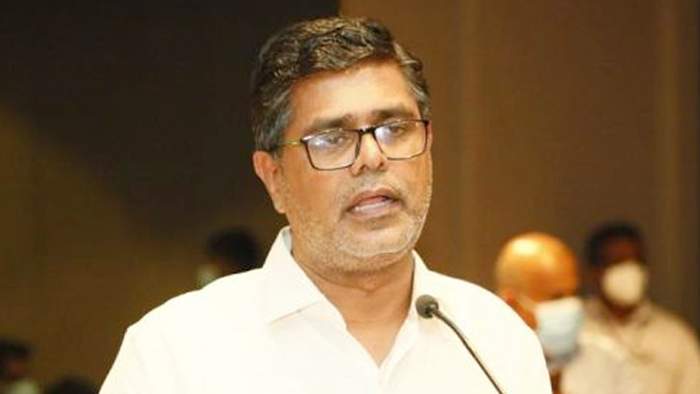
SJB Colombo District MP Mujibur Rahuman in parliament demanded to know from the government the reasons for CEB suspending the leave of all its employees until further notice from Thursday.
MP Rahuman said that the CEB has got an acting General Manager anew and the latter yesterday morning issued a circular suspending leave of all CEB employees with immediate effect until further notice.
“We demand that Minister Kanchana Wijesekera should explain this to the House. This circular was issued while this debate on the new Electricity Amendment Bill was pending. There are many who oppose this Bill. The Minister must tell parliament the reason for the urge to cancel the leave of CEB employees,” the MP said.However, Speaker Mahinda Yapa Abeywardena prevented Minister Wijesekera responding to the query and said that the matter raised by MP Rahuman was not relevant.
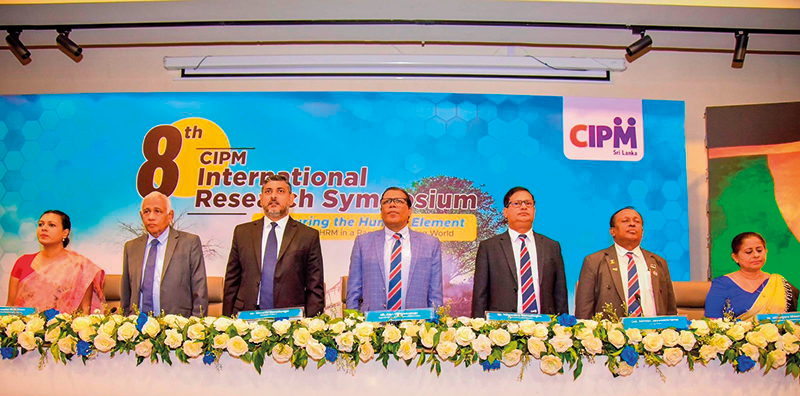
The Chartered Institute of Personnel Management (CIPM) successfully concluded the 8th Annual CIPM Symposium, which took place on 31st May 2024. Themed “Nurturing the Human Element—Redefining HRM in a Rapidly Changing World,” the symposium underscored the pivotal role of human resource management (HRM) in today’s dynamic global landscape. Since its inception in 1959, CIPM has been dedicated to advancing the HR profession through education, professional development, and advocacy, solidifying its position as Sri Lanka’s leading professional body for HRM.
Ken Vijayakumar, the President of the CIPM, graced the occasion as the chief guest. The symposium commenced with the welcome address by the Chairperson, Prof. Arosha Adikaram, followed by the Web Launch of the Symposium Proceedings and Abstract Book by the CIPM President. The event featured distinguished addresses, including a speech by Chief Guest Ken Vijayakumar, President of CIPM, and an address by Guest of Honor Shakthi Ranatunga, Chief Operating Officer of MAS Holdings Pvt. Ltd., Sri Lanka.
The symposium also featured an inspiring keynote address by Prof. Mario Fernando, Professor of Management and Director of the Centre for Cross Cultural Management (CCCM) at the University of Wollongong, Australia.
Vote of Thanks of the inauguration session was delivered by Dr. Dillanjani Weeratunga, Symposium Co-chair.
The symposium served as a comprehensive platform for researchers to present their findings across a wide range of critical topics in HRM. These included Cultural Diversity and Inclusion, Talent Development and Retention, Ethical Leadership and Corporate Social Responsibility, Adapting to Technological Advancements, Mental Health and Well-being at Work, Global Workforce Challenges, Employee Empowerment, and Reskilling and Upskilling.
The plenary session was led by Prof. Wasantha Rajapakse. Certificates were awarded to the best paper presenters during the valedictory session, followed by a vote of thanks delivered by Kamani Perera, Manager of Research and Development.
The annual symposium of CIPM was a truly inclusive event, attracting a diverse audience that spanned undergraduates, graduates, working professionals, research scholars and lecturers. This widespread interest highlights the symposium’s significance in the field of HRM, offering a unique opportunity for everyone to network and learn from scholarly brains.The CIPM International Research Symposium was sponsored by Hambantota International Port, Sri Lanka Institute of Information Technology (SLIIT), E B Creasy & Co. PLC, and Print Xcel Company.



US sports envoys to Lanka to champion youth development

Rahuman questions sudden cancellation of leave of CEB employees


