
Features
Tribute to a patriot – HassinaLeelarathne

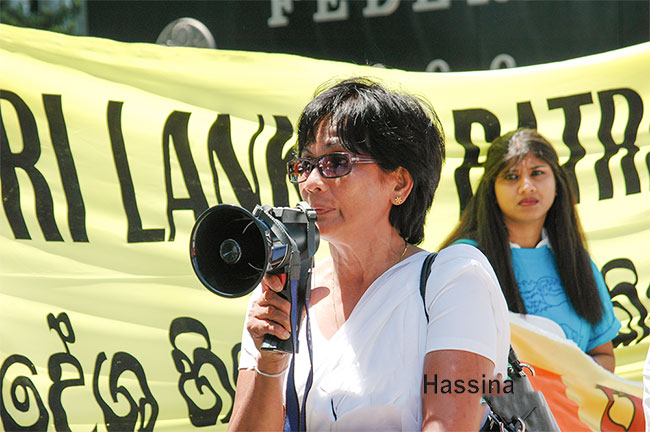
By Podinilame Dissanayake
When Sri Lanka Express (SLE), the only registered newspaper of Lankan origin in Northern America was confronted with a lawsuit, some decades ago for allegedly defaming a Lankan-born wealthy businessman in the US, the request of the accuser to halt legal action was to publish an apology. The defiant co-editor of SLE, Hassina Leelarathne, burst out, “It has to be over my dead body… I will sell or mortgage my house to fight it in court because my act is nothing less than professional journalism.” Fight in court she did skillfully. The case was thrown out for lack of substance.
A subtle attempt to tame and muzzle a community voice was halted.
Hassina’s character was marked by two distinct traits; passion for journalism and uncompromising patriotism towards her country of birth. Her actions, on both counts, were marked by bravery and forthrightness.
Hassina Gnei Sourjah was born on June 22, 1948, to well-known members of the Malay community in Sri Lanka. Her brothers Baba Sourjah and late Faisal were outstanding Rugby players at Royal College, Colombo, and club rugby thereafter; Faisal being a star place-kicker who was instrumental in converting the almost impossible penalties for the Royal College team that ‘stole’ the Bradby Shield in the famous 1971 encounter, beating the much-fancied and undefeated Trinity College, Kandy team by a considerable margin (22 to 3). The famous Sourjahs at Trinity College (son and father of rugby lions who captained Trinity) too were her distant relatives.
She had her early education at the Girls’ convent in Kollupitiya and St. Paul’s Milagiriya, Bambalapitiya, and went on to earn a Bachelor’s degree from Peradeniya with English honours. (she completed her Masters in English from San Jose State University, California in 1975). Hassina hailed from a devout and conventional Islamic family who prayed five times a day and had elderly relatives taking pride in exhibiting the permanent scratch marks on their foreheads through having done so.
This form of conservatism, ingrained in her, gradually began to erode during her undergraduate study days when she was introduced to ‘Kalama Sutra’; the Budhdha’s charter of free inquiry. The inquisitiveness continued until she became a fully pledged ‘Upasika’ and became a vegetarian which she was for the rest of her life. She could recite ‘Gathas’ that an ordinary lay Buddhist would yet with full knowledge of what they meant. She knew the ‘Ratana Sutra’ in Pali, by heart and its deep meaning.
Hassina began her journalism career at The Times of Ceylon group, in the early 1970s, after a brief stint as an English teacher in a school in Maggona, off Beruwela. She had developed an interest in journalism during her early teens, and this was when female journalists were very few and rare and almost nonexistent from the Malay community. She made her mark in the male-dominated profession of journalism that was characterised by neck-breaking competition laced with aqua vitae. Hassina was successfully making her way up as a noted writer/reporter when she was introduced to Dolamulla Gamage Deeptha Leelarathne, a well-known senior journalist at the popular Sinhala newspaper Lankadeepa; a product of Dehiwela Madya Maha Vidyalaya. Common work ethics, creativeness and the perseverance of the two towards their profession bound them for life. They were married soon amidst many raised eyebrows of colleagues and associates for such were the days when English journalists rode high, assuming super-status over the non-English.
Their foreign sojourn began when Deeptha visited the United States on a fellowship of journalism, offered by Stanford University, in 1971, and another in 1975 when Hassina joined him. The fellowship invitations primarily originated from Deepatha’s foray into the literary world of science and space explorations, via the Apollo project: his extensive writing, covering the moon landing and other series of articles on scientific aspects, in Sinhala.
Their fervour for journalism continued in the US when they began the Sri Lanka Express newspaper and the radio programme Tharanga in the late ‘70s from the City of Palo Alto in Northern California. The former was an English by-weekly publication and the latter a monthly bi-lingual (Sinhala and English) two-hour programme. This was the period of the rotary phone and the cyclostyle machine, decades before the influx of electronic media. All content (news and views) had to be typed, cut and pasted manually on special boards, transported to the print shop, printed, stamped and mailed to readers; a laborious task for the couple who were fully employed elsewhere. SLE readers were supplied with news from the world media and through other sources privy to the editors when the world knew very little of Sri Lanka. It was heartening for the Sri Lankan listeners to welcome Amaradeva, Nanda Malini, Jothipala, Milton Perera and other popular musicians to their households in California, making their way through Tharanga. Wesak, Aluth Aurudu neketh, Poya ceremonies, Dalada perahera were brought home to an eagerly awaiting diaspora whose travels to their homeland were not as frequent as at present.
The couples’ skill sets were complementary to each other. Apart from the strengths they derived from diverse societal backgrounds, there existed among them the capability and flexibility to switch roles between the conceptual and technical roles, as the situation demanded.
The Leelarathnes moved to Southern California, in the mid-’80s, and continued with SLE and a shortened version of Tharanga; radio programmes being curtailed due to State budget restrictions. Both had their employment engagements and now a happy addition to the family; newborn son Sahan.
The post-’80s were a challenging period. The devastating separatist war in Sri Lanka, in particular, had many facets to report and write on. The assassinations and the brutal annihilations, amidst political swings back at home, were covered in SLE. Newsworthy local community developments in Los Angeles were given equal importance. The publication carried on for more than 25 years; Hassina carried on the task single-handedly after the passing away of Deeptha in 2006.
SLE openly campaigned against separatism in Sri Lanka, which included the disclosure of suspected terrorist moles hiding behind the veil of benevolent activities. She bared the hidden agendas of the dubious fundraising activities of ‘Operation USA’ which was allegedly in cahoots with the TRO. The agitation campaign in front of the ‘Operation USA’ office while a fundraiser was on, by the ‘Sri Lankan Patriots’ (SLP) Organisation is memorable.
Hassina was the live wire behind the SLP’s bold and creative plans and strategies. The organisation’s motto ‘Simply patriotic’ was her suggestion. The last act of the organisation which was the construction of a 3,000 square foot library and community hall for the first ‘Ranaviru Gama’, in Pangolla off Kurunegala, was her bright idea, which saw fruition in record time. SLP members had visited the location to donate computers to the children of Ranaviru Gama, when Hassina abruptly promised them a community centre when she witnessed the lack of facilities to house the computers.
Hassina strategised the peaceful invasion of a Congressman’s town hall meeting with more than a hundred SLP activists, questioning him on his alleged involvement with separatist activities in Sri Lanka. The Congressman’s responses were childish at best; he left the meeting through the backdoor, leaving behind his bewildered constituents. The Congressman has been silent on this issue for a long period thereafter until he resurfaced with the new regime of President Biden with his support for resolution 413, which again failed to be enacted.
When the separatists organised a walk from Canada to appear on the famous Oprah Winfrey show in the US, it was Hassina’s strategy that ended the publicity stunt. When the Sri Lankan born popular rapper MIA took the opportunity in the PBS talk show with Tavis Smiley to sanitise activities of Sri Lankan terrorism as those emanating from freedom fighting, Hassina lost no time in taking active measures to counter same and to instigate a response via the same show; Palitha Kohona, the permanent representative of Sri Lanka to the United Nations responding to false propaganda.
She challenged some mushroom programme activities under the auspices of the United Nation, that were aimed at destabilising developing nations; activities of WIDER and UNHCR.
There were numerous other disclosures that Hassina made public and acted against which could only be detailed through research on the same. Equally important is the stand she took over the growth and development of the expatriate community she lived in, the greater Los Angeles area.
She was critical of personal aggrandizements at the expense of public and religious affairs, and other developments detrimental to the society at large.
She along with others travelled to Washington DC to campaign for a Sri Lankan Consul General’s office for Los Angeles, during a visit there, by the Minister of Foreign Affairs of Sri Lanka. When minister Lakshman Kadiragamar queried whether the project would be financially feasible she replied boldly … “Yes, through trade.” Yet in later years she was highly critical of the office when it became an aid mechanism for political favouritism and trade was virtually extinct.
The reporting she did uncovering the acts of an honorary Consul General of Sri Lanka in LA (before the Consular office was instituted) to evade a traffic ticket and the emergence of a Sri Lankan gang are two cases among many worth mentioning here.
The story of the emergence of the ‘Sri Lanka gang’ is the pathetic tale of a situation that arose when responsible institutions in the community failed to nip unhealthy developments in the bud. The gang was gaining momentum influencing the youth. Hassina’s requests to religious organisations to intervene fell on deaf ears. She took it upon herself to disclose the story in SLE with some catchy photographs and a write-up on probable adverse effects. A few weeks later, the gang leader, with his friends, was seen at a Sinhala New Year festival in a public park. When he introduced himself for a handshake with Hassina, she spurted out, “You don’t deserve a handshake from me… I do not extend my hand to gangsters.” She was not ruffled by the mini scuffle that ensued. Later when she left the event before its conclusion, she refused a friendly escort to guard against the gang making merry at the gate. “I am responsible for my actions and no one else should”; there were no murmurs or catcalls thrown at her by the seemingly inebriated gang when she walked through them.
While being a practising Buddhist she also took up causes that others would dare not comment upon. Her open stand against the subtle incursion of Scientology into the Sri Lankan community through Buddhist institutions and cultural events is noteworthy. A ‘wealthy’ attempt to force-feed Scientology material to a captive Sri Lankan audience at the nation’s independence celebration was brought to task and subjected to open criticism by her when there was none to stand against it, let alone speak about it.
At the time of her death, Hassina was writing a book on the early Sri Lankan settlers in the US, on which she did extensive research. She was fascinated by the story of the American philanthropist Marie De S Canavarro who arrived in Sri Lanka to engage in Buddhist missionary work along with the revered Anagarika Dharmapala. Marie was also instrumental in starting the Sangamitta Balika Vidyalaya in Colombo. Hassina painstakingly discovered the tombstone of Marie in the Forest Lawn Memorial Park in Glendale, California. Hassina’s plans to educate the diaspora on the contribution made by Marie and to celebrate her life on Women’s Day in March 2020 did not materialise due to the Coronavirus pandemic. She gave publicity to worthy Buddhist news that came up in the community. The misuse of the Buddhist flag for commercial purposes and thieves entering Buddhist temples dressed in hijab were some of her late coverages, a couple of months before she passed away.
She listened to Dhamma talks and observed ‘Ata-sil’ and practised ‘Samadhi’ at home while visiting temple after temple seeking the essence of Dhamma.
When Sri Lanka was shaken by the Easter Sunday massacre, a couple of years ago, it was Hassina who instigated and encouraged the Sri Lankan Catholic community, in Los Angeles, to conduct a memorial and a dialogue with the multi-religious community living in LA. She was personally instrumental in coordinating the same with the Archdioceses of Torrance. It was a great success, giving an opportunity to all religious groups to express their sorrow and thoughts; our Muslim brethren in particular. She advised the Sri Lankan Catholics to begin a fund in aid of the child victims from the terror blast, which was done instantaneously under the name ‘Sarana’, and continue to date with monthly remittances to Sri Lanka.
She was an animal lover and her residence had an open gate for stray dogs. Some dogs refused to leave her after the owner arrived to fetch them. There were special categories of friends waiting for her when she visited Sri Lanka; Stray dogs, crows and three-wheel drivers. The first two were for the feeding they received and the third for the benevolent tipping she did. She contributed funds to save cattle from slaughter.
It was the love of labour for journalism that kept her working long hours on her pet projects. There were no financial rewards; brickbats and gibes were many from those who wished the caravan to continue its aimless merry ride driven by the powerful and abled. Her immense contribution to the community went largely unrecognised in a world of self-centred institutions and beings in hot pursuit of fame, glory and material enrichment.
She kept going heartily till the very last, shunning her rapidly deteriorating health condition. The Financial Analyst of the Department of Veteran Affairs of California breathed her last in the morning of 17 October 17 2021.
A watchperson who kept vigil on her community’s wholesome developments is no more. The open campaigner for fair play, who refused to bow down to the whims and fancies of the mighty, is now silent. May sanity prevail in our community despite her silence!
May she attain the supreme bliss of nirvana!



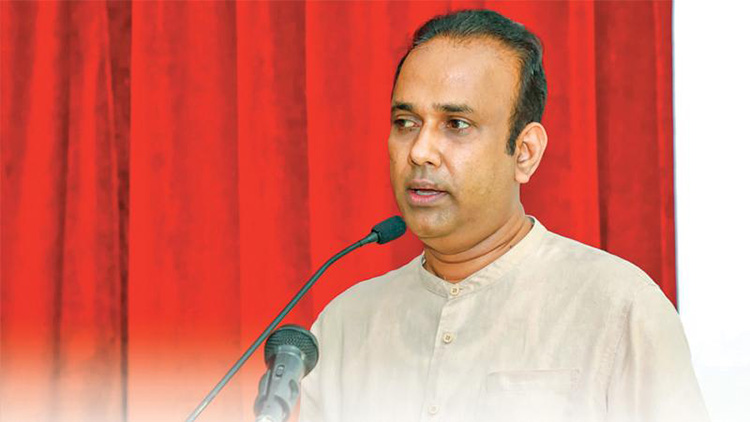
by Dr Gotabhya Ranasinghe
Senior Consultant Cardiologist
National Hospital Sri Lanka
When we sought a meeting with Hon Dr. Ramesh Pathirana, Minister of Health, he graciously cleared his busy schedule to accommodate us. Renowned for his attentive listening and deep understanding, Minister Pathirana is dedicated to advancing the health sector. His openness and transparency exemplify the qualities of an exemplary politician and minister.
Dr. Palitha Mahipala, the current Health Secretary, demonstrates both commendable enthusiasm and unwavering support. This combination of attributes makes him a highly compatible colleague for the esteemed Minister of Health.
Our discussion centered on a project that has been in the works for the past 30 years, one that no other minister had managed to advance.
Minister Pathirana, however, recognized the project’s significance and its potential to revolutionize care for heart patients.
The project involves the construction of a state-of-the-art facility at the premises of the National Hospital Colombo. The project’s location within the premises of the National Hospital underscores its importance and relevance to the healthcare infrastructure of the nation.
This facility will include a cardiology building and a tertiary care center, equipped with the latest technology to handle and treat all types of heart-related conditions and surgeries.
Securing funding was a major milestone for this initiative. Minister Pathirana successfully obtained approval for a $40 billion loan from the Asian Development Bank. With the funding in place, the foundation stone is scheduled to be laid in September this year, and construction will begin in January 2025.
This project guarantees a consistent and uninterrupted supply of stents and related medications for heart patients. As a result, patients will have timely access to essential medical supplies during their treatment and recovery. By securing these critical resources, the project aims to enhance patient outcomes, minimize treatment delays, and maintain the highest standards of cardiac care.
Upon its fruition, this monumental building will serve as a beacon of hope and healing, symbolizing the unwavering dedication to improving patient outcomes and fostering a healthier society.We anticipate a future marked by significant progress and positive outcomes in Sri Lanka’s cardiovascular treatment landscape within the foreseeable timeframe.

by Fr. Emmanuel Fernando, OMI
Jesuit Fr. Aloysius Pieris (affectionately called Fr. Aloy) celebrated his 90th birthday on April 9, 2024 and I, as the editor of our Oblate Journal, THE MISSIONARY OBLATE had gone to press by that time. Immediately I decided to publish an article, appreciating the untiring selfless services he continues to offer for inter-Faith dialogue, the renewal of the Catholic Church, his concern for the poor and the suffering Sri Lankan masses and to me, the present writer.
It was in 1988, when I was appointed Director of the Oblate Scholastics at Ampitiya by the then Oblate Provincial Fr. Anselm Silva, that I came to know Fr. Aloy more closely. Knowing well his expertise in matters spiritual, theological, Indological and pastoral, and with the collaborative spirit of my companion-formators, our Oblate Scholastics were sent to Tulana, the Research and Encounter Centre, Kelaniya, of which he is the Founder-Director, for ‘exposure-programmes’ on matters spiritual, biblical, theological and pastoral. Some of these dimensions according to my view and that of my companion-formators, were not available at the National Seminary, Ampitiya.
Ever since that time, our Oblate formators/ accompaniers at the Oblate Scholasticate, Ampitiya , have continued to send our Oblate Scholastics to Tulana Centre for deepening their insights and convictions regarding matters needed to serve the people in today’s context. Fr. Aloy also had tried very enthusiastically with the Oblate team headed by Frs. Oswald Firth and Clement Waidyasekara to begin a Theologate, directed by the Religious Congregations in Sri Lanka, for the contextual formation/ accompaniment of their members. It should very well be a desired goal of the Leaders / Provincials of the Religious Congregations.
Besides being a formator/accompanier at the Oblate Scholasticate, I was entrusted also with the task of editing and publishing our Oblate journal, ‘The Missionary Oblate’. To maintain the quality of the journal I continue to depend on Fr. Aloy for his thought-provoking and stimulating articles on Biblical Spirituality, Biblical Theology and Ecclesiology. I am very grateful to him for his generous assistance. Of late, his writings on renewal of the Church, initiated by Pope St. John XX111 and continued by Pope Francis through the Synodal path, published in our Oblate journal, enable our readers to focus their attention also on the needed renewal in the Catholic Church in Sri Lanka. Fr. Aloy appreciated very much the Synodal path adopted by the Jesuit Pope Francis for the renewal of the Church, rooted very much on prayerful discernment. In my Religious and presbyteral life, Fr.Aloy continues to be my spiritual animator / guide and ongoing formator / acccompanier.
Fr. Aloysius Pieris, BA Hons (Lond), LPh (SHC, India), STL (PFT, Naples), PhD (SLU/VC), ThD (Tilburg), D.Ltt (KU), has been one of the eminent Asian theologians well recognized internationally and one who has lectured and held visiting chairs in many universities both in the West and in the East. Many members of Religious Congregations from Asian countries have benefited from his lectures and guidance in the East Asian Pastoral Institute (EAPI) in Manila, Philippines. He had been a Theologian consulted by the Federation of Asian Bishops’ Conferences for many years. During his professorship at the Gregorian University in Rome, he was called to be a member of a special group of advisers on other religions consulted by Pope Paul VI.
Fr. Aloy is the author of more than 30 books and well over 500 Research Papers. Some of his books and articles have been translated and published in several countries. Among those books, one can find the following: 1) The Genesis of an Asian Theology of Liberation (An Autobiographical Excursus on the Art of Theologising in Asia, 2) An Asian Theology of Liberation, 3) Providential Timeliness of Vatican 11 (a long-overdue halt to a scandalous millennium, 4) Give Vatican 11 a chance, 5) Leadership in the Church, 6) Relishing our faith in working for justice (Themes for study and discussion), 7) A Message meant mainly, not exclusively for Jesuits (Background information necessary for helping Francis renew the Church), 8) Lent in Lanka (Reflections and Resolutions, 9) Love meets wisdom (A Christian Experience of Buddhism, 10) Fire and Water 11) God’s Reign for God’s poor, 12) Our Unhiddden Agenda (How we Jesuits work, pray and form our men). He is also the Editor of two journals, Vagdevi, Journal of Religious Reflection and Dialogue, New Series.
Fr. Aloy has a BA in Pali and Sanskrit from the University of London and a Ph.D in Buddhist Philosophy from the University of Sri Lankan, Vidyodaya Campus. On Nov. 23, 2019, he was awarded the prestigious honorary Doctorate of Literature (D.Litt) by the Chancellor of the University of Kelaniya, the Most Venerable Welamitiyawe Dharmakirthi Sri Kusala Dhamma Thera.
Fr. Aloy continues to be a promoter of Gospel values and virtues. Justice as a constitutive dimension of love and social concern for the downtrodden masses are very much noted in his life and work. He had very much appreciated the commitment of the late Fr. Joseph (Joe) Fernando, the National Director of the Social and Economic Centre (SEDEC) for the poor.
In Sri Lanka, a few religious Congregations – the Good Shepherd Sisters, the Christian Brothers, the Marist Brothers and the Oblates – have invited him to animate their members especially during their Provincial Congresses, Chapters and International Conferences. The mainline Christian Churches also have sought his advice and followed his seminars. I, for one, regret very much, that the Sri Lankan authorities of the Catholic Church –today’s Hierarchy—- have not sought Fr.
Aloy’s expertise for the renewal of the Catholic Church in Sri Lanka and thus have not benefited from the immense store of wisdom and insight that he can offer to our local Church while the Sri Lankan bishops who governed the Catholic church in the immediate aftermath of the Second Vatican Council (Edmund Fernando OMI, Anthony de Saram, Leo Nanayakkara OSB, Frank Marcus Fernando, Paul Perera,) visited him and consulted him on many matters. Among the Tamil Bishops, Bishop Rayappu Joseph was keeping close contact with him and Bishop J. Deogupillai hosted him and his team visiting him after the horrible Black July massacre of Tamils.
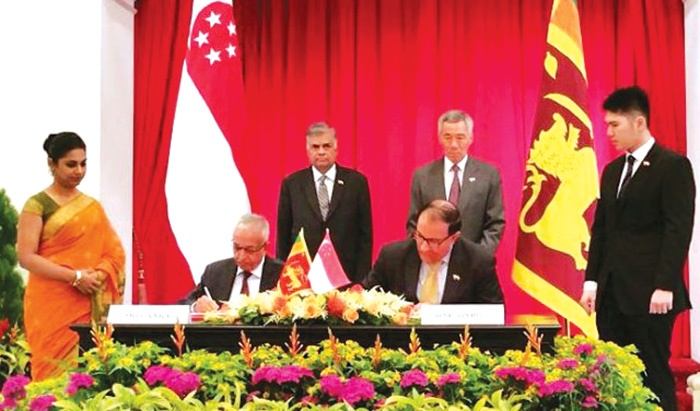
Sri Lanka-Singapore Free Trade Agreement
By Gomi Senadhira
senadhiragomi@gmail.com
“You might tell fairy tales, but the progress of a country cannot be achieved through such narratives. A country cannot be developed by making false promises. The country moved backward because of the electoral promises made by political parties throughout time. We have witnessed that the ultimate result of this is the country becoming bankrupt. Unfortunately, many segments of the population have not come to realize this yet.” – President Ranil Wickremesinghe, 2024 Budget speech
Any Sri Lankan would agree with the above words of President Wickremesinghe on the false promises our politicians and officials make and the fairy tales they narrate which bankrupted this country. So, to understand this, let’s look at one such fairy tale with lots of false promises; Ranil Wickremesinghe’s greatest achievement in the area of international trade and investment promotion during the Yahapalana period, Sri Lanka-Singapore Free Trade Agreement (SLSFTA).
It is appropriate and timely to do it now as Finance Minister Wickremesinghe has just presented to parliament a bill on the National Policy on Economic Transformation which includes the establishment of an Office for International Trade and the Sri Lanka Institute of Economics and International Trade.
Was SLSFTA a “Cleverly negotiated Free Trade Agreement” as stated by the (former) Minister of Development Strategies and International Trade Malik Samarawickrama during the Parliamentary Debate on the SLSFTA in July 2018, or a colossal blunder covered up with lies, false promises, and fairy tales? After SLSFTA was signed there were a number of fairy tales published on this agreement by the Ministry of Development Strategies and International, Institute of Policy Studies, and others.
However, for this article, I would like to limit my comments to the speech by Minister Samarawickrama during the Parliamentary Debate, and the two most important areas in the agreement which were covered up with lies, fairy tales, and false promises, namely: revenue loss for Sri Lanka and Investment from Singapore. On the other important area, “Waste products dumping” I do not want to comment here as I have written extensively on the issue.
1. The revenue loss
During the Parliamentary Debate in July 2018, Minister Samarawickrama stated “…. let me reiterate that this FTA with Singapore has been very cleverly negotiated by us…. The liberalisation programme under this FTA has been carefully designed to have the least impact on domestic industry and revenue collection. We have included all revenue sensitive items in the negative list of items which will not be subject to removal of tariff. Therefore, 97.8% revenue from Customs duty is protected. Our tariff liberalisation will take place over a period of 12-15 years! In fact, the revenue earned through tariffs on goods imported from Singapore last year was Rs. 35 billion.
The revenue loss for over the next 15 years due to the FTA is only Rs. 733 million– which when annualised, on average, is just Rs. 51 million. That is just 0.14% per year! So anyone who claims the Singapore FTA causes revenue loss to the Government cannot do basic arithmetic! Mr. Speaker, in conclusion, I call on my fellow members of this House – don’t mislead the public with baseless criticism that is not grounded in facts. Don’t look at petty politics and use these issues for your own political survival.”
I was surprised to read the minister’s speech because an article published in January 2018 in “The Straits Times“, based on information released by the Singaporean Negotiators stated, “…. With the FTA, tariff savings for Singapore exports are estimated to hit $10 million annually“.
As the annual tariff savings (that is the revenue loss for Sri Lanka) calculated by the Singaporean Negotiators, Singaporean $ 10 million (Sri Lankan rupees 1,200 million in 2018) was way above the rupees’ 733 million revenue loss for 15 years estimated by the Sri Lankan negotiators, it was clear to any observer that one of the parties to the agreement had not done the basic arithmetic!
Six years later, according to a report published by “The Morning” newspaper, speaking at the Committee on Public Finance (COPF) on 7th May 2024, Mr Samarawickrama’s chief trade negotiator K.J. Weerasinghehad had admitted “…. that forecasted revenue loss for the Government of Sri Lanka through the Singapore FTA is Rs. 450 million in 2023 and Rs. 1.3 billion in 2024.”
If these numbers are correct, as tariff liberalisation under the SLSFTA has just started, we will pass Rs 2 billion very soon. Then, the question is how Sri Lanka’s trade negotiators made such a colossal blunder. Didn’t they do their basic arithmetic? If they didn’t know how to do basic arithmetic they should have at least done their basic readings. For example, the headline of the article published in The Straits Times in January 2018 was “Singapore, Sri Lanka sign FTA, annual savings of $10m expected”.
Anyway, as Sri Lanka’s chief negotiator reiterated at the COPF meeting that “…. since 99% of the tariffs in Singapore have zero rates of duty, Sri Lanka has agreed on 80% tariff liberalisation over a period of 15 years while expecting Singapore investments to address the imbalance in trade,” let’s turn towards investment.
Investment from Singapore
In July 2018, speaking during the Parliamentary Debate on the FTA this is what Minister Malik Samarawickrama stated on investment from Singapore, “Already, thanks to this FTA, in just the past two-and-a-half months since the agreement came into effect we have received a proposal from Singapore for investment amounting to $ 14.8 billion in an oil refinery for export of petroleum products. In addition, we have proposals for a steel manufacturing plant for exports ($ 1 billion investment), flour milling plant ($ 50 million), sugar refinery ($ 200 million). This adds up to more than $ 16.05 billion in the pipeline on these projects alone.
And all of these projects will create thousands of more jobs for our people. In principle approval has already been granted by the BOI and the investors are awaiting the release of land the environmental approvals to commence the project.
I request the Opposition and those with vested interests to change their narrow-minded thinking and join us to develop our country. We must always look at what is best for the whole community, not just the few who may oppose. We owe it to our people to courageously take decisions that will change their lives for the better.”
According to the media report I quoted earlier, speaking at the Committee on Public Finance (COPF) Chief Negotiator Weerasinghe has admitted that Sri Lanka was not happy with overall Singapore investments that have come in the past few years in return for the trade liberalisation under the Singapore-Sri Lanka Free Trade Agreement. He has added that between 2021 and 2023 the total investment from Singapore had been around $162 million!
What happened to those projects worth $16 billion negotiated, thanks to the SLSFTA, in just the two-and-a-half months after the agreement came into effect and approved by the BOI? I do not know about the steel manufacturing plant for exports ($ 1 billion investment), flour milling plant ($ 50 million) and sugar refinery ($ 200 million).
However, story of the multibillion-dollar investment in the Petroleum Refinery unfolded in a manner that would qualify it as the best fairy tale with false promises presented by our politicians and the officials, prior to 2019 elections.
Though many Sri Lankans got to know, through the media which repeatedly highlighted a plethora of issues surrounding the project and the questionable credentials of the Singaporean investor, the construction work on the Mirrijiwela Oil Refinery along with the cement factory began on the24th of March 2019 with a bang and Minister Ranil Wickremesinghe and his ministers along with the foreign and local dignitaries laid the foundation stones.
That was few months before the 2019 Presidential elections. Inaugurating the construction work Prime Minister Ranil Wickremesinghe said the projects will create thousands of job opportunities in the area and surrounding districts.
The oil refinery, which was to be built over 200 acres of land, with the capacity to refine 200,000 barrels of crude oil per day, was to generate US$7 billion of exports and create 1,500 direct and 3,000 indirect jobs. The construction of the refinery was to be completed in 44 months. Four years later, in August 2023 the Cabinet of Ministers approved the proposal presented by President Ranil Wickremesinghe to cancel the agreement with the investors of the refinery as the project has not been implemented! Can they explain to the country how much money was wasted to produce that fairy tale?
It is obvious that the President, ministers, and officials had made huge blunders and had deliberately misled the public and the parliament on the revenue loss and potential investment from SLSFTA with fairy tales and false promises.
As the president himself said, a country cannot be developed by making false promises or with fairy tales and these false promises and fairy tales had bankrupted the country. “Unfortunately, many segments of the population have not come to realize this yet”.
(The writer, a specialist and an activist on trade and development issues . )



US sports envoys to Lanka to champion youth development

Rahuman questions sudden cancellation of leave of CEB employees


