
News
Toxic coconut oil scare trigger public wave of fear over aflatoxins in foodstuffs


People now wary of buying certain products
By Suresh Perera
In the backdrop of a top official of Sri Lanka’s key standards body coming under heavy flak over her controversial claim that several other consumer commodities also contain toxic substances, public apprehension has shifted to many other products in the market following a wave of fear triggered over cancer-causing free radicals in foodstuffs, industry players said.
The Trade Ministry has already initiated a disciplinary inquiry into the assertion by Dr. Siddhika Senaratne, the Director-General of the Sri Lanka Standards Institution (SLSI), that aflatoxins are also found in certain other food items sold to the public.
Aflatoxins are a family of toxins produced by certain fungi found on agricultural crops.
As the SLSI scientist’s remarks during a television talk show ignited an uproar following the seizure of imported stocks of contaminated coconut oil, industry officials said that customers are now wary of purchasing certain food products as the social media, rightly or wrongly, painted a frightening picture, they said.
A committee will be appointed to examine Dr. Senaratne’s statement to ascertain the validity or otherwise of her claim of the presence of aflatoxins in some food products in the marketplace, authoritative sources said.
Though the Director-General didn’t identify any of the “toxic products” she claimed were being sold to consumers, her statement unleashed a cycle of fear and uncertainty as consumers, influenced largely by social media reports and hearsay, viewed many brands with suspicion, the sources noted.
However, there has been no credible scientific evidence so far to prove that products identified on social media contain carcinogenic properties, they said.
Dr. Senaratne’s contention was that identifying products with toxic substances could lead to the collapse of some local industries. The Consumer Affairs Authority (CAA) has been informed to take up the issue with the relevant manufacturers for remedial action, she said.
It is no secret that many mills use copra with fungus to extract coconut oil. The perishable copra is dried outdoors but there is no proper cleaning of the fungi, which are common under tropical and sub-tropical conditions, before the oil is extracted, industry officials said.
Has it been established whether the shiny wax coating used on apples as an oxygen barrier to preserve freshness, particularly in consignments imported from China, belong to the safe food grade material?, they asked.
In the case of apples imported to Sri Lanka from the USA, the whole process of orchard to point of landing take many weeks. It is true that fruits are stored in cold rooms to preserve quality and slow the aging process by regulating oxygen and carbon dioxide levels. However, the question arises whether there are accredited processes to monitor the agro chemical and other toxic levels in imported apples and other varieties of fruits before permitting the stocks to be released to the local market, they noted.
Hoppers are a staple of Sri Lankan cuisine, but it’s common knowledge that many wayside eateries introduce plaster of paris (a quick-setting gypsum plaster consisting of a fine white powder known as calcium sulfate hemihydrate) to the batter to keep them fresh and crispy, the officials asserted.
“This is because customers insist on freshly baked hoppers and as a result, those that have gone flat cannot be sold”, they said.
Cleanliness of eateries is being monitored to some extent, but are there any quality checks for toxicity on the food served to customers?, they queried.
After the contaminated coconut oil scandal surfaced, people are reluctant to even buy traditional oil-based sweetmeats from the marketplace, they further said.
Unlike earlier years, there is a slump in sweetmeat sales, a supermarket official said. “Customers are wary about toxic coconut oil in the market”.








The U.S. Embassy in Colombo welcomed the U.S. Sports Envoys to Sri Lanka, former National Basketball Association (NBA) and Women’s National Basketball Association (WNBA) players Stephen Howard and Astou Ndiaye, from June 8 through 14.
The Public Diplomacy section of the U.S. Embassy said that it would launch a weeklong basketball program intended to harness the unifying power of sports, made possible through collaboration with Foundation of Goodness and IImpact Hoop Lab.
While in Sri Lanka, Howard and Ndiaye, both retired professional basketball players, will conduct a weeklong program, Hoops for Hope: Bridging Borders through Basketball. The Sports Envoys will lead basketball clinics and exhibition matches and engage in leadership sessions in Colombo and Southern Province for youth aged 14-18 from Northern, Uva, Eastern and Western Provinces, offering skills and leadership training both on and off the court. The U.S. Envoys will also share their expertise with the Sri Lanka Basketball Federation, national coaches, and players, furthering the development of basketball in the country. Beyond the clinics, they will collaborate with Sri Lankan schoolchildren to take part in a community service project in the Colombo area.
“We are so proud to welcome Stephen and Astou as our Sports Envoys to Sri Lanka, to build on the strong people-to-people connections between the United States and Sri Lanka,” said U.S. Ambassador Julie Chung. “The lessons that will be shared by our Sports Envoys – communication, teamwork, resilience, inclusion, and conflict resolution – are essential for leadership development, community building, equality, and peace. The U.S. Sports Envoy program is a testament to our belief that sports can be a powerful tool in promoting peace and unity.”
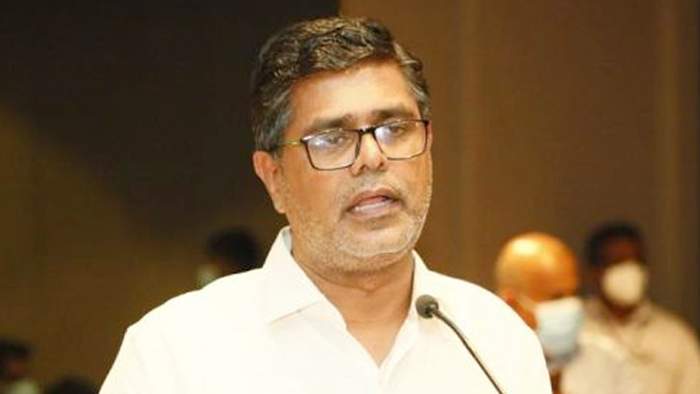
SJB Colombo District MP Mujibur Rahuman in parliament demanded to know from the government the reasons for CEB suspending the leave of all its employees until further notice from Thursday.
MP Rahuman said that the CEB has got an acting General Manager anew and the latter yesterday morning issued a circular suspending leave of all CEB employees with immediate effect until further notice.
“We demand that Minister Kanchana Wijesekera should explain this to the House. This circular was issued while this debate on the new Electricity Amendment Bill was pending. There are many who oppose this Bill. The Minister must tell parliament the reason for the urge to cancel the leave of CEB employees,” the MP said.However, Speaker Mahinda Yapa Abeywardena prevented Minister Wijesekera responding to the query and said that the matter raised by MP Rahuman was not relevant.
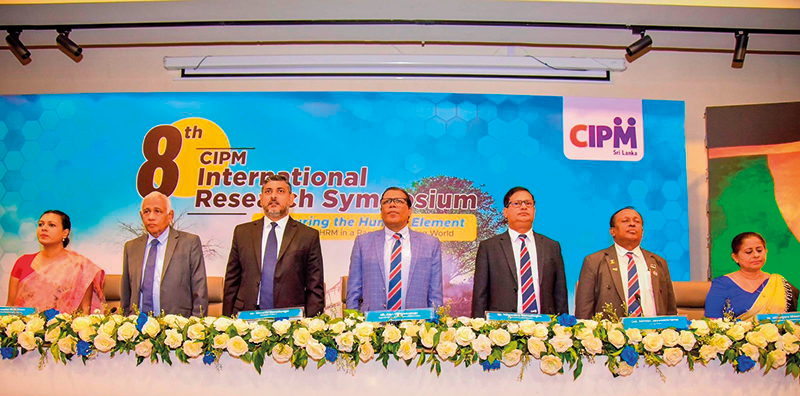
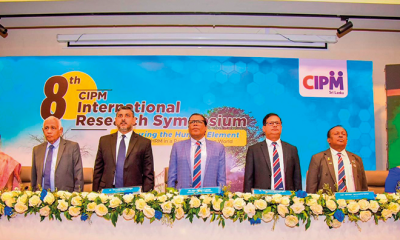
The Chartered Institute of Personnel Management (CIPM) successfully concluded the 8th Annual CIPM Symposium, which took place on 31st May 2024. Themed “Nurturing the Human Element—Redefining HRM in a Rapidly Changing World,” the symposium underscored the pivotal role of human resource management (HRM) in today’s dynamic global landscape. Since its inception in 1959, CIPM has been dedicated to advancing the HR profession through education, professional development, and advocacy, solidifying its position as Sri Lanka’s leading professional body for HRM.
Ken Vijayakumar, the President of the CIPM, graced the occasion as the chief guest. The symposium commenced with the welcome address by the Chairperson, Prof. Arosha Adikaram, followed by the Web Launch of the Symposium Proceedings and Abstract Book by the CIPM President. The event featured distinguished addresses, including a speech by Chief Guest Ken Vijayakumar, President of CIPM, and an address by Guest of Honor Shakthi Ranatunga, Chief Operating Officer of MAS Holdings Pvt. Ltd., Sri Lanka.
The symposium also featured an inspiring keynote address by Prof. Mario Fernando, Professor of Management and Director of the Centre for Cross Cultural Management (CCCM) at the University of Wollongong, Australia.
Vote of Thanks of the inauguration session was delivered by Dr. Dillanjani Weeratunga, Symposium Co-chair.
The symposium served as a comprehensive platform for researchers to present their findings across a wide range of critical topics in HRM. These included Cultural Diversity and Inclusion, Talent Development and Retention, Ethical Leadership and Corporate Social Responsibility, Adapting to Technological Advancements, Mental Health and Well-being at Work, Global Workforce Challenges, Employee Empowerment, and Reskilling and Upskilling.
The plenary session was led by Prof. Wasantha Rajapakse. Certificates were awarded to the best paper presenters during the valedictory session, followed by a vote of thanks delivered by Kamani Perera, Manager of Research and Development.
The annual symposium of CIPM was a truly inclusive event, attracting a diverse audience that spanned undergraduates, graduates, working professionals, research scholars and lecturers. This widespread interest highlights the symposium’s significance in the field of HRM, offering a unique opportunity for everyone to network and learn from scholarly brains.The CIPM International Research Symposium was sponsored by Hambantota International Port, Sri Lanka Institute of Information Technology (SLIIT), E B Creasy & Co. PLC, and Print Xcel Company.



US sports envoys to Lanka to champion youth development

Rahuman questions sudden cancellation of leave of CEB employees


