Life style
To the Ends of the Earth

by Rajiva Wijesinha
Before the recent publication of Off the Beaten Track, Godage & Bros in this same year produced To the Ends of the Earth, yet another book by Prof Rajiva Wijesinha about his travels in exotic places.
That earlier book looked at four continents, North and South America, Africa and Asia but, as the title indicates, it was about the lesser known extremities of those areas. Beginning with Brazil, the book explores seven countries in South America, and also Mexico and three other countries in Central America along with three in the Caribbean. The travels there began in 1986 and concluded in 2019 with a journey to Bolivia.
That first visit hooked him as it were with the range of people and places he saw, for Brazil ‘struck me not as a melting pot, where everyone strives to settle within particular confines, but rather as a sort of fondue, where individual fiavours can be retained, while a common thread that provides reassurance adheres to each segment.
Being in effect a continent rather than a country does help. There is room for the Teutonic farmers of Rio Grande do Sul, with their expansive ranches and the fabulous churrascarias where one can pig oneself on all sorts of meats cooked in all sorts of ways, while animated conversations, characteristically Latin one would say, flow from all the tables around one; the blacks can have their energetic carnivals in Salvador, only to be outdone by the range of races in Rio who have made a multi-ethnic version of that art form emphatically their own; the mestizos, initially those of mixed American Indian and white blood, grow increasingly darker as one moves northward, and one finds too groups of oriental Indians and Chinese, adding their own characteristics to the mix; while out in the Mato Grosso and the Amazon areas to the west, pure Indians still live, some with lifestyles just the same as those their ancestors had practised for generations before Columbus sailed. ‘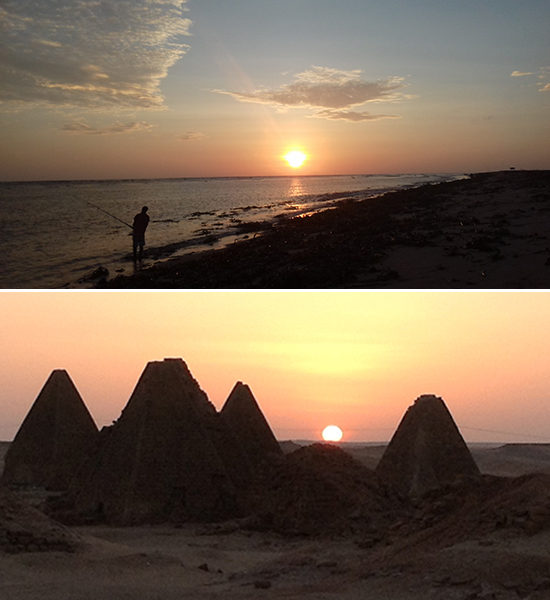

In Peru and Ecuador he found fascinating the blend of Indian art and Christian imagery, the San Ignacio Chapel in Arequipa, decorated by a devoted Indian artist in murals that recreated the delicate plumage of tropical birds, in natural dyes that had survived over two hundred years, later the statues and pillars in many churches in Quito, the exciting capital of Ecuador.
But what entranced above all in this continent was the magnificent civilization of Aztecs and Incas and above all the Mayas. In Mexico he had a glimpse of a continuity of culture when at the great pyramids of Teotihuacan he came across a ritualistic dance, hundreds of young men dressed in evocative traditional costumes, headbands and elaborate cloaks, bare strips of cloth at the waist and intricate leggings, moving or rather stamping energetically in a complex rhythm, up and down, forward and back, persistently, powerfully, to the relentless beating of drums. They continued while he climbed up the pyramids of both the Sun and the Moon, and were still at it when he got back, an absolutely breathtaking sight, close up as well as from the heights that placed the pattern in even more vivid perspective.
And then there were the Mayas, the Temple of the Magician at Uxmal, a pyramid that somehow also had an oval shape, that took his breath away. That motivated another visit, this time to Guatemala, where a helpful consul at the border let him in without a visa to see the great complex at Tikal, deep in the jungle, which he wandered through on his own, to the sounds and sights of exotic birds, toucans and coucals and the colourful Peten turkey.
There were also other sorts of jungle adventures, jumping into the confluence of the two rivers that make up the Amazon at Manaos, fishing for piranhas for supper in the Kumaseva river near Iquitos in Peru, walking in the jungle there while his guide swung on lianas Tarzan fashion in dripping rain.
There are jungle trips in Africa too, crowded safaris in Tanzania and Uganda, tailor made trips in Mozambique and Angola, which allowed for lingering over glorious sunsets over river and sea. More unusual were the religious fantasies of Ethiopia, what was supposed to be the palace of the Queen of Sheba at Axum, the Debre Dammo monastery which had to be reached by climbing a rope, which he was dissuaded from trying to do, a long trek up a steep hill to see the Mariam Korka church, an impressive small building with wonderful paintings on its walls, and its neighbour the Daniel Korka church which required slithering along an open cliff.

There were too the fantastic rock hewn churches of Lalibela, and the monasteries nearby, one a long cave under a rocky ledge, with pilgrims clad in white and swaying gently to the relentless gentle rhythm of wonderful chanting. And there were beautifully illustrated bibles, which the priest held open for inspection without allowing them to be touched. These, and exotic crosses, which you were permitted to kiss, were drawn from ramshackle cupboards with total nonchalance.
Then there was rocking across the crocodile infested Nile in a coracle in Sudan, to see the multiple remains on Sai Island, a temple from the days of the pharaohs, a Byzantine Cathedral and the remains of an Ottoman fort. And nothing had prepared him for the pyramids of the Sudan, not one cluster but two, framed against a large rock at Karima, framed against the sunset at Begrawiya. That had followed a sight of whirling dervishes far outside Khartoum, a whole host walking round and round the open area in the middle, whirling and chanting, while the surrounding crowd joined in what seemed a marvelous frenzy.
Lions and hippos in the Serengeti pale in comparison, though that visit to Tanzania also included the beautiful architecture of Zanzibar and its quaint palaces. As exotic was the hilltop capital of King Moshoeshoe in Lesotho, a surprisingly beautiful country, which even boasted dinosaur footprints.
The Asian sections, looking only at the island nations in the east, provide equally unusual experiences, including ferries through the Moluccas islands, ending in New Year on a far away beach in the Kea Islands, abounding in giant tortoises and colourful starfish.
There were several visits to the Philippines, but the most exciting was the first, when he explored on his own, taking a bus up to Baguio and then to the underground caves at Sagada and the terraced rice fields of Banaue. Very different were several meetings with Ninoy Aquino, President of the Philippines from 2010, including a lunch when he had to make conversation in lieu of the Sri Lankan Prime Minister who gazed blandly into the middle distance.
The range of experience is splendidly illustrated, pages of lively colour and black and white pictures which capture the lines of the different arts and crafts of the different continents.