
News
TNA unveils its constitutional proposals


The TNA has called upon the Experts Committee to Draft a new Constitution to adhere to the following principles:
1. Nature of the State:
(1) Sri Lanka (Ceylon) shall be recognised as a free, sovereign, independent and united Republic comprising the institutions of the Centre and of the Regions, which shall exercise powers of governance as laid down in the Constitution.
(2) One of the Regions shall be for the territory predominantly occupied by the Tamil-speaking peoples in the North-East.
2. Fundamental Rights:
The Constitution shall include a comprehensive list of fundamental rights and freedoms, founded on human dignity and personal autonomy, and reflecting the full gamut of Sri Lanka’s international human rights obligations.
3. Language:
(1) The Constitution shall recognise Sinhala, Tamil, and English as the official languages throughout Sri Lanka, and the languages of administration in the entire island.
(2) Citizens should have a right to interact with the State, whether in person or in correspondence, in the language of their choice.
(3) The Constitution should specify that official documents, notices or directives which communicate, imply or impose a penalty or fine or punishment have no force or effect in law in the event they are issued in violation of language rights.
4. The Executive:
(1)The Constitution shall provide for a government with a ceremonial President who is accountable to Parliament, and who acts on the advice of the Prime Minister. The Prime Minister shall be the head of the cabinet of ministers.
(2
)The cabinet of ministers, the state ministers, and the deputy ministers, shall be appointed by the President on the advice of the Prime Minister from amongst members of Parliament. Assignment of subjects and functions shall be within the powers of the Prime Minister, and these powers may be exercised by the Prime Minister at any time.
5. The Legislature:
(1) The Constitution shall provide for a bicameral legislature with a chamber comprising members directly elected by the people, and a second chamber comprising representatives of the Regions.
(2) Legislation shall be passed upon passage of a Bill by simple majority through both chambers, except in the case of amendments to the Constitution, in which case, the Bill shall be passed with a two-thirds majority in both chambers. And in the case of amendments affecting devolution to the Regions, it shall have an additional requirement of assent by every one of the delegations from the Regions to the second chamber.
6. Sharing of Powers of Governance:
(1) There shall be Regional Councils for every Region, as defined in a schedule to the Constitution.
(2) There shall be a Governor for each Region, who shall be appointed by the President on the advice of the Chief Minister of the relevant Regional Council, and such advice shall only be given with the approval of the Regional Council.
(3) The Governor shall, except as provided in the Constitution, act on the advice of the Chief Minister and the cabinet of ministers of the Regional Council.
(4) Regional Councils shall have legislative power over subjects specified in a schedule to the Constitution. The statutes duly enacted by a Regional Council shall prevail over all previous legislation on the same subject with respect to the relevant region.
(5) Suitable time-bound arrangements shall be made with regard to Governor’s assent to statutes to avoid delay.
(6) National policy on a devolved subject defeats the object of devolution. Therefore, all Regions must be consulted and where all Regions agree, national policy must be confined to framework legislation within which Regions can exercise fully legislative and executive power pertaining to the devolved subject. Framework legislation shall not curtail devolved power.
(7) The Central Legislature may make laws with respect to subjects devolved to the Regional Councils, provided all Regional Councils vote to approve the said Bill. Where a Regional Council does not so approve, the Act, if passed, shall not have force or effect within the said Region.
(8) Devolved power cannot be overridden or taken back without the consent of the Region concerned. In the case of Constitutional amendments affecting devolution, it should have the approval of every regional delegation from the Regions in addition to two third majority votes in both Houses.
(9) Assignment of subjects and functions shall be based on the principle of maximum possible devolution. All subjects other than such subjects as must necessarily be with the Central Government, such as national security, national defence, armed forces, foreign affairs, and national economic affairs, must be devolved.
(10) Some of the important subjects and functions to be devolved shall include (but not be limited to):
a. land;
b. law and order;
c. education including tertiary education;
d. health;
e. housing and construction;
f. agriculture and agrarian services;
g. irrigation;
h. fisheries;
i. animal husbandry and livestock development;
j. resettlement and rehabilitation;
k. local government;
1. regional public service;
m. regional police service;
n. religious and cultural affairs;
p. all other socioeconomic and cultural matters;
o. cooperatives and cooperative banks;
q. industries; and
r. taxation, central grants, international and domestic loans and grants, and foreign direct investment.
(11) All appointments to the regional public service and regional police service, other than the Chief Secretary and other secretaries to regional ministries, shall be made by the Regional Public Service Commission and the Regional Police Commission, as the case may be, which shall be answerable and responsible to the Chief Minister and to the cabinet of ministers of the relevant Region.
(12) The Chief Secretary shall be appointed by the President with the concurrence of the Chief Minister of the Region, and shall be removable by the President on the advice of the Chief Minister. Secretaries to regional ministries shall be appointed by the Governor on the recommendation of the Chief Minister and the cabinet of ministers of the relevant Region, and shall be removable on their advice.
(13) There shall be adequate provision made in the Constitution for the protection of the minority communities in every Region.
7. The Judiciary:
(1) The Constitution shall provide fora Constitutional Court, comprising members appointed by the Constitutional Council, to hear and determine the constitutionality of legislation made by the Central Legislature and statutes made by Regional Councils. Such power may be exercised prior to the enactment of such law or statute, or after enactment, whether it arises in the course of legal proceedings or by the direct institution of proceedings.
(2) In respect of matters relating to the interpretation of the Constitution, the decisions of the Constitutional Court shall be final.
(3) Jurisdiction with respect to fundamental rights applications shall be exercised by the Provincial High Courts.
8. Public Security:
(1) The Constitution shall provide that the declaration of a state of emergency shall be made by the President, on the advice of the Prime Minister, or on the advice of the Governor of the Region with the concurrence of the Chief Minister of Region. Such a state of emergency shall only be declared when there are reasonable grounds to apprehend the existence of a clear and present danger to public security, preservation of public order (including preservation of public order consequent to natural disasters and epidemics) or the maintenance of supplies and services essential to the life of the community in the country or Region. A state of emergency can be declared only with respect to the territory where such a clear and present danger prevails.
(2) The declaration of emergency shall state the basis on which such a state of emergency was declared, and shall be limited in time.
(3) The Declaration of Emergency shall, be subject to parliamentary approval or the relevant Regional Council’s approval, as the case may be, and be subject to judicial review by the Constitutional Court. If such approval is not granted, or where the Constitutional Court so holds, such Declaration of Emergency shall stand rescinded.
9. Land:
(1) Land shall be a devolved subject. All state land used by the Central Government for a subject in the Central List shall be continued to be used by the Central Government. Rights acquired by citizens in state land shall be preserved. All other state land shall vest in the Region concerned, and can be used by the Region in terms of its devolved powers over land.
(2) Alienation of state land shall be done on the basis of the principles enunciated in the Bandaranaike-Chelvanayakam Pact and Senanayake-Chelvanayakam Pact.
(3) Regions shall have powers of land acquisition and requisition.
10. Pollce:
(1) Law and order shall be a devolved subject.
(2) There shall be a National Police Force, and Regional Police Forces for each Region.
(3) Offences that are reserved to be dealt with by the National Police shall be listed in a schedule to the Constitution. All other offences shall be within the purview of the Regional Police.
(4) The head of the Regional Police shall be the Regional Police Commissioner, who shall he appointed by the Governor on the advice of the Chief Minister of the Region, There shall be a Regional Police Commission to be appointed by the Governor on the advice of the Chief Minister and the leader of the opposition of the relevant Regional Council. Appointment and disciplinary control of Regional Police personnel shall be under the Regional Police Commission. The Regional Police Commissioner shall be answerable and responsible to the Regional Minister, entrusted with the subject of law and order.
Signed
– R. Sampanthan MP Leader, Tamil National Alliance and Parliamentary Croup Leader of ITAK
– Sgd. Mavai S. Senathirajah – Leader. ITAK and co-leader, TNA
-Sgd. Selvam Adaikalanathan, MP – Leader. TELO and co-leader, TNA
– Sgd. D Sithadthan, MP – Leader, PLOTE and co-leader. TNA



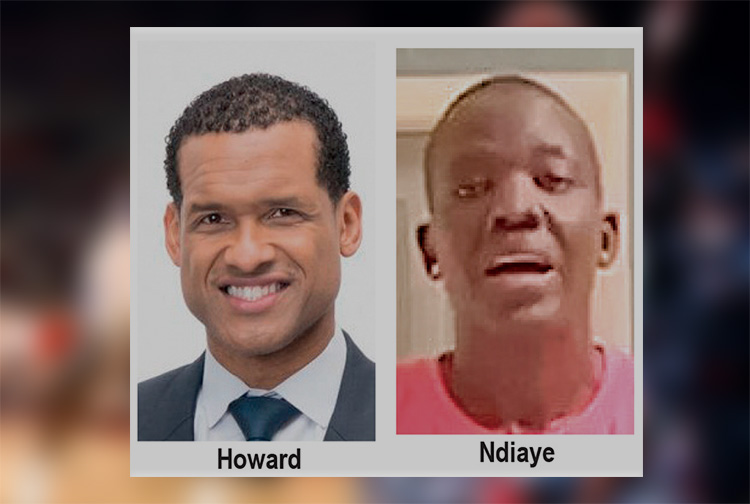
The U.S. Embassy in Colombo welcomed the U.S. Sports Envoys to Sri Lanka, former National Basketball Association (NBA) and Women’s National Basketball Association (WNBA) players Stephen Howard and Astou Ndiaye, from June 8 through 14.
The Public Diplomacy section of the U.S. Embassy said that it would launch a weeklong basketball program intended to harness the unifying power of sports, made possible through collaboration with Foundation of Goodness and IImpact Hoop Lab.
While in Sri Lanka, Howard and Ndiaye, both retired professional basketball players, will conduct a weeklong program, Hoops for Hope: Bridging Borders through Basketball. The Sports Envoys will lead basketball clinics and exhibition matches and engage in leadership sessions in Colombo and Southern Province for youth aged 14-18 from Northern, Uva, Eastern and Western Provinces, offering skills and leadership training both on and off the court. The U.S. Envoys will also share their expertise with the Sri Lanka Basketball Federation, national coaches, and players, furthering the development of basketball in the country. Beyond the clinics, they will collaborate with Sri Lankan schoolchildren to take part in a community service project in the Colombo area.
“We are so proud to welcome Stephen and Astou as our Sports Envoys to Sri Lanka, to build on the strong people-to-people connections between the United States and Sri Lanka,” said U.S. Ambassador Julie Chung. “The lessons that will be shared by our Sports Envoys – communication, teamwork, resilience, inclusion, and conflict resolution – are essential for leadership development, community building, equality, and peace. The U.S. Sports Envoy program is a testament to our belief that sports can be a powerful tool in promoting peace and unity.”
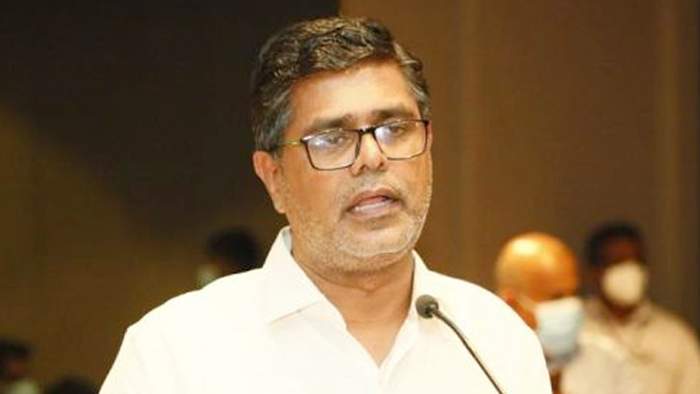
SJB Colombo District MP Mujibur Rahuman in parliament demanded to know from the government the reasons for CEB suspending the leave of all its employees until further notice from Thursday.
MP Rahuman said that the CEB has got an acting General Manager anew and the latter yesterday morning issued a circular suspending leave of all CEB employees with immediate effect until further notice.
“We demand that Minister Kanchana Wijesekera should explain this to the House. This circular was issued while this debate on the new Electricity Amendment Bill was pending. There are many who oppose this Bill. The Minister must tell parliament the reason for the urge to cancel the leave of CEB employees,” the MP said.However, Speaker Mahinda Yapa Abeywardena prevented Minister Wijesekera responding to the query and said that the matter raised by MP Rahuman was not relevant.
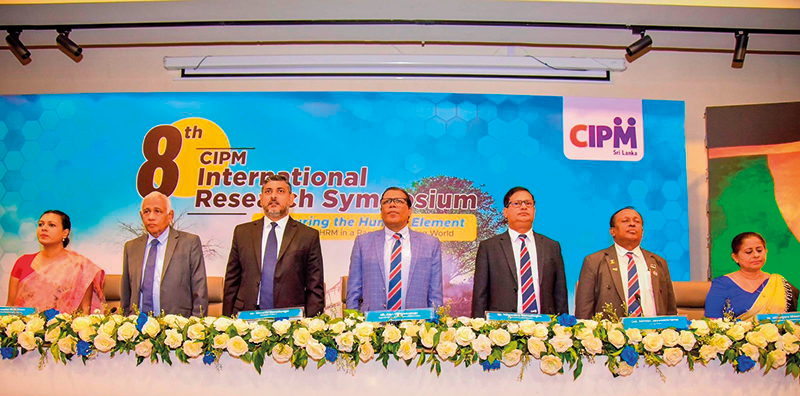
The Chartered Institute of Personnel Management (CIPM) successfully concluded the 8th Annual CIPM Symposium, which took place on 31st May 2024. Themed “Nurturing the Human Element—Redefining HRM in a Rapidly Changing World,” the symposium underscored the pivotal role of human resource management (HRM) in today’s dynamic global landscape. Since its inception in 1959, CIPM has been dedicated to advancing the HR profession through education, professional development, and advocacy, solidifying its position as Sri Lanka’s leading professional body for HRM.
Ken Vijayakumar, the President of the CIPM, graced the occasion as the chief guest. The symposium commenced with the welcome address by the Chairperson, Prof. Arosha Adikaram, followed by the Web Launch of the Symposium Proceedings and Abstract Book by the CIPM President. The event featured distinguished addresses, including a speech by Chief Guest Ken Vijayakumar, President of CIPM, and an address by Guest of Honor Shakthi Ranatunga, Chief Operating Officer of MAS Holdings Pvt. Ltd., Sri Lanka.
The symposium also featured an inspiring keynote address by Prof. Mario Fernando, Professor of Management and Director of the Centre for Cross Cultural Management (CCCM) at the University of Wollongong, Australia.
Vote of Thanks of the inauguration session was delivered by Dr. Dillanjani Weeratunga, Symposium Co-chair.
The symposium served as a comprehensive platform for researchers to present their findings across a wide range of critical topics in HRM. These included Cultural Diversity and Inclusion, Talent Development and Retention, Ethical Leadership and Corporate Social Responsibility, Adapting to Technological Advancements, Mental Health and Well-being at Work, Global Workforce Challenges, Employee Empowerment, and Reskilling and Upskilling.
The plenary session was led by Prof. Wasantha Rajapakse. Certificates were awarded to the best paper presenters during the valedictory session, followed by a vote of thanks delivered by Kamani Perera, Manager of Research and Development.
The annual symposium of CIPM was a truly inclusive event, attracting a diverse audience that spanned undergraduates, graduates, working professionals, research scholars and lecturers. This widespread interest highlights the symposium’s significance in the field of HRM, offering a unique opportunity for everyone to network and learn from scholarly brains.The CIPM International Research Symposium was sponsored by Hambantota International Port, Sri Lanka Institute of Information Technology (SLIIT), E B Creasy & Co. PLC, and Print Xcel Company.



US sports envoys to Lanka to champion youth development

Rahuman questions sudden cancellation of leave of CEB employees


