News
Tissa Vitarana opposes going to IMF at All Party confab

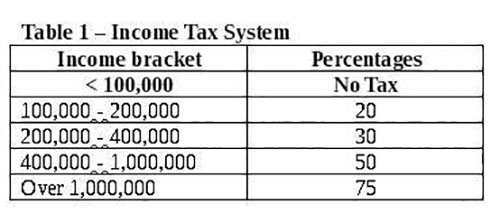
Calls for 50% tax on income between Rs. 400,000 and Rs. 1 million
I am glad that this conference is being held when Sri Lanka is faced with one of the worst economic crises since independence. Before getting onto my speech, I wish to thank the President and Prime Minister for holding this meeting. Further, the presence of members of the Opposition is also welcome. This is a signal of the readiness of the Opposition to cooperate with the Government to overcome the crisis, as one nation.
However, I strongly disagree with the view that both the Government and the Leader of the Opposition hold that the solution lies only through the IMF (International Monetary Fund). The IMF solution will only lead to a further loss of dollars through the unrestricted opening of the economy to more imports and also lead to increased debt due to taking further loans.
It would have been better to have had an earlier meeting of the Government party leaders so that agreement on policy matters could have been reached among ourselves in the Government. I would support the view of the Tamil speaking MP’s that national unity is essential and could be achieved by fully implementing the 13th Amendment to the Constitution.

Due to shortages and high prices of basic essentials, most of them imported, like fuel (oil and gas), medicines and food, life has become a misery for most of the people (perhaps other than the super-rich). The knock on effects e.g. shortage of electricity, have added to the misery. The root cause is the shortage of US dollars (USD). The Foreign Exchange Reserve which was maintained at USD 7-8 Billion has come down to less than USD 1 Billion. This has led to our Fitch Rating dropping to 2C (1C means bankruptcy). The real value of the rupee has dropped from 200 to a dollar, to 285 per dollar. This has led to the non-acceptance of Letters of Credit (LC) from Sri Lanka by foreign suppliers. As a result it is only after payment in dollars that goods are sent from abroad, which means a delay of several months. But due to the shortage of dollars in the country this cannot be done even in time.
A similar crisis occurred during the 1970-75 SLFP/LSSP/CP Coalition Government. With the formation of OPEC, oil prices rose by more than five times and a ton of sugar went up from £ 42 to £ 600. The JVP insurgency damaged the economy and added to the cost to the country.
Dr.N.M.Perera, then Finance Minister, overcame the crisis and raised the Foreign Reserves from USD 1.3 Billion in 1970 to USD 2.7 Billion by 1975, thereby stabilizing the economy and providing sufficient US dollars for our essential imports. He strictly banned non-essential imports thereby reducing the foreign exchange deficit, which is the main cause of the lack of dollars. He encouraged the development of local industry and agriculture.
Since 1977 the UNP came to power with its neoliberal economic policies. These have been operative since then. These were designed by the USA (led by Prof. Friedman of the Chicago School of Economics), to continue to exploit the world’s resources (specially countries of the Third World, like Sri Lanka) to the advantage of the USA and its imperialist allies in the post-colonial era. This open economy, promoted by the WTO (World Trade Organization), which the UNP and its allies in Sri Lanka strongly support, led to unlimited import of luxury and other non-essential goods. The result was that the foreign exchange deficit was at time double the export income.
This ate into our reserves and also led to massive foreign borrowing. Successive Governments, the UNP more than the SLFP, went into both short and long term borrowing, often at a high interest rate. Last year alone Sri Lanka had to pay USD six billion for debt servicing. The question then is how can we pay this amount when our reserves are so low.
The only way out is to get a moratorium from our creditors, that is ask for time to delay the payments for a period of about five years. This would mean for this period we will have USD 30 Billion, to put our economy right and also immediately fund the import of essentials, with the restoration of LCs. This has been done by several countries in the course of past crises. I am told that Argentina and Uruguay among other countries have done so this time too.
Our solution should ensure that we do not increase our debt, a root cause of our problems. This would be the inevitable outcome of turning to the IMF for assistance. Further the IMF policy of unlimited imports would put us into deeper debt.
Concrete measures should be taken to rationalize our import structure. Nearly 25% of our dollars is allocated to the import oil and gas. The latter requirement can be effectively minimized by domestic bio-gas production using cookers produced by the NERD institution. Fuel should be rationed giving priority to public transport. There should be a total ban on non-essential imports. Other selected items should be subject to heavy taxes.
This is a better solution than the issuing of permits, which leads to corruption. Foreign inputs required for industrial production for exports should be permitted. Promotion of science, technology and research for value added industries using local raw material should also be supported.
The tax system should be drastically revised as indicated in Table 1.
As an incentive, company taxes should remain low only for value added industries, that use local or foreign raw materials, especially for export and import substitution. Unfair exploitation of local human and material resources must be minimized, especially for the local market. Incentives must be given for tourism and remittances from abroad. Indirect taxes must be minimized.
The adoption of a floating exchange rate system is a progressive step in the present context. The public and private loss making institutions can be made profitable like in Kerala, India by utilizing the “Solidarity Principle”. Here the ownership of an enterprise is given to the employees and the profit is shared equally among them. Stop taking inflated foreign loans. The above changes should be associated with a wage-price freeze (which led to the success of Roosevelt’s “New Deal”).