
News
‘Those who expressed doubts about KDU’s potential proved wrong’


Prez pushing for education reforms
President Gotabaya Rajapaksa said that in spite of doubts that had been raised in certain quarters about the viability of the General Sir John Kotelawala Defence University (KDU) as a fully-fledged university, during its initial expansion, the critics had been proved wrong.
The KDU had evolved in a remarkably short span of time from a Defence Academy catering to the higher educational and training needs of the Armed Forces to a fully-fledged university offering courses of study in many fields to both Officer Cadets and civilian students, President Rajapaksa said. The Commander-in-Chief of the Armed Forces was delivering the keynote address at the annual Convocation of the KDU on Tuesday (16) afternoon.
The President said that regardless of doubts expressed by some, the KDU had been able to attract highly qualified and capable staff, maintain excellent standards of teaching, and consistently produce outstanding graduates in fields as diverse as Engineering, Law, Management, and Medicine.
It was now very clear that the KDU’s expansion was a great success, the President said.
The President said: “The graduates produced by the KDU are not only highly proficient in their specialisms but also have the reputation of being highly disciplined, possessing great integrity, and demonstrating strong leadership qualities as well as teamwork skills. These features are all very much in demand amongst employers.
“The high demand for KDU graduates by employers in both the private and the public sector, and the high demand from students all over the country to enter the KDU for both undergraduate and postgraduate study, speaks volumes. The fact that the university already has nearly 300 international students, including close to 40 in the Medical Faculty alone, is also a laudable achievement. In this context, the ongoing expansion of the university with the opening of its Southern Campus is encouraging, as is the expansion in its programmes of study through the inauguration of new faculties in Technology and in Criminal Justice. We will look at further options for the expansion of this university in the future as well. This will allow a larger number of students to benefit from the unique features and culture of this institution.
“In considering the future of higher education in Sri Lanka holistically, however, it must be said that there are several issues which need to be addressed.
“The world is currently in the midst of what has been called the Fourth Industrial Revolution.
“Building on the digital revolution that took place in the second half of the twentieth century, rapid technological innovations in a number of fields are converging to create transformative changes around the world.
“These changes are taking place at exponential speed, and are impacting almost every single industry in every single country. The ongoing global pandemic has only accelerated the pace of these changes further. Every country, every government, and every institution involved in education should therefore take note of these important evolving changes.
“Sri Lanka must keep pace with these disruptions and transformations taking place globally.
“We cannot afford to lag behind. Our higher education system must adapt swiftly. It has to offer our students an education that will remain relevant despite fast changing circumstances and help them find gainful employment in future. Unfortunately, this is an area in which our universities and other higher education institutions need considerable improvement.
“During the past year, the government employed a large number of unemployed graduates through a special scheme initiated under the Ministry of Public Administration. Of the nearly 60,000 who gained employment through this scheme, close to half were graduates in the Arts. Many had obtained their qualifications through the Open University and through external degree programmes offered by other state universities.
“It is good that such individuals had a desire to learn at the tertiary level and were able to obtain their qualifications without having to attend university full time. However, there are doubts as to whether their education has equipped them with the knowledge, skills, and abilities they need to contribute productively towards fulfilling the needs of the public. This is an essential requirement if the outcome of their studies is for them to be employed by the Government and paid using public funds.
“The skills that are most in demand in today’s job market are technology related. There are so many opportunities for graduates in information technology not only in terms of employment at private sector companies, but also in terms of potential self-employment and in launching new start-ups.
“Technology will play a key role in every single economic sector in the future. At minimum, all graduates from our university system need to have some knowledge about new technologies and at least a functional familiarity with computers if they are to have a chance to build successful futures for themselves.
“That is why I have requested all the Vice Chancellors to immediately introduce IT and Computer Studies as subjects for all of their students, irrespective of their field of study. This will give them much better prospects of finding lucrative employment or succeeding in their own businesses after they graduate.
“Alongside familiarity with technology, possessing knowledge of English is another critical requirement for our youth. If any young person has a sound knowledge of English and has access to the internet, there is no limitation on what they can learn because there are so many resources available to them online, free of charge.”




The U.S. Embassy in Colombo welcomed the U.S. Sports Envoys to Sri Lanka, former National Basketball Association (NBA) and Women’s National Basketball Association (WNBA) players Stephen Howard and Astou Ndiaye, from June 8 through 14.
The Public Diplomacy section of the U.S. Embassy said that it would launch a weeklong basketball program intended to harness the unifying power of sports, made possible through collaboration with Foundation of Goodness and IImpact Hoop Lab.
While in Sri Lanka, Howard and Ndiaye, both retired professional basketball players, will conduct a weeklong program, Hoops for Hope: Bridging Borders through Basketball. The Sports Envoys will lead basketball clinics and exhibition matches and engage in leadership sessions in Colombo and Southern Province for youth aged 14-18 from Northern, Uva, Eastern and Western Provinces, offering skills and leadership training both on and off the court. The U.S. Envoys will also share their expertise with the Sri Lanka Basketball Federation, national coaches, and players, furthering the development of basketball in the country. Beyond the clinics, they will collaborate with Sri Lankan schoolchildren to take part in a community service project in the Colombo area.
“We are so proud to welcome Stephen and Astou as our Sports Envoys to Sri Lanka, to build on the strong people-to-people connections between the United States and Sri Lanka,” said U.S. Ambassador Julie Chung. “The lessons that will be shared by our Sports Envoys – communication, teamwork, resilience, inclusion, and conflict resolution – are essential for leadership development, community building, equality, and peace. The U.S. Sports Envoy program is a testament to our belief that sports can be a powerful tool in promoting peace and unity.”
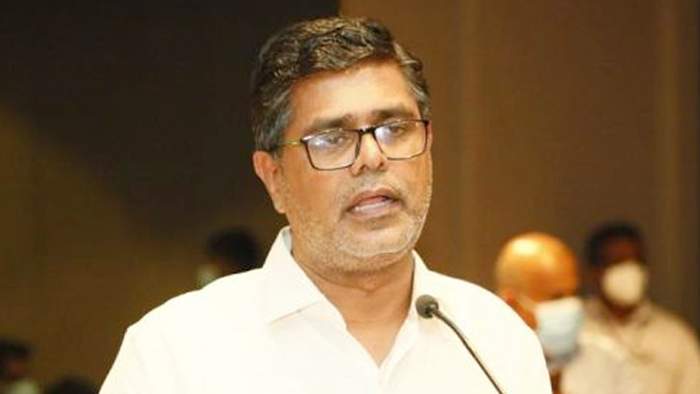
SJB Colombo District MP Mujibur Rahuman in parliament demanded to know from the government the reasons for CEB suspending the leave of all its employees until further notice from Thursday.
MP Rahuman said that the CEB has got an acting General Manager anew and the latter yesterday morning issued a circular suspending leave of all CEB employees with immediate effect until further notice.
“We demand that Minister Kanchana Wijesekera should explain this to the House. This circular was issued while this debate on the new Electricity Amendment Bill was pending. There are many who oppose this Bill. The Minister must tell parliament the reason for the urge to cancel the leave of CEB employees,” the MP said.However, Speaker Mahinda Yapa Abeywardena prevented Minister Wijesekera responding to the query and said that the matter raised by MP Rahuman was not relevant.
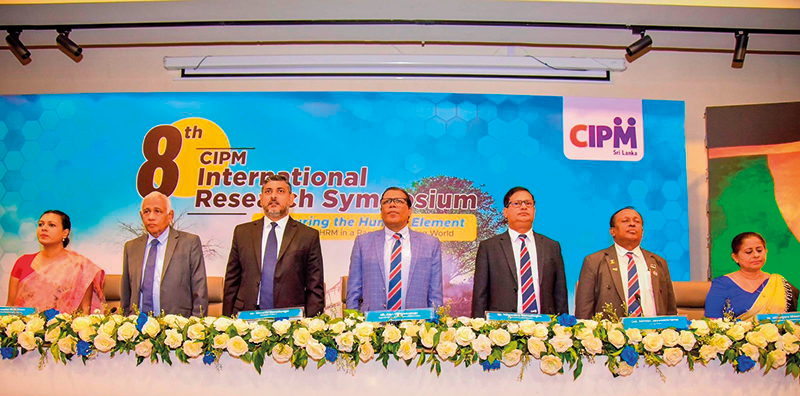
The Chartered Institute of Personnel Management (CIPM) successfully concluded the 8th Annual CIPM Symposium, which took place on 31st May 2024. Themed “Nurturing the Human Element—Redefining HRM in a Rapidly Changing World,” the symposium underscored the pivotal role of human resource management (HRM) in today’s dynamic global landscape. Since its inception in 1959, CIPM has been dedicated to advancing the HR profession through education, professional development, and advocacy, solidifying its position as Sri Lanka’s leading professional body for HRM.
Ken Vijayakumar, the President of the CIPM, graced the occasion as the chief guest. The symposium commenced with the welcome address by the Chairperson, Prof. Arosha Adikaram, followed by the Web Launch of the Symposium Proceedings and Abstract Book by the CIPM President. The event featured distinguished addresses, including a speech by Chief Guest Ken Vijayakumar, President of CIPM, and an address by Guest of Honor Shakthi Ranatunga, Chief Operating Officer of MAS Holdings Pvt. Ltd., Sri Lanka.
The symposium also featured an inspiring keynote address by Prof. Mario Fernando, Professor of Management and Director of the Centre for Cross Cultural Management (CCCM) at the University of Wollongong, Australia.
Vote of Thanks of the inauguration session was delivered by Dr. Dillanjani Weeratunga, Symposium Co-chair.
The symposium served as a comprehensive platform for researchers to present their findings across a wide range of critical topics in HRM. These included Cultural Diversity and Inclusion, Talent Development and Retention, Ethical Leadership and Corporate Social Responsibility, Adapting to Technological Advancements, Mental Health and Well-being at Work, Global Workforce Challenges, Employee Empowerment, and Reskilling and Upskilling.
The plenary session was led by Prof. Wasantha Rajapakse. Certificates were awarded to the best paper presenters during the valedictory session, followed by a vote of thanks delivered by Kamani Perera, Manager of Research and Development.
The annual symposium of CIPM was a truly inclusive event, attracting a diverse audience that spanned undergraduates, graduates, working professionals, research scholars and lecturers. This widespread interest highlights the symposium’s significance in the field of HRM, offering a unique opportunity for everyone to network and learn from scholarly brains.The CIPM International Research Symposium was sponsored by Hambantota International Port, Sri Lanka Institute of Information Technology (SLIIT), E B Creasy & Co. PLC, and Print Xcel Company.



US sports envoys to Lanka to champion youth development

Rahuman questions sudden cancellation of leave of CEB employees


