
Life style
THE VULNERABLE SRI LANKAN LEOPARD: One of only two island sub-species

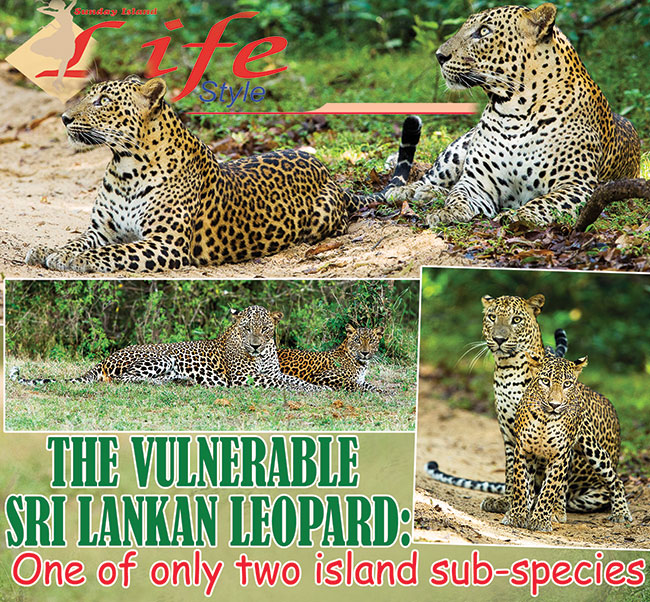
Sri Lanka Leopard Day today
by Rukshan Jayewardene
Today, leopards live in 26 range countries scattered across the African and Asian continents and are subdivided into nine sub-species based on their genetic divergence and distinction. Of these, the Sri Lankan leopard (Panthera pardus kotiya) is one of only two sub-species restricted to islands. The other sub-species (Panthera pardus melas) live on the Indonesian Island of Java. The Javan leopard clings precariously to existence in several protected areas and high-altitude forests. Their total number is estimated to be down to 250 adult individuals and it is considered to be critically endangered by IUCN. Java’s forest cover is also below 10% of the total land area of the island. The predicament faced by the Javan leopard should be a wake-up call for all those who wish to ensure the conservation of the Sri Lankan leopard.
 Population pressure, land conversion to agriculture (loss of habitat), prey depletion and untimely death at the hands of humans are common problems faced by these two island leopards. If one were to make a geophysical comparison of these two tropical islands, Java has a land area of 128,297 sq km and 145 million people (2015) while the island of Sri Lanka has an area of 65,610 sq km and 22 million people. Therefore, Java has approximately twice the land area of Sri Lanka and six and a half times its population. When compared in this way, it is plain to see that Java’s pressure on the land for agriculture and settlements is immense. Although Sri Lanka’s equation is far better, we are still a densely populated agricultural land, with our population unevenly distributed across the island. This so called maldistribution allows for living space for wildlife away from humans, especially in the comparatively sparsely populated dry zone districts.
An irreplaceable role
Wise land use policies and practice, and the strict enforcement of the laws that govern the extensive protected area network, is a key to conservation of all but the elephant (who require separate attention). Recent reversals regarding the legal safeguards put in place to conserve forest land, as well as haphazard, non-consultative land use policies especially concerning agriculture has accelerated deforestation, wildlife habitat loss and population pressure on wilderness lands.
The leopard is an important animal in the wild, a keystone species that plays an important regulatory role in the eco-systems in which they naturally occur. Here, in Sri Lanka, it is an apex predator (at the apex of all food webs on land), plays an irreplaceable role, and its extirpation would create a void that cannot be filled by any other animal. The leopard can be characterized by three qualities; intelligence, adaptability and resilience. Its intelligence and agility makes the leopard a behaviorally interesting animal, and its beauty makes it one of the most sought after wild animals in the world.
A counter-productive ‘numbers’ game
The leopard’s tourism potential is not fully utilized and generally mismanaged by both the government and private sectors. It is a special animal that needs focused conservation attention as well as knowledgeable field guides, trackers and naturalists. Up to this point in time, the bulk of wildlife tourism is sustained by the mass market and package tours that this country courts. These tours are unwieldy for the most part and consist of “beach holiday” visitors who are only cursorily interested in this valuable and fragile resource of ours. Therefore, tourism’s stamp on the protected areas of Sri Lanka is heavy, ecologically insensitive and for the most part ignorantly so.
Leopard-centric tourism, as practiced by this country, exerts damaging pressure on a few national parks that are victims of their own popularity. If this valuable animal and its habitat are to be protected, and at the same time maximum revenue is to be earned, it is never going to be done through a tourist arrival head count. Wildlife/nature/eco-tourism as practiced in this country is a ‘numbers game’ which is counter-productive to the long-term conservation of species and habitats.
Starving a Natural Heritage
Importantly the Department of Wildlife Conservation has to be empowered with manpower, legal knowledge and capacity, as well as state-of-the-art training and other material resources to deal with the ever more sophisticated threat posed by poachers and encroachers within and outside protected areas. As long as wildlife and wilderness remain a State monopoly in the custodianship of the government, legislators must see fit to give the relevant departments adequate funds and resources as stated above to enable effective conservation.
By starving these ministries and departments of resources, a case cannot be made for privatization of the natural heritage common to all present and future Sri Lankan citizens. In Sri Lanka natural assets in private hands have always been governed by an overriding profit motive and exclusivity which is not conducive to managing natural assets for the benefit of its citizenry Alternatively Public-Private partnerships are an option that can be explored. However, regulatory mechanisms and oversight must remain in government hands at all times or else these too will not serve the nation in any meaningful fashion.
On this Sri Lankan “Leopard Day” while celebrating this unique animal, it is apposite to give thought to the management of wild leopards as much as the concerns regarding their conservation.
Pix by Rukshan Jayewardene



Institute of Hospitality Sri Lanka
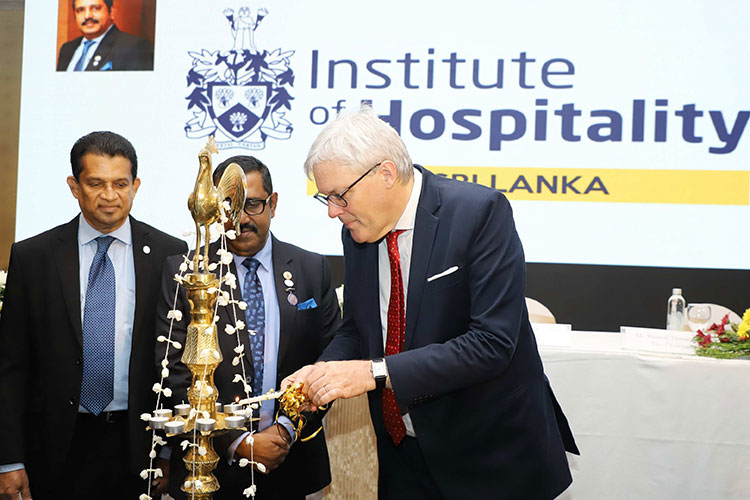
 The 32nd Annual General Meeting (AGM) of the UK-based Institute of Hospitality’s Sri Lanka Chapter was held recently at the Ramada Hotel Colombo,.The event provided an evening of camaraderie , reflection of the past and present achievements,setting new benchmarks for the future
The AGM had the presence of two distinguished guests, the Chief Guest Opposition Leader Sajith Premadasa, and the Guest of Honour British High Commissioner to Sri Lanka, Andrew Patrick. Their inspiring speeches were lauded by all hoteliers who were present at the occasion
A special thanks was extended to Robert Richardson, CEO of the Institute of Hospitality UK, along with his team, sponsors, committee members, and all attendees for making the event memorable.
Dr. Harsha Jayasingh, Past President of the Institute of Hospitality (UK) Sri Lanka Chapter, emphasised the Institute’s longstanding history and the strength of its Sri Lankan branch. “The Institute of Hospitality (IH) UK has a history of 86 years, and we are proud to be the Sri Lanka Branch. IH Sri Lanka is much stronger now with many members from all areas of the hospitality industry,” he stated.
Dr. Jayasingh highlighted the significant role of tourism in Sri Lanka’s economy,. He said tourism it is the third-largest source of revenue for the country. “Tourism accounts for about 13.3% of total foreign exchange earnings and employs 450,000 people directly and indirectly. The hospitality industry in this island of pearl holds tremendous potential for economic growth, job creations, and cultural exchange,” he added.
He also pointed out more women should be attracted to the industry and advocated for the use of technology in hospitality sector to attract the younger generation.
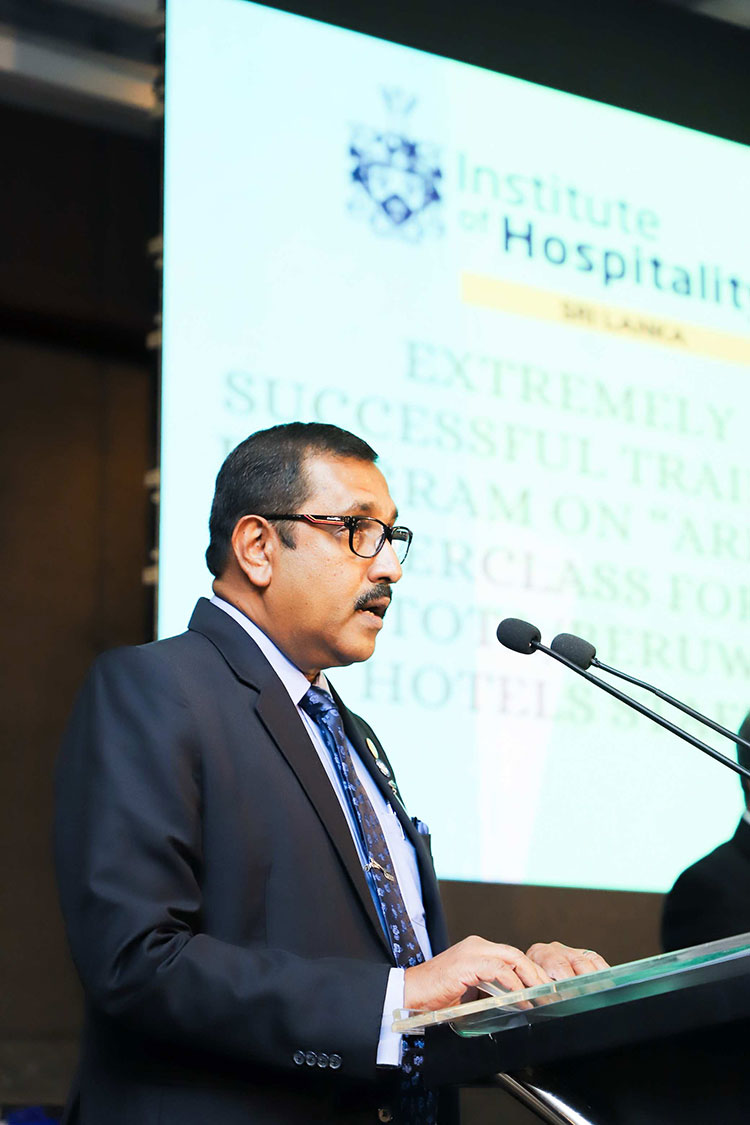
The newly appointed Chairman Ramesh Dassanayake spoke about the challenges faced by the industry, including the reluctance of youth to join the sector. . Dassanayake expressed concerns over the migration of staff between hotels and the overall ‘brain drain’ in the sector. ” We must maintain high standards in the hotel We must try to attract tourists to Sri Lanka, we must have with many facilities Hence, hotel schools and other professional institutions involved in skills development mustincrease their intakes,” he pointed out.
Chief Guest Sajith Premadasa emphasised the importance of eco tourism and said “We need to have an environmental policy related to tourism in place,” . .
The 32nd AGM of the Institute of Hospitality UK, Sri Lanka Chapter, was a testament to the strength and potential of Sri Lanka’s hospitality industry. The insights and commitments shared during the event set a new benchmark for the future.(ZC)



Pix by Thushara Attapathu
Life style
He recognizes human identity beyond boundaries of gender, race, nationality and religion.

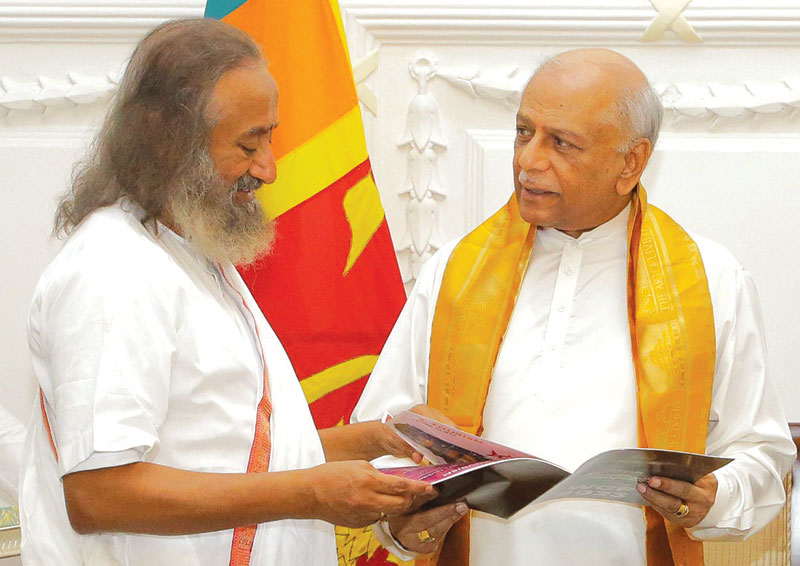
Visit of Sri Gurudev to Sri Lanka
Humanitarian, spiritual leader and Global Ambassador of Peace Gurudev Sri Sri Ravi Shankar (Sri Gurudev) was in Sri Lanka on a three day tour on the invitation of the Prime Minister of Sri Lanka Dinesh Gunewardene. Gurudev who inspired a wave of volunteerism and service to moot one of the largest volunteer-based organisations in the world – The Art of Living – visited the various projects under the aegis of the foundation and launched twelve vocational and technical centers around the island. He was accompanied by thousands of followers from Sri Lanka and around the world.
Gurudev who visited Sri Lanka for the sixth time also had a first day cover launched in honour of his visit. He is a strong proponent of spreading happiness, using the unique Sudarshan Kriya, yoga, meditation and practical wisdom to unite people, empower individuals and transform communities. His programmes provide techniques and tools to live a deeper, more joyous life, while his non-profit organisations recognize the human identity beyond the boundaries of gender, race, nationality and religion.
The Art of Living which has more than 30,000 teachers and over one million volunteers across 180 countries has touched in excess of five hundred million people around the world. CNN called it “Life Changing” and The Washington Post headlined it, “Fresh air to millions”.
In Trincomalee, Gurudev met with war victims and had a heartwarming engagement with the children from the children’s homes run by the Foundation. He also visited the Koneswara Temple in Trincomalee and graced the Kumbhabhishekam at Seetha ecogPnize the human identity beyond the boundaries of gender, race, nationality and religion. Amman temple at Nuwara Eliya. He held discussions with the trustees on the progress of the foundation’s social service projects, while also holding a special event – Ekamuthuwa – attended by a large number of dignitaries and his devotees from around the world.
His time with the Prime Minister was spent discussing the prospects of unity in diversity and uniting Sri Lanka by adding happiness into the formula of living. In addition he had discussions with the Speaker of the Parliament of Sri Lanka Mahinda Yapa Abeywardena, prominent business stewards and civil society leaders.
by Zanita Careem
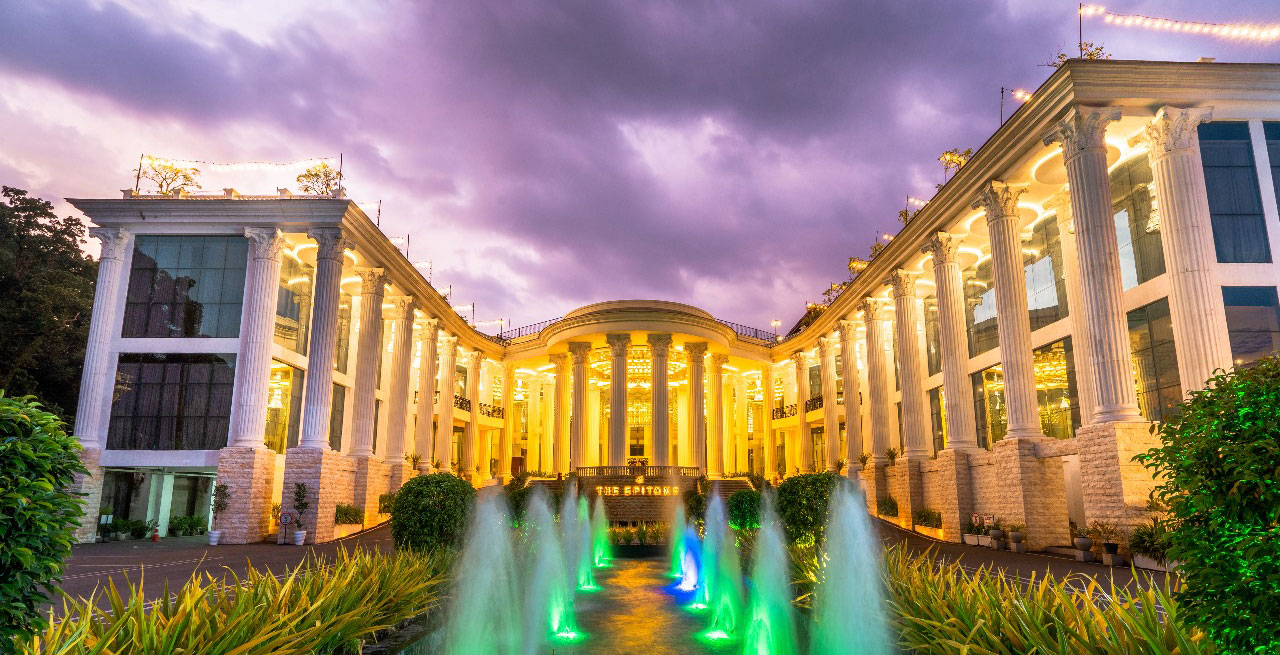
Envison your dream wedding day come to life at the Epitome Hotel, a prestigious city hotel in Kurunegala offering an unrivalled luxury rendors experience for weddings.
The venue is designed to embody opulence and luxury from all quarters for a spectacular wedding in kurunegala,Thier ballroom is the largest banquet facility in Sri Lanka It can be divided into six luxurious pillarless wedding halls on the ground floor and 25pax smaller banquet halls.
It can be easily named as a five star heaven in the heart of the city contributing to a myriad of immense experiences tailored to inspire and delight wedding experiences.
From opulent décor set up to exquisite table decor, lavish food, every detail is meticulously curated to spark your imagination and ignite creativity for a perfect wedding. The previous prestigious wedding shows season one and season two attracted large crowds
were unique events which gave the wedding vendors and potential clients had an opportunity to connect and interact with each other. Beyond being a showcase it was a chance for the wedding vendors to unite and contribute to the vibrancy of the wedding industry. The wedding show covered all area of the bridal industry providing a comprehensive variety of bridal supplies from Sri lanka and became the most popular bridal exhibitions in Kurunegala.This bridal exhibitions allowed brides and grooms to experience first hand the products and services available from suppliers in Sri Lanka
These wedding shows held at The Epitome created a benchmark and gave an opportunity for vendors to create connections to the utmost satisfaction said Harshan Lakshita Executive Director. of the magnificent Hotel
Our wedding shows featured experts and professionals in every field‘ It covered all areas of the bridal industry provided a comprehensive variety of bridal supplies from Sri lanka and became most popular bridal exhibition in this region.We are always open to everyone to join us at our wedding shows in the future. It is an opportunity to discover the incredible talent within our local wedding and bridal vendors to make meaningful relationships and plan thier special day at our breathtaking hotel The Epitome said General Manager Kavinda Caldera
The Epitome Hotel’s bridal show which will be held end of June will buzz with great ideas,advice and inspiration for all those who plan thier dream wedding
…….
The Hotel Epitome’s Wedding Season 3 will marked excellence, celebration and inspiration for those in the wedding industry. The exhibition halls will resonate with ideas on exquisite bridal wear to decor, florists , photography etc and showshowcase the rich tapestry of talent within the local wedding industry. .






US sports envoys to Lanka to champion youth development

Rahuman questions sudden cancellation of leave of CEB employees


