Features
The Value of Goodness – employing business profits to help the needy

(Excerpted from the autobiography of Merrill J. Fernando)
A generous man will prosper;
he who refreshes will himself be refreshed Bible book of proverbs
My mother was the first genuine practitioner of community responsibility that I knew. She had never heard of Corporate Social Responsibility but her faith, upbringing, and innate goodness commanded that she bear some accountability for her neighbours’ wellbeing. Her instinctive and visible generosity was of direct benefit, in many small ways, to the less advantaged in our village community of Pallansena. Ours was a family of moderate means and by no means affluent, but it is my view that sharing comes easily, and more naturally, to those of a modest background.
As a principled human being, one cannot ignore one’s less fortunate neighbour. Similarly, as an entrepreneur, you cannot operate in isolation, indifferent to the plight of the deprived and the marginalized of the community, who may also, in some way, be contributing to your affluence. As a child I learnt that lesson from my mother and carried it into my later life as an entrepreneur.
My decision to share part of my gains with the less fortunate was a natural outcome of that early lesson and had nothing to do with an impersonal Board decision to add value to a company bottom line.
In 1962, when I set up MJF Company, I had 18 employees, and, at the end of the year, I gave each a small sum of money to buy school uniforms, books, shoes, and other simple necessities for their children. Business was good and I had more money than I had ever handled before. Unwittingly, I had come to a cross-roads in my life, when I made a very conscious decision to share part of the surplus value that my business created with the less fortunate, who actually helped me to create that value. That was the first practical expression of the lesson I learnt from my mother and, unknowingly, the first step on the long road which, four decades later, led to the Merrill J. Fernando Charitable Foundation.
The MJF Charitable Foundation: Birth and growth With the growth of the company, the expansion of the workforce, and increases in personal gain, the Human Service aspect of my business compelled a more formalized and structured approach. Therefore, in 2002, the MJF Charitable Foundation (MJFCF) was incorporated. From that small beginning, today, the Foundation sponsors over 100 projects annually, touching the lives of over 60,000 people in the plantations and the wider community.
Lest the use of the word ‘Charitable’ be misunderstood, the core philosophy of the initiative is ‘Empowerment with Dignity,’ enabling disadvantaged individuals and communities to become self-sufficient. I have no patience with, nor sympathy for, the idle who seek handouts. The MJFCF focuses on Empowerment, specifically avoiding the possibility of creating dependence, as often happens in conventional aid models. Beneficiaries are motivated to nurture their inherent abilities and translate those to life-enriching initiatives, in order to make the humanitarian projects of the MJFCF sustainable.
The Foundation initiatives, which have reached out to all districts of the island, especially areas with relatively-underdeveloped infrastructure, radiate from two centres, one in Moratuwa, about 20 kilometres south of Colombo, and the other in Kalkudah, 280 kilometres from Colombo, in the Eastern Province.
MJFCF Center Moratuwa
Some years previously, I had purchased a 10-acre premises in Moratuwa, a silent garment factory complex, which eventually formed the nucleus of the Foundation’s activities. That was another one of the strategic investments I used to make from time to time, as mentioned earlier. By 2011, it had been converted to a multi-purpose transformational centre with facilities for therapy, learning, and vocational training for the differently-abled, pre-school, women’s development, ICT and graphics, carpentry, culinary and cookery, sports and physical fitness training and much more. The Moratuwa Centre is the flagship of the Foundation.
In 2011, in a simple ceremony, I set down 20 mango plants at various points in the Moratuwa premises. In subsequent visits, over the next decade, I have watched these trees gradually blossoming and fruiting. Along with those mango trees, the purpose of the center has also grown and sent out branches all over the country; the fruits of those endeavours are reflected in the lives of children, individuals, and communities, enriched and empowered despite inherent inadequacies.
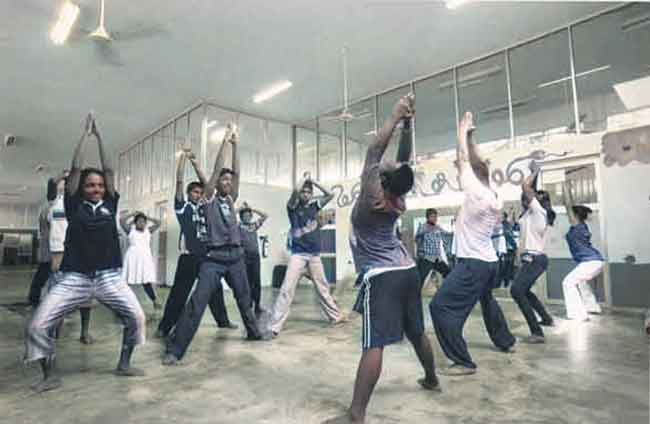
Moratuwa is where it all began and the rehabilitation and enabling programs started to take shape. Over 300 children with Down syndrome, autism, cerebral palsy, and other developmental disorders have benefited from the daily programs designed to meet wide-ranging individual needs. Our dedicated teams have engaged disabled children in various vocational training initiatives, ranging from music, cookery, and electronics to agriculture.
This program has produced a drumming troupe consisting entirely of Down syndrome children, who have performed with maestro Ravi Bandu. There are others who have learnt skills in baking, sewing, and rug-weaving, competencies which will enable them to actually earn a living. The ‘Rainbow Centre,’ as the rehabilitation unit is known, has truly brought colour, light, and variety to the lives of many children, who would otherwise be condemned to an existence of dreary darkness.
The center provides specialized and individual attention, which are not available in mainstream schools, for children with developmental disorders. Many such children are from low income families, for whom private therapy is not even a distant dream. The physiotherapy unit at the center provides weekly, free-of-cost services, as opposed to national hospitals, where the concerned parents would be fortunate to obtain an appointment once in three months. The regular therapeutic and training engagements ensure the continuity of developmental attention to affected children, whilst enabling mapping and evaluation of progress.
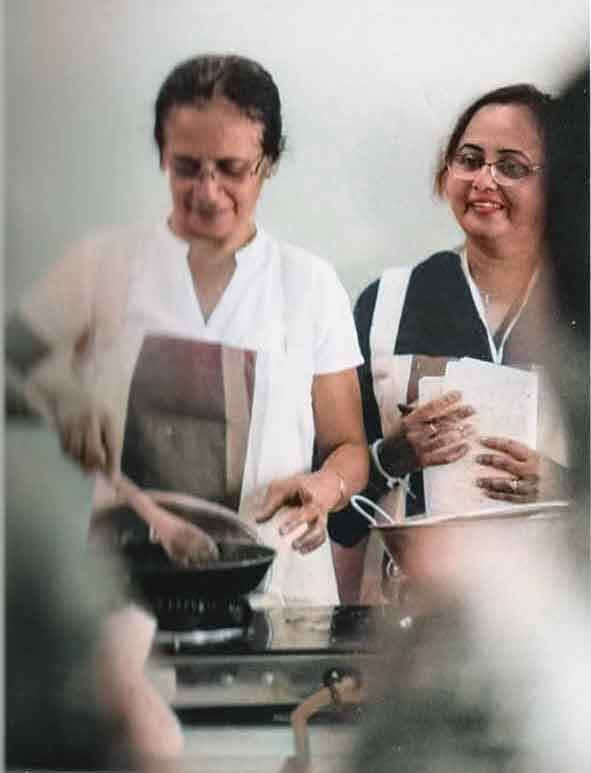
One of its most important and rewarding programs has been the Women’s Development Initiative. Over the past decade, over 1,000 women have benefited, acquiring skills in cookery and sewing. A women’s group has been provided a sales outlet in Moratuwa, to distribute their products through Uber Eats, enabling them to market their food as far away as Peliyagoda!
MJF Center East
After the Moratuwa Centre had become fully functional, I instructed Anura Gunasekera, a Senior Manager in our company, to find suitable land for similar centers in the north and the east. That led to the purchase of a 20-acre abandoned cashew plantation in Kalkudah which, in 2018, opened for operation as a fully-equipped duplicate of the Moratuwa Center, catering to a similar spectrum of activities.
These two main centers are supported by sub-facilities in Peliyagoda, Pallansena, Pitipane, Siyambalanduwa, Point Pedro, Ampara, Udawalawe, Ambagahawatte, and Weligama. The Ambagahawatte facility is dedicated to the rehabilitation and therapy for children with cerebral palsy and other developmental disorders.
The Eastern Province has no other such facility that provides a multiplicity of interventions, addressing a wide spectrum of issues related to both children and adults. On a broad front, there are similarities between the individual and community needs in the societies that the two centers address. However, the requirements of the eastern society are compounded by the regional impact of our long ethnic war, the 2004 tsunami, and the impact of the normal misfortunes common to scattered, but numerous farming and fishing communities, which are always at the mercy of disruptions to the climate, the weather, and the marketability of their produce.
The other factor is that in a region, in which the civilian administrative infrastructure is hard-pressed to meet the normal, basic needs of the larger community, the provision of specialized, transformational initiatives targeting special individuals and groups, naturally become a secondary consideration. Hence, in terms of impact and consequence, Kalkudah possibly supersedes Moratuwa, as it fills a huge community service gap in the region.
Its first programme commenced in the latter part of 2018, targeting children of several age groups with a wide range of learning and developmental activities. In July we launched several rehabilitation and teaching programmes for children with special needs, especially sensory and cognitive impairment, replicating the ‘Rainbow Centre’ activities of the Moratuwa complex.
The Eastern Province, as in the north, is a region with a high proportion of families led by single women. In view of the shortage of casual. low-middle level employment opportunities in the region, unlike in an urban environment, providing avenues of steady income for such women was a special focus of the center. Therefore, we designed several agri-based interventions, involving these women in the cultivation of short-term crops, on land in close proximity to their homes, ensuring both empowerment and income generation through occupations they were comfortable with.
All these centers are run by dedicated groups of people, many of the individuals being specialists in the care-giving and rehabilitation facilities that we offer. Rehana Wettasinghe has, for many years, been the driving force at the Moratuwa Centre, whilst Mark Patterson is the Head of the Eastern Centre. I am truly appreciative of the care and attention that these individuals and their teams bring to an immensely-challenging assignment, which requires devotion and a consuming passion for what they do, far surpassing the normal obligation to duty.
Post tsunami expansion
The 2004, Boxing Day tsunami, the greatest natural disaster in modern times, devastated our communities along the island’s entire coastline. The estimated death toll was around 40,000, whilst the long-term damage to livelihoods and normal life was inestimable. The scale of the disaster and the consequent rehabilitation requirements compelled an unplanned, exponential expansion of the scope of the Foundation. Overnight, our mission was forced to grow wings.
Dilhan and a colleague, who visited the south as soon as the waters receded, first selected 55 families for immediate rehabilitation. In a parallel move in Colombo we set up a Tsunami Relief Logistics Centre. Our teams visited Hambantota, Ambalantota, Rekawa, and Kilinochchi and established refugee centres where affected people were provided with meals. We also visited and assisted, with the help of the Government forces, in areas in the north which were under LTTE control. This was an exercise which required a high degree of diplomacy and a transparent display of sensitivity, to the custodians of a society which had been engaged in a war of attrition with the State for over two decades.
Fishing communities were rehabilitated with funding for the purchase of boats, nets, and other equipment, working with CEYNOR a Sri Lankan Government and NORAD Joint Venture. According to one assessment, in the tsunami-hit areas, only 10% of the boats and fishing gear had survived. Over 200 bicycles were also provided, to enable fishermen to transport their daily catch at the end of the day. Provision of basic housing for those who lost their dwellings was another issue that we addressed. The focus was entirely on enabling the beneficiaries to become self-sufficient, in the shortest possible time.
Small Entrepreneur Program (SEP)
Assistance on a different scale was provided to small-time single entrepreneurs, people who were identified as having the capacity to develop and run a small industry on their own and expand it gradually, whilst providing employment to others in the community. One of the first of such beneficiaries was a mushroom grower, a single mother, who had lost everything in the tsunami. That was the beginning of the Small Entrepreneur Program (SEP), which eventually grew in to a separate project of its own, empowering over 2,000 individuals and benefiting their families and communities. In our closely-connected rural farming societies, where the SEP has been most active, caring and sharing are still very lively community virtues.
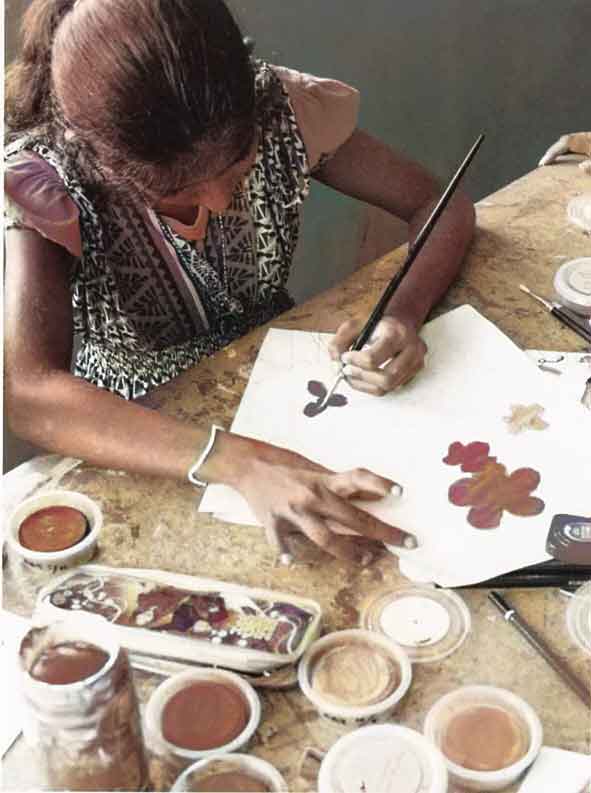
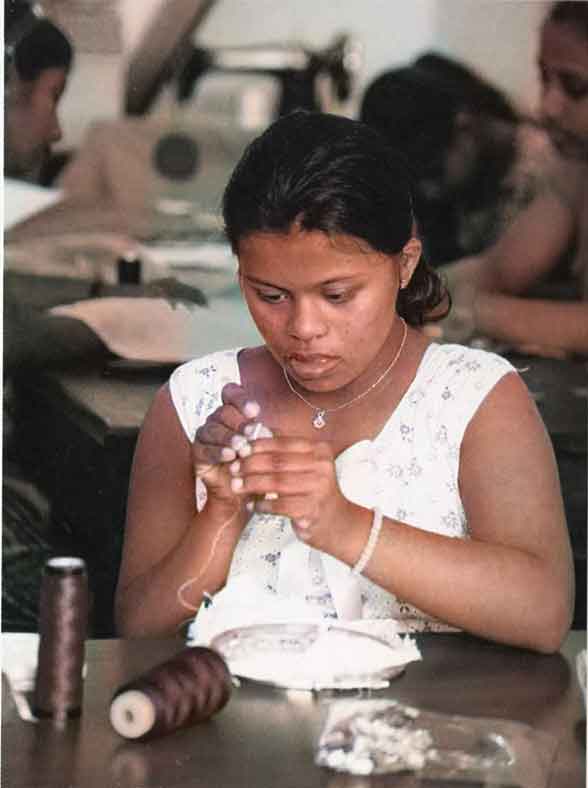
This scheme included Ayurveda practitioners, watchmakers, tailors, builders, papadam producers, carpenters, potters, fruit cultivators, beauty therapists, and textile manufacturers; practitioners of diverse trades and skills, bound by a common misfortune and driven by a single desire – the determination to re-establish themselves as independent entrepreneurs and to regain personal responsibility for their respective destinies. Some of the products of such enterprises, such as the specialised `Mankada’ pottery from a small community in Uda Walawe, have been marketed in Poland, New Zealand, and Australia, riding on the back of the Dilmah tea marketing network.
The SEP soon generated its own dynamic and close upon 1,000 different projects have now been launched in various parts of the country. This program includes an apprenticeship course, in which are trained anew in various skills and assisted to set themselves up in independent enterprise thereafter. The project also addresses the rehabilitation of ex-prisoners, who demonstrate a genuine desire to reform themselves and be accepted as responsible members of society. To date nearly 300 former prisoners have been assisted and not one has reverted to crime.
In fact, one ex-prisoner, who was released to society on conditional parole, set up an orange orchard in Ampara with assistance from the SEP and made such a success of the project that the outgrower system he generated eventually spread across a couple of hundred acres, benefiting several communities. He also launched a yoghurt production business, purchasing the milk from village cattle owners, creating a new enterprise with multiple benefits. I am very glad that Dilhan, with his insistence, dispelled my initial reluctance to get involved with this individual with a decidedly violent past.
SEP and its role in the North and East
The collateral damage of armed conflict is most visible in the resultant disruption to family life. Men go to war, whilst wives, mothers, and sisters stay back to look after the home and the children. In our war, as in such conflicts elsewhere in the world, many of the men did not return, leaving families to be led by single women. This problem seemed to be more acute in the north and the east than elsewhere in our country.
The Foundation was able to connect with a dedicated and civic-minded Christian priest, Father Damian Soosapillai of Point Pedro, and through him, give livelihood assistance to about 500 war widows. These single women were provided with the necessary equipment and facilitation, to practice trades and skills interrupted by the war or given training in new vocations so that they could quickly take charge of their own lives.