
News
The success story behind developing Rathna Ella as an eco-tourism venture


By Ifham Nizam
Rathna Ella, the 14th highest waterfall in Sri Lanka, has been developed as an eco-tourism venture by the National Ethnic Unity Foundation (NEUF) with GEF-SGP/UNDP funding.
Situated within the 345-hectare Rathna Ella Conservation forest at Hasalaka in the Kandy district, the waterfall is formed by the Hasalaka Oya, the only water source available for drinking and agricultural purposes to around 2,000 families.
On average, around 5,000 people visit the waterfall annually, of which 80% are local tourists.
“As the first step, we mobilized villagers to conserve the Rathna Ella forest by forming Soba Mithuro of Rathna Ella (Nature Friends of Rathna Ella) to regularize eco-tourism activities in the area by ensuring the safe disposal of waste, improvement of facilities available to visitors, and in general, formalize eco-tourism, while offering the villagers an opportunity to enhance their livelihoods”, says NEUF Chairman, B. W. Gunasekara.
Soba Mithuro, headed by its president and an executive committee, has a membership of 37 persons representing families of the village. It collaborates local residents, especially the youth, who are one of the main beneficiaries of the project.
 Initially, the CBO (Community-based Organization) identified key issues in the Rathna Ella village due to unplanned tourism. As the project proponent, the NEUF was able to effectively mobilize villagers to conserve the environment, while giving them the opportunity to benefit from eco-tourism related activities.
The Sri Jayewardenepura University carried out water and soil analysis of the entire landscape. They collected water and soil samples for analysis to determine the health of the ecosystem of the project area.
The Mahaweli Authority supported the initiative by providing training to villagers on livelihood development activities and self-employment. It also contributed towards providing sewing machines to them.
The Department of Agriculture provided training on organic agriculture to the farmers through agricultural instructors.
As the project was an eco-tourism development venture, it was very attractive to youth and many were keen to get involved. At present, about 20 youth are actively involved in its activities. The project facilitated capacity building of youth in enhancing their ability to undertake small-scale business ventures, Gunasekara noted.
The key objectives of the project are to conserve the Rathna Ella, Kaluwawatuna Ella falls and Rathna Ella Conservation forest through the empowerment and involvement of the community and to improve the livelihoods of 20 families in the village by developing eco-tourism related income generating activities.
The initiatives of the project is to offer benefits to villagers, offer a memorable experience to tourists and contribute effectively towards the sustainability of the pristine environment and its biodiversity.
Among the work undertaken under the project include the establishment of an information outlet on the Rathna Ella village and the surrounding ecosystem. Visitors will be advised on how to behave in a manner that would preserve the environment and also on taking necessary precautions to avoid accidents.
A sales outlet was established to display locally made handicraft and food items by villagers, which helps to strengthen their livelihoods considerably.
The project has also supported the development of traditional reed handicrafts and train women to continue the traditional artisan work. Boots, torches and ropes needed for hiking are also provided to visitors.
A waste management plan is also in place with many trash bins in various places. The waste collected is recycled or safely disposed to prevent pollution and prevent injury to visitors. The project also promoted organic farming in the village, which was a relatively new concept for the farmers.
Organic farming activities promoted by the project have emphasized the production of organic fertilizer with the dual objective of safeguarding the environment and promoting eco-friendly farming practices. Promotion and familiarization of organic farming and home gardening have helped minimize chemical pollution of soil and water in the downstream area. The project has trained 15 families to make their own organic fertilizer.
Rathna Ella Conservation forest was the primary source of income for some villagers. In the past, illegal activities such as logging, gem mining and cutting trees for firewood were widespread within the forest. The eco-tourism project promoted sustainable income generating opportunities to ensure that the pressure on the forest for livelihoods was minimized.
Other products sold to visitors include dairy products, paper bags, garments, disposable masks, reed-based products, traditional foods and value added agricultural products.
Moreover, the beneficiaries also operate home-stays and camping sites, undertake grain milling, sell potted plants, paper bags and clothing items. At present, 44 individuals are engaged in home gardening, which has been introduced as an optional livelihood activity. The average monthly household income of the villagers was around Rs. 23,500 at the beginning of the project. This has now increased to Rs. 40,000 as a result of related activities.
Seed paddy varieties were also distributed among 15 families to start their own cultivation. These varieties enjoy a high demand among consumers and can fetch a good price compared to more common varieties of rice in the local market.
During the height of Covid-19 pandemic, the tourism industry collapsed, and the villagers had few opportunities to make a living. The CBO stepped in by providing fertilizer, vegetables and grains to 43 needy families.
The possibility of marketing products at hotels, restaurants, eating houses, grocery stores and in supermarkets in the Hasalaka and Mahiyangana areas is also being explored.
The project facilitated several self-employment opportunities and small businesses for the women in the village. At present, 37 women who had been previously confined to doing household chores are self-employed, adding to the household income. They are now able to earn an average monthly income of Rs. 40,000 through their business ventures.
As there are no foreign tourists visiting the site now due to the Covid-19 pandemic, the women have started to make disposable masks to support their families, Project Coordinator, Thilina Madushanka, said.




The U.S. Embassy in Colombo welcomed the U.S. Sports Envoys to Sri Lanka, former National Basketball Association (NBA) and Women’s National Basketball Association (WNBA) players Stephen Howard and Astou Ndiaye, from June 8 through 14.
The Public Diplomacy section of the U.S. Embassy said that it would launch a weeklong basketball program intended to harness the unifying power of sports, made possible through collaboration with Foundation of Goodness and IImpact Hoop Lab.
While in Sri Lanka, Howard and Ndiaye, both retired professional basketball players, will conduct a weeklong program, Hoops for Hope: Bridging Borders through Basketball. The Sports Envoys will lead basketball clinics and exhibition matches and engage in leadership sessions in Colombo and Southern Province for youth aged 14-18 from Northern, Uva, Eastern and Western Provinces, offering skills and leadership training both on and off the court. The U.S. Envoys will also share their expertise with the Sri Lanka Basketball Federation, national coaches, and players, furthering the development of basketball in the country. Beyond the clinics, they will collaborate with Sri Lankan schoolchildren to take part in a community service project in the Colombo area.
“We are so proud to welcome Stephen and Astou as our Sports Envoys to Sri Lanka, to build on the strong people-to-people connections between the United States and Sri Lanka,” said U.S. Ambassador Julie Chung. “The lessons that will be shared by our Sports Envoys – communication, teamwork, resilience, inclusion, and conflict resolution – are essential for leadership development, community building, equality, and peace. The U.S. Sports Envoy program is a testament to our belief that sports can be a powerful tool in promoting peace and unity.”
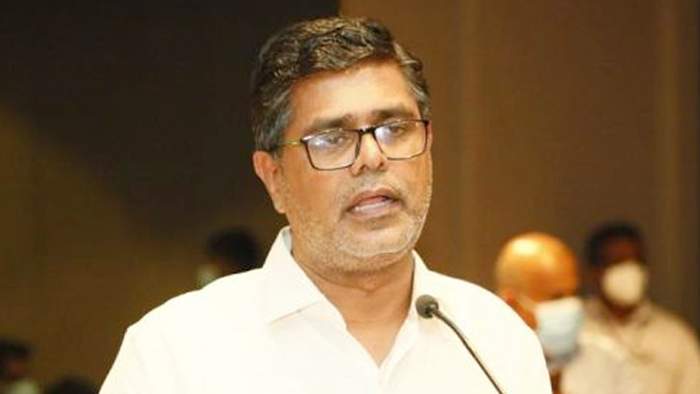
SJB Colombo District MP Mujibur Rahuman in parliament demanded to know from the government the reasons for CEB suspending the leave of all its employees until further notice from Thursday.
MP Rahuman said that the CEB has got an acting General Manager anew and the latter yesterday morning issued a circular suspending leave of all CEB employees with immediate effect until further notice.
“We demand that Minister Kanchana Wijesekera should explain this to the House. This circular was issued while this debate on the new Electricity Amendment Bill was pending. There are many who oppose this Bill. The Minister must tell parliament the reason for the urge to cancel the leave of CEB employees,” the MP said.However, Speaker Mahinda Yapa Abeywardena prevented Minister Wijesekera responding to the query and said that the matter raised by MP Rahuman was not relevant.
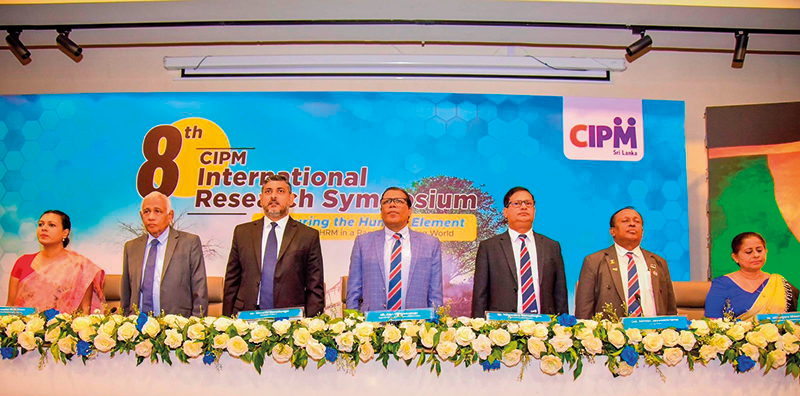
The Chartered Institute of Personnel Management (CIPM) successfully concluded the 8th Annual CIPM Symposium, which took place on 31st May 2024. Themed “Nurturing the Human Element—Redefining HRM in a Rapidly Changing World,” the symposium underscored the pivotal role of human resource management (HRM) in today’s dynamic global landscape. Since its inception in 1959, CIPM has been dedicated to advancing the HR profession through education, professional development, and advocacy, solidifying its position as Sri Lanka’s leading professional body for HRM.
Ken Vijayakumar, the President of the CIPM, graced the occasion as the chief guest. The symposium commenced with the welcome address by the Chairperson, Prof. Arosha Adikaram, followed by the Web Launch of the Symposium Proceedings and Abstract Book by the CIPM President. The event featured distinguished addresses, including a speech by Chief Guest Ken Vijayakumar, President of CIPM, and an address by Guest of Honor Shakthi Ranatunga, Chief Operating Officer of MAS Holdings Pvt. Ltd., Sri Lanka.
The symposium also featured an inspiring keynote address by Prof. Mario Fernando, Professor of Management and Director of the Centre for Cross Cultural Management (CCCM) at the University of Wollongong, Australia.
Vote of Thanks of the inauguration session was delivered by Dr. Dillanjani Weeratunga, Symposium Co-chair.
The symposium served as a comprehensive platform for researchers to present their findings across a wide range of critical topics in HRM. These included Cultural Diversity and Inclusion, Talent Development and Retention, Ethical Leadership and Corporate Social Responsibility, Adapting to Technological Advancements, Mental Health and Well-being at Work, Global Workforce Challenges, Employee Empowerment, and Reskilling and Upskilling.
The plenary session was led by Prof. Wasantha Rajapakse. Certificates were awarded to the best paper presenters during the valedictory session, followed by a vote of thanks delivered by Kamani Perera, Manager of Research and Development.
The annual symposium of CIPM was a truly inclusive event, attracting a diverse audience that spanned undergraduates, graduates, working professionals, research scholars and lecturers. This widespread interest highlights the symposium’s significance in the field of HRM, offering a unique opportunity for everyone to network and learn from scholarly brains.The CIPM International Research Symposium was sponsored by Hambantota International Port, Sri Lanka Institute of Information Technology (SLIIT), E B Creasy & Co. PLC, and Print Xcel Company.



US sports envoys to Lanka to champion youth development

Rahuman questions sudden cancellation of leave of CEB employees


