
Life style
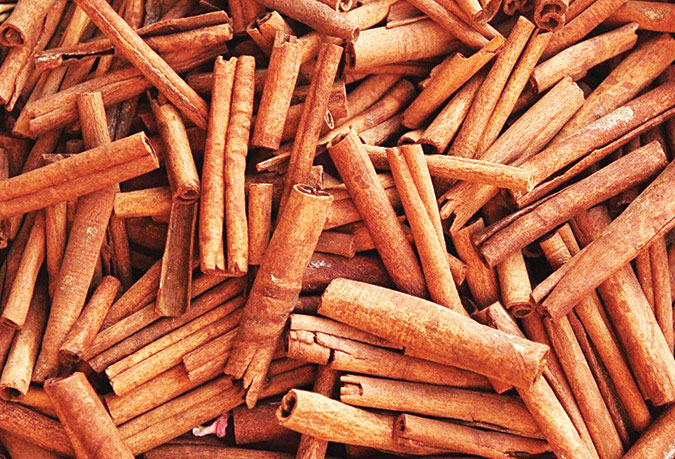
The story of the Ceylon spice: harvesting ‘true cinnamon’

By Zinara Rathnayake
It is 9am in the Carlton estate in Thihagoda, a small town about 160km (100 miles) south of Sri Lanka’s capital Colombo, and the July sun hides behind inky clouds. The air is thick and hot. Two men walk to the main estate building carrying piles of cinnamon branches. Inside, a group of women sit on the cement floor, chatting as they peel cinnamon.
Since 2000, workers here have planted, harvested and peeled cinnamon, sending batches of the fragrant sticks to a factory in Kamburupitiya, a 15-minute drive away, where they are cut, packed and loaded onto shipping containers for export.
Cinnamon harvesting usually takes place from June to December when the monsoon skies burst into downpours. But here at Rathna Producers Cinnamon Exports, it is produced throughout the year on the 42-acre (17 hectares) estate. “When we are done harvesting one acre, the next acre is ready,” says Chamara Lakshith, 28, the estate’s visiting officer, whose job involves coordinating between the estate and the main office in Kamburupitiya. “But sometimes for a few weeks, the bark is so hard that you can’t peel cinnamon. We know it by looking at the trees; young leaves turn striking red.”
The family business that began in 1985 is run by Ravindu Runage, whose late father started in the cinnamon trade with 7,000 Sri Lankan rupees ($35) to buy cinnamon from small farmers and sell it to bigger traders.
Now, Runage says the company is one of the largest cinnamon producers in Sri Lanka, exporting cinnamon and other spices like nutmeg and black pepper to 56 countries. Apart from growing organic cinnamon, the company also sources it from 8,000 individual and small-scale farmers and exports more than 30 containers of cinnamon a month.
“We grew up with cinnamon,” says 36-year-old Runage, at his office in Kamburupitiya, surrounded by several industry awards his family has won over the years. “We lived in a two-bedroom house. We slept in one room. In the other room, my thaththa [father] stored cinnamon.”
Once they were in the business, the Runage family learned that Mexico is one of the biggest cinnamon consumers. “So thaththa learned English and visited Mexico in 1998 to find a buyer,” says Runage. “But they spoke Spanish. So thaththa sent his business cards to companies he found in a telephone book.”
“Five months later, we sold our first container of cinnamon to Mexico.”
The world’s best cinnamon
There are two types of cinnamon in the Western market: Ceylon cinnamon (named after the title British colonisers gave to Sri Lanka) and cassia. Ceylon cinnamon is native to Sri Lanka; it has a lush, inviting scent and a sweet taste, and its quills are soft and light brown in colour. Cassia comes from other Asian countries like China, Indonesia and Vietnam; its bark is sturdy with a rough texture, it is dark brown in colour and is stronger and hotter in taste. Cassia is considered lower quality, while Ceylon often triumphs as the pure, “true cinnamon”.
The process of producing this cinnamon includes several laborious, time-consuming steps. This is also why Ceylon cinnamon is expensive in the market while cassia is cheap, Runage says.
At the estate, seeds are planted in grow bags. After one year, saplings are cultivated. Harvesting begins four years later.

Ravindu Runage’s late father started Rathna Producers Cinnamon Exports in 1985; they have now won several industry awards
For harvesting, farmers cut down the branches of cinnamon trees at an angle, which allows cinnamon bushes to regrow, Lakshith says. Young and tender twigs are thrown away. Once branches are soaked in water and are moist enough, peelers remove the outermost layer of the cinnamon bark. To produce thin cinnamon quills, they spend hours stripping off the inner bark of the cinnamon branch in sheets.
Once produced, Ceylon cinnamon quills are graded based on their width; the thinner the quills, the higher they are in value. Alba is the highest form of cinnamon, with a diameter of 6mm. H1 is a lower grade of cinnamon, with a diameter of 22mm. In the export market, Alba costs twice as much as H1.
A generational craft
With a hearty smile, Suduhakuru Piyathilake holds a large batch of cinnamon quills. Piyathilake and his wife have been living in an old, dilapidated house next to the estate’s main building for 10 years now.
At 5am every day, Piyathilake heads off to the plantation. After collecting branches from about 15 trees, he plods back to the water tank in the main building, drops them off for soaking and returns to the plantation. He must make several trips back and forth before he begins peeling.
“When it’s moist, it’s easy to peel,” says the 55-year-old. “That’s why we cut them early in the morning and soak them.”
When the clock hits 10am, Piyathilake comes back with the last batch. After five hours, he has collected the branches of 200 trees. Sweat trickles down his forehead. A resident kitten swats at his feet, but Piyathilake ignores it and rushes in for a shower.
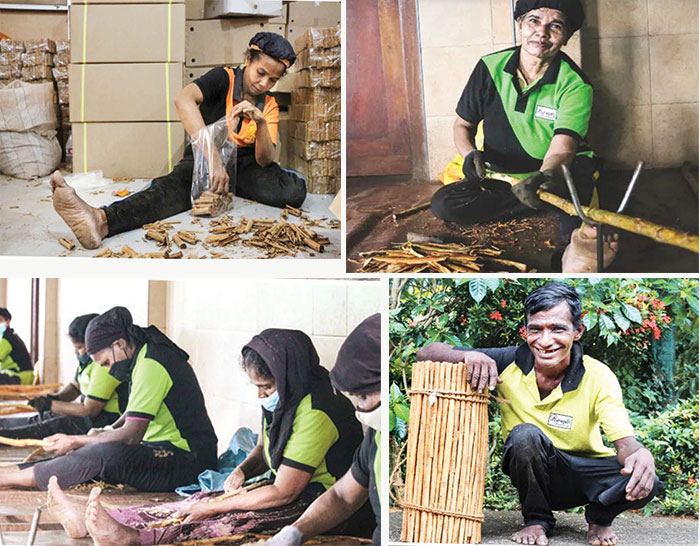
After a two-hour break, he sharpens his knife by scraping the outer bark of the branch and then he gets to work. “This is what my father and his father did,” he says. “Now my sons are cinnamon peelers.”
Piyathilake has been peeling cinnamon for the last 43 years. He learned the craft from his father in their village in Elpitiya, 70km north of the Runage family estate, where his children live with his mother. At home, cinnamon trees adorn their back yard, Piyathilake says. “But it’s a small garden so we can’t harvest cinnamon every day of the year. We don’t make much money there. So I work here with my wife. We only see our children once in every four months.”
Piyathilake is so adept at work that he can masterfully strip off extremely thin barks of the cinnamon branch by merely measuring them next to his index finger. After peeling the outer bark, he makes two cuts on two opposite sides before peeling off the inner bark. A half a length cut of your smallest bone is for Alba, Piyathilake says. For “rough” or H1 cinnamon quills, Piyathilake uses the length of two bones of his index finger.
However, even for experienced generational peelers like Piyathilake, making extremely thin Alba cinnamon is profitless. By 10pm – when he sets off to sleep – Piyathilake can have peeled about 5kg of lower grade cinnamon, earning about 2,500 rupees ($12.50) per kilogramme. “But I will only make just one kilo of Alba for the whole day,” he says. “Alba is smaller and lightweight so you need to make more quills to make up a kilo – that earns me only 4,300 rupees [$21.50].”
When Piyathilake removes the inner bark, it curls up within a few minutes under the shade. These barks are then stuffed with small cuttings of the bark called quillings to make one 42-inch (1 metre) quill. Quills are placed on ropes under the roof for drying. After three days, peelers pack them into bales and send them off to the factory.
For Piyathilake and his family, cinnamon is their bread and butter, but it is also much more than that. “It’s a craft you have to master for years. I started peeling cinnamon when I was 12. It took me several years to strip off thin layers of the inner bark without damaging it,” he says.
Skills shortage
For producers like Runage, however, it is not always easy to find skilled labour. At the Carlton estate, Piyathilake is one of their last experienced peelers. Runage feels that finding generational peelers is one of the biggest challenges in the business today.
“Peeling cinnamon requires hard labour, so the younger generations don’t want to do it any more. They prefer office jobs. It doesn’t necessarily mean that these office jobs will pay you more than peeling cinnamon, but an office job has a better social image today,” says Runage. “People consider peeling cinnamon as a low-level job, so it’s difficult for us to find experienced peelers now.”
Back at the estate’s main building, grey-haired Heenipellage Chandra sits on a floor mat, her eyes focused on the cinnamon bark she peels. For 10 years, the 62-year-old has walked to the estate daily to peel at least 3kg of cinnamon. Chandra recalls Runage’s father visiting her house in the late 1980s. “He came to meet my father-in-law and buy cinnamon from him.”
Chandra has been peeling cinnamon at home since she was married. “Somewhere in the late 1970s,” she says, trying to recall her wedding day, “Husband’s father and his father, all of them peeled cinnamon.”
But Chandra’s children do not peel cinnamon any more. Both her 20-something sons do office jobs, says Chandra as her eyes twinkle with a smile. She is proud of her sons. They have climbed the social ladder.
When the coronavirus pandemic began, most resident cinnamon peelers left for their homes during the months-long lockdowns. Runage had to shuffle his staff around to find labour; women from the factory were relocated to the estate to peel cinnamon.
– AL JAZEERA



Institute of Hospitality Sri Lanka
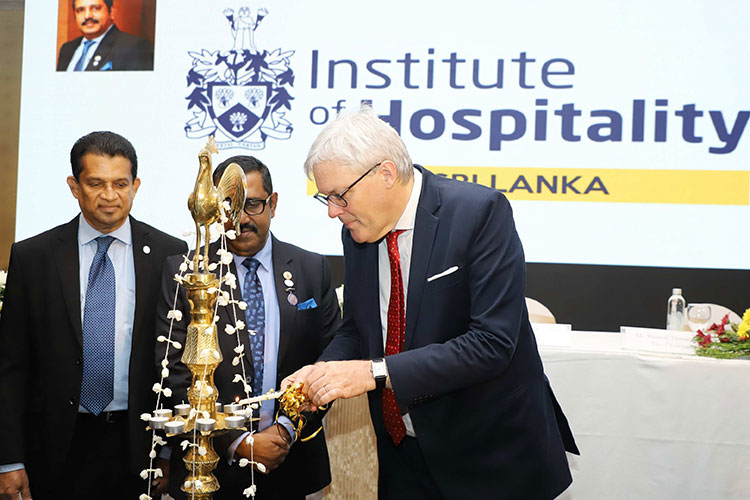
 The 32nd Annual General Meeting (AGM) of the UK-based Institute of Hospitality’s Sri Lanka Chapter was held recently at the Ramada Hotel Colombo,.The event provided an evening of camaraderie , reflection of the past and present achievements,setting new benchmarks for the future
The AGM had the presence of two distinguished guests, the Chief Guest Opposition Leader Sajith Premadasa, and the Guest of Honour British High Commissioner to Sri Lanka, Andrew Patrick. Their inspiring speeches were lauded by all hoteliers who were present at the occasion
A special thanks was extended to Robert Richardson, CEO of the Institute of Hospitality UK, along with his team, sponsors, committee members, and all attendees for making the event memorable.
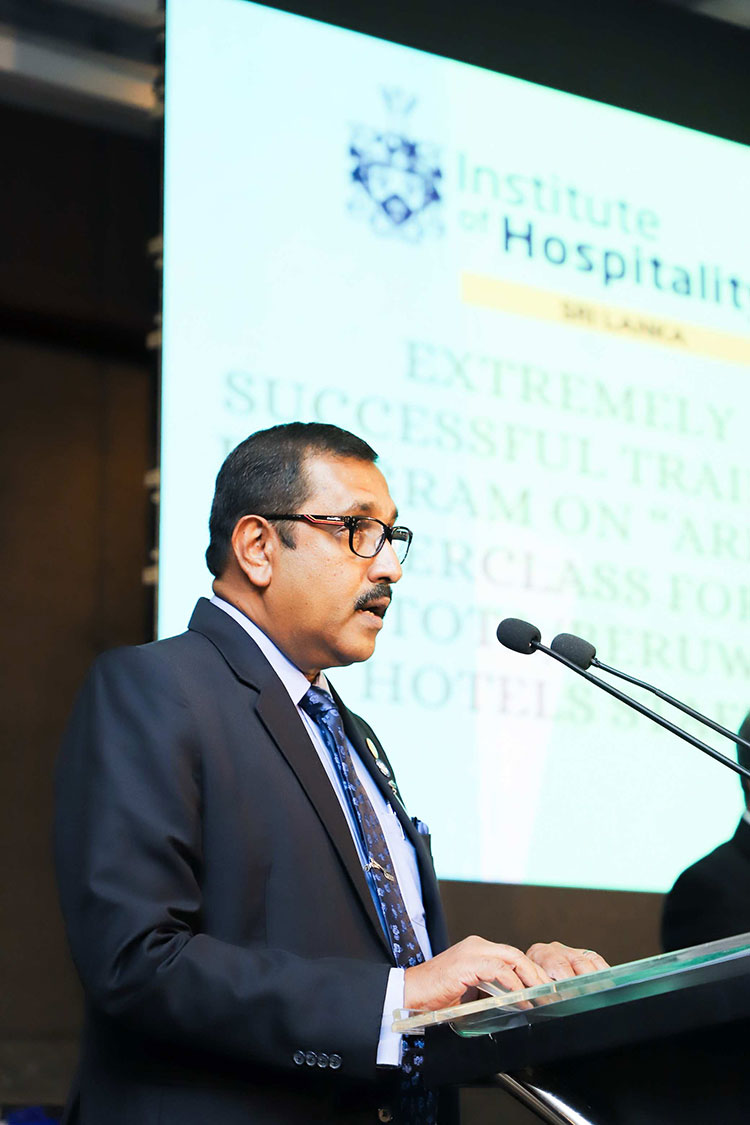
Dr. Harsha Jayasingh, Past President of the Institute of Hospitality (UK) Sri Lanka Chapter, emphasised the Institute’s longstanding history and the strength of its Sri Lankan branch. “The Institute of Hospitality (IH) UK has a history of 86 years, and we are proud to be the Sri Lanka Branch. IH Sri Lanka is much stronger now with many members from all areas of the hospitality industry,” he stated.
Dr. Jayasingh highlighted the significant role of tourism in Sri Lanka’s economy,. He said tourism it is the third-largest source of revenue for the country. “Tourism accounts for about 13.3% of total foreign exchange earnings and employs 450,000 people directly and indirectly. The hospitality industry in this island of pearl holds tremendous potential for economic growth, job creations, and cultural exchange,” he added.
He also pointed out more women should be attracted to the industry and advocated for the use of technology in hospitality sector to attract the younger generation.
The newly appointed Chairman Ramesh Dassanayake spoke about the challenges faced by the industry, including the reluctance of youth to join the sector. . Dassanayake expressed concerns over the migration of staff between hotels and the overall ‘brain drain’ in the sector. ” We must maintain high standards in the hotel We must try to attract tourists to Sri Lanka, we must have with many facilities Hence, hotel schools and other professional institutions involved in skills development mustincrease their intakes,” he pointed out.
Chief Guest Sajith Premadasa emphasised the importance of eco tourism and said “We need to have an environmental policy related to tourism in place,” . .
The 32nd AGM of the Institute of Hospitality UK, Sri Lanka Chapter, was a testament to the strength and potential of Sri Lanka’s hospitality industry. The insights and commitments shared during the event set a new benchmark for the future.(ZC)



Pix by Thushara Attapathu
Life style
He recognizes human identity beyond boundaries of gender, race, nationality and religion.
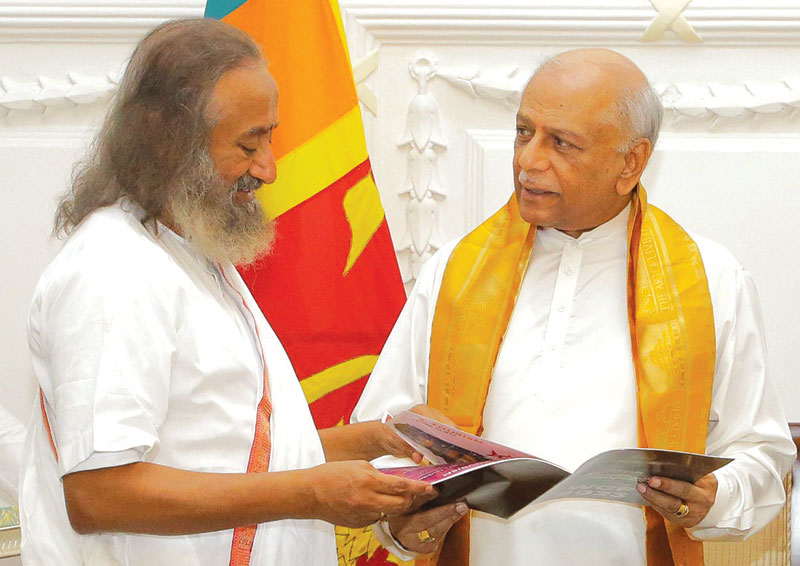
Visit of Sri Gurudev to Sri Lanka
Humanitarian, spiritual leader and Global Ambassador of Peace Gurudev Sri Sri Ravi Shankar (Sri Gurudev) was in Sri Lanka on a three day tour on the invitation of the Prime Minister of Sri Lanka Dinesh Gunewardene. Gurudev who inspired a wave of volunteerism and service to moot one of the largest volunteer-based organisations in the world – The Art of Living – visited the various projects under the aegis of the foundation and launched twelve vocational and technical centers around the island. He was accompanied by thousands of followers from Sri Lanka and around the world.
Gurudev who visited Sri Lanka for the sixth time also had a first day cover launched in honour of his visit. He is a strong proponent of spreading happiness, using the unique Sudarshan Kriya, yoga, meditation and practical wisdom to unite people, empower individuals and transform communities. His programmes provide techniques and tools to live a deeper, more joyous life, while his non-profit organisations recognize the human identity beyond the boundaries of gender, race, nationality and religion.
The Art of Living which has more than 30,000 teachers and over one million volunteers across 180 countries has touched in excess of five hundred million people around the world. CNN called it “Life Changing” and The Washington Post headlined it, “Fresh air to millions”.
In Trincomalee, Gurudev met with war victims and had a heartwarming engagement with the children from the children’s homes run by the Foundation. He also visited the Koneswara Temple in Trincomalee and graced the Kumbhabhishekam at Seetha ecogPnize the human identity beyond the boundaries of gender, race, nationality and religion. Amman temple at Nuwara Eliya. He held discussions with the trustees on the progress of the foundation’s social service projects, while also holding a special event – Ekamuthuwa – attended by a large number of dignitaries and his devotees from around the world.
His time with the Prime Minister was spent discussing the prospects of unity in diversity and uniting Sri Lanka by adding happiness into the formula of living. In addition he had discussions with the Speaker of the Parliament of Sri Lanka Mahinda Yapa Abeywardena, prominent business stewards and civil society leaders.
by Zanita Careem
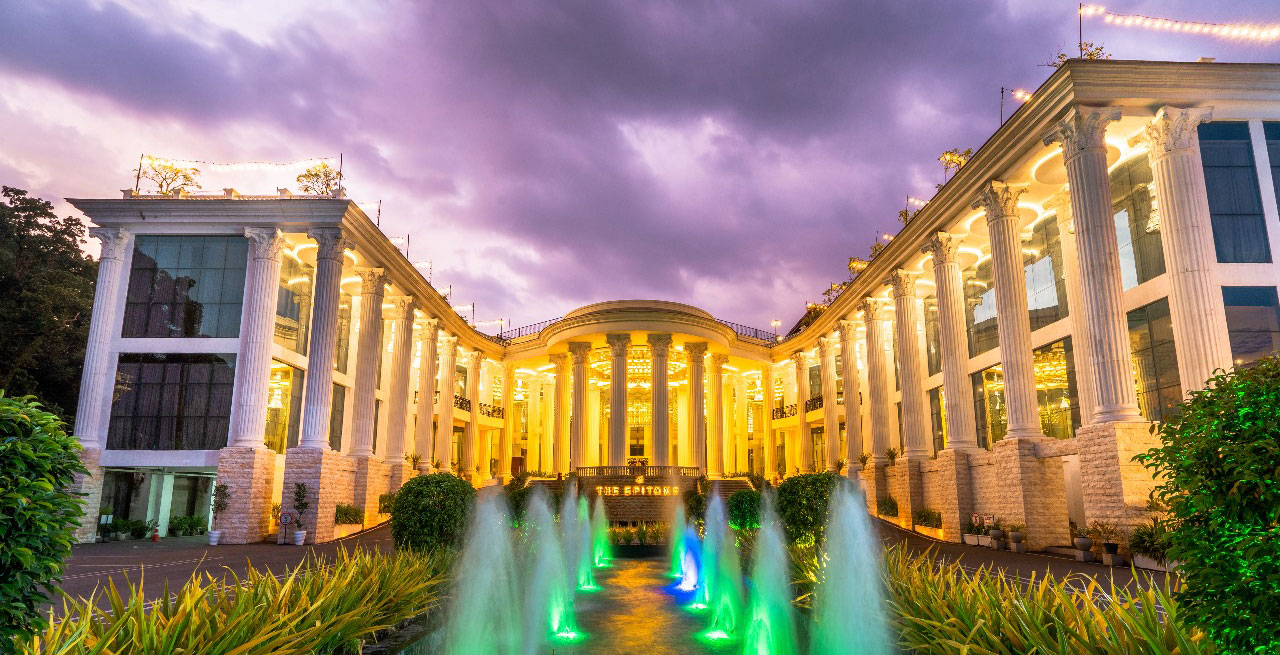
Envison your dream wedding day come to life at the Epitome Hotel, a prestigious city hotel in Kurunegala offering an unrivalled luxury rendors experience for weddings.
The venue is designed to embody opulence and luxury from all quarters for a spectacular wedding in kurunegala,Thier ballroom is the largest banquet facility in Sri Lanka It can be divided into six luxurious pillarless wedding halls on the ground floor and 25pax smaller banquet halls.
It can be easily named as a five star heaven in the heart of the city contributing to a myriad of immense experiences tailored to inspire and delight wedding experiences.
From opulent décor set up to exquisite table decor, lavish food, every detail is meticulously curated to spark your imagination and ignite creativity for a perfect wedding. The previous prestigious wedding shows season one and season two attracted large crowds
were unique events which gave the wedding vendors and potential clients had an opportunity to connect and interact with each other. Beyond being a showcase it was a chance for the wedding vendors to unite and contribute to the vibrancy of the wedding industry. The wedding show covered all area of the bridal industry providing a comprehensive variety of bridal supplies from Sri lanka and became the most popular bridal exhibitions in Kurunegala.This bridal exhibitions allowed brides and grooms to experience first hand the products and services available from suppliers in Sri Lanka
These wedding shows held at The Epitome created a benchmark and gave an opportunity for vendors to create connections to the utmost satisfaction said Harshan Lakshita Executive Director. of the magnificent Hotel
Our wedding shows featured experts and professionals in every field‘ It covered all areas of the bridal industry provided a comprehensive variety of bridal supplies from Sri lanka and became most popular bridal exhibition in this region.We are always open to everyone to join us at our wedding shows in the future. It is an opportunity to discover the incredible talent within our local wedding and bridal vendors to make meaningful relationships and plan thier special day at our breathtaking hotel The Epitome said General Manager Kavinda Caldera
The Epitome Hotel’s bridal show which will be held end of June will buzz with great ideas,advice and inspiration for all those who plan thier dream wedding
…….
The Hotel Epitome’s Wedding Season 3 will marked excellence, celebration and inspiration for those in the wedding industry. The exhibition halls will resonate with ideas on exquisite bridal wear to decor, florists , photography etc and showshowcase the rich tapestry of talent within the local wedding industry. .






US sports envoys to Lanka to champion youth development

Rahuman questions sudden cancellation of leave of CEB employees


