
Life style
The journey and evolution of biriyani : From Iran to India

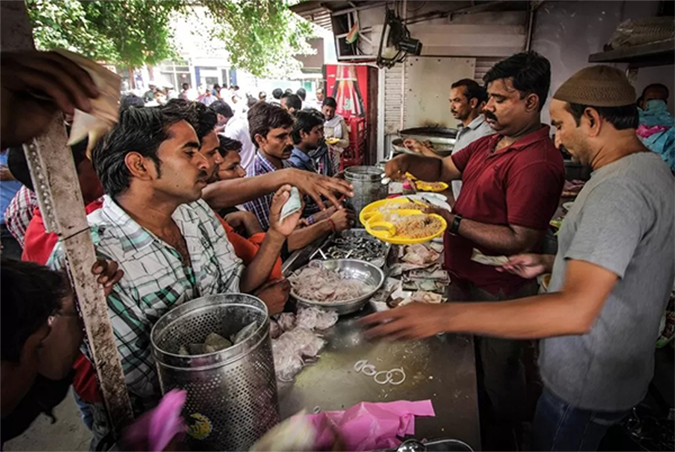
Biriyani is the quintessential celebratory dish in India and an aromatic delicacy that dazzles as a sublime one-dish meal, writes historian and food expert Pushpesh Pant.
The 400-year-old city of Hyderabad is linked in popular mind for its signature biriyani as much as it is with the exquisitely constructed Charminar monument.The biriyani may have become a local landmark, but that doesn’t stop people from asking, “Where did it come to India from and when?”
The lazy “scholars” are quick to opine that it was the genius of Indian people who transformed the “Cinderella of Central Asian pilaff” into the sparkling biriyani, but it is difficult to buy this “thesis”.
A pulav (as pilaff is called in India) is a pulav – call it by any name – and a biriyani is a biriyani – belonging to a very different species.There can be little doubt that biriyani originated in Iran. Even the name biriyani can be traced to the original Persian “birinj biriyan” – literally, fried rice.
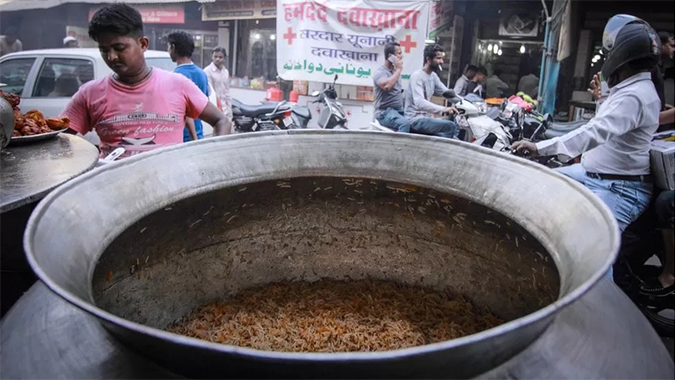
In Iran, the deg (pot) is put on dum (slow cooking to allow the marinated meat to cook in its own juices and perfectly with layered rice and aromatic substances), and the rice is gently fried.
The doyenne of Islamic cooking in India, Salma Hussein, tells us however that the biriyani sold on the streets in contemporary Iran no longer contains rice and has evolved into succulent chunks of meat cooked in an envelope of rumali roti (paper thin bread).But the dish has also evolved in India, where it has a colourful and varied history.
There is no evidence that biriyani first came to this land with the Moguls. It is far more probable that it travelled with pilgrims and soldier-statesmen of noble descent to the Deccan region in south India.It was only much later that the dish meandered along less travelled roads, along the seaboard and the hinterland of the peninsula, donning different local garbs to tickle regional palates.
In present day Kerala for instance, one encounters the Malabar/Mopla biriyani. At times it substitutes meat and chicken in favour of fish or prawn. The spicing is stronger here and its proponents do not miss the aromatic symphony associated with the Hyderabadi product.
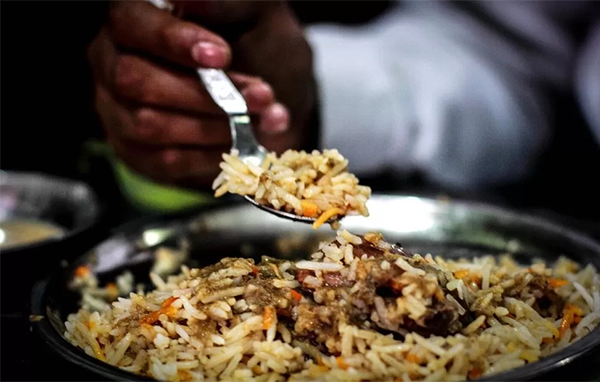
In far off West Bengal, the Dhakai version of the dish from the Bangladeshi capital is no less seductive. It is not unreasonable to suggest that the biriyani could have traversed the sea route to reach this port city, which was once ruled by nawabs (Mughal princes).And along the west coast, the milder Bohri biriyani has many die hard patrons.
A far more robust biriyani – flavourful and satisfying – continues to be cooked in [the central city of] Bhopal where another strain may have come with the Durrani Afghans who once wore the colours of Ahmed Shah Abdali’s army.Then there is the Moradabadi biriyani (made in Moradabad city in the northern state of Uttar Pradesh) that has suddenly (re)surfaced in the capital, Delhi.
And the best example of the “Rajasthani improvisation on the biriyani theme” is arguably the deg prepared for the devout pilgrims at Garib Nawaz ki Dargah at the popular Ajmer Sharif Sufi shrine.Unfortunately though, people remain unacquainted with the real McCoy.
The fare dished out at most eateries can be best described as “frying pan biriyani”.
Here rice may be long grained and a hint of saffron may tint it yellow, but this concoction is not even a distant cousin of true blue biriyani.Even posh hotels and fine dining restaurants don’t bother cooking it from scratch. They have instead, developed the fine art of “assembling” the dum ki biriyani.–BBC



Institute of Hospitality Sri Lanka
 The 32nd Annual General Meeting (AGM) of the UK-based Institute of Hospitality’s Sri Lanka Chapter was held recently at the Ramada Hotel Colombo,.The event provided an evening of camaraderie , reflection of the past and present achievements,setting new benchmarks for the future
The AGM had the presence of two distinguished guests, the Chief Guest Opposition Leader Sajith Premadasa, and the Guest of Honour British High Commissioner to Sri Lanka, Andrew Patrick. Their inspiring speeches were lauded by all hoteliers who were present at the occasion
A special thanks was extended to Robert Richardson, CEO of the Institute of Hospitality UK, along with his team, sponsors, committee members, and all attendees for making the event memorable.
Dr. Harsha Jayasingh, Past President of the Institute of Hospitality (UK) Sri Lanka Chapter, emphasised the Institute’s longstanding history and the strength of its Sri Lankan branch. “The Institute of Hospitality (IH) UK has a history of 86 years, and we are proud to be the Sri Lanka Branch. IH Sri Lanka is much stronger now with many members from all areas of the hospitality industry,” he stated.
Dr. Jayasingh highlighted the significant role of tourism in Sri Lanka’s economy,. He said tourism it is the third-largest source of revenue for the country. “Tourism accounts for about 13.3% of total foreign exchange earnings and employs 450,000 people directly and indirectly. The hospitality industry in this island of pearl holds tremendous potential for economic growth, job creations, and cultural exchange,” he added.
He also pointed out more women should be attracted to the industry and advocated for the use of technology in hospitality sector to attract the younger generation.
The newly appointed Chairman Ramesh Dassanayake spoke about the challenges faced by the industry, including the reluctance of youth to join the sector. . Dassanayake expressed concerns over the migration of staff between hotels and the overall ‘brain drain’ in the sector. ” We must maintain high standards in the hotel We must try to attract tourists to Sri Lanka, we must have with many facilities Hence, hotel schools and other professional institutions involved in skills development mustincrease their intakes,” he pointed out.
Chief Guest Sajith Premadasa emphasised the importance of eco tourism and said “We need to have an environmental policy related to tourism in place,” . .
The 32nd AGM of the Institute of Hospitality UK, Sri Lanka Chapter, was a testament to the strength and potential of Sri Lanka’s hospitality industry. The insights and commitments shared during the event set a new benchmark for the future.(ZC)


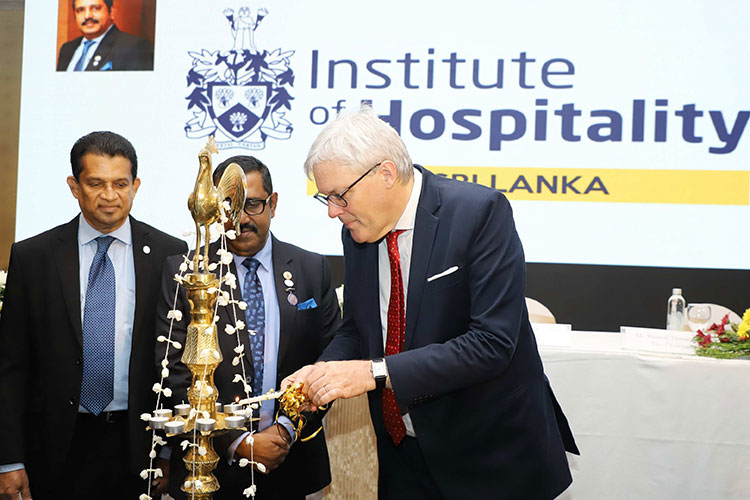
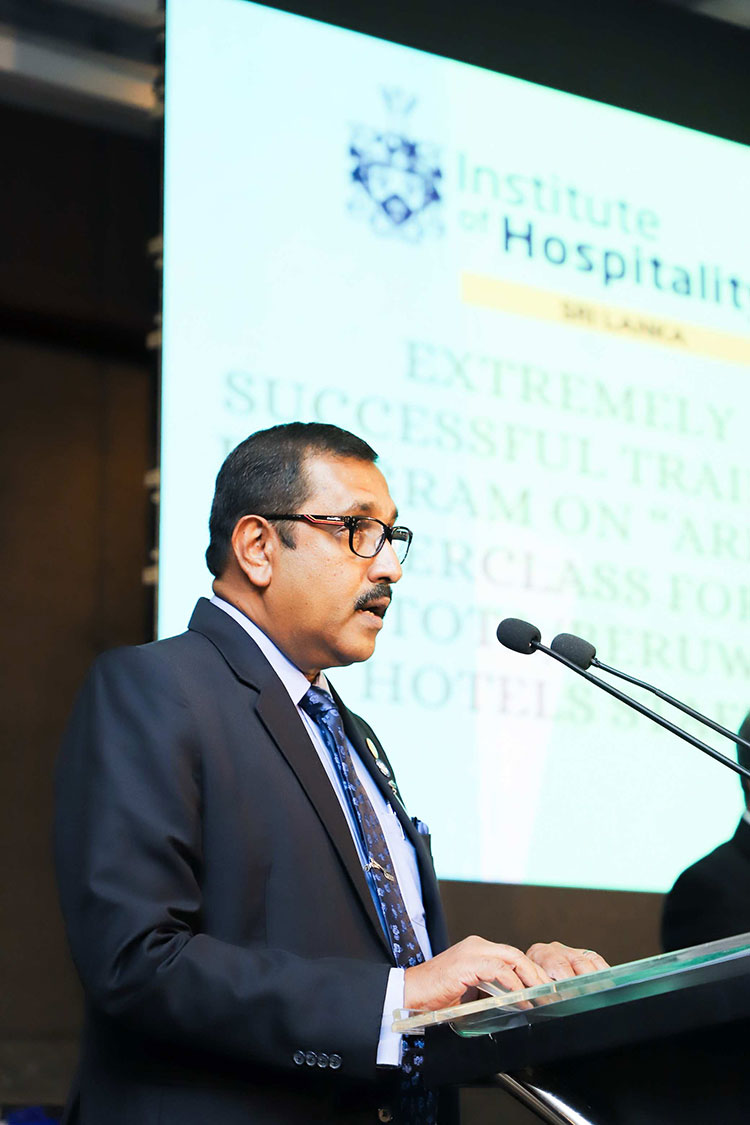

Pix by Thushara Attapathu
Life style
He recognizes human identity beyond boundaries of gender, race, nationality and religion.
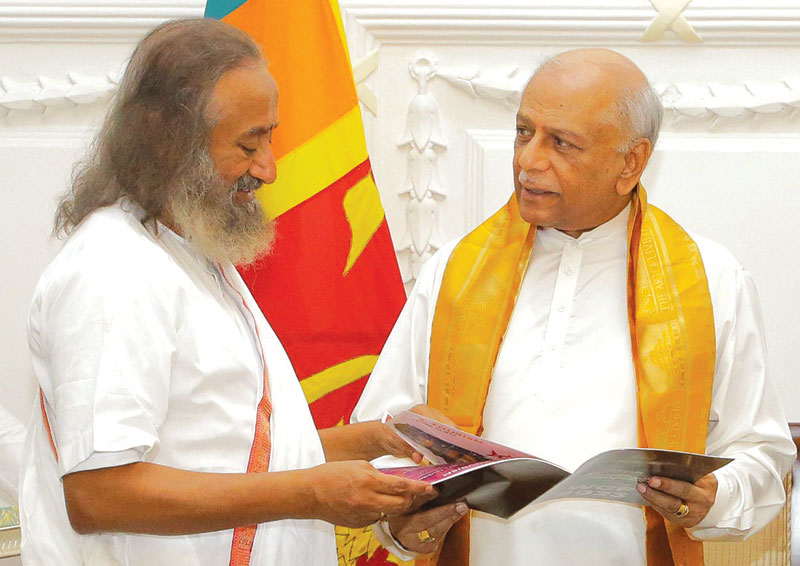
Visit of Sri Gurudev to Sri Lanka
Humanitarian, spiritual leader and Global Ambassador of Peace Gurudev Sri Sri Ravi Shankar (Sri Gurudev) was in Sri Lanka on a three day tour on the invitation of the Prime Minister of Sri Lanka Dinesh Gunewardene. Gurudev who inspired a wave of volunteerism and service to moot one of the largest volunteer-based organisations in the world – The Art of Living – visited the various projects under the aegis of the foundation and launched twelve vocational and technical centers around the island. He was accompanied by thousands of followers from Sri Lanka and around the world.
Gurudev who visited Sri Lanka for the sixth time also had a first day cover launched in honour of his visit. He is a strong proponent of spreading happiness, using the unique Sudarshan Kriya, yoga, meditation and practical wisdom to unite people, empower individuals and transform communities. His programmes provide techniques and tools to live a deeper, more joyous life, while his non-profit organisations recognize the human identity beyond the boundaries of gender, race, nationality and religion.
The Art of Living which has more than 30,000 teachers and over one million volunteers across 180 countries has touched in excess of five hundred million people around the world. CNN called it “Life Changing” and The Washington Post headlined it, “Fresh air to millions”.
In Trincomalee, Gurudev met with war victims and had a heartwarming engagement with the children from the children’s homes run by the Foundation. He also visited the Koneswara Temple in Trincomalee and graced the Kumbhabhishekam at Seetha ecogPnize the human identity beyond the boundaries of gender, race, nationality and religion. Amman temple at Nuwara Eliya. He held discussions with the trustees on the progress of the foundation’s social service projects, while also holding a special event – Ekamuthuwa – attended by a large number of dignitaries and his devotees from around the world.
His time with the Prime Minister was spent discussing the prospects of unity in diversity and uniting Sri Lanka by adding happiness into the formula of living. In addition he had discussions with the Speaker of the Parliament of Sri Lanka Mahinda Yapa Abeywardena, prominent business stewards and civil society leaders.
by Zanita Careem
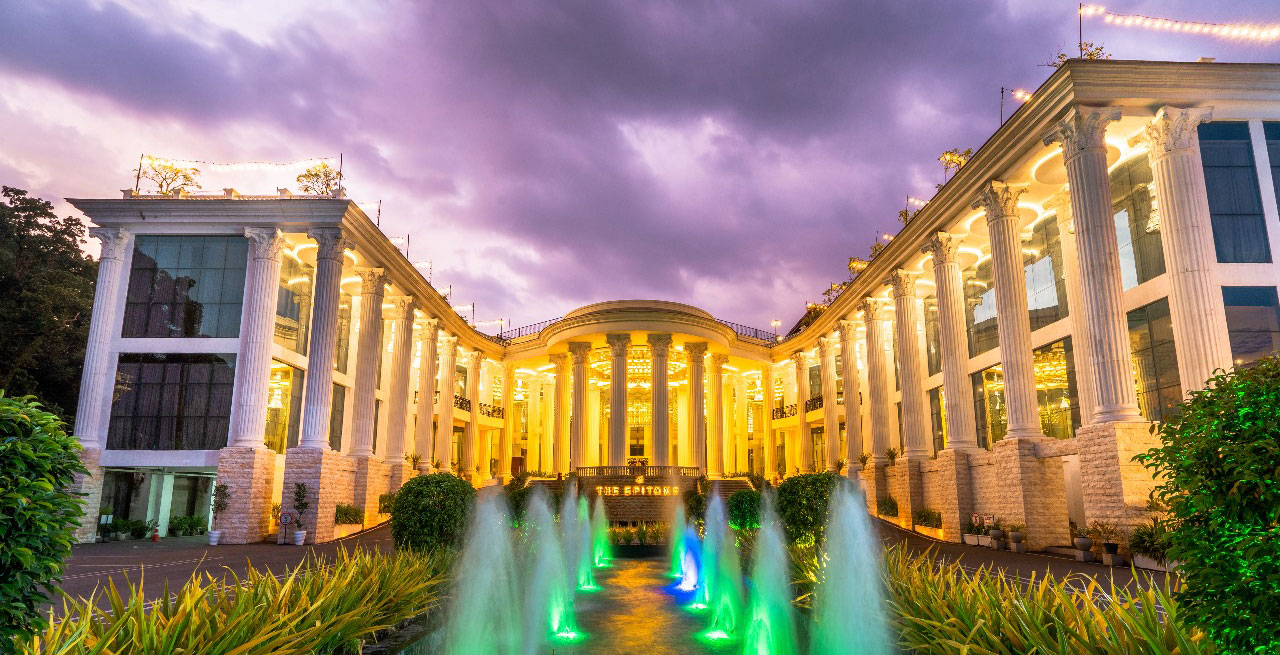
Envison your dream wedding day come to life at the Epitome Hotel, a prestigious city hotel in Kurunegala offering an unrivalled luxury rendors experience for weddings.
The venue is designed to embody opulence and luxury from all quarters for a spectacular wedding in kurunegala,Thier ballroom is the largest banquet facility in Sri Lanka It can be divided into six luxurious pillarless wedding halls on the ground floor and 25pax smaller banquet halls.
It can be easily named as a five star heaven in the heart of the city contributing to a myriad of immense experiences tailored to inspire and delight wedding experiences.
From opulent décor set up to exquisite table decor, lavish food, every detail is meticulously curated to spark your imagination and ignite creativity for a perfect wedding. The previous prestigious wedding shows season one and season two attracted large crowds
were unique events which gave the wedding vendors and potential clients had an opportunity to connect and interact with each other. Beyond being a showcase it was a chance for the wedding vendors to unite and contribute to the vibrancy of the wedding industry. The wedding show covered all area of the bridal industry providing a comprehensive variety of bridal supplies from Sri lanka and became the most popular bridal exhibitions in Kurunegala.This bridal exhibitions allowed brides and grooms to experience first hand the products and services available from suppliers in Sri Lanka
These wedding shows held at The Epitome created a benchmark and gave an opportunity for vendors to create connections to the utmost satisfaction said Harshan Lakshita Executive Director. of the magnificent Hotel
Our wedding shows featured experts and professionals in every field‘ It covered all areas of the bridal industry provided a comprehensive variety of bridal supplies from Sri lanka and became most popular bridal exhibition in this region.We are always open to everyone to join us at our wedding shows in the future. It is an opportunity to discover the incredible talent within our local wedding and bridal vendors to make meaningful relationships and plan thier special day at our breathtaking hotel The Epitome said General Manager Kavinda Caldera
The Epitome Hotel’s bridal show which will be held end of June will buzz with great ideas,advice and inspiration for all those who plan thier dream wedding
…….
The Hotel Epitome’s Wedding Season 3 will marked excellence, celebration and inspiration for those in the wedding industry. The exhibition halls will resonate with ideas on exquisite bridal wear to decor, florists , photography etc and showshowcase the rich tapestry of talent within the local wedding industry. .





US sports envoys to Lanka to champion youth development

Rahuman questions sudden cancellation of leave of CEB employees


