
Life style
The ” Indian burger ” McDonalds can’t master

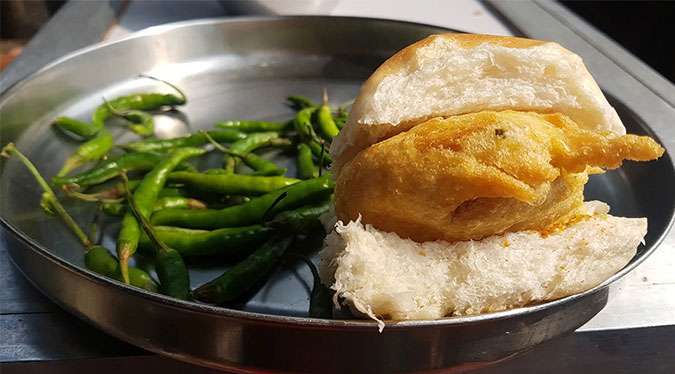
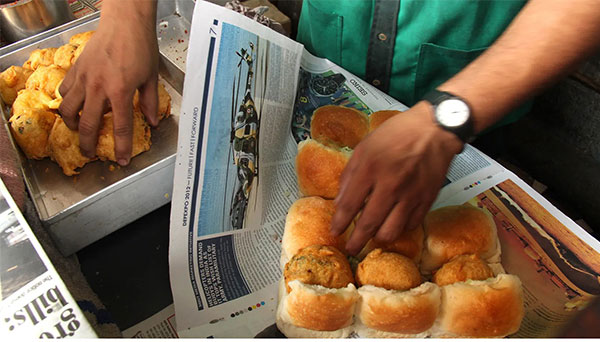
Thakur dropped another batch of potato patties, known as batata vada, into the cooking oil that had been sizzling in a massive iron pan since early morning. He’d already shaped the patties, made with mashed potato mixed with masala spices, green chilli and, occasionally, finely chopped raw onion, into near perfect spheres, and dipped them quickly in a thick chickpea batter just before frying. The vada made a gentle hiss as they hit the oil, and the aroma of the chickpea batter floated in the air, making me impatient. A few tosses and turns, and the vada were ready.
Thakur sliced open a soft, square bread roll called a pav, slathered on some green chilli-coriander chutney, and gesturing to me with a bowl of dry garlic chutney asked, “Lahsun?”
I nodded, and he sprinkled on a generous quantity of garlic chutney, then pressed the vada on top. He wrapped the sandwich in a piece of old newspaper, added a side of fried green chilli (in case the spice hit was not enough) and handed it to me in exchange for 12 rupees (roughly 14 pence).
As my teeth sank into the soft cloud of pav and the crispy vada, it was almost as if I was biting into the original taste of Mumbai. It was a perfect contrast of tastes and textures: the chewy blandness of the pav acting as a foil to the piquant crunchiness of the vada. Even to my palate, shaped by years of spicy food, the first mouthful was a fiery hit. I could feel the tang of both chutneys spread across my tongue. The vada pav is a delectable carb overload – an instant energy boost.
Today, this snack is synonymous with the city of Mumbai, with almost every resident, from factory workers to college students to Bollywood stars, unabashed in declaring their love for it. More than two million of these crispy, flavourful sandwiches are consumed in India’s financial capital and largest metropolis every single day.
“For a city that’s always on the move, I think the vada pav makes for the quickest, wallet-friendly, on-the-go snack,” travel blogger Kaushal Karkhanis, who runs a dedicated to this single dish, told me. “I think it’s the first ‘eating out’ experience for just about anyone in Mumbai. At this price, it cuts across social strata and is a great leveller.”
While the vada pav is delicious (as fried snacks tend to be), the overwhelming love for this snack often leaves outsiders bemused. But the truth is that the Maharashtrian capital has a close cultural connection with the vada pav that goes way beyond taste.
The dish is believed to have been invented in 1966 by a Mumbaikar, Ashok Vaidya, who opened the first vada pav stall opposite the Dadar train station, through which hundreds of thousands of workers – often in need of a quick, inexpensive snack – passed every day on their way to the textile mills in suburbs such as Parel and Worli. Vada pav was an instant hit with Bombayites (as Mumbaikars were then known). Vaidya remains a Mumbai icon; one local journalist even made a documentary about him.
After strikes throughout the 1970s and ‘80s eventually led to the textile mills’ closures, many former mill workers opened vada pav stalls of their own with the encouragement of Maharashtra state’s right-wing political party, Shiv Sena.
“The vada pav was subsequently co-opted by the Shiv Sena in order to offer a Maharashtrian alternative to the Udupi joints that were extremely popular at the time,” explained Mumbai-based food writer Meher Mirza, referring to the stalls set up by people from the South Indian temple town of Udupi in Karnataka. Shiv Sena’s campaign followed the rise in popularity of several south Indian dishes: the dosa (a crepe-like pancake made from fermented batter, traditionally stuffed with a spicy potato filling) and the idli (a savoury steamed cake made from black lentils and rice). The goal was to convince Mumbaikars to spurn ‘outside’ snacks and embrace their own cuisine, a strategy that worked very well in those turbulent economic times.

Ironically, both of vada pav’s main components – the potato and the bun – are European imports, brought into India by the Portuguese around the 17th Century. The only key ingredient originally belonging to the region – or even India – in the dish, is the besan (chickpea flour) in which the potato mix is coated before being deep-fried. Still, Mumbaikars consider the vada pav a thoroughly ‘Bombay’ (as Mumbai is still called by many of its residents) dish.
The vada pav industry in Mumbai chugged along peacefully until the 1990s with the arrival of international chain restaurants like McDonald’s, which served vegetarian burgers similar to vada pav to accommodate many Indians’ aversion to beef. But although the patties consist of fried potato, McDonalds’ McAloo Tikki burger could not be more different from the beloved vada pav. Not only does it not match the spice levels of the home-grown vada pav, but it also leaves little room for artistry. The flavour of vada pav depends entirely upon the whims of the cook, with every vendor claiming to have a secret recipe or a special ingredient that makes his vada pav unique: a pinch of ground masala, or a topping of choora (the crispy crumbs left at the bottom of the frying pan) along with the vada. It’s no wonder that the vada pav has always remained more popular in Mumbai, where it flies off street stalls like the proverbial hot cake.
In the early 2000s, local entrepreneur Dheeraj Gupta saw an economic opportunity and franchised the vada pav in his chain . “Calling it the ‘Indian burger’ immediately gave it an aspirational value, as well as a cultural context for those outside Mumbai city,” Gupta told me.
The company also introduced several new spins on the traditional treat, such as the Schezwan vada pav (inspired by Chinese cuisine) and the Nacho vada pav (topped with tortilla chips). Gupta says that the modern variants have struck a chord with consumers, accounting for more than 40% of sales. JumboKing now has 75 outlets in Mumbai alone, with each selling more than 500 vada pav every day, Gupta said. The chain can also be found in cities like Pune and Indore, and Gupta has plans to expand his reach even further over the next five years.
However, many Mumbai residents still vouch for the taste of the vada pav made in the street-side stalls. The most popular vada pav stalls – such as Aaram Milk Bar opposite the Chhatrapai Shivaji Terminus or Ashok Vada Pav in the suburb of Dadar – can still be found near suburban train stations across the city in order to serve the commuters who rely on the ‘Bombay local’ trains (as residents call them) to get to work. Some vendors have even begun serving adapted versions, dishing out Schezwan and sweetcorn vada pav with panache.
But as a former Mumbai resident, I am still partial to the original vada pav. To me, it’s the true taste of the city.– BBC



Institute of Hospitality Sri Lanka
 The 32nd Annual General Meeting (AGM) of the UK-based Institute of Hospitality’s Sri Lanka Chapter was held recently at the Ramada Hotel Colombo,.The event provided an evening of camaraderie , reflection of the past and present achievements,setting new benchmarks for the future
The AGM had the presence of two distinguished guests, the Chief Guest Opposition Leader Sajith Premadasa, and the Guest of Honour British High Commissioner to Sri Lanka, Andrew Patrick. Their inspiring speeches were lauded by all hoteliers who were present at the occasion
A special thanks was extended to Robert Richardson, CEO of the Institute of Hospitality UK, along with his team, sponsors, committee members, and all attendees for making the event memorable.
Dr. Harsha Jayasingh, Past President of the Institute of Hospitality (UK) Sri Lanka Chapter, emphasised the Institute’s longstanding history and the strength of its Sri Lankan branch. “The Institute of Hospitality (IH) UK has a history of 86 years, and we are proud to be the Sri Lanka Branch. IH Sri Lanka is much stronger now with many members from all areas of the hospitality industry,” he stated.
Dr. Jayasingh highlighted the significant role of tourism in Sri Lanka’s economy,. He said tourism it is the third-largest source of revenue for the country. “Tourism accounts for about 13.3% of total foreign exchange earnings and employs 450,000 people directly and indirectly. The hospitality industry in this island of pearl holds tremendous potential for economic growth, job creations, and cultural exchange,” he added.
He also pointed out more women should be attracted to the industry and advocated for the use of technology in hospitality sector to attract the younger generation.
The newly appointed Chairman Ramesh Dassanayake spoke about the challenges faced by the industry, including the reluctance of youth to join the sector. . Dassanayake expressed concerns over the migration of staff between hotels and the overall ‘brain drain’ in the sector. ” We must maintain high standards in the hotel We must try to attract tourists to Sri Lanka, we must have with many facilities Hence, hotel schools and other professional institutions involved in skills development mustincrease their intakes,” he pointed out.
Chief Guest Sajith Premadasa emphasised the importance of eco tourism and said “We need to have an environmental policy related to tourism in place,” . .
The 32nd AGM of the Institute of Hospitality UK, Sri Lanka Chapter, was a testament to the strength and potential of Sri Lanka’s hospitality industry. The insights and commitments shared during the event set a new benchmark for the future.(ZC)


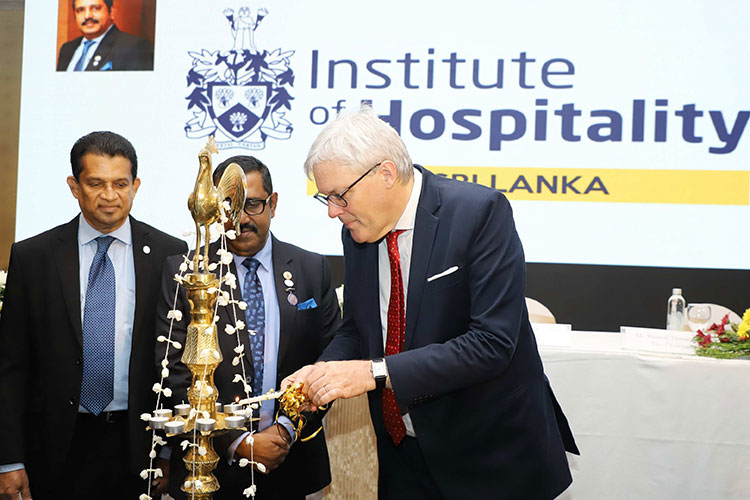
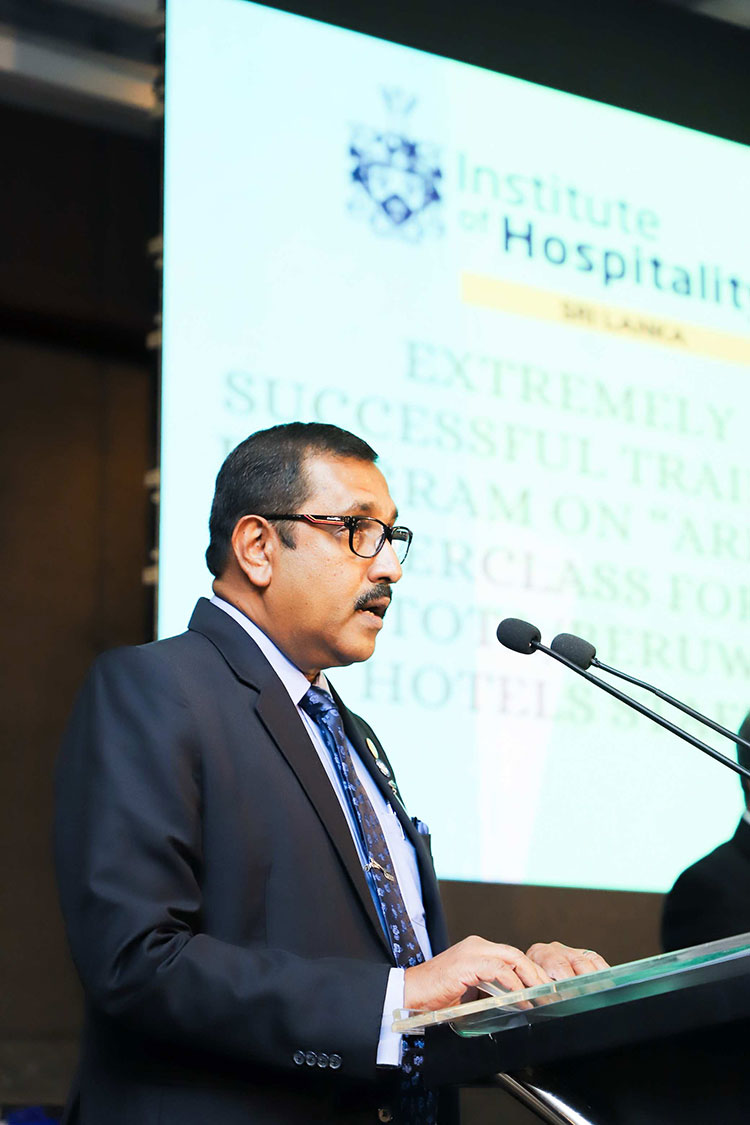

Pix by Thushara Attapathu
Life style
He recognizes human identity beyond boundaries of gender, race, nationality and religion.
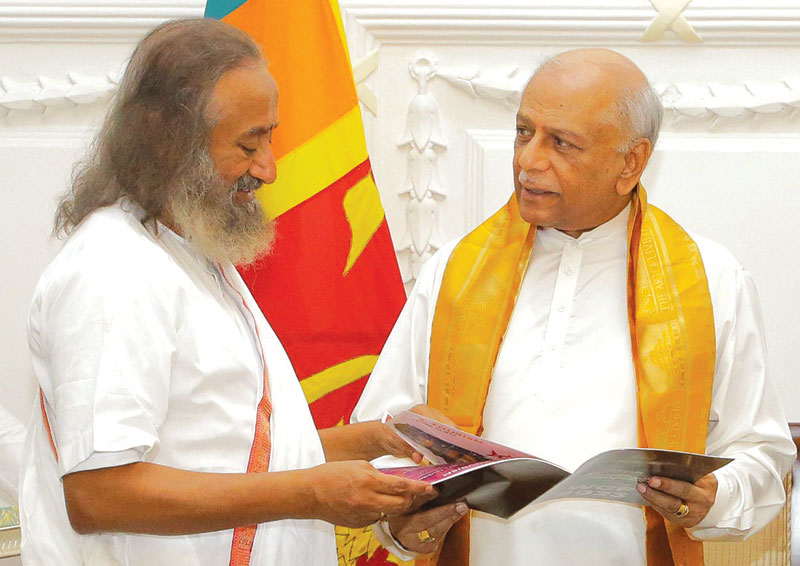
Visit of Sri Gurudev to Sri Lanka
Humanitarian, spiritual leader and Global Ambassador of Peace Gurudev Sri Sri Ravi Shankar (Sri Gurudev) was in Sri Lanka on a three day tour on the invitation of the Prime Minister of Sri Lanka Dinesh Gunewardene. Gurudev who inspired a wave of volunteerism and service to moot one of the largest volunteer-based organisations in the world – The Art of Living – visited the various projects under the aegis of the foundation and launched twelve vocational and technical centers around the island. He was accompanied by thousands of followers from Sri Lanka and around the world.
Gurudev who visited Sri Lanka for the sixth time also had a first day cover launched in honour of his visit. He is a strong proponent of spreading happiness, using the unique Sudarshan Kriya, yoga, meditation and practical wisdom to unite people, empower individuals and transform communities. His programmes provide techniques and tools to live a deeper, more joyous life, while his non-profit organisations recognize the human identity beyond the boundaries of gender, race, nationality and religion.
The Art of Living which has more than 30,000 teachers and over one million volunteers across 180 countries has touched in excess of five hundred million people around the world. CNN called it “Life Changing” and The Washington Post headlined it, “Fresh air to millions”.
In Trincomalee, Gurudev met with war victims and had a heartwarming engagement with the children from the children’s homes run by the Foundation. He also visited the Koneswara Temple in Trincomalee and graced the Kumbhabhishekam at Seetha ecogPnize the human identity beyond the boundaries of gender, race, nationality and religion. Amman temple at Nuwara Eliya. He held discussions with the trustees on the progress of the foundation’s social service projects, while also holding a special event – Ekamuthuwa – attended by a large number of dignitaries and his devotees from around the world.
His time with the Prime Minister was spent discussing the prospects of unity in diversity and uniting Sri Lanka by adding happiness into the formula of living. In addition he had discussions with the Speaker of the Parliament of Sri Lanka Mahinda Yapa Abeywardena, prominent business stewards and civil society leaders.
by Zanita Careem
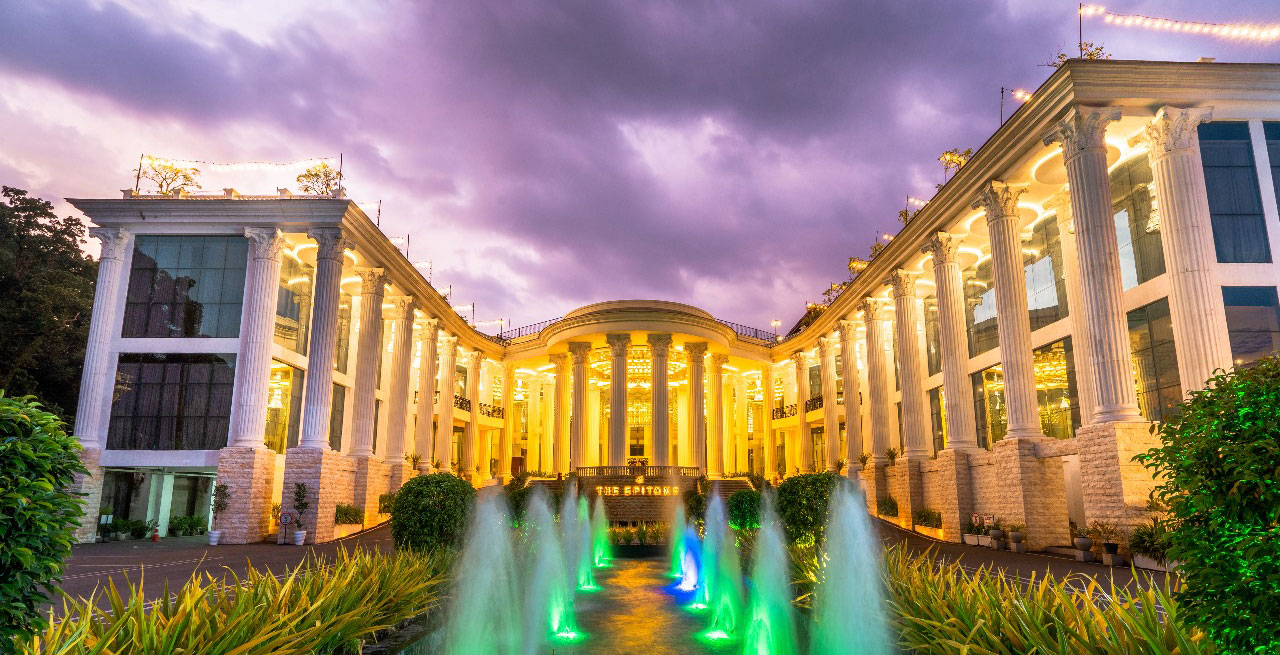
Envison your dream wedding day come to life at the Epitome Hotel, a prestigious city hotel in Kurunegala offering an unrivalled luxury rendors experience for weddings.
The venue is designed to embody opulence and luxury from all quarters for a spectacular wedding in kurunegala,Thier ballroom is the largest banquet facility in Sri Lanka It can be divided into six luxurious pillarless wedding halls on the ground floor and 25pax smaller banquet halls.
It can be easily named as a five star heaven in the heart of the city contributing to a myriad of immense experiences tailored to inspire and delight wedding experiences.
From opulent décor set up to exquisite table decor, lavish food, every detail is meticulously curated to spark your imagination and ignite creativity for a perfect wedding. The previous prestigious wedding shows season one and season two attracted large crowds
were unique events which gave the wedding vendors and potential clients had an opportunity to connect and interact with each other. Beyond being a showcase it was a chance for the wedding vendors to unite and contribute to the vibrancy of the wedding industry. The wedding show covered all area of the bridal industry providing a comprehensive variety of bridal supplies from Sri lanka and became the most popular bridal exhibitions in Kurunegala.This bridal exhibitions allowed brides and grooms to experience first hand the products and services available from suppliers in Sri Lanka
These wedding shows held at The Epitome created a benchmark and gave an opportunity for vendors to create connections to the utmost satisfaction said Harshan Lakshita Executive Director. of the magnificent Hotel
Our wedding shows featured experts and professionals in every field‘ It covered all areas of the bridal industry provided a comprehensive variety of bridal supplies from Sri lanka and became most popular bridal exhibition in this region.We are always open to everyone to join us at our wedding shows in the future. It is an opportunity to discover the incredible talent within our local wedding and bridal vendors to make meaningful relationships and plan thier special day at our breathtaking hotel The Epitome said General Manager Kavinda Caldera
The Epitome Hotel’s bridal show which will be held end of June will buzz with great ideas,advice and inspiration for all those who plan thier dream wedding
…….
The Hotel Epitome’s Wedding Season 3 will marked excellence, celebration and inspiration for those in the wedding industry. The exhibition halls will resonate with ideas on exquisite bridal wear to decor, florists , photography etc and showshowcase the rich tapestry of talent within the local wedding industry. .





US sports envoys to Lanka to champion youth development

Rahuman questions sudden cancellation of leave of CEB employees


