Features
Telijjawila Days

by Gamini Wimalasuriya
My late father and my mother who is 104 years now always used to talk about “Telijjawila Days’ as the best time of their lives, reminiscing with lot of nostalgia the days he was the Principal of Telijjawila Central School.
Dharmasoka College
My father late H L Wimalasuriya hails from a family of educationists. His father, the late N B Wimalasuriya, was the first head master of Dharmasoka College, Ambalangoda when it started on February 2, 1914, under its Founder/Principal/Manager, the late Mudaliyar Santiago Thomas de Silva, who privately financed the establishment and the development of the school.
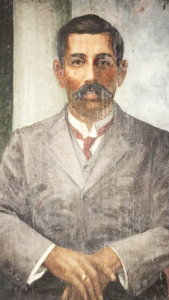

Tragically, my grandfather who rose to be an Inspector of Schools died at the age of 42 of complications arising from a leech bite due to his diabetic condition. There were no medicines/insulin available at that time.
Late N B Wimalasuriya
My father had also started life as a teacher with a salary of Rs 30/= per month, out of which he had to pay seven rupees per month as boarding fees. He like his father before him, became a Principal, an Inspector of Schools, and ended up as the Commissioner of Examinations and Registrar of the Peradeniya University. Yet, he always used to say that the best time of his life were his “Telijjawila days”
Telijjawila Central School
The pioneer educationist in this country who advocated free education for all was the late C W W Kannangara who said that a beautiful flower blooming in the jungle should not be allowed to fade away in the jungle itself. He was referring to the children in the villages who should be given the chance to bloom in life with proper education. He started 54 Central Schools in the country spread over all districts.
In 1946, he handpicked my father, who was then Principal of Matugama Central School and had asked him to start a school in Telijjawila, a laid back hamlet in the Matara district. My parents had just got married at the time. My mother hailed from Ovitigala, Matugama, and my father from Hikkaduwa.
This was the beginning of their “Telijjawila days,” the story as related by them. My maternal grandfather, late Mudaliyar Karathelis Wijegunawardene of Ovitigala, Matugama had arranged a car which was rare at the time to take my parents to Telijjawila and they were told to meet the gam muladeniya (village headman) on arrival.When inquiries were made as to where the headman lived, the villagers pointed to a gravel road and said to look for the ulu daapu gedera (house with a tiled roof). Apparently that had been the only house with a tiled roof and a Petromax lamp in the area.
The headman had arranged a small house for my parents and on Jan. 17, 1946, my father had started the school in a makeshift cadjan hut with 16 children. The medium of instruction was English till 1956. My father says that out of the first 16 students enrolled to the school, two ended up as civil servants and one a famous doctor who later migrated to Australia and died about two years ago. The others also did well in life as government servants, teachers etc.

The school had been coeducational when it began and in almost no time he had started two separate hostels for boys and girls as children from the district started enrolling in the school. Sports and other activities also started alongside academic studies,My parents often used to mention the names of some of the teachers at the time, Mr Pragnadasa, Mr Mendis, Mr Abeygunawardene, Ms Podi Nona, Ms Wijetunge and the young matron of the girl’s hostel, Ms Regina Ratnayake, always with high regards and much appreciation of all their hard work and dedication.
Today, Telijjawila Madya Maha Vidyalaya is one of the leading Central Schools in the Matara District. My sister and I were born at the Galle Hospital during my parents’ “Telijjawila days”.
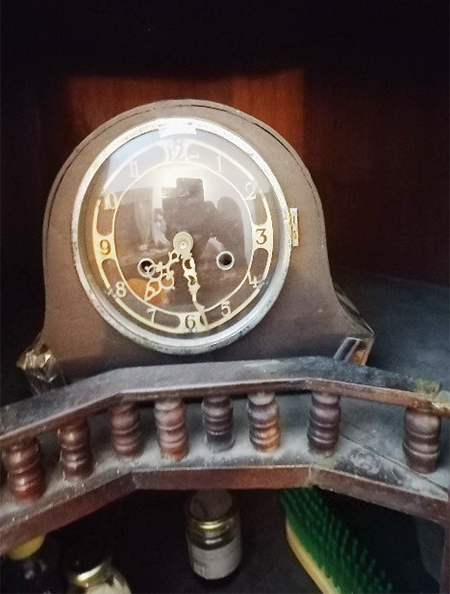
At a farewell function given to my father at the time of leaving the school, the tutorial staff of the school had presented him a table clock with a plaque which is still in my possession as an antique displayed at my home.
Mathematicians
Deviating from Telijjawila, my father had another story he used to relate very often. He and his father were good mathematicians and the story goes that late Mr P de S Kularatne had been taught mathematics by my grandfather. Mr Kularatne at Ananda College in turn had taught my father mathematics which was his favourite subject. My father ended up writing two mathematic books in Sinhala for geometry and algebra, and had also translated the then famous maths text book, Halls Algebra, to Sinhala.
(gembaw@gmail.com)