
News
Tamil MPs seek Modi intervention on political solution

By Meera Sirinivasan
Prominent Tamil legislators from the north and east have written to Indian Prime Minister Narendra Modi seeking India’s help in ensuring that Colombo addresses the island’s long-pending Tamil question with a lasting political solution.
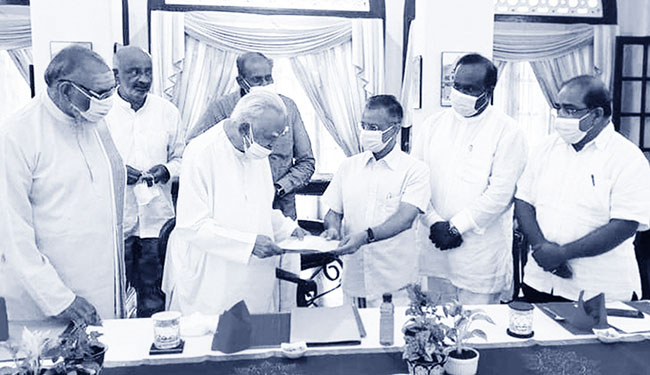
A delegation of MPs, led by senior Tamil politician and Tamil National Alliance (TNA) leader R. Sampanthan, met the Indian High Commissioner in Colombo on Tuesday, and handed over the letter.
The seven-page letter foregrounds the many unkept promises, made by different governments in Colombo, to implement the 13th Amendment and go beyond it to ensure meaningful power devolution. Signed by TNA’s constituent party leaders — Mavai Senathiraja (ITAK), Dharmalingam Sithadthan (PLOTE), Selvam Adaikalanathan (TELO) — with others including former Northern Province Chief Minister C.V. Wigneswaran and former MP Suresh Premachandran (EPRLF), the letter traces past attempts, from the time of the Indo-Lanka Accord of 1987, to bring about a constitutional settlement, based on proposals developed by various expert committees.
It also mentions the interventions made by the Indian political leadership at different points, including PM Modi’s address to the Sri Lankan Parliament in 2015, when he spoke of his firm belief in “cooperative federalism”.
“We remain committed to a political solution based on a federal structure that recognises our right to self-determination in the areas of our historic habitation for which we repeatedly obtained a mandate from the Tamil People in the north and east where they have always been the majority. We have consistently placed this as our proposal for constitutional reform,” the signatories have said.
Flagging heightening attacks and threats to land owned by Tamils in the north and east, and language rights of Tamil-speaking people, including Malaiyaha Tamils living in the hill country, the parliamentarians have appealed to PM Modi “to urge the government of Sri Lanka to keep its promises to fully implement the provisions of the 13th Amendment to the Constitution, which ensures a measure of power devolution”.
They have also sought Indian pressure to ensure implementation of “the clear commitments made by all sections of government from 1987 onwards and enable the Tamil speaking peoples to live with dignity, self-respect, peace and security in the areas of their historic habitation, exercising their right to self-determination within the framework of a united, undivided country.”
The letter is the outcome of deliberations among Tamil MPs. Prominent Malaiyaha Tamil and Muslim leaders, who were part of the exercise earlier, exited it following differences over the emphasis of the letter. They wished to peg the letter to the 13th Amendment, which followed the 1987 Accord, and is frequently dismissed by key members of the ruling Rajapaksa administration.
However, the letter addressed to PM Modi and submitted to High Commissioner Gopal Baglay on Tuesday, also highlights what some in the Tamil polity deem limits of the 13th Amendment that established a provincial council system, envisaging devolution of powers to the provinces. The Amendment was “introduced into a Unitary Constitution making the exercise one of decentralisation instead of devolution,” the letter noted. “It is against this background that every effort made thereafter moved in the direction of surpassing the 13th Amendment towards a federal structure,” it said.
President Gotabaya Rajapaksa, in a policy statement in the first session of Parliament this year on Tuesday, referred to the experts’ committee appointed by him to draft a new constitution. “I hope to submit the recommendations of this Committee to the Cabinet and the Parliament for broad discussion,” he said, making no reference to the Tamil political leadership’s continuing calls for a political solution in the new Constitution.
On the other hand, he appeared to equate ethnic reconciliation to development. “We regard government’s prime responsibility towards reconciliation as providing such facilities to these [war-affected] people without discrimination,” he said, urging parliamentarians representing the people of the north and east to “set aside various political ideologies, at least temporarily”, and support the government’s efforts to “improve the living conditions of the people in your areas”.
President Rajapaksa is yet to hold talks with the Tamil leadership or elected MPs since his election to office in November 2019. In June 2021, a meeting between the President and a TNA delegation was scheduled. However, Mr. Rajapaksa’s office cancelled the meeting and said a new date would be announced. (The Hindu)



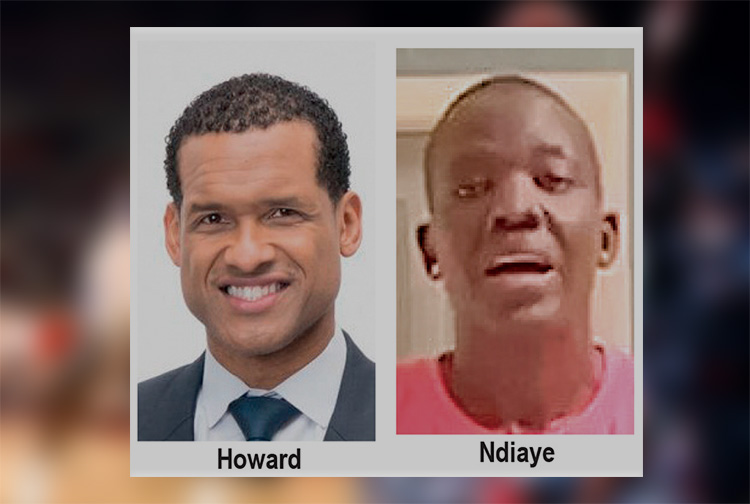
The U.S. Embassy in Colombo welcomed the U.S. Sports Envoys to Sri Lanka, former National Basketball Association (NBA) and Women’s National Basketball Association (WNBA) players Stephen Howard and Astou Ndiaye, from June 8 through 14.
The Public Diplomacy section of the U.S. Embassy said that it would launch a weeklong basketball program intended to harness the unifying power of sports, made possible through collaboration with Foundation of Goodness and IImpact Hoop Lab.
While in Sri Lanka, Howard and Ndiaye, both retired professional basketball players, will conduct a weeklong program, Hoops for Hope: Bridging Borders through Basketball. The Sports Envoys will lead basketball clinics and exhibition matches and engage in leadership sessions in Colombo and Southern Province for youth aged 14-18 from Northern, Uva, Eastern and Western Provinces, offering skills and leadership training both on and off the court. The U.S. Envoys will also share their expertise with the Sri Lanka Basketball Federation, national coaches, and players, furthering the development of basketball in the country. Beyond the clinics, they will collaborate with Sri Lankan schoolchildren to take part in a community service project in the Colombo area.
“We are so proud to welcome Stephen and Astou as our Sports Envoys to Sri Lanka, to build on the strong people-to-people connections between the United States and Sri Lanka,” said U.S. Ambassador Julie Chung. “The lessons that will be shared by our Sports Envoys – communication, teamwork, resilience, inclusion, and conflict resolution – are essential for leadership development, community building, equality, and peace. The U.S. Sports Envoy program is a testament to our belief that sports can be a powerful tool in promoting peace and unity.”
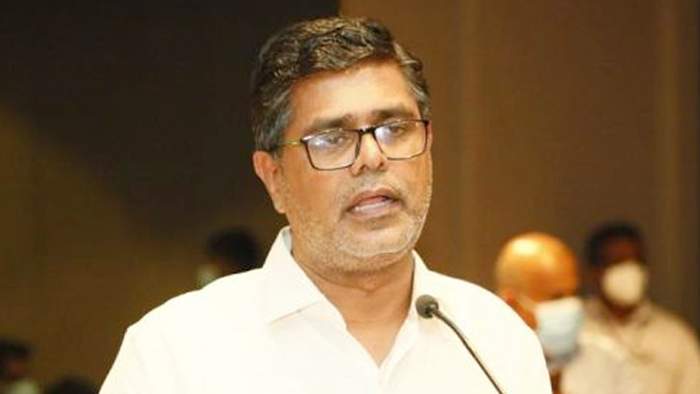
SJB Colombo District MP Mujibur Rahuman in parliament demanded to know from the government the reasons for CEB suspending the leave of all its employees until further notice from Thursday.
MP Rahuman said that the CEB has got an acting General Manager anew and the latter yesterday morning issued a circular suspending leave of all CEB employees with immediate effect until further notice.
“We demand that Minister Kanchana Wijesekera should explain this to the House. This circular was issued while this debate on the new Electricity Amendment Bill was pending. There are many who oppose this Bill. The Minister must tell parliament the reason for the urge to cancel the leave of CEB employees,” the MP said.However, Speaker Mahinda Yapa Abeywardena prevented Minister Wijesekera responding to the query and said that the matter raised by MP Rahuman was not relevant.
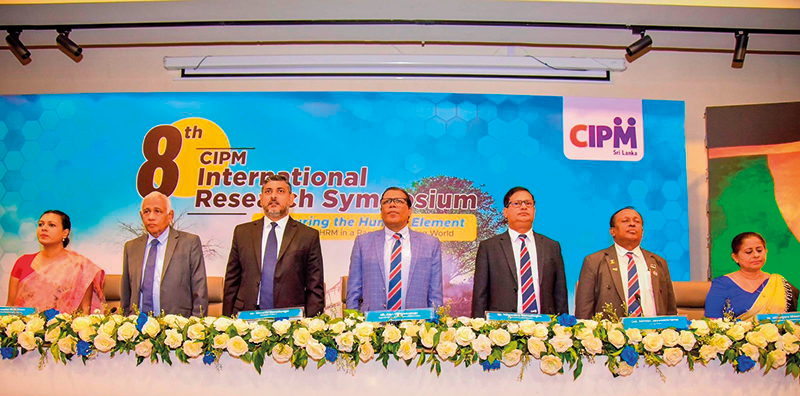
The Chartered Institute of Personnel Management (CIPM) successfully concluded the 8th Annual CIPM Symposium, which took place on 31st May 2024. Themed “Nurturing the Human Element—Redefining HRM in a Rapidly Changing World,” the symposium underscored the pivotal role of human resource management (HRM) in today’s dynamic global landscape. Since its inception in 1959, CIPM has been dedicated to advancing the HR profession through education, professional development, and advocacy, solidifying its position as Sri Lanka’s leading professional body for HRM.
Ken Vijayakumar, the President of the CIPM, graced the occasion as the chief guest. The symposium commenced with the welcome address by the Chairperson, Prof. Arosha Adikaram, followed by the Web Launch of the Symposium Proceedings and Abstract Book by the CIPM President. The event featured distinguished addresses, including a speech by Chief Guest Ken Vijayakumar, President of CIPM, and an address by Guest of Honor Shakthi Ranatunga, Chief Operating Officer of MAS Holdings Pvt. Ltd., Sri Lanka.
The symposium also featured an inspiring keynote address by Prof. Mario Fernando, Professor of Management and Director of the Centre for Cross Cultural Management (CCCM) at the University of Wollongong, Australia.
Vote of Thanks of the inauguration session was delivered by Dr. Dillanjani Weeratunga, Symposium Co-chair.
The symposium served as a comprehensive platform for researchers to present their findings across a wide range of critical topics in HRM. These included Cultural Diversity and Inclusion, Talent Development and Retention, Ethical Leadership and Corporate Social Responsibility, Adapting to Technological Advancements, Mental Health and Well-being at Work, Global Workforce Challenges, Employee Empowerment, and Reskilling and Upskilling.
The plenary session was led by Prof. Wasantha Rajapakse. Certificates were awarded to the best paper presenters during the valedictory session, followed by a vote of thanks delivered by Kamani Perera, Manager of Research and Development.
The annual symposium of CIPM was a truly inclusive event, attracting a diverse audience that spanned undergraduates, graduates, working professionals, research scholars and lecturers. This widespread interest highlights the symposium’s significance in the field of HRM, offering a unique opportunity for everyone to network and learn from scholarly brains.The CIPM International Research Symposium was sponsored by Hambantota International Port, Sri Lanka Institute of Information Technology (SLIIT), E B Creasy & Co. PLC, and Print Xcel Company.



US sports envoys to Lanka to champion youth development

Rahuman questions sudden cancellation of leave of CEB employees


