Sat Mag
Sugar is the villain, not fat

By Dr Parakrama Waidyanatha
After the Second World War, with increasing affluence, the consumption of fat, sugar and fast foods increased notably, and concurrently the incidence of coronary heart disease stroke and metabolic syndrome (blood pressure, diabetes and obesity), in the U.S and Europe. It is reported that fast food outlets in the U.S doubled from 1972 to 1999 whereas obesity jumped by 113% and currently remains at 18.5%! Worldwide, obesity has tripled since 1975 and is now 9% whereas childhood obesity is even higher, being 10.9%, having increased more than tenfold across the world over the past four decades! Obesity is now a serious worldwide malady, especially of young ones for which diet is key, sugar being the main culprit!
However, since the 1950s the blame on heart disease and strokes has been laid squarely on saturated fat (SFA) consumption and elevation of blood serum cholesterol (BSC), and in the early 1970s the lipid hypothesis came into being and was globally accepted. It states that SFA consumption increases serum lipids and BSC which clogs arteries leading to heart attacks and strokes. Of the three types of cholesterol, HDL, LDL and VLDL the latter two, also called the bad cholesterol are believed to clog arteries via the formation of plaques inside blood vessels whereas HDL, the so called good cholesterol, scavenges the excess serum cholesterol and transports it back to the liver. The lipid hypothesis was based on the exhaustive research findings; but despite substantial evidence contradicting the findings, the medical authorities of the U.S, supported by the American Heart Association, stood by its decision. It was reported then that in the U.S, the people feared saturated fat more than ghosts!
However, despite substantial reduction in the consumption of fat and cholesterol, over the last five decades, the incidence of heart disease hardly decreased.
Overwhelming evidence
contradicting the saturated
fat- heart disease hypothesis
A major study relating to the lipid hypothesis was the Framingham study, a longitudinal cohort study, a type of epidemiological study, that followed a group of individuals over time to determine the natural history of coronary heart disease and strokes. However, the study failed to demonstrate the expected relationship of SFA and BSC. Interestingly, William P. Castele, M D, the Director of the Study, writing an editorial in the journal ‘Archives of Internal Medicine’ in July 1992 states that “in Framingham, Massachusetts, the more saturated fat one ate, the more calories one ate, lower the persons BSC, …. they weighed the least and were the most physically active”
Similarly, the Framingham Ischemic stroke study reported in the article titled ‘Inverse association of dietary fat with development of ischemic stroke in men’ published in the Journal of American Medical Association, by Gilman, M.W et al (1997), the authors reported an inverse association of dietary fat with the development of ischemic stroke in men; and the lowest incidence of strokes was with the highest saturated fat consumers. The duration of the study was 20 years and included 832 men.
A much publicised study by the anti-SFA lobby was the Seven Countries study of Ancel Keys, considered the leader of the ‘diet-heart hypothesis. He claimed establishing a correlation between SFA consumption and CHD . His demeanour was most confident and convincing, and many nutritionist of the day believed him and fell in line. However, this study was also subjected to a critical evaluation by a famous biometrician of the period, Wood W D P. In a publication in Statistician in 1981, he questioned how Ancel Keys selected the seven countries out of the 21 OECD countries. He pointed out that, statistically, there were 116,280 ways of selecting seven samples out of 21, and fewer than 10% of the samples gave a correlation coefficient equal to or more than 0.84, and his correlation varied from +0.9 to – 0.9 !
Then in 1990, a famous cardiologist at the time, Sir Walter Willet writing an eeditorial in the American Journal of Public Health’stated that ‘even though the focus of dietary recommendation is usually a reduction of saturated fat intake, no relation between saturated fat intake and risk of coronary heart disease was observed in the most informative prospective study to date’.
A landmark happening of the epoch was the diametrically opposite stand taken by Paul Dudley White, M.D, famous cardiologist in the 1970 s to support Keys from what he did in 1956! He was the President then of the American Heart Association and later cardiologist of President Eisenhower. On invitation to a television programme to support the SFA- CHD in hypothesis in 1956, he said: “See here, I began my practice as a cardiologist in 1921, and I never saw an MI (myocardial infarction) patient until 1928. Back in the MI-free days before 1920, the fats were butter and lard, and I think that we would all benefit from the kind of diet that we had at a time when no one had ever heard the word corn oil” In 1961, Eisenhower suffered a heart attack and Keys diet heart hypothesis was the belief of the day. Eisenhower too was convinced by it; and apparently Dudley White changed his thinking through conviction or otherwise!
In regard to association of SFA and CHD then, the following conclusions can be drawn:
1. International epidemiology is flawed by confounding factors and selection biases;
2. Within countries, epidemiology gives little support for diet and heart disease;
3. Risk factors have largely been established by epidemiological studies, and only provide evidence of associations not of cause and effect;
4. Trends in CHD mortality not consistent with changes in amount and type of fat in the diet;
5. Less than 50% of CHD risk is accounted by known risk factors; and
no research has proved high BSC or High SFA intakes cause CHD
Villain remains at large
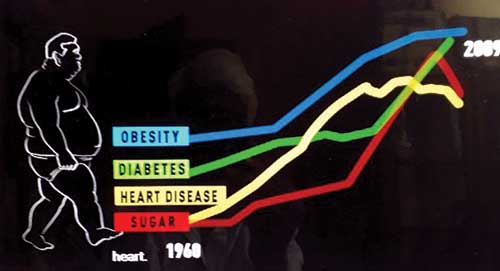

Although Keys had shown a correlation between saturated fat and heart disease, he failed to exclude the possibility that the disease could also be caused by something else; but his Italian partner in the Seven Country Study Allesandro Menotti, re-analyzing the data showed that sugar was the food that correlated the most with heart disease deaths, and not saturated fat! It was too late as in most countries saturated fat hypothesis was already the official position!
John Yudkin retired from his post at Queens Elizabeth College in 1971 to write his book ‘Pure, White and Deadly’ which the current day nutritionists consider a masterpiece. The College, however, reneged on a promise for him to continue to use the facilities, as it had hired a fully committed supporter of the fat hypothesis to replace him, the man who built the nutrition department of the College from scratch!
Villain convicted
There is now overwhelming evidence that excessive sugar, in fact fructose, consumption in the key cause of the metabolic syndrome: hypertension, diabetes, obesity and heart disease, Alzeimer’s disease and cancer. Sucrose breaks down in the liver into 50% each of fructose and glucose.
In the US for example, the per capita sugar consumption has doubled in the last 50 years from 32kg to 63kg, and that is why despite the majority opting for a low fat diet with the advent of the lipid hypothesis, CHD rate increased. The global consumption of sugar is 23 kg per capita per year whereas, that of Sri Lanka and India, for example, are 23 and 19. The highest sugar consumer is UAE at an unbelievable 214 kg per capita per year!
Robert Lustig, M.D, a pediatric endocrinologist and a leading campaigner against excessive sugar consumption claims that fructose is a poison! Much of it is consumed via high fructose corn syrup, which is a major component in many of the sugary drinks such as coke; and 12.1% of the daily caloric intake of an adult American is via fructose. He states that hepatic fructose metabolism leads to visceral adiposity (abdominal fat accumulation) leading to all manifestations of the metabolic syndrome. Thirty percent of the fructose is said to be converted to very low density lipoproteins (VLDL) which block the blood vessels through synthesis of plaques. The LDL cholesterol, he claims is not as bad as we think.
Lustig in his much quoted 90 minute lecture titled Sugar: the bitter truth, uncompromisingly claims that sugar is the main cause of the global obesity syndrome. He argues that governments catering to the sugar mafia have overlooked the facts. It is sad that the world overlooked John Yudkin’s warning for half a century with catastrophic consequences! The American Heart Association now recommends only 9 teaspoonfuls of sugar per capita per day as against the average US consumption of 26!
In conclusion, whilst sugar is the main culprit, saturated fat cannot probably be totally absolved. Sadly the global food industry cabal too should be blamed for overlooking the health warnings. They have been hell bent on fighting one another for grocery shop space rather than heeding public health: and it is up to the governments now to be more resolute in controlling the food quality from the health perspective.