
News
Sri Lanka’s Chinese debt making international headlines


Sri Lanka’s debt to China is making headlines in international and local media again. Media reports partly blame China and its lending practices, for Sri Lanka’s debt crisis, says a Verité Research media release. It said: The publication titled: “The Lure of Chinese Loans: Sri Lanka’s experiment with a special framework to finance its infrastructure” sheds light on the perils of creating frameworks to facilitate deviations from competitive bidding to tap into concessional export credit from emerging economies such as China.
The report reveals that the root causes of problems associated with loans taken to finance infrastructure are weak regulatory frameworks in the country and the excessive discretion exercised by politicians and public officials in making decisions.The report findings highlight that fixing the country’s procurement regulatory framework and improving independent oversight of the procurement process is essential to prevent irresponsible borrowing, cost overruns, and poor project selection.
Sri Lanka does not have a procurement law enacted by Parliament, and the guidelines that govern procurement can be modified, with Cabinet approval. In 2010, Sri Lanka introduced a framework that allowed the Cabinet to approve the processing of projects that originated as Unsolicited Proposals (USPs) outside the normal competitive bidding process.
The Cabinet approval is given based on the recommendation of a Standing Cabinet Appointed Review Committee (SCARC). This framework was in operation till 2016. The objective was to tap into concessional loans from export credit agencies of emerging economies such as China to finance the Government’s ambitious infrastructure development plan. The period of 2010-2016 can be considered the golden era for financing from China, with Sri Lanka receiving $ 5,895 million in loans from China. Over half of these loans (53%) were realised through projects that were approved by SCARC.
The report analyses the design and execution of the special framework and finds that the lack of rigour in the evaluation process and the ability of decision-makers to exercise excessive discretion made the framework highly prone to abuse and misuse. The analysis of the Gampaha, Attanagalla, and Minuwangoda Water Supply Project (GAMWS), approved by SCARC, demonstrated the weaknesses of the special framework in practice.
The project originated as a USP from China Machinery Engineering Corporation (CMEC) and was awarded to the same company despite having little experience and expertise in similar water projects. The contract was awarded without the normal competitive bidding process and without carrying out the minimum due diligence required. For example, the feasibility study and environmental impact assessments for the project were completed after the contract was signed.
The contract price was 33.4% higher than the cost estimate of $ 172 million. Despite rushing to award the contract in the hope of securing a concessional loan from the China EXIM Bank, the Government failed to secure the concessional export credit facility. Three years after signing the contract, it had to settle for a less concessional loan from the China Development Bank. Delays in securing funding with investigations into alleged malpractices delayed project completion by more than seven years.
The report’s analysis reveals inadequacies in the oversight processes to detect and prevent malpractices. While the Auditor General’s Department frequently reported on financial and other irregularities related to the project, there was no evidence of any legal action being taken against the individuals involved.
This lack of accountability is a key factor that contributes to the recurrence of such problems. The report finds that weak and ineffective oversight makes the rewards of bypassing due process far higher than the risks of getting caught. The findings of the report thus highlight the importance of limiting the Cabinet of Ministers’ discretionary power to create lax regulatory frameworks that allow contracts for publicly funded projects to be awarded outside the normal competitive procurement process. Further, it demonstrates the importance of strengthening independent oversight in the procurement process to prevent such malpractices and having systems to penalise individuals and companies that circumvent due process.



The U.S. Embassy in Colombo welcomed the U.S. Sports Envoys to Sri Lanka, former National Basketball Association (NBA) and Women’s National Basketball Association (WNBA) players Stephen Howard and Astou Ndiaye, from June 8 through 14.
The Public Diplomacy section of the U.S. Embassy said that it would launch a weeklong basketball program intended to harness the unifying power of sports, made possible through collaboration with Foundation of Goodness and IImpact Hoop Lab.
While in Sri Lanka, Howard and Ndiaye, both retired professional basketball players, will conduct a weeklong program, Hoops for Hope: Bridging Borders through Basketball. The Sports Envoys will lead basketball clinics and exhibition matches and engage in leadership sessions in Colombo and Southern Province for youth aged 14-18 from Northern, Uva, Eastern and Western Provinces, offering skills and leadership training both on and off the court. The U.S. Envoys will also share their expertise with the Sri Lanka Basketball Federation, national coaches, and players, furthering the development of basketball in the country. Beyond the clinics, they will collaborate with Sri Lankan schoolchildren to take part in a community service project in the Colombo area.
“We are so proud to welcome Stephen and Astou as our Sports Envoys to Sri Lanka, to build on the strong people-to-people connections between the United States and Sri Lanka,” said U.S. Ambassador Julie Chung. “The lessons that will be shared by our Sports Envoys – communication, teamwork, resilience, inclusion, and conflict resolution – are essential for leadership development, community building, equality, and peace. The U.S. Sports Envoy program is a testament to our belief that sports can be a powerful tool in promoting peace and unity.”
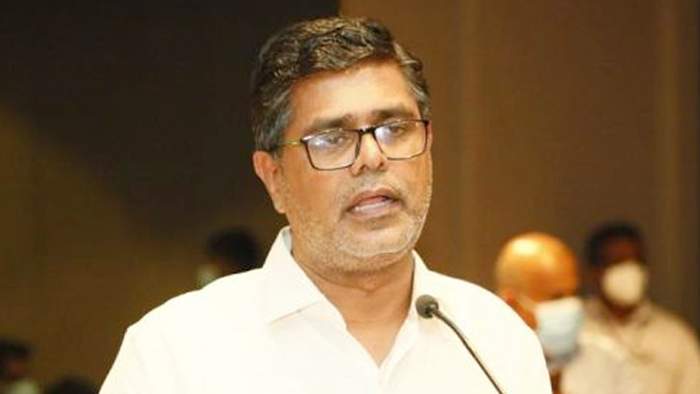
SJB Colombo District MP Mujibur Rahuman in parliament demanded to know from the government the reasons for CEB suspending the leave of all its employees until further notice from Thursday.
MP Rahuman said that the CEB has got an acting General Manager anew and the latter yesterday morning issued a circular suspending leave of all CEB employees with immediate effect until further notice.
“We demand that Minister Kanchana Wijesekera should explain this to the House. This circular was issued while this debate on the new Electricity Amendment Bill was pending. There are many who oppose this Bill. The Minister must tell parliament the reason for the urge to cancel the leave of CEB employees,” the MP said.However, Speaker Mahinda Yapa Abeywardena prevented Minister Wijesekera responding to the query and said that the matter raised by MP Rahuman was not relevant.
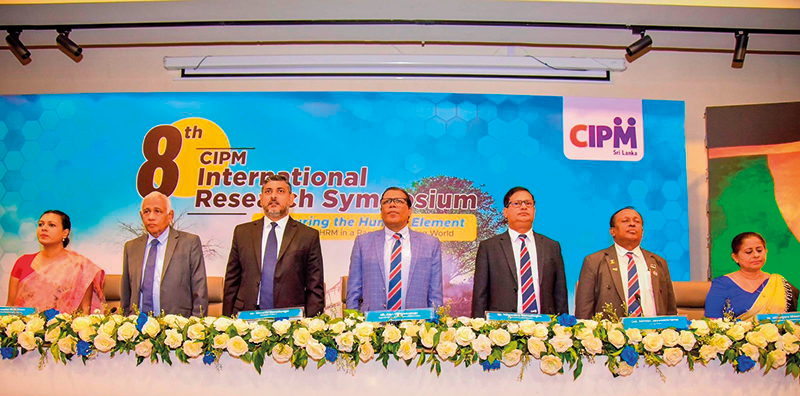
The Chartered Institute of Personnel Management (CIPM) successfully concluded the 8th Annual CIPM Symposium, which took place on 31st May 2024. Themed “Nurturing the Human Element—Redefining HRM in a Rapidly Changing World,” the symposium underscored the pivotal role of human resource management (HRM) in today’s dynamic global landscape. Since its inception in 1959, CIPM has been dedicated to advancing the HR profession through education, professional development, and advocacy, solidifying its position as Sri Lanka’s leading professional body for HRM.
Ken Vijayakumar, the President of the CIPM, graced the occasion as the chief guest. The symposium commenced with the welcome address by the Chairperson, Prof. Arosha Adikaram, followed by the Web Launch of the Symposium Proceedings and Abstract Book by the CIPM President. The event featured distinguished addresses, including a speech by Chief Guest Ken Vijayakumar, President of CIPM, and an address by Guest of Honor Shakthi Ranatunga, Chief Operating Officer of MAS Holdings Pvt. Ltd., Sri Lanka.
The symposium also featured an inspiring keynote address by Prof. Mario Fernando, Professor of Management and Director of the Centre for Cross Cultural Management (CCCM) at the University of Wollongong, Australia.
Vote of Thanks of the inauguration session was delivered by Dr. Dillanjani Weeratunga, Symposium Co-chair.
The symposium served as a comprehensive platform for researchers to present their findings across a wide range of critical topics in HRM. These included Cultural Diversity and Inclusion, Talent Development and Retention, Ethical Leadership and Corporate Social Responsibility, Adapting to Technological Advancements, Mental Health and Well-being at Work, Global Workforce Challenges, Employee Empowerment, and Reskilling and Upskilling.
The plenary session was led by Prof. Wasantha Rajapakse. Certificates were awarded to the best paper presenters during the valedictory session, followed by a vote of thanks delivered by Kamani Perera, Manager of Research and Development.
The annual symposium of CIPM was a truly inclusive event, attracting a diverse audience that spanned undergraduates, graduates, working professionals, research scholars and lecturers. This widespread interest highlights the symposium’s significance in the field of HRM, offering a unique opportunity for everyone to network and learn from scholarly brains.The CIPM International Research Symposium was sponsored by Hambantota International Port, Sri Lanka Institute of Information Technology (SLIIT), E B Creasy & Co. PLC, and Print Xcel Company.



US sports envoys to Lanka to champion youth development

Rahuman questions sudden cancellation of leave of CEB employees


