
News
Sri Lanka exporters, importers battle high rates, box shortfalls to maintain trade lifeline


Sri Lanka’s exporters and importers are working against multiple global and domestic logistics disruptions in the post-Covid-19 period to keep exports ticking and supply the country with essential foods and raw material as freight rates soar.
Exporters are also facing shortfalls of containers with import controls in Sri Lanka, compounding global bottlenecks in shuttling empty containers.
Though freight rates have started to stabilize gradually from Covid-19 peaks, Sri Lankan shippers are paying high rates and battling capacity bottlenecks.
Perfect Storm
Freight rates from Colombo to Europe, China and Hong Kong have jumped over 200 per cent, to the US over 150 per cent and to Singapore over 100 per cent, Sri Lanka’s Shipper Council Chairman Suren Abeysekera said.
Freight rates were competitive before the Covid-19 pandemic, helped by large container ships coming into service, but pandemic disruptions rapidly pushed up rates as ships were taken off service reducing capacity.
The Shanghai Freight Index has jumped three-fold compared to 2019 last quarter while the Drewry’s World Container Freight Index also shows a threefold jump from 2019 with the average spot freight rate jumping from 1500 dollars in March 2019 to 4800 dollar by March 2021, Abeysekera said.
“In my 21-plus year experience I have never seen something like this before,” Abeysekera said calling it a ‘perfect storm’ in ocean freight.
The resurgence of economic activities after Covid lockdowns ended, and the rush to build up stocks had created congestion in the global logistics system.
Shipping companies were making large profits and orders have also been placed at shipbuilders.
“Whatever that stopped during COVID, couldn’t come back to its former glory even though the industry came back quickly to match the consumer demand,” Abeysekera explained.
Costly Delays
Across the logistics chain, there are delays and congestion, which is a cost to shippers.
“Congestions created at ports amplify this issue with ships spending more time close to ports rather than moving cargo on water,” Abeysekera said.
While global trade has not actually grown, it is the disruptions and delays that are causing capacity problems, he said.
“Remember the number of ships in the world has not suddenly increased but most are out of schedule creating havoc to demand when it needs supply.”
“It is our understanding that the current volatility in the ocean freight market would continue throughout 2021 and shippers in the country should adapt to the new norm in containerized shipping,” he said.
The industry has taken a number of initiatives to mitigate the situation; more innovations are being underway, but there are also measures that authorities can take, he said.
Box Shortfall
Overall ships are fuller than before, reducing the ability of shuttles to be emptied.
Globally there were difficulties in getting hold of empty containers and also specific types such as food-grade boxes, refrigerated containers and different sizes such as 40-foot containers and 20-foot containers.
Vessels delaying their return to Asia due to congestion in export destinations had also contributed to a shortfall of containers in Asia. Others have also got stuck in inland ports.
There is at least one investigation by regulators to probe whether an artificial shortage is created, he said.
In Sri Lanka exporters are facing difficulties getting empty containers in general and specific types of containers.
Sri Lanka’s import controls had created shortfalls of empty containers, whereas, in the past, there was an excess of boxes on the island.
“Specifically for Sri Lanka, the reduction of imports has had a direct impact on container availability,” Abeysekera said.
“Generally, Sri Lanka has an imbalance in the number of containers with more inflow than outflow. But currently, it is reversed.”
Due to import imbalance, the 20’ equivalent size containers have a better availability compared to 40’ and 45’ containers in Sri Lanka.
But the overall export cost of 2 x 20’ containers instead of a 40’ container is incomparable.
Shippers Innovating
Shippers are taking several measures on their own to mitigate the fallout and maintain the external trade lifelines of the country.
Forecasting volumes to shipping lines and maintaining accuracy is one way to make sure shipments can be made on time.
“Currently, the earlier you could forecast the lines, the better chance for exporters/ importers to obtain space on vessels,” Abeysekera said.
“Presently, forecasting is done as early as and when found weeks ahead by some users. This helps with rates as well.”
The creation of a common container pool without having to look for containers in specific yards would also help, he said.
It is not clear whether an online data-based could be set up for container freight stations to update data daily.
Official Measures
State authorities could also take measures that would help combat the problem.
Sri Lanka has lost a number of ocean services during the congestion that happened during a Covid-19 spike at Colombo Port last year.
Though many lines have returned some are still bypassing Colombo.
“Sri Lanka should market its Colombo port internationally as a port which successfully combats Covid and attract vessels back to its shores which will increase capacity for local importers and exporters,” Abeysekera said.
Attracting new lines to Colombo would also help.
Sri Lanka can also invite shipping lines to use Colombo as their hub in Asia, he said.
Additional ships calling in Colombo will give more business to shipping agents and other service providers including husbandry and ship services.
Sri Lanka however has placed controls on foreign ownership of shipping agencies, which some say has prevented the island from following on the path of Singapore where regional offices are set up.
Fast-tracking clearances by border agencies would also help, he said.
Sri Lanka can also relook at import controls, he said. Ad hoc changes are creating ripples and uncertainties in the market.
While the cost of shipping had hit record levels, shippers have to put up with very high service charges from middlemen such as freight forwarders, consolidators.
He says such gauging is unethical given the current context. (ECONOMYNEXT)




The U.S. Embassy in Colombo welcomed the U.S. Sports Envoys to Sri Lanka, former National Basketball Association (NBA) and Women’s National Basketball Association (WNBA) players Stephen Howard and Astou Ndiaye, from June 8 through 14.
The Public Diplomacy section of the U.S. Embassy said that it would launch a weeklong basketball program intended to harness the unifying power of sports, made possible through collaboration with Foundation of Goodness and IImpact Hoop Lab.
While in Sri Lanka, Howard and Ndiaye, both retired professional basketball players, will conduct a weeklong program, Hoops for Hope: Bridging Borders through Basketball. The Sports Envoys will lead basketball clinics and exhibition matches and engage in leadership sessions in Colombo and Southern Province for youth aged 14-18 from Northern, Uva, Eastern and Western Provinces, offering skills and leadership training both on and off the court. The U.S. Envoys will also share their expertise with the Sri Lanka Basketball Federation, national coaches, and players, furthering the development of basketball in the country. Beyond the clinics, they will collaborate with Sri Lankan schoolchildren to take part in a community service project in the Colombo area.
“We are so proud to welcome Stephen and Astou as our Sports Envoys to Sri Lanka, to build on the strong people-to-people connections between the United States and Sri Lanka,” said U.S. Ambassador Julie Chung. “The lessons that will be shared by our Sports Envoys – communication, teamwork, resilience, inclusion, and conflict resolution – are essential for leadership development, community building, equality, and peace. The U.S. Sports Envoy program is a testament to our belief that sports can be a powerful tool in promoting peace and unity.”
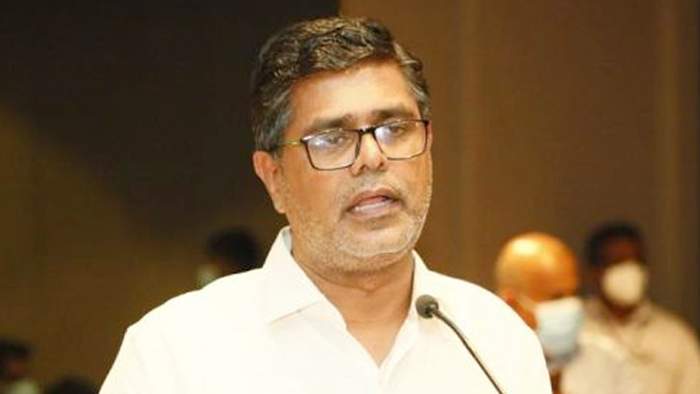
SJB Colombo District MP Mujibur Rahuman in parliament demanded to know from the government the reasons for CEB suspending the leave of all its employees until further notice from Thursday.
MP Rahuman said that the CEB has got an acting General Manager anew and the latter yesterday morning issued a circular suspending leave of all CEB employees with immediate effect until further notice.
“We demand that Minister Kanchana Wijesekera should explain this to the House. This circular was issued while this debate on the new Electricity Amendment Bill was pending. There are many who oppose this Bill. The Minister must tell parliament the reason for the urge to cancel the leave of CEB employees,” the MP said.However, Speaker Mahinda Yapa Abeywardena prevented Minister Wijesekera responding to the query and said that the matter raised by MP Rahuman was not relevant.
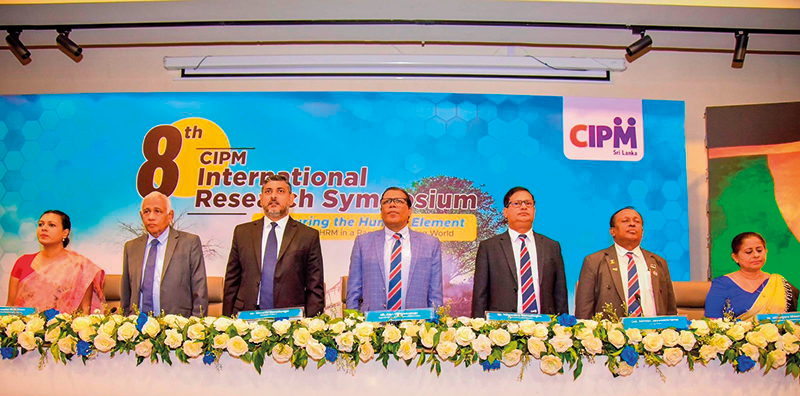
The Chartered Institute of Personnel Management (CIPM) successfully concluded the 8th Annual CIPM Symposium, which took place on 31st May 2024. Themed “Nurturing the Human Element—Redefining HRM in a Rapidly Changing World,” the symposium underscored the pivotal role of human resource management (HRM) in today’s dynamic global landscape. Since its inception in 1959, CIPM has been dedicated to advancing the HR profession through education, professional development, and advocacy, solidifying its position as Sri Lanka’s leading professional body for HRM.
Ken Vijayakumar, the President of the CIPM, graced the occasion as the chief guest. The symposium commenced with the welcome address by the Chairperson, Prof. Arosha Adikaram, followed by the Web Launch of the Symposium Proceedings and Abstract Book by the CIPM President. The event featured distinguished addresses, including a speech by Chief Guest Ken Vijayakumar, President of CIPM, and an address by Guest of Honor Shakthi Ranatunga, Chief Operating Officer of MAS Holdings Pvt. Ltd., Sri Lanka.
The symposium also featured an inspiring keynote address by Prof. Mario Fernando, Professor of Management and Director of the Centre for Cross Cultural Management (CCCM) at the University of Wollongong, Australia.
Vote of Thanks of the inauguration session was delivered by Dr. Dillanjani Weeratunga, Symposium Co-chair.
The symposium served as a comprehensive platform for researchers to present their findings across a wide range of critical topics in HRM. These included Cultural Diversity and Inclusion, Talent Development and Retention, Ethical Leadership and Corporate Social Responsibility, Adapting to Technological Advancements, Mental Health and Well-being at Work, Global Workforce Challenges, Employee Empowerment, and Reskilling and Upskilling.
The plenary session was led by Prof. Wasantha Rajapakse. Certificates were awarded to the best paper presenters during the valedictory session, followed by a vote of thanks delivered by Kamani Perera, Manager of Research and Development.
The annual symposium of CIPM was a truly inclusive event, attracting a diverse audience that spanned undergraduates, graduates, working professionals, research scholars and lecturers. This widespread interest highlights the symposium’s significance in the field of HRM, offering a unique opportunity for everyone to network and learn from scholarly brains.The CIPM International Research Symposium was sponsored by Hambantota International Port, Sri Lanka Institute of Information Technology (SLIIT), E B Creasy & Co. PLC, and Print Xcel Company.



US sports envoys to Lanka to champion youth development

Rahuman questions sudden cancellation of leave of CEB employees


