
News
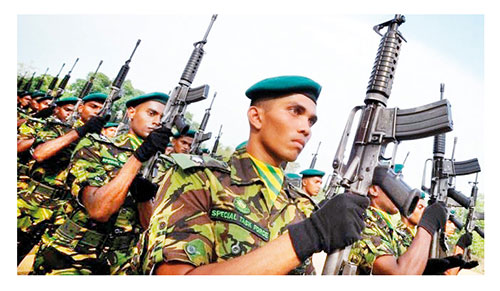
Special Task Force commemorates fallen heroes today

By Shamindra Ferdinando
Sri Lanka paid a very heavy price to bring the war to a successful conclusion, in May 2009. The armed forces, the police and its elite paramilitary unit, the Special Task Force (STF), restored peace, through arms, after protracted negotiations failed to produce the desired results. Bringing the war to a successful end had been costly, in terms of men and material. The STF lost 464 officers and men, while 774 others suffered injuries, and some even disabled for life.
As the STF celebrates its 36th anniversary, today (Sept 1), over a decade after the end of the conflict, it would be pertinent to examine how families, of those who made the supreme sacrifice, cope up with the loss of their loved ones on the battlefield. Do they feel their loss was in vain? How do they view the much-touted post-war national reconciliation process, over the past few years? Do the families of those who laid down their lives, as well as the wounded, receive the respect, love and appreciation they really deserve?
The well-being of those who bear arms for the State should be the responsibility of the government of the day, regardless of its agenda. The responsibility of guaranteeing safety and security of bereaved families, too, lies with the government. A country should be eternally grateful for those who gave up their today for our tomorrow. In Sri Lanka’s case, volunteering for military life is exceptional as the government did not resort to compulsory military service, in spite of over three decades of conflict, which was more a war of attrition, fought by the enemy, using terror as its vanguard against the state, as well as civilians. Even at the height of the war, Sri Lanka never seriously considered compulsory military service, though tangible measures were taken to enhance the fighting capabilities of the armed forces.
The police were subjected to unprecedented change with the formation of the STF, during President JR Jayewardene’s tenure. The establishment of the STF was Sri Lanka’s initial response to the growing threat, posed by separatist terrorists, at a time the focus of enemy operation was the Jaffna peninsula. Both the military and the police struggled to suppress foreign-backed terrorism. For want of a cohesive strategy, Sri Lanka suffered badly, with the military and the police being largely restricted to their heavily fortified bases, in the peninsula, and the Vanni. The ground situation, in the Eastern Theater of operations, was relatively under control. The deployment of the STF, in the Jaffna peninsula, in 1984, should be examined against the backdrop of the deepening security crisis, in the Jaffna peninsula.
The STF experienced its first major loss, on Sept 1, 1984, at Tikkam, Valvettiturai, the then hotbed of terrorism. Four personnel perished in a single blast. Soon after the blast, Police Headquarters re-deployed the STF, in the East, where the unit played a significant role in the period leading to the Indo-Lanka accord forced on us, in late July, 1987. Between August 1987 and early 1990, the STF played a key role in counter-insurgency operations against the Janatha Vimukthi Peramuna (JVP). The elite group resumed its classic role, in June 1990, in the wake of the Liberation Tigers of Tamil Eelam (LTTE) resuming hostilities, following a 14-month ceasefire with the government.
The STF, initially trained by former members of the British elite Special Air Services, received its expertise, in various fields, from experts from several countries, including Israel. The STF earned the respect of even its enemies, as well as foreign partners, for fighting skills and expertise displayed under extremely tough conditions.
The STF earned a name for itself by providing security to those politicians high on the ‘hit lists.’ Though not successful always, (on some occasions not due to their fault), the STF always was in high demand for personal protection duties. Presidents received STF security, in addition to visiting foreign dignitaries.
Families of those who had been killed in action, wounded or survived terrorism in the North (1984-2009), as well as South (1987-1990), should be genuinely proud because their sacrifices saved the country from ruination.
With the conclusion of the conflict, in May 2009, the then government re-assigned the STF for countrywide duties, on a much wider scale, in support of law enforcement efforts. Regardless of its overall success, during the conflict, it would be the responsibility of all serving officers and men to maintain proud traditions. With over 8,000 officers, and men, deployed at nearly 70 bases, countrywide, the elite unit remains committed to meet any eventuality.
Let those who had sacrificed their lives, the wounded and the serving officers, and men, and their families, be part of a proud community of the nation’s defenders. Let the families of those courageous officers, and men, of the armed forces, the STF, included, bask in the glory of Sri Lanka’s triumph over terrorism. Let us strive hard to achieve real peace, now that the war has been brought to an end by men of arms.



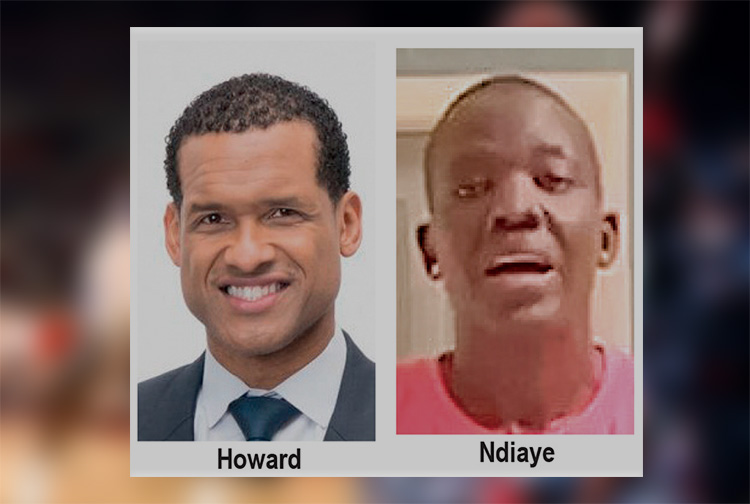
The U.S. Embassy in Colombo welcomed the U.S. Sports Envoys to Sri Lanka, former National Basketball Association (NBA) and Women’s National Basketball Association (WNBA) players Stephen Howard and Astou Ndiaye, from June 8 through 14.
The Public Diplomacy section of the U.S. Embassy said that it would launch a weeklong basketball program intended to harness the unifying power of sports, made possible through collaboration with Foundation of Goodness and IImpact Hoop Lab.
While in Sri Lanka, Howard and Ndiaye, both retired professional basketball players, will conduct a weeklong program, Hoops for Hope: Bridging Borders through Basketball. The Sports Envoys will lead basketball clinics and exhibition matches and engage in leadership sessions in Colombo and Southern Province for youth aged 14-18 from Northern, Uva, Eastern and Western Provinces, offering skills and leadership training both on and off the court. The U.S. Envoys will also share their expertise with the Sri Lanka Basketball Federation, national coaches, and players, furthering the development of basketball in the country. Beyond the clinics, they will collaborate with Sri Lankan schoolchildren to take part in a community service project in the Colombo area.
“We are so proud to welcome Stephen and Astou as our Sports Envoys to Sri Lanka, to build on the strong people-to-people connections between the United States and Sri Lanka,” said U.S. Ambassador Julie Chung. “The lessons that will be shared by our Sports Envoys – communication, teamwork, resilience, inclusion, and conflict resolution – are essential for leadership development, community building, equality, and peace. The U.S. Sports Envoy program is a testament to our belief that sports can be a powerful tool in promoting peace and unity.”
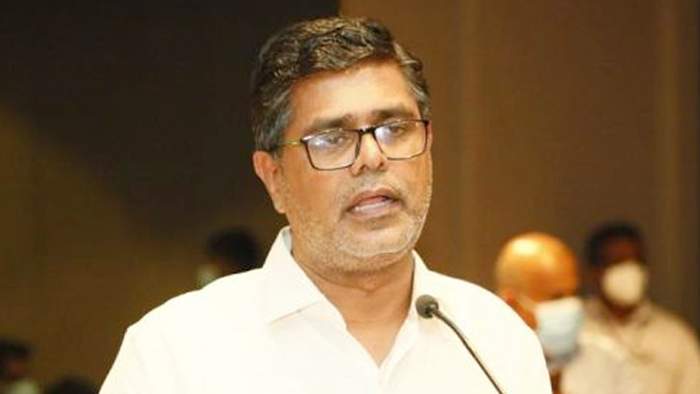
SJB Colombo District MP Mujibur Rahuman in parliament demanded to know from the government the reasons for CEB suspending the leave of all its employees until further notice from Thursday.
MP Rahuman said that the CEB has got an acting General Manager anew and the latter yesterday morning issued a circular suspending leave of all CEB employees with immediate effect until further notice.
“We demand that Minister Kanchana Wijesekera should explain this to the House. This circular was issued while this debate on the new Electricity Amendment Bill was pending. There are many who oppose this Bill. The Minister must tell parliament the reason for the urge to cancel the leave of CEB employees,” the MP said.However, Speaker Mahinda Yapa Abeywardena prevented Minister Wijesekera responding to the query and said that the matter raised by MP Rahuman was not relevant.
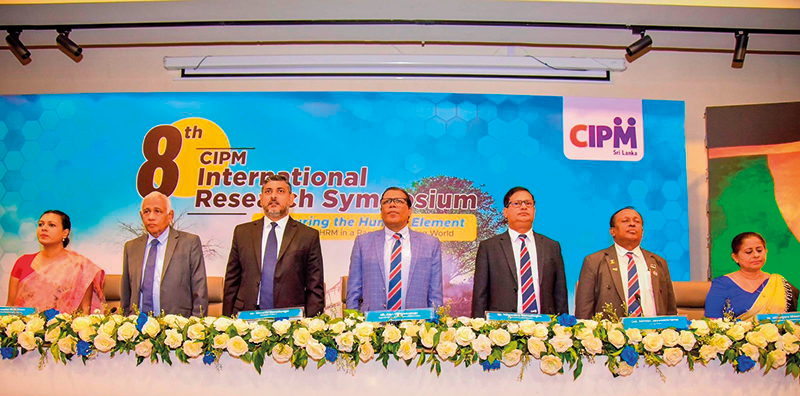
The Chartered Institute of Personnel Management (CIPM) successfully concluded the 8th Annual CIPM Symposium, which took place on 31st May 2024. Themed “Nurturing the Human Element—Redefining HRM in a Rapidly Changing World,” the symposium underscored the pivotal role of human resource management (HRM) in today’s dynamic global landscape. Since its inception in 1959, CIPM has been dedicated to advancing the HR profession through education, professional development, and advocacy, solidifying its position as Sri Lanka’s leading professional body for HRM.
Ken Vijayakumar, the President of the CIPM, graced the occasion as the chief guest. The symposium commenced with the welcome address by the Chairperson, Prof. Arosha Adikaram, followed by the Web Launch of the Symposium Proceedings and Abstract Book by the CIPM President. The event featured distinguished addresses, including a speech by Chief Guest Ken Vijayakumar, President of CIPM, and an address by Guest of Honor Shakthi Ranatunga, Chief Operating Officer of MAS Holdings Pvt. Ltd., Sri Lanka.
The symposium also featured an inspiring keynote address by Prof. Mario Fernando, Professor of Management and Director of the Centre for Cross Cultural Management (CCCM) at the University of Wollongong, Australia.
Vote of Thanks of the inauguration session was delivered by Dr. Dillanjani Weeratunga, Symposium Co-chair.
The symposium served as a comprehensive platform for researchers to present their findings across a wide range of critical topics in HRM. These included Cultural Diversity and Inclusion, Talent Development and Retention, Ethical Leadership and Corporate Social Responsibility, Adapting to Technological Advancements, Mental Health and Well-being at Work, Global Workforce Challenges, Employee Empowerment, and Reskilling and Upskilling.
The plenary session was led by Prof. Wasantha Rajapakse. Certificates were awarded to the best paper presenters during the valedictory session, followed by a vote of thanks delivered by Kamani Perera, Manager of Research and Development.
The annual symposium of CIPM was a truly inclusive event, attracting a diverse audience that spanned undergraduates, graduates, working professionals, research scholars and lecturers. This widespread interest highlights the symposium’s significance in the field of HRM, offering a unique opportunity for everyone to network and learn from scholarly brains.The CIPM International Research Symposium was sponsored by Hambantota International Port, Sri Lanka Institute of Information Technology (SLIIT), E B Creasy & Co. PLC, and Print Xcel Company.



US sports envoys to Lanka to champion youth development

Rahuman questions sudden cancellation of leave of CEB employees


