
News
South Asia’s economic landscape: Hope and hurdles on path to prosperity

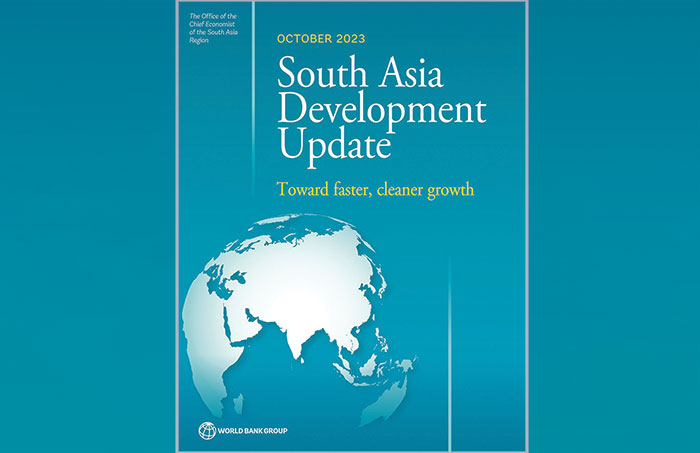
Not all countries in the region are growing fast, and three—Afghanistan, Pakistan and Sri Lanka—are in acute crisis
South Asia has emerged as a beacon of hope in the global economy, with the World Bank predicting that the region will outshine other developing regions in the years to come. However, a deeper dive into the situation reveals a complex reality marked by both progress and challenges, says the World Bank its latest ‘South Asia Development Update, Toward Faster, Cleaner Growth.’
The report said that while certain countries in South Asia are basking in robust economic growth, and others are recovering from turbulent times, the region as a whole is advancing at a more restrained pace compared to the pre-pandemic era. This warrants concern as South Asia still has substantial ground to cover in terms of economic development. With per capita incomes averaging around US$2,000, the region falls significantly short, standing at only one-fifth of the level achieved by neighboring East Asia and Pacific countries or the upper-middle-income average, and a mere one-twentieth of the income level of high-income countries.
Though South Asia’s current growth rates may surpass those of numerous other regions, they remain insufficient for the region’s countries to attain high-income status within a single generation. Moreover, not all nations within South Asia are experiencing rapid growth; Afghanistan, Pakistan, and Sri Lanka find themselves mired in acute crises.
To draw a parallel, South Asia’s progress is akin to mountaineers navigating the foothills of the Himalayas. Some have scarcely departed from base camp, while others are advancing briskly but remain at a lower altitude. Regardless of their current position, every country in the region has a long journey ahead, and the path ahead is poised to become even more formidable.
The “South Asia Development Update: Toward Faster, Cleaner Growth,” released last week provides policymakers with a roadmap to expedite their journey. This report underscores four pivotal components for success:
1. Boosting Private Investment: Robust private investment stands as a cornerstone for catching up with high-income countries and facilitating the transition to cleaner energy sources. Unfortunately, private investment growth in all South Asian countries, except one, has decelerated compared to the pre-pandemic period. To reignite private investment, policymakers must prioritize infrastructure development, enhance the business environment, ensure access to credit through a robust financial system, and eliminate market distortions.
2. Restoring Fiscal Sustainability: Many nations in South Asia carry a substantial debt burden, a roadblock to economic prosperity. Over the past decade, South Asia has experienced an above-average increase in public debt. High public debt stifles private investment, constrains spending on essential infrastructure and human capital, and reduces resilience. Tackling this challenge necessitates a combination of revenue augmentation, increased spending efficiency, and the implementation of robust fiscal regulations.
3. Speeding the Energy Transition: South Asia has made strides in adopting basic energy-saving technologies but lags in embracing advanced ones. Modernizing the economy and improving energy efficiency will enable the region to keep pace with the global energy transition.
4. Maintaining a Healthy Labor Market: The energy transition heralds new employment prospects but also poses the risk of leaving lower-skilled, informal workers with pollution-intensive jobs behind. Access to education, training, finance, and markets can aid workers in transitioning to new sectors. A strong labor market, fortified with effective social safety nets, eases the path for displaced workers.
The road to prosperity demands sustained high growth rates over extended periods. Many nations have seen their aspirations dashed as growth faltered following an initial surge. However, with the right policies and investments, South Asia can surmount these challenges and reach the summit, securing sustainable livelihoods for its people on a habitable planet. Achieving this goal will necessitate concerted efforts from policymakers and stakeholders across the region.













The U.S. Embassy in Colombo welcomed the U.S. Sports Envoys to Sri Lanka, former National Basketball Association (NBA) and Women’s National Basketball Association (WNBA) players Stephen Howard and Astou Ndiaye, from June 8 through 14.
The Public Diplomacy section of the U.S. Embassy said that it would launch a weeklong basketball program intended to harness the unifying power of sports, made possible through collaboration with Foundation of Goodness and IImpact Hoop Lab.
While in Sri Lanka, Howard and Ndiaye, both retired professional basketball players, will conduct a weeklong program, Hoops for Hope: Bridging Borders through Basketball. The Sports Envoys will lead basketball clinics and exhibition matches and engage in leadership sessions in Colombo and Southern Province for youth aged 14-18 from Northern, Uva, Eastern and Western Provinces, offering skills and leadership training both on and off the court. The U.S. Envoys will also share their expertise with the Sri Lanka Basketball Federation, national coaches, and players, furthering the development of basketball in the country. Beyond the clinics, they will collaborate with Sri Lankan schoolchildren to take part in a community service project in the Colombo area.
“We are so proud to welcome Stephen and Astou as our Sports Envoys to Sri Lanka, to build on the strong people-to-people connections between the United States and Sri Lanka,” said U.S. Ambassador Julie Chung. “The lessons that will be shared by our Sports Envoys – communication, teamwork, resilience, inclusion, and conflict resolution – are essential for leadership development, community building, equality, and peace. The U.S. Sports Envoy program is a testament to our belief that sports can be a powerful tool in promoting peace and unity.”
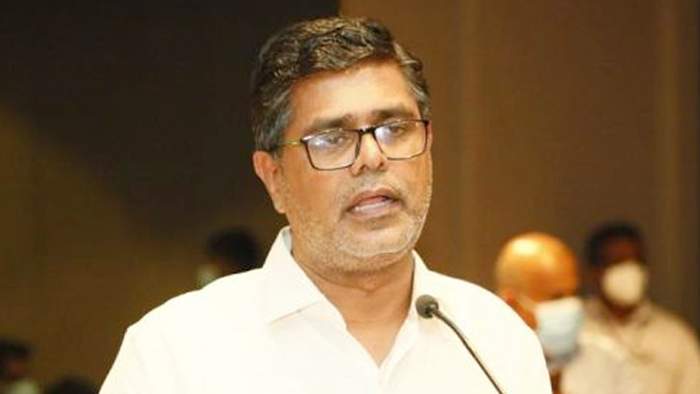
SJB Colombo District MP Mujibur Rahuman in parliament demanded to know from the government the reasons for CEB suspending the leave of all its employees until further notice from Thursday.
MP Rahuman said that the CEB has got an acting General Manager anew and the latter yesterday morning issued a circular suspending leave of all CEB employees with immediate effect until further notice.
“We demand that Minister Kanchana Wijesekera should explain this to the House. This circular was issued while this debate on the new Electricity Amendment Bill was pending. There are many who oppose this Bill. The Minister must tell parliament the reason for the urge to cancel the leave of CEB employees,” the MP said.However, Speaker Mahinda Yapa Abeywardena prevented Minister Wijesekera responding to the query and said that the matter raised by MP Rahuman was not relevant.
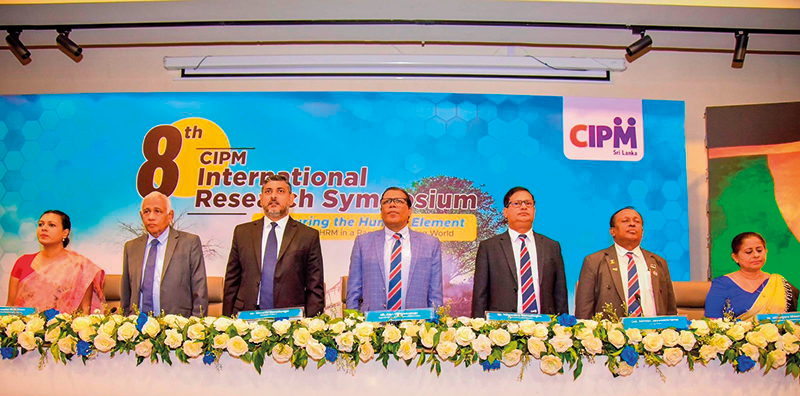
The Chartered Institute of Personnel Management (CIPM) successfully concluded the 8th Annual CIPM Symposium, which took place on 31st May 2024. Themed “Nurturing the Human Element—Redefining HRM in a Rapidly Changing World,” the symposium underscored the pivotal role of human resource management (HRM) in today’s dynamic global landscape. Since its inception in 1959, CIPM has been dedicated to advancing the HR profession through education, professional development, and advocacy, solidifying its position as Sri Lanka’s leading professional body for HRM.
Ken Vijayakumar, the President of the CIPM, graced the occasion as the chief guest. The symposium commenced with the welcome address by the Chairperson, Prof. Arosha Adikaram, followed by the Web Launch of the Symposium Proceedings and Abstract Book by the CIPM President. The event featured distinguished addresses, including a speech by Chief Guest Ken Vijayakumar, President of CIPM, and an address by Guest of Honor Shakthi Ranatunga, Chief Operating Officer of MAS Holdings Pvt. Ltd., Sri Lanka.
The symposium also featured an inspiring keynote address by Prof. Mario Fernando, Professor of Management and Director of the Centre for Cross Cultural Management (CCCM) at the University of Wollongong, Australia.
Vote of Thanks of the inauguration session was delivered by Dr. Dillanjani Weeratunga, Symposium Co-chair.
The symposium served as a comprehensive platform for researchers to present their findings across a wide range of critical topics in HRM. These included Cultural Diversity and Inclusion, Talent Development and Retention, Ethical Leadership and Corporate Social Responsibility, Adapting to Technological Advancements, Mental Health and Well-being at Work, Global Workforce Challenges, Employee Empowerment, and Reskilling and Upskilling.
The plenary session was led by Prof. Wasantha Rajapakse. Certificates were awarded to the best paper presenters during the valedictory session, followed by a vote of thanks delivered by Kamani Perera, Manager of Research and Development.
The annual symposium of CIPM was a truly inclusive event, attracting a diverse audience that spanned undergraduates, graduates, working professionals, research scholars and lecturers. This widespread interest highlights the symposium’s significance in the field of HRM, offering a unique opportunity for everyone to network and learn from scholarly brains.The CIPM International Research Symposium was sponsored by Hambantota International Port, Sri Lanka Institute of Information Technology (SLIIT), E B Creasy & Co. PLC, and Print Xcel Company.



US sports envoys to Lanka to champion youth development

Rahuman questions sudden cancellation of leave of CEB employees


