
News
SLMA opposes move to legalise cannabis


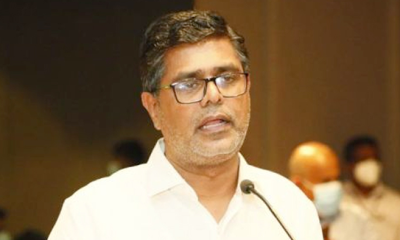
The Sri Lanka Medical Association (SLMA) and the Expert Committee on Tobacco, Alcohol and Illicit Drugs have warned against the government move to legalise cannabis. It has, in a letter addressed to the Secretary to the President, Saman Ekanayake, asked the government “to be extremely cautious when considering any form of legalising of cannabis – even the relaxation of laws on cultivation, for doubtful ‘economic’ benefits.”
The population of Sri Lanka is suffering on multiple fronts, and the “cure” of cannabis cultivation dangled in front of the government can end up being far worse than the illness. Sri Lanka does not deserve more misery,” says the letter signed by Dr. Vinya Ariyaratne, President, SLMA and Prof. Narada Warnasuriya, Chairperson, Expert Committee on Tobacco, Alcohol and Illicit Drugs.
The letter, under the title ‘Committee to explore feasibility of cultivating cannabis for export,’ addressed to the President’s Secretary, Saman Ekanayake, says: We are concerned of the continuous efforts to legalize cannabis cultivation under various pretexts in Sri Lanka. We learned from the media that the government has appointed a committee to explore the feasibility of legalizing cultivation for the export of cannabis products. The arguments used for economic benefits are mostly false. However, only those who have studied them carefully can counter the various beguiling claims made by advocates – with vested interests. Those who want to promote cannabis smoking, for profit, cover up the real intention by presenting it as a foreign exchange earner through hemp export. Hemp is a dead market with prices plum
meting over the years and companies making billion-dollar losses. The lucrative market is selling cannabis cigarettes.The current economic crisis seems to be the latest lever used by interested parties to proceed on their objectives. Though we are convinced that this committee was appointed in good faith by the government, we wish to place the following queries before this committee.
1. What is the need for new policies or laws, as growing cannabis for medicinal purposes is already allowed?
2. Has an independent and credible international market survey been carried out estimating the market share we can get, the prices, the profits and the actual amount of foreign currency that the country and the government will earn? This is because there is a surplus of hemp production around the world, leading to crashes in market prices, putting farmers in debt and causing billion-dollar losses to cannabis companies.
3. Are there studies to ascertain if they have the economies of scale to compete with the current “legal” growers such as China, Netherlands?
4. Is the current international illegal cannabis market taken into account which produces millions of tons of cannabis annually, and can easily compete with “legal” exports from small countries such as Sri Lanka?
5. Will any multinational cannabis companies be allowed to grow cannabis in Sri Lanka, alone or in collaboration with a local partner or the government?
6. If so, will these entities be allowed to repatriate their profits in foreign currency from Sri Lanka?
7. What are the steps that will be taken to ensure that they do not falsify data to ensure that their sales proceeds are kept abroad without coming back to Sri Lanka through practices such as transfer pricing?
8. Will government land be allocated to cannabis cultivation in the context of real and potential food shortages in Sri Lanka?
9. Will armed forces or police protection be provided to these plantations?
10. Have other less harmful more acceptable cash crops (E.g. castor bean – beheth endaru, citronella etc) been considered for export with a potential saving of foreign currency?
11. What are the examples of countries that have successfully addressed balance of payment crises through cannabis cultivation?
12. Will the committee take into account the large investments made by the tobacco industry in cannabis companies although the cannabis companies are making billion-dollar losses?
We also wish to bring to your attention the danger of promoting use of cannabis by giving it the level of publicity it receives now. As you may be aware, there is a concerted effort to promote cannabis through social media. The current publicity relating to decriminalization and legalization (even only for export) will ensure a synergistic effect, resulting in normalizing cannabis use. Evidence shows that such publicity related to one substance can lead to increase in use of other substances as well.
We are concerned because cannabis is already the most widely used psychoactive substance in Sri Lanka and the world. It is also the most used illegal drug by young people around the world. Despite claims of medical benefits, there are many health harms of cannabis including mental disorders such as depression and schizophrenia, cannabis use disorders and serious lung ailments. It also affects brain development of adolescents and is associated with self-harm and suicide as well as road traffic accidents which already are major killers in Sri Lanka.
Therefore, we wish to earnestly request you to be extremely cautious when considering any form of legalizing of cannabis – even the relaxation of laws on cultivation, for doubtful “economic” benefits. Prices of cannabis products have fallen steeply during the last 6-7 years in world markets due to oversupply and all predictions of it being the goose that lays golden eggs, that were made 4 to 5 years ago, have been shown to be spurious. The population of Sri Lanka is suffering on multiple fronts, and the “cure” of cannabis cultivation dangled in the front of the government can end up being far worse than the illness. Sri Lanka does not deserve more misery.







The U.S. Embassy in Colombo welcomed the U.S. Sports Envoys to Sri Lanka, former National Basketball Association (NBA) and Women’s National Basketball Association (WNBA) players Stephen Howard and Astou Ndiaye, from June 8 through 14.
The Public Diplomacy section of the U.S. Embassy said that it would launch a weeklong basketball program intended to harness the unifying power of sports, made possible through collaboration with Foundation of Goodness and IImpact Hoop Lab.
While in Sri Lanka, Howard and Ndiaye, both retired professional basketball players, will conduct a weeklong program, Hoops for Hope: Bridging Borders through Basketball. The Sports Envoys will lead basketball clinics and exhibition matches and engage in leadership sessions in Colombo and Southern Province for youth aged 14-18 from Northern, Uva, Eastern and Western Provinces, offering skills and leadership training both on and off the court. The U.S. Envoys will also share their expertise with the Sri Lanka Basketball Federation, national coaches, and players, furthering the development of basketball in the country. Beyond the clinics, they will collaborate with Sri Lankan schoolchildren to take part in a community service project in the Colombo area.
“We are so proud to welcome Stephen and Astou as our Sports Envoys to Sri Lanka, to build on the strong people-to-people connections between the United States and Sri Lanka,” said U.S. Ambassador Julie Chung. “The lessons that will be shared by our Sports Envoys – communication, teamwork, resilience, inclusion, and conflict resolution – are essential for leadership development, community building, equality, and peace. The U.S. Sports Envoy program is a testament to our belief that sports can be a powerful tool in promoting peace and unity.”
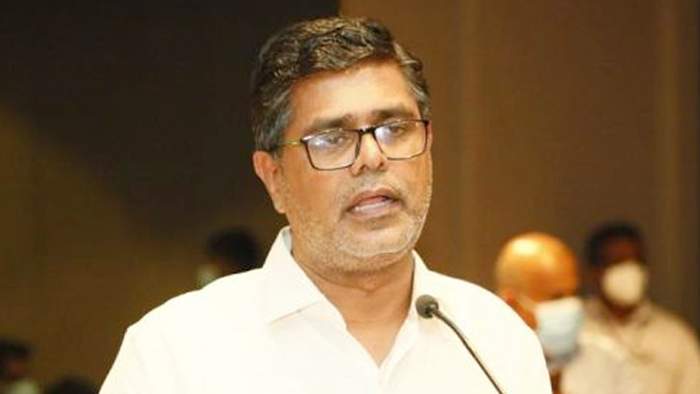
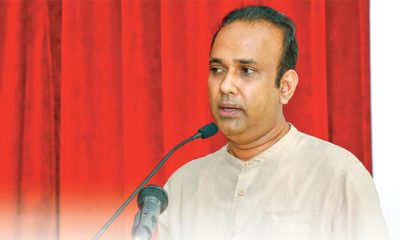
SJB Colombo District MP Mujibur Rahuman in parliament demanded to know from the government the reasons for CEB suspending the leave of all its employees until further notice from Thursday.
MP Rahuman said that the CEB has got an acting General Manager anew and the latter yesterday morning issued a circular suspending leave of all CEB employees with immediate effect until further notice.
“We demand that Minister Kanchana Wijesekera should explain this to the House. This circular was issued while this debate on the new Electricity Amendment Bill was pending. There are many who oppose this Bill. The Minister must tell parliament the reason for the urge to cancel the leave of CEB employees,” the MP said.However, Speaker Mahinda Yapa Abeywardena prevented Minister Wijesekera responding to the query and said that the matter raised by MP Rahuman was not relevant.
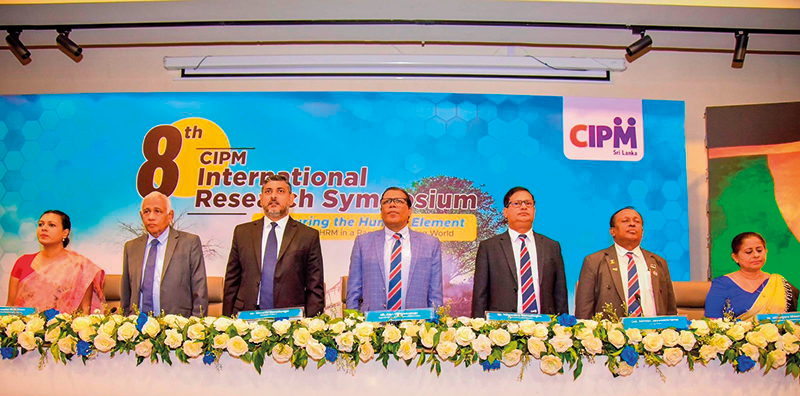
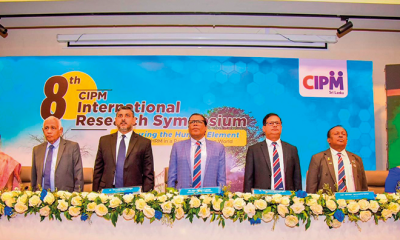
The Chartered Institute of Personnel Management (CIPM) successfully concluded the 8th Annual CIPM Symposium, which took place on 31st May 2024. Themed “Nurturing the Human Element—Redefining HRM in a Rapidly Changing World,” the symposium underscored the pivotal role of human resource management (HRM) in today’s dynamic global landscape. Since its inception in 1959, CIPM has been dedicated to advancing the HR profession through education, professional development, and advocacy, solidifying its position as Sri Lanka’s leading professional body for HRM.
Ken Vijayakumar, the President of the CIPM, graced the occasion as the chief guest. The symposium commenced with the welcome address by the Chairperson, Prof. Arosha Adikaram, followed by the Web Launch of the Symposium Proceedings and Abstract Book by the CIPM President. The event featured distinguished addresses, including a speech by Chief Guest Ken Vijayakumar, President of CIPM, and an address by Guest of Honor Shakthi Ranatunga, Chief Operating Officer of MAS Holdings Pvt. Ltd., Sri Lanka.
The symposium also featured an inspiring keynote address by Prof. Mario Fernando, Professor of Management and Director of the Centre for Cross Cultural Management (CCCM) at the University of Wollongong, Australia.
Vote of Thanks of the inauguration session was delivered by Dr. Dillanjani Weeratunga, Symposium Co-chair.
The symposium served as a comprehensive platform for researchers to present their findings across a wide range of critical topics in HRM. These included Cultural Diversity and Inclusion, Talent Development and Retention, Ethical Leadership and Corporate Social Responsibility, Adapting to Technological Advancements, Mental Health and Well-being at Work, Global Workforce Challenges, Employee Empowerment, and Reskilling and Upskilling.
The plenary session was led by Prof. Wasantha Rajapakse. Certificates were awarded to the best paper presenters during the valedictory session, followed by a vote of thanks delivered by Kamani Perera, Manager of Research and Development.
The annual symposium of CIPM was a truly inclusive event, attracting a diverse audience that spanned undergraduates, graduates, working professionals, research scholars and lecturers. This widespread interest highlights the symposium’s significance in the field of HRM, offering a unique opportunity for everyone to network and learn from scholarly brains.The CIPM International Research Symposium was sponsored by Hambantota International Port, Sri Lanka Institute of Information Technology (SLIIT), E B Creasy & Co. PLC, and Print Xcel Company.



US sports envoys to Lanka to champion youth development

Rahuman questions sudden cancellation of leave of CEB employees


