
Life style
Shifting paradigms in diabetes care


Today is World Diabetes Day
The prevalence of diabetes worldwide has nearly doubled since the 1980s. Globally about 422 million people have diabetes according to the World Health Organization and the majority of them live in low and middle-income countries. Around 1.5 million deaths are directly attributed to diabetes each year. A century after the discovery of insulin, millions of people with diabetes around the world still cannot access the care they need.
In this setting the theme for World Diabetes Day 2021-23 has been declared- ‘Access to Diabetes Care.’ The management of diabetes has today taken a shift involving a more holistic approach, points out Consultant Endocrinologist at the Sri Jayewardenepura General Hospital, Dr. Dimuthu Muthukuda. In an interview with the Sunday Island, she throws light on these shifting paradigms which are aimed at enhancing the quality of life of those with diabetes.
by Randima Attygalle
Q: How relevant is this year’s theme ‘Access to Diabetes care’ in a Sri Lankan context?
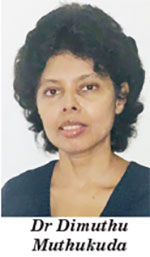 A: Since the discovery of insulin in 1921, there had been many strides forward in terms of the varieties of insulin – both oral and injectable. Today there are both national and international guidelines pertaining to diabetes care. Despite these, people with diabetes all over the world are challenged in accessing diabetic care. We are at a satisfactory level in delivering diabetic care within our freely accessible and well-structured health care system. Our limiting factor is the non-availability of the ideal device for insulin delivery which is the insulin pen. What we have in the state health sector for cost reasons is still the syringe and the needle. However, we are constantly improving our services for increased accessibility.
Q: What is the current ‘diabetes picture’ here at home?
A: In terms of the numbers, our situation is quite alarming. Recent studies show that the prevalence of diabetes in suburban areas of the island is about 20%. The situation in the rest of the South East Asian countries is no better. The major triggers of diabetes in our part of the world are obesity and being overweight. Today obesity has reached pandemic proportions and is as dangerous as COVID. Worse, there is a sizeable proportion of school children with diabetes.
The accumulation of fat in the abdomen which is called ‘abdominal or central obesity’ is common among South East Asians. This reflects the tendency for a person to develop diabetes. The other major risk factor is insulin resistance. This condition is closely linked to obesity and diabetes and this inter-connectivity leads to a very vicious cycle.
A few decades ago when we talked of a person with diabetes, it was a middle-aged or an older person that we visualized. This is no longer the case. Today many children, adolescents and young adults are diabetics.
Q: What are the most common types of diabetes?
A: Type 1, Type 2 and Gestational diabetes are the common types. In Type 1, the body does not produce any insulin and there is life-long insulin dependency. Very often children under 10 years develop this type although symptoms could occur in adolescence as well.
Type 2 is the most common, where the body does not use insulin which is produced by the pancreas effectively. This insulin resistance is also attributed to obesity where insulin is prevented from working well at tissue-level. Although Type 2 is called ‘adult-onset diabetes,’ today we see many young people developing it giving enough time to develop other complications. After about 10-15 years of having Type 2 Diabetes, the pancreas can get exhausted and it could stop producing insulin. Therefore initially although a person can manage Type 2 with drugs, later he/she may need insulin as well.
Diabetes during pregnancy is what is known as gestational diabetes. The long term consequences of this type could be serious. If a pregnant woman has gestational diabetes, there is a 50% chance of her children getting it. There is also the risk of children being obese. This is why we say that when we manage diabetes of an expectant mother, we also manage the condition in the next generation.
Q: Who are at high risk of developing diabetes?
A: Being a South Asian per se is a risk factor. Besides that, being overweight or obese, appearance of blackish velvety skin behind the neck, having a family history of diabetes (children whose both of whose parents have diabetes have more than 75% chances of developing the disease) and children of mothers with gestational diabetes and people who are on certain drugs such as steroids are at high risk.
Q: Can you throw light on the new interventions in managing diabetes?
A: Today the global trend is to look at the condition from a positive perspective. The traditional understanding was that the moment a person is diagnosed with diabetes, he/she becomes a ‘diabetic’ or a ‘diabetic patient’. Imagine a person being diagnosed at 15 or 20 with diabetes; are we going to call that person a ‘diabetic’ for the rest of his/her life? What will be his/her social and psychological well being in that case? Today diabetes is considered as a condition which you need to manage. Instead of calling ‘diabetics’ or a ‘diabetes patients’ we call them ‘individuals with diabetes’.
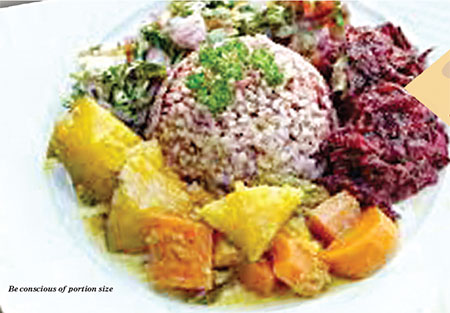
A few decades ago the most feared thought was going on a ‘diabetic diet’. Today we are talking of a healthy diet for everyone in the family; we are talking about giving advice to the whole family because it has to be essentially a family affair. For instance, you are going to cook a healthy meal for the entire family and not only for the member with diabetes.
The pharmacological management landscape of diabetes has also changed. Instead of the gluco centric approach which looked only at glycemic or sugar control, today a holistic approach is in place which is known as ‘cardio-renal’ approach. This looks at reducing cardio-renal complications (kidney and heart related complications). Although morbidity and mortality due to diabetes is largely heart attacks, the root cause is underestimated because the cause of death goes as ‘heart attack’ and most of these heart attacks can be prevented. To strengthen the cardio-renal management of people with diabetes, our health sector is trying its best to make the latest cardio-protective drugs available in government hospitals.
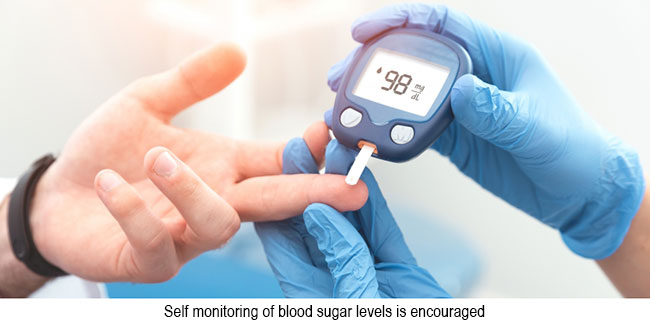
In diabetes management, we not only address sugar levels but the entire spectrum of micro vascular and macro vascular complications. When diabetes is mismanaged both small (micro) and big (macro) vessels can be damaged. While micro vascular damage will involve the retina of the eye, kidneys and nerves, macro vascular damage will lead to stroke, heart attack and peripheral vascular disease. As Endocrinologists, our ultimate goal is to prevent people from getting micro and macro vascular diseases. To realize this, we encourage people with diabetes to monitor their blood glucose levels at home using glucometers. It is imperative that they have good metabolic control and healthy cholesterol levels. Diseases such as ischemic heart disease and non-alcoholic fatty liver should also be kept at bay. Then only can we prevent amputations and even death. Today we look at the bigger picture.
Another new trend is what we call ‘diabetes remission’. New clinical trials have shown that in case of recent onset of diabetes, if a person is able to lose weight coupled with a healthy diet and exercise and also with the use of drugs such as Metformin, a person can go into a remission for a long period of time with a fully normalized blood sugar levels.
Q: What measures are in place to empower people with diabetes, so that they become independent and can improve their quality of life?
A: Sri Lanka College of Endocrinologists (SLCE) carries out many educational programmes including training of trainers and health care personnel. Guidelines are also developed by the SLCE.
Education and awareness is very much a part of Endocrinology Units of state hospitals today. We look at the entire metabolic picture and deliver a comprehensive diabetic care delivery through our clinics.
Q: What is the role of diet and exercise in preventing and managing diabetes?
A: Eating in moderation is the key and rather than what you eat, you need to be mindful of how you eat. Managing portions is crucial here. Our plate should ideally have 1/4th of rice and the rest should be green leaves, fish, etc. People should also be more creative and intelligent in their food choices. Mixing food which contains more sugar with fibre-rich food for example, can be a smart way of eating. It is not realistic to stay away from delicacies during festive seasons, nor depriving a child of sweets; the key is enjoying what you like in moderation. Eating fruits in between meals is encouraged so that they serve the dual purpose of having a snack as well as fulfilling the daily fruit requirement. Processed food and fast food should be minimal.
In terms of exercise, we encourage at least half an hour of physical activity such as brisk walking, cycling, swimming or aerobics, at least five days a week. Exercising itself can help minimize insulin resistance.
Even people with disabilities are encouraged to exercise their muscles while being seated or lying down.
Q: What challenges do you see for people with diabetes during the pandemic and how can they be mitigated?
A: When a person has poorly controlled diabetes, his/her immunity is compromised and chances of catching infections are very high. So it is essential that people manage their diabetes and take their drugs diligently. Mismanaged diabetes can result in COVID pneumonia. Even during the lockdowns, we ensured that drugs reached people and most clinics operated uninterrupted in the best interest of the public.
We see more people becoming sedentary during the pandemic. Both children and adults are spending a considerable time before computer screens with little or no exercise. This could make them susceptible to obesity which is a precursor to diabetes. Hence, children should be encouraged to indulge in some kind of physical activity and even adults should regularly take breaks from their desks and take a short walk around.
Q: Finally, how important do you think it is to adopt a multidisciplinary approach to combat diabetes instead of making it the sole responsibility of the health sector?
A: Although management of diabetes has to be customized, it is very crucial that we have a multi modal approach with the participation of schools, policy makers, employers and media to prevent the numbers from escalating. Today we have the traffic light system for certain foods, however there is still a question of consumer literacy. We also see children being the target of advertisers and there is a need for regulation here. Hence it is imperative that all stakeholders get together in preventing diabetes which could take a toll both on individual productivity as well as the health sector.



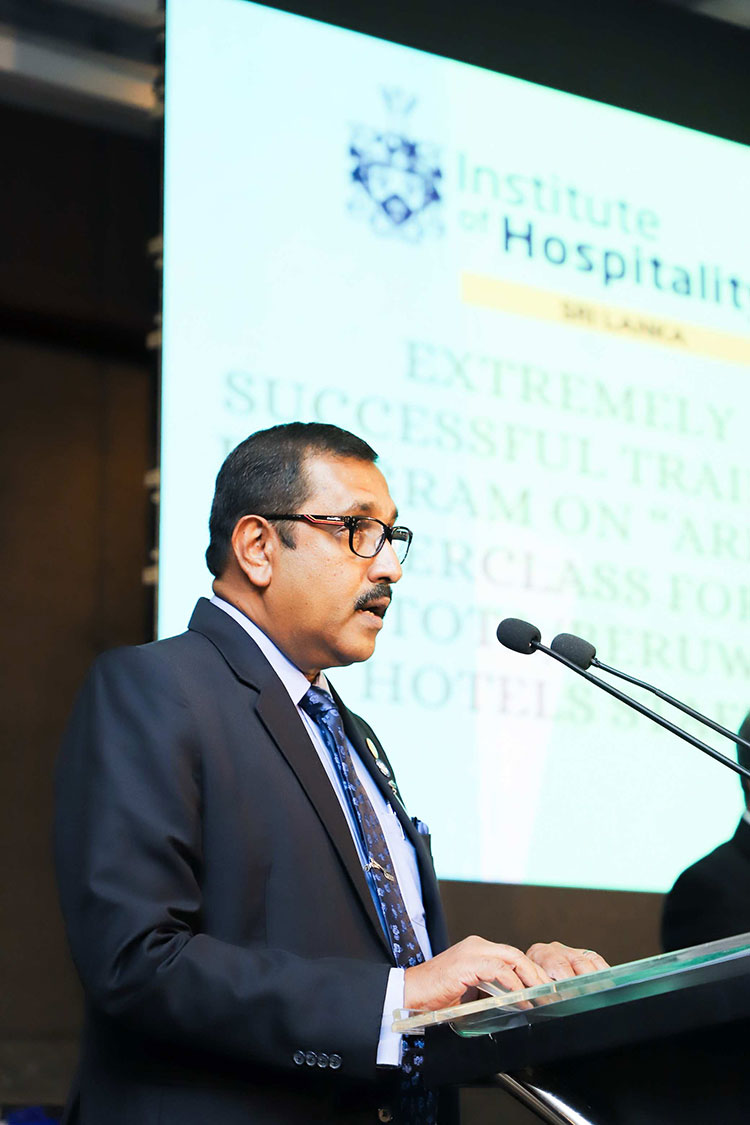
Institute of Hospitality Sri Lanka
 The 32nd Annual General Meeting (AGM) of the UK-based Institute of Hospitality’s Sri Lanka Chapter was held recently at the Ramada Hotel Colombo,.The event provided an evening of camaraderie , reflection of the past and present achievements,setting new benchmarks for the future
The AGM had the presence of two distinguished guests, the Chief Guest Opposition Leader Sajith Premadasa, and the Guest of Honour British High Commissioner to Sri Lanka, Andrew Patrick. Their inspiring speeches were lauded by all hoteliers who were present at the occasion
A special thanks was extended to Robert Richardson, CEO of the Institute of Hospitality UK, along with his team, sponsors, committee members, and all attendees for making the event memorable.
Dr. Harsha Jayasingh, Past President of the Institute of Hospitality (UK) Sri Lanka Chapter, emphasised the Institute’s longstanding history and the strength of its Sri Lankan branch. “The Institute of Hospitality (IH) UK has a history of 86 years, and we are proud to be the Sri Lanka Branch. IH Sri Lanka is much stronger now with many members from all areas of the hospitality industry,” he stated.
Dr. Jayasingh highlighted the significant role of tourism in Sri Lanka’s economy,. He said tourism it is the third-largest source of revenue for the country. “Tourism accounts for about 13.3% of total foreign exchange earnings and employs 450,000 people directly and indirectly. The hospitality industry in this island of pearl holds tremendous potential for economic growth, job creations, and cultural exchange,” he added.
He also pointed out more women should be attracted to the industry and advocated for the use of technology in hospitality sector to attract the younger generation.
The newly appointed Chairman Ramesh Dassanayake spoke about the challenges faced by the industry, including the reluctance of youth to join the sector. . Dassanayake expressed concerns over the migration of staff between hotels and the overall ‘brain drain’ in the sector. ” We must maintain high standards in the hotel We must try to attract tourists to Sri Lanka, we must have with many facilities Hence, hotel schools and other professional institutions involved in skills development mustincrease their intakes,” he pointed out.
Chief Guest Sajith Premadasa emphasised the importance of eco tourism and said “We need to have an environmental policy related to tourism in place,” . .
The 32nd AGM of the Institute of Hospitality UK, Sri Lanka Chapter, was a testament to the strength and potential of Sri Lanka’s hospitality industry. The insights and commitments shared during the event set a new benchmark for the future.(ZC)


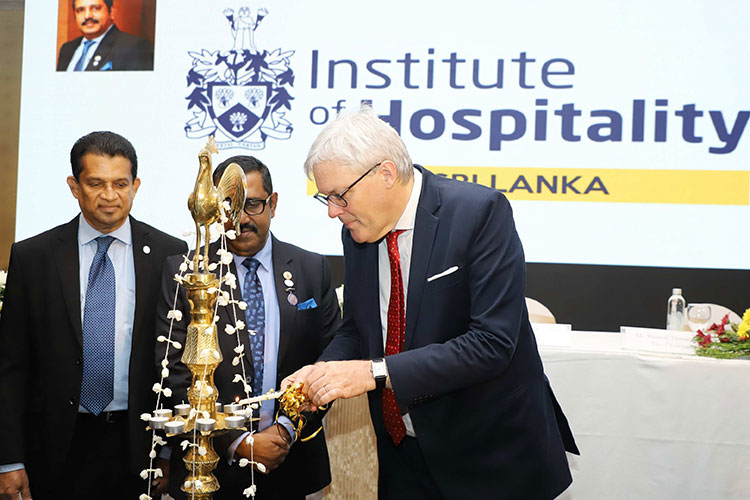

Pix by Thushara Attapathu
Life style
He recognizes human identity beyond boundaries of gender, race, nationality and religion.

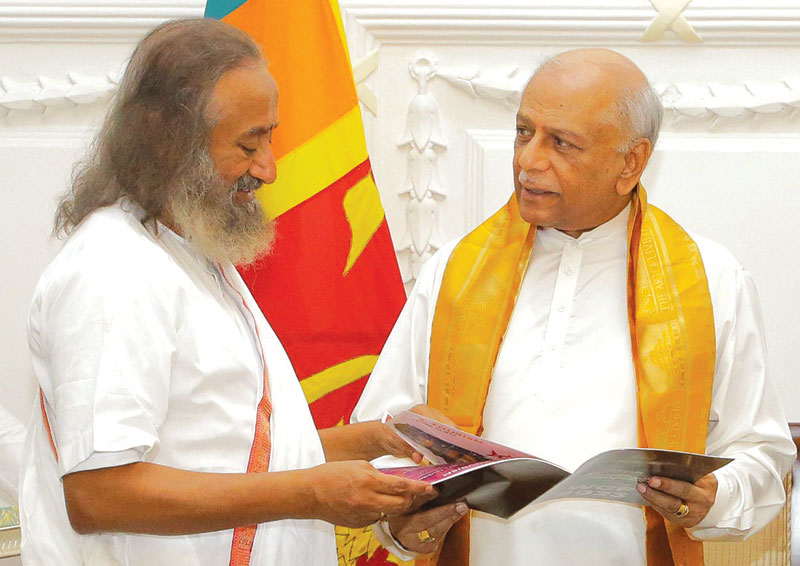
Visit of Sri Gurudev to Sri Lanka
Humanitarian, spiritual leader and Global Ambassador of Peace Gurudev Sri Sri Ravi Shankar (Sri Gurudev) was in Sri Lanka on a three day tour on the invitation of the Prime Minister of Sri Lanka Dinesh Gunewardene. Gurudev who inspired a wave of volunteerism and service to moot one of the largest volunteer-based organisations in the world – The Art of Living – visited the various projects under the aegis of the foundation and launched twelve vocational and technical centers around the island. He was accompanied by thousands of followers from Sri Lanka and around the world.
Gurudev who visited Sri Lanka for the sixth time also had a first day cover launched in honour of his visit. He is a strong proponent of spreading happiness, using the unique Sudarshan Kriya, yoga, meditation and practical wisdom to unite people, empower individuals and transform communities. His programmes provide techniques and tools to live a deeper, more joyous life, while his non-profit organisations recognize the human identity beyond the boundaries of gender, race, nationality and religion.
The Art of Living which has more than 30,000 teachers and over one million volunteers across 180 countries has touched in excess of five hundred million people around the world. CNN called it “Life Changing” and The Washington Post headlined it, “Fresh air to millions”.
In Trincomalee, Gurudev met with war victims and had a heartwarming engagement with the children from the children’s homes run by the Foundation. He also visited the Koneswara Temple in Trincomalee and graced the Kumbhabhishekam at Seetha ecogPnize the human identity beyond the boundaries of gender, race, nationality and religion. Amman temple at Nuwara Eliya. He held discussions with the trustees on the progress of the foundation’s social service projects, while also holding a special event – Ekamuthuwa – attended by a large number of dignitaries and his devotees from around the world.
His time with the Prime Minister was spent discussing the prospects of unity in diversity and uniting Sri Lanka by adding happiness into the formula of living. In addition he had discussions with the Speaker of the Parliament of Sri Lanka Mahinda Yapa Abeywardena, prominent business stewards and civil society leaders.
by Zanita Careem
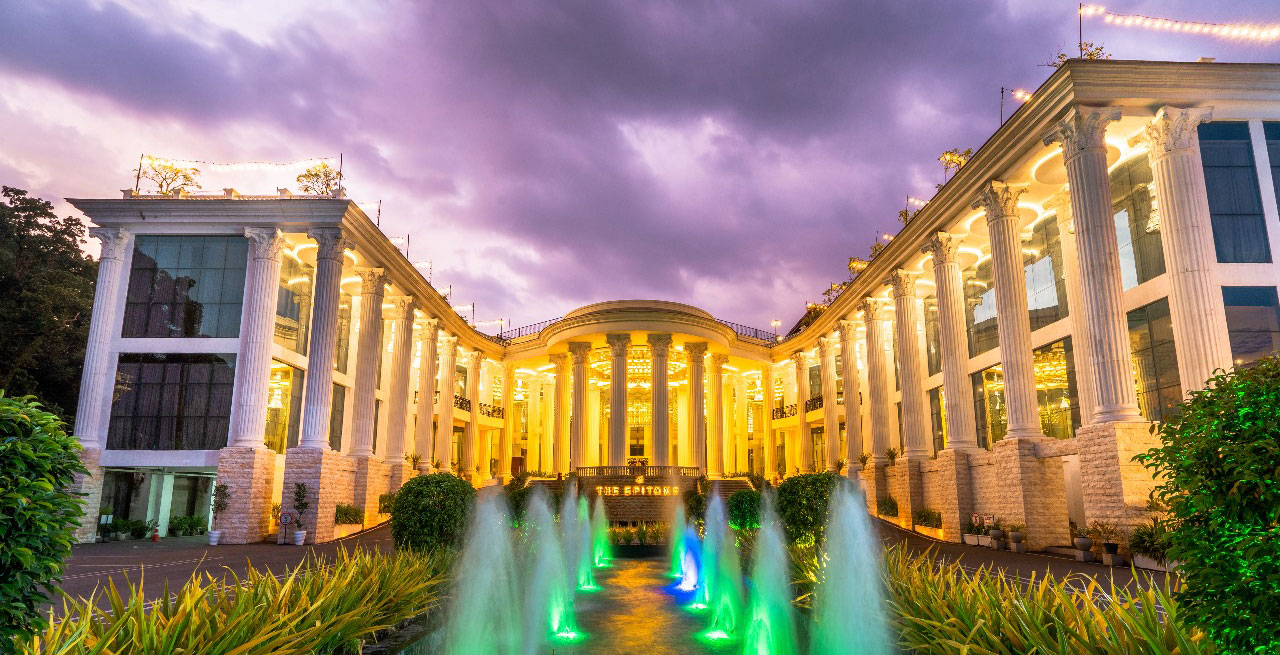
Envison your dream wedding day come to life at the Epitome Hotel, a prestigious city hotel in Kurunegala offering an unrivalled luxury rendors experience for weddings.
The venue is designed to embody opulence and luxury from all quarters for a spectacular wedding in kurunegala,Thier ballroom is the largest banquet facility in Sri Lanka It can be divided into six luxurious pillarless wedding halls on the ground floor and 25pax smaller banquet halls.
It can be easily named as a five star heaven in the heart of the city contributing to a myriad of immense experiences tailored to inspire and delight wedding experiences.
From opulent décor set up to exquisite table decor, lavish food, every detail is meticulously curated to spark your imagination and ignite creativity for a perfect wedding. The previous prestigious wedding shows season one and season two attracted large crowds
were unique events which gave the wedding vendors and potential clients had an opportunity to connect and interact with each other. Beyond being a showcase it was a chance for the wedding vendors to unite and contribute to the vibrancy of the wedding industry. The wedding show covered all area of the bridal industry providing a comprehensive variety of bridal supplies from Sri lanka and became the most popular bridal exhibitions in Kurunegala.This bridal exhibitions allowed brides and grooms to experience first hand the products and services available from suppliers in Sri Lanka
These wedding shows held at The Epitome created a benchmark and gave an opportunity for vendors to create connections to the utmost satisfaction said Harshan Lakshita Executive Director. of the magnificent Hotel
Our wedding shows featured experts and professionals in every field‘ It covered all areas of the bridal industry provided a comprehensive variety of bridal supplies from Sri lanka and became most popular bridal exhibition in this region.We are always open to everyone to join us at our wedding shows in the future. It is an opportunity to discover the incredible talent within our local wedding and bridal vendors to make meaningful relationships and plan thier special day at our breathtaking hotel The Epitome said General Manager Kavinda Caldera
The Epitome Hotel’s bridal show which will be held end of June will buzz with great ideas,advice and inspiration for all those who plan thier dream wedding
…….
The Hotel Epitome’s Wedding Season 3 will marked excellence, celebration and inspiration for those in the wedding industry. The exhibition halls will resonate with ideas on exquisite bridal wear to decor, florists , photography etc and showshowcase the rich tapestry of talent within the local wedding industry. .






US sports envoys to Lanka to champion youth development

Rahuman questions sudden cancellation of leave of CEB employees


