
Business
Safeguarding lives and livelihood of Sri Lankans

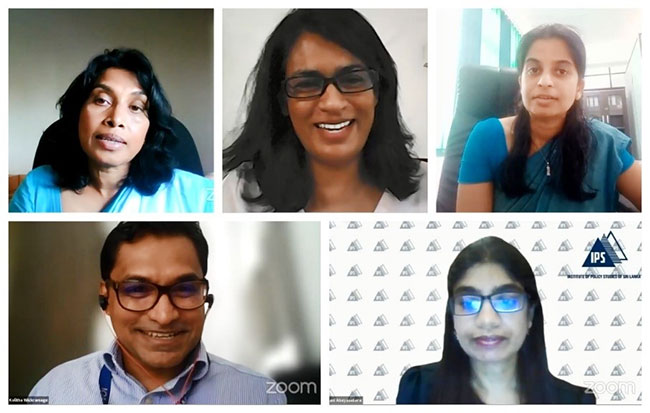
Pandemics and Disruptions:
by Suresh Ranasinghe
The impact of COVID-19 on Sri Lanka’s labour market, education, migration, and health sectors were discussed at the second webinar panel discussion held on October 13, to mark the release of the ‘Sri Lanka: State of the Economy 2021’ report, the flagship report of the Institute of Policy Studies of Sri Lanka (IPS).
The event saw presentations by Dr Nisha Arunatilake and Dr Bilesha Weeraratne from IPS, with expert insights from Ms Madhavie Gunawardena, Director of TRCSL and Former Commissioner of Labour and Dr Kolitha Wickramage, Global Migration Health Research and Epidemiology Coordinator, Migration Health Division, International Organization for Migration (IOM). Ashani Abayasekera from IPS moderated the discussion.
Key highlights of the discussion are presented in this blog.
Presentation: Labour Markets and Education
Dr Nisha Arunatilake
An estimated 225 million people lost their jobs globally in 2020 due to COVID-19, according to the International Labour Organization (ILO). Sri Lanka’s labour market was also severely affected, with 150,000 people losing jobs and the quality of available jobs deteriorated with many workers taking on more vulnerable forms of employment (eg. agriculture, self-employment) that have low social security. The unemployment rate rose by 0.7% in 2020. The most affected were youth, low and medium-skilled individuals, and males, while several women left the labour market altogether.
The pandemic affected different types of workers differently. Frontline workers were the most vulnerable, and a large share of frontline workers are females. The ILO has classified industries according to their COVID-19-related economic output risk. This calculation was used to see how COVID-19 has affected different types of workers, and it shows that 39% of workers are in high-risk industries in Sri Lanka. Further, medium-skilled workers and women are more likely to be in high-risk industries.
The government took various measures to provide relief to workers, but the relief packages were given is not as sizeable as the types of relief provided in other countries. IPS research shows that the perception of employees, employers, and trade union leaders is that the government could have done better by providing financial support through the EPF/ETF funds, as done in other countries like India.
 The pandemic has highlighted the importance of providing pre-retirement social protection such as unemployment benefits and wage support during illnesses in addition to current post-retirement social protection measures. Therefore, it is necessary to create a separate fund to provide pre-retirement social protection as practised in Nepal, Malaysia, and Singapore.
A recent IPS study finds that, Sri Lanka’s ETF funds are sufficient to cover sickness and unemployment benefits to workers and provide wage support to retain jobs. In summary, the government must improve and expand access to social security for employees and firms, support firms to offer flexible work arrangements for higher labour participation and develop better labour market institutions that have the capacity to collect timely data and are prepared to address disaster risks.
Since March 2020, schools across Sri Lanka were closed other than for few brief periods of operation and the total number of school days missed are significantly higher in Sri Lanka compared to other countries. Even though the Ministry of Education and associated organisations provided lessons online and via TV, less than 50% of the students were reached online and in smaller schools, only 30% were reached by both online and TV. There needs to be an assessment done about the learning losses, and adjust the curricular, so that schools can focus on the most needed competencies to streamline and speed up the recovery.
Migration and Health
Dr Bilesha Weeraratne
A large number of migrant workers were forced to return much earlier than they planned due to the pandemic, and it affected earnings and their capacity to return. Notably, most of the returnees were either self-financed or their employer paid for their return air ticket. Limitations in Sri Lanka’s return and repatriation efforts were not able to bring a wide cross-section of returnees back to Sri Lanka from the onset itself. On average, there was a 4.5-month delay between the decision to return and the actual date of return. This was also because of the lack of proper information. Sri Lanka has a return and reintegration sub policy, and the issue was that it was not implemented.
Returning migrant workers require economic, social and psychosocial reintegration support but reintegration support was largely limited to immediate health support (testing, quarantine, treatment). Also, issues associated with the vaccination process in Sri Lanka such as irregular and inconsistent supply, delays in NMRA approvals, disorganised deployment etc. caused the delays in vaccinating potential migrant workers as well. However, the vaccination process for migrant workers was much better organised than the overall vaccination process in the country.
Sri Lanka sends 225,000 workers abroad while foreign annual exchange earnings is USD7 billion. Although in 2020 there were just 53,713 registered departures, remittances increased grew by 5.8%. They began declining since the beginning of 2021. There were many reasons for the growth last year like informal remittance channels being closed due to the lockdown and workers increasing their remittances through formal channels. Further, workers who were terminated would have got lump sums as terminal benefits which were remitted, while another reason would have been the reluctance of returnees to carry cash as they had to be quarantined on arrival.
Commentary: Labour Markets and Education
Ms Madhavie Gunawardena
The COVID-19 pandemic has flagged the need for Sri Lanka to revisit its labour laws and regulations. Since the labour market was forced to accept work from home (WFH), accommodating flexibility in labour legislation and other legislation governing the workplace is essential. Accommodating flexible working practices is important, especially for women, as this allows them to balance their family and work responsibilities, thus retaining them in the labour force. With prolonged school closures, there is currently no way of improving the students’ soft skills as extra-curricular and co-curricular activities were halted. This will affect their employability in the future.
Commentary: Migration and Health
Dr Kolitha Wickramage
In the migration sector, future policy decisions should take into consideration factors such as the gender dimension of returnees and skills requirements of migrant workers as well. Psychosocial health and mental health are extremely important for the reintegration package since this is still an unmet agenda. Even though the overall vaccination process including vaccination for migrant workers in Sri Lanka is appreciable, the number of deaths and serious cases can be averted if a more systematic strategy such as those provided by WHO Sage recommendations were followed. The IPS State of the Economy report must be commended for recognising the need to address psychosocial issues of migrants, in addition to their social and economic issues.


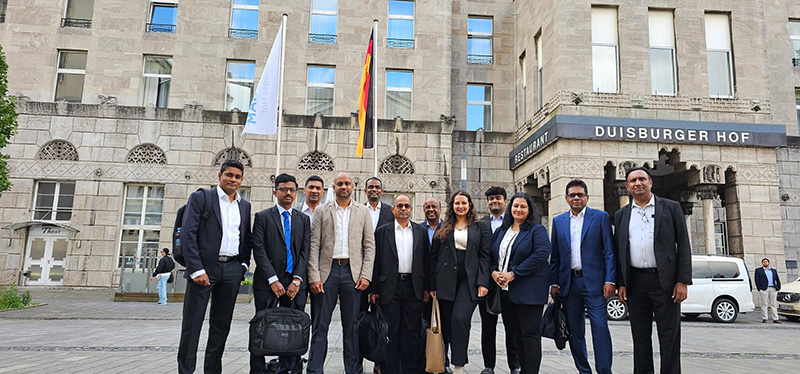
The Delegation of German Industry and Commerce in Sri Lanka (AHK Sri Lanka) proudly facilitated the first-ever Sri Lankan delegation’s participation at Drupa 2024, the world’s largest trade fair for the printing industry and technology. Held after an eight-year hiatus, Drupa 2024 was a landmark event, marking significant advancements and opportunities in the global printing industry.
AHK Sri Lanka played a pivotal role in organising and supporting the delegation, which comprised 17 members from the Sri Lanka Association for Printers (SLAP), representing eight companies from the commercial, newspaper, stationery printing, and packaging industries. This pioneering effort by AHK Sri Lanka not only showcased the diverse capabilities of Sri Lanka’s printing sector but also facilitated vital bilateral discussions with key stakeholders from the German printing industry.
Business
Unveiling Ayugiri: Browns Hotels & Resorts sets the stage for a new era in luxury Ayurveda Wellness

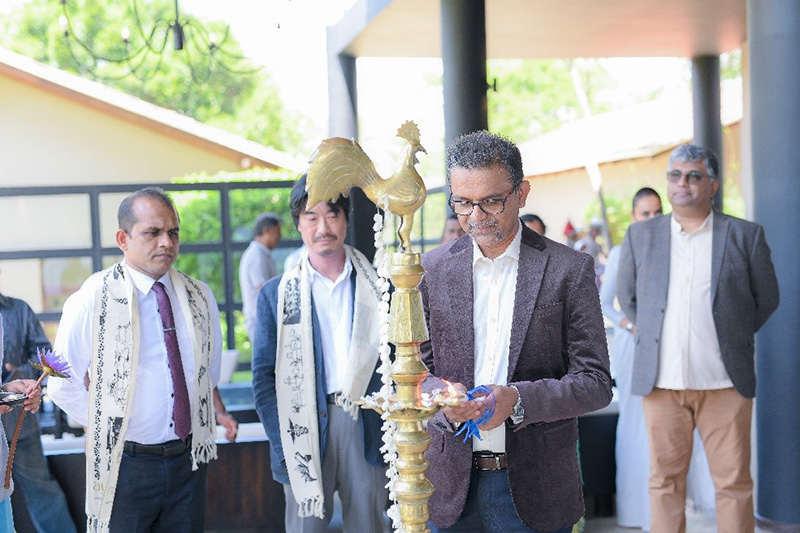
In a captivating reimagining of luxury wellness tourism, Browns Hotels & Resorts proudly unveiled the exquisite Ayugiri Ayurveda Wellness Resort Sigiriya. This momentous occasion, celebrated amidst a vibrant and serene grand opening on the 6th of June, heralds a new chapter in the Ayurveda wellness tourism landscape in Sri Lanka. Nestled amidst 54 acres of unspoiled natural splendour, Ayugiri features 22 exclusive suites and stands out as the only luxury Ayurveda wellness resort in the country offering plunge pools in every room, rendering it truly one-of-a-kind.
The grand opening of Ayugiri Ayurveda Wellness Resort was an enchanting event, where guests were captivated by the melodies of flutists and violinists resonating through Sigiriya’s lush landscapes. As traditional drummers and dancers infused the air with vibrant energy, Browns Hotels & Resorts’ CEO, Eksath Wijeratne, Kotaro Katsuki, Acting Ambassador for the Embassy of Japan and General Manager, Buwaneka Bandara, unveiled the resort’s new logo, marking a significant moment witnessed by distinguished guests from the French Embassy, Ayurveda and wellness enthusiasts along with officials from the Sigiriya area, LOLC Holdings and Browns Group.
“Our strategic expansion into wellness tourism with Ayugiri Ayurveda Wellness Resort Sigiriya symbolises a significant milestone for Browns Hotels & Resorts. Wellness tourism has consistently outperformed the overall tourism industry for over a decade, reflecting a growing global interest in travel that goes beyond leisure to offer rejuvenation and holistic well-being. By integrating the timeless wisdom of Ayurveda with modern luxury, we aim to set a new standard in luxury wellness tourism in Sri Lanka. Whether your goal is prevention, healing, or a deeper connection to inner harmony, Ayugiri offers a sanctuary for holistic well-being” stated Eksath Wijeratne.
Ayugiri encapsulates the essence of life, inspired by the lotus flower held by the graceful queens of the infamous Sigiriya frescoes. Just as the lotus emerges from the murky depths, untainted and serene,
Ayugiri invites guests on a journey of purity and rejuvenation, harmonised with a balance of mind, body and spirit, the essence of nature, echoes of culture and the wisdom of ancient Ayurvedic healing.

HNB General Insurance, one of Sri Lanka’s leading general insurance providers, has been honored as the Best General Bancassurance Provider in Sri Lanka 2024 by the prestigious Global Banking and Finance Review – UK.
The esteemed accolade underscores HNB General Insurance’s unwavering commitment to excellence and its outstanding performance in the field of bancassurance. Through dedication and hard work, the HNB General Insurance team has continuously endeavored to deliver innovative insurance solutions, cultivate strong relationships with banking partners, and provide unparalleled service to customers nationwide. This recognition is a testament to the team’s dedication and relentless pursuit of excellence in the bancassurance business.
“We are honored to receive this prestigious award, which reflects our team’s tireless efforts and dedication to delivering value-added insurance solutions and exceptional service through our bancassurance partnerships,” said Sithumina Jayasundara, CEO of HNB General Insurance. “This recognition reaffirms our position as a trusted insurance provider in Sri Lanka and motivates us to continue striving for excellence in serving our customers and communities.”



US sports envoys to Lanka to champion youth development

Rahuman questions sudden cancellation of leave of CEB employees


