
News
Russia gas cuts stoke Asia’s energy security fears


Sri Lanka, Pakistan vulnerable
Taipei, Taiwan – The latest cut in Russian natural gas flows to Europe threatens to further destabilise energy security in Asia and could accelerate a move away from liquified natural gas (LNG) in the region, experts say.On Wednesday, Russia’s state-run energy giant Gazprom cut gas supplies to Europe via Nord Stream 1 to just 20 percent of the pipeline’s capacity.
While Gazprom cited turbine maintenance for the disruption, European Union officials cast the latest in a series of supply disruptions as a “politically motivated” move linked to the tensions between Brussels and the Kremlin over the war in Ukraine.LNG futures in Europe leaped as much as 10 percent on the news, while spot prices in North Asia soared to their highest point since March.
Utilities in South Korea and Japan are reportedly anxious that Europe will hoard more gas as northern winter approaches and are moving quickly to secure as many LNG cargoes as possible.
“The direct impact of Nord Stream cuts will be intensified competition for very limited LNG cargoes,” Kaushal Ramesh, a Singapore-based gas analyst at Rystad Energy, told Al Jazeera.
“We expect Asian buyers who can afford it – mainly Japan and Taiwan – to compete with Europe. Physical transactions in Asia are already topping $47/MMBtu (Metric Million British thermal units) and yet we’re nowhere near winter.”
Although significant regional variation in LNG prices existed in the past, the market has increasingly globalised in recent years. Asia’s prices now closely track those in Europe, while the United States enjoys a significant discount as the world’s largest producer of the commodity and is widely forecast to further its lead going forward.
“The Asia-Europe linkage was established as US LNG really took off in recent years. Cargoes then went to either location in response to price signals,” Ramesh said.
“Now Europe – which until 2020 was a ‘backstop’ market for cargoes nobody else wanted – is deep in deficit with a step change in LNG demand, so they’re competing with Asia, which strengthens that linkage. As long as Europe is in deficit, events there will continue to govern Asian LNG prices,” he said.
The effect of soaring prices is not being felt equally across the region. While deep-pocketed nations like Japan and South Korea have the reserves to absorb the steep hikes, developing countries, particularly in South Asia, are struggling to keep the lights on.
Pakistan has experienced rolling blackouts of more than 12 hours in recent weeks as the country’s new government struggles to get more gas. The prolonged outages amid extreme heat brought throngs of angry Karachi residents out on the streets in late June, with police using tear gas and batons to disperse protesters.
In early July, Pakistan’s state-owned gas company failed to attract a single supplier for a $1bn LNG purchase tender. The energy crunch has exacerbated new Prime Minister Shehbaz Sharif’s struggles to maintain legitimacy as his government tries to contain an economic crisis and negotiate bailouts with the International Monetary Fund.
In Sri Lanka, where energy shortages preceded the total collapse of the country’s economy and national government in May, the country’s petrol stocks are on the verge of running dry.Economists in the region say countries’ resilience will depend on the duration of volatility.
“If it’s a short-term crisis that eases in the next six months, I don’t expect any new major victims,” Badri Narayanan Gopalakrishnan, a Delhi-based economist who previously consulted for the Asia Development Bank, told Al Jazeera.
“I don’t think Pakistan will go the way of Sri Lanka because it’s slightly more diversified with greater domestic capacity and is relatively less reliant on expensive imports.”
“It’s a tough situation but the poorer economies are typically used to having lower energy supplies for a variety of reasons,” he added.
“Recent spurts of growth and development have definitely made many developing states more dependent on energy but this is still somewhat manageable if they diversify their energy sources, as India is increasingly doing. However, all countries are vulnerable if the situation stays the same too long.”
The rapid tightening of supply could also damage demand as prices become unsustainable, which, combined with other destabilising macro-economic factors, would darken the already shaky economic outlook.
“The biggest macro trend affecting the demand side now is pricing. We’re beyond the affordability levels of much of the industrial sector even in Europe,” said Ramesh.
“That means, combined with overall energy and food price inflation, as well as the interest rate hikes needed to dig ourselves out of the inflationary trend – we shouldn’t discount the demand destruction impact of an impending recession.”
The COVID-19 pandemic caused global energy demand to yo-yo, with data from the International Energy Agency (IEA) showing a decline of more than 3 percent in the opening quarter of 2020, while the recovery triggered a resurgence with demand shooting up 6 percent in 2021. The IEA predicts demand will increase by 2.4 percent this year, which is around pre-pandemic growth rates. However, soaring prices may threaten gas’s position in the energy mix in the future. The IEA already predicts gas consumption will contract slightly in 2022, while there has been a substantial downward revision for the commodity’s growth prospects in the coming years.
“We see the risk of permanent LNG demand destruction in some countries that could hang on to coal and fuel oil and jump straight to renewables a few years down the road. That is unless more competitively priced LNG is made available to them soon,” Ramesh said.
Gopalakrishnan said the jump to renewables would be crucial, especially for countries that lack coal reserves.
“Renewables have low marginal cost and can reduce excessive dependence on imports for fuel,” he said.
“Ultimately, investment in renewables is the way forward for the region.”
SOURCE: AL JAZEERA



The U.S. Embassy in Colombo welcomed the U.S. Sports Envoys to Sri Lanka, former National Basketball Association (NBA) and Women’s National Basketball Association (WNBA) players Stephen Howard and Astou Ndiaye, from June 8 through 14.
The Public Diplomacy section of the U.S. Embassy said that it would launch a weeklong basketball program intended to harness the unifying power of sports, made possible through collaboration with Foundation of Goodness and IImpact Hoop Lab.
While in Sri Lanka, Howard and Ndiaye, both retired professional basketball players, will conduct a weeklong program, Hoops for Hope: Bridging Borders through Basketball. The Sports Envoys will lead basketball clinics and exhibition matches and engage in leadership sessions in Colombo and Southern Province for youth aged 14-18 from Northern, Uva, Eastern and Western Provinces, offering skills and leadership training both on and off the court. The U.S. Envoys will also share their expertise with the Sri Lanka Basketball Federation, national coaches, and players, furthering the development of basketball in the country. Beyond the clinics, they will collaborate with Sri Lankan schoolchildren to take part in a community service project in the Colombo area.
“We are so proud to welcome Stephen and Astou as our Sports Envoys to Sri Lanka, to build on the strong people-to-people connections between the United States and Sri Lanka,” said U.S. Ambassador Julie Chung. “The lessons that will be shared by our Sports Envoys – communication, teamwork, resilience, inclusion, and conflict resolution – are essential for leadership development, community building, equality, and peace. The U.S. Sports Envoy program is a testament to our belief that sports can be a powerful tool in promoting peace and unity.”
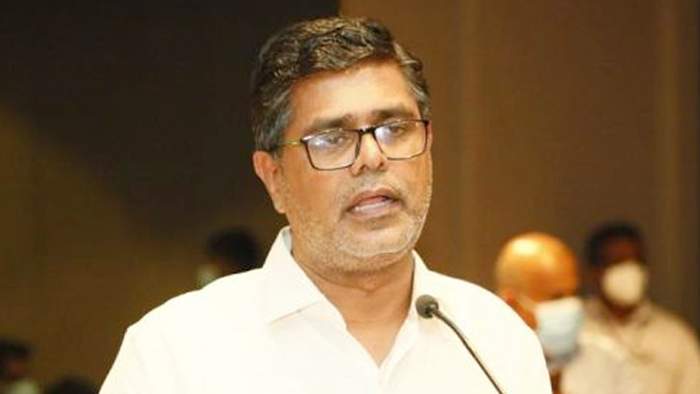
SJB Colombo District MP Mujibur Rahuman in parliament demanded to know from the government the reasons for CEB suspending the leave of all its employees until further notice from Thursday.
MP Rahuman said that the CEB has got an acting General Manager anew and the latter yesterday morning issued a circular suspending leave of all CEB employees with immediate effect until further notice.
“We demand that Minister Kanchana Wijesekera should explain this to the House. This circular was issued while this debate on the new Electricity Amendment Bill was pending. There are many who oppose this Bill. The Minister must tell parliament the reason for the urge to cancel the leave of CEB employees,” the MP said.However, Speaker Mahinda Yapa Abeywardena prevented Minister Wijesekera responding to the query and said that the matter raised by MP Rahuman was not relevant.
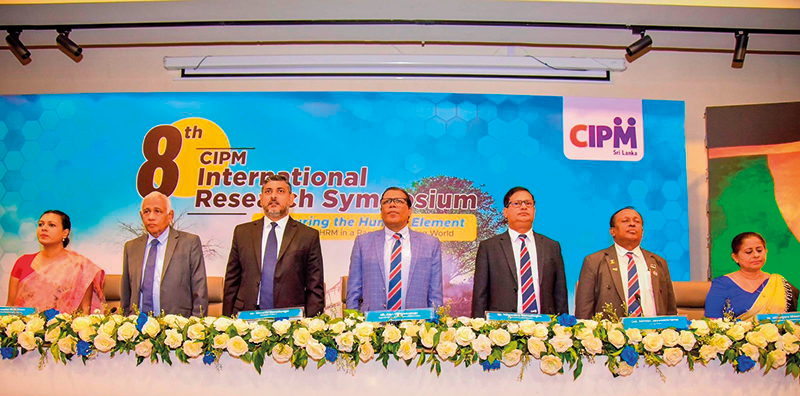
The Chartered Institute of Personnel Management (CIPM) successfully concluded the 8th Annual CIPM Symposium, which took place on 31st May 2024. Themed “Nurturing the Human Element—Redefining HRM in a Rapidly Changing World,” the symposium underscored the pivotal role of human resource management (HRM) in today’s dynamic global landscape. Since its inception in 1959, CIPM has been dedicated to advancing the HR profession through education, professional development, and advocacy, solidifying its position as Sri Lanka’s leading professional body for HRM.
Ken Vijayakumar, the President of the CIPM, graced the occasion as the chief guest. The symposium commenced with the welcome address by the Chairperson, Prof. Arosha Adikaram, followed by the Web Launch of the Symposium Proceedings and Abstract Book by the CIPM President. The event featured distinguished addresses, including a speech by Chief Guest Ken Vijayakumar, President of CIPM, and an address by Guest of Honor Shakthi Ranatunga, Chief Operating Officer of MAS Holdings Pvt. Ltd., Sri Lanka.
The symposium also featured an inspiring keynote address by Prof. Mario Fernando, Professor of Management and Director of the Centre for Cross Cultural Management (CCCM) at the University of Wollongong, Australia.
Vote of Thanks of the inauguration session was delivered by Dr. Dillanjani Weeratunga, Symposium Co-chair.
The symposium served as a comprehensive platform for researchers to present their findings across a wide range of critical topics in HRM. These included Cultural Diversity and Inclusion, Talent Development and Retention, Ethical Leadership and Corporate Social Responsibility, Adapting to Technological Advancements, Mental Health and Well-being at Work, Global Workforce Challenges, Employee Empowerment, and Reskilling and Upskilling.
The plenary session was led by Prof. Wasantha Rajapakse. Certificates were awarded to the best paper presenters during the valedictory session, followed by a vote of thanks delivered by Kamani Perera, Manager of Research and Development.
The annual symposium of CIPM was a truly inclusive event, attracting a diverse audience that spanned undergraduates, graduates, working professionals, research scholars and lecturers. This widespread interest highlights the symposium’s significance in the field of HRM, offering a unique opportunity for everyone to network and learn from scholarly brains.The CIPM International Research Symposium was sponsored by Hambantota International Port, Sri Lanka Institute of Information Technology (SLIIT), E B Creasy & Co. PLC, and Print Xcel Company.



US sports envoys to Lanka to champion youth development

Rahuman questions sudden cancellation of leave of CEB employees


