
News
Ruination of last Maha cultivation: Farmers not paid compensation at all

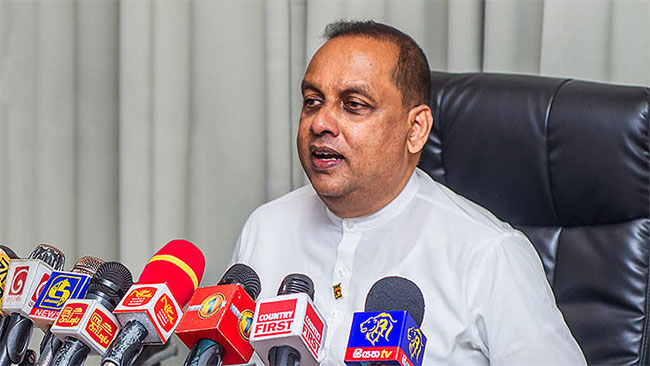
India on behalf of Sri Lanka placed order for urea from Oman
By Shamindra Ferdinando
Agriculture, Wildlife and Wildlife Conservation Minister Mahinda Amaraweera on Monday (20) admitted that contrary to repeated assurances given by the government, those who suffered crop losses due to the disastrous decision to ban urea and agro chemicals had not been paid a cent.
The SLFPer said that required funds hadn’t been allocated, though a Cabinet paper was submitted in that regard. The Hambantota district lawmaker declared that the government lacked the wherewithal to compensate the farmers.
Co-Cabinet spokesman Amaraweera made the revelation on the Hiru Salakuna programme. Responding to a three-member panel comprising Chamuditha amarawickrema, Madushan Silva and Kalindu Vithanage, MP Amaraweera estimated that the government required Rs 15,000 mn to sufficiently compensate the farmers.
The minister essentially denied personal responsibility for the failure on the part of the government to compensate farmers as that particular assurance hadn’t been given by him.
The interviewers reminded the minister he couldn’t take that stand as he too was a member of the same government.
Minister Amaraweera indicated that the farmers were very much unlikely to receive compensation for crop losses experienced during the Maha season.
Lawmaker Amaraweera acknowledged that the overnight declaration of mandatory carbonic agriculture policy was their primary blunder. The minister explained that the farmers never demanded compensation. They asked for fertilizer, water and other requirements. But instead, the government offered compensation though the promise was not met, MP Amaraweera said.
Mahinda Amaraweera received ministerial appointment on May 23 following the dissolution of the Cabinet-of-Ministers with the resignation of Premier Mahinda Rajapaksa close on the heels of May 09 violence.
Minister Amaraweera said that the government hadn’t been able to procure urea though the ban was lifted in last November. Therefore, India’s assistance had been sought, Minister Amaraweera said, revealing that Sri Lanka would receive 65,000 metric tons of urea ordered by India from Oman. The minister contradicted previous government statement that India would provide urea to Sri Lanka in spite of a ban on fertilizer exports. Responding to questions, MP Amaraweera said that Sri Lanka’s order for urea, too, had been placed by India. Asked whether the Indian quality stands in respect Omani urea would be compatible with Sri Lanka’s soil, Minister Amaraweera said that in spite of concerns raised in some quarters he was quite confident there wouldn’t be any issue at all.
The payment for the urea would be made via the Indian credit line, the Minister said. The SLFPer dismissed concerns raised by the panel of journalists as regards the suitability of the shipment scheduled to arrive in Colombo on July 06.The Hiru panel asked the minister whether the government had forgotten the circumstances leading to Sri Lanka being compelled to compensate a Chinese state company to the tune of USD 6.7 mn in spite of China supplied carbonic fertilizer failing quality testing.
Minister Amaraweera denied accusations that he interfered with the quality control process relating to the planned urea shipment via India. According to the Agriculture Minister, the urea would be made available to those who cultivated paddy after about third week of July.
At the onset of the interview, Minister Amaraweera claimed that as a result of rapid action taken to increase cultivated paddy lands the country no longer faced threat of famine. Acknowledging the warnings issued by Prime Minister Ranil Wickremesinghe, Speaker Mahinda Yapa Abeywardena and various experts, lawmaker Amaraweera said that at the time he took over the agriculture portfolio late last month, relevant authorities estimated a significant shortfall of rice of the required supply as only 275,000 hectares were cultivated. But since late May, additional land had been cultivated, MP Amaraweera said, estimating the cultivated land at 475,000 hectares.
Even if the total yield was going to be low due to a variety of reasons, including the non-availability of fertilizer and agro chemicals, cultivation of approximately 200,000 hectares of additional land would certainly make a difference.
Referring to recent COPE (Committee on Public Enterprises) proceedings, Minister Amaraweera said that earlier those in authority estimated the country needed to procure approximately 800,000 mt of rice to meet the shortfall this year. The minister claimed that they would be able to bring this down to 400,000 mt of rice due to substantial increase in the cultivated land.
During the interview, Minister Amaraweera admitted that so far this year 365,000 mt of rice had been imported. The Hiru panel repeatedly pointed out that the country had to squander foreign currency on rice imports due to the ruination of paddy cultivation caused by overnight banning of urea.
Lawmaker Amaraweera said that he desired either environment or industries portfolio but President Gotabaya Rajapaksa offered him agriculture. The minister briefly described how stability suffered due to political crisis triggered by the debt crisis.
Responding to President of Rice Millers Association and Chairman of Araliya Group Dudley Sirisena declaration that he would ensure the availability of rice at government controlled price- Nadu at Rs 220 a kilo, Samba at Rs 230 and Keeri Samba at Rs 260, those big and small millers had no option to release their stocks ahead of government intervention. The minister said that both President Gotabaya Rajapaksa and Premier Ranil Wickremesinghe gave the go ahead for tangible measures to bring the situation under control. Lawmaker Amaraweera alleged that Dudley Sirisena made that announcement in response to government moves, including importation of 50,000 mt of rice.
Minister Amaraweera side-stepped questions on how Dudley Sirisena and a few other major millers , including lawmaker Siripala Gamlath made massive profits at the expense of hapless consumers struggling to make ends meet.
The minister emphasized that rice would never be available again under 100 rupees.




The U.S. Embassy in Colombo welcomed the U.S. Sports Envoys to Sri Lanka, former National Basketball Association (NBA) and Women’s National Basketball Association (WNBA) players Stephen Howard and Astou Ndiaye, from June 8 through 14.
The Public Diplomacy section of the U.S. Embassy said that it would launch a weeklong basketball program intended to harness the unifying power of sports, made possible through collaboration with Foundation of Goodness and IImpact Hoop Lab.
While in Sri Lanka, Howard and Ndiaye, both retired professional basketball players, will conduct a weeklong program, Hoops for Hope: Bridging Borders through Basketball. The Sports Envoys will lead basketball clinics and exhibition matches and engage in leadership sessions in Colombo and Southern Province for youth aged 14-18 from Northern, Uva, Eastern and Western Provinces, offering skills and leadership training both on and off the court. The U.S. Envoys will also share their expertise with the Sri Lanka Basketball Federation, national coaches, and players, furthering the development of basketball in the country. Beyond the clinics, they will collaborate with Sri Lankan schoolchildren to take part in a community service project in the Colombo area.
“We are so proud to welcome Stephen and Astou as our Sports Envoys to Sri Lanka, to build on the strong people-to-people connections between the United States and Sri Lanka,” said U.S. Ambassador Julie Chung. “The lessons that will be shared by our Sports Envoys – communication, teamwork, resilience, inclusion, and conflict resolution – are essential for leadership development, community building, equality, and peace. The U.S. Sports Envoy program is a testament to our belief that sports can be a powerful tool in promoting peace and unity.”
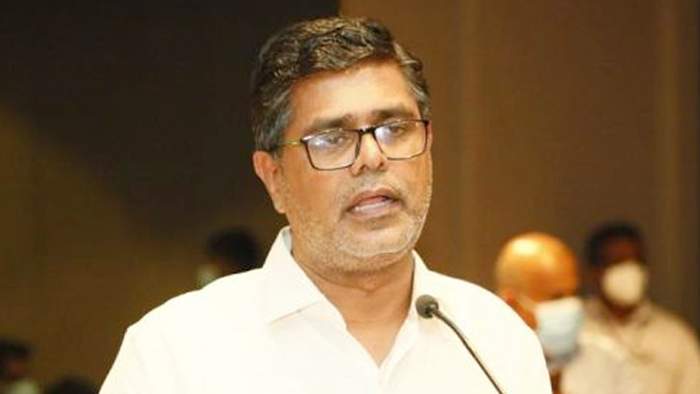
SJB Colombo District MP Mujibur Rahuman in parliament demanded to know from the government the reasons for CEB suspending the leave of all its employees until further notice from Thursday.
MP Rahuman said that the CEB has got an acting General Manager anew and the latter yesterday morning issued a circular suspending leave of all CEB employees with immediate effect until further notice.
“We demand that Minister Kanchana Wijesekera should explain this to the House. This circular was issued while this debate on the new Electricity Amendment Bill was pending. There are many who oppose this Bill. The Minister must tell parliament the reason for the urge to cancel the leave of CEB employees,” the MP said.However, Speaker Mahinda Yapa Abeywardena prevented Minister Wijesekera responding to the query and said that the matter raised by MP Rahuman was not relevant.
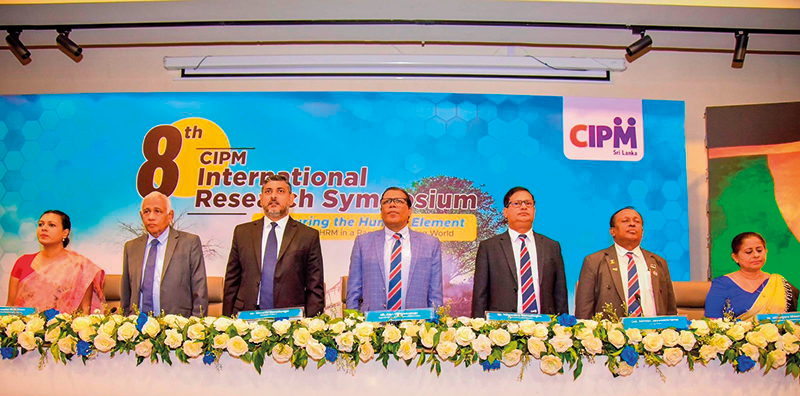
The Chartered Institute of Personnel Management (CIPM) successfully concluded the 8th Annual CIPM Symposium, which took place on 31st May 2024. Themed “Nurturing the Human Element—Redefining HRM in a Rapidly Changing World,” the symposium underscored the pivotal role of human resource management (HRM) in today’s dynamic global landscape. Since its inception in 1959, CIPM has been dedicated to advancing the HR profession through education, professional development, and advocacy, solidifying its position as Sri Lanka’s leading professional body for HRM.
Ken Vijayakumar, the President of the CIPM, graced the occasion as the chief guest. The symposium commenced with the welcome address by the Chairperson, Prof. Arosha Adikaram, followed by the Web Launch of the Symposium Proceedings and Abstract Book by the CIPM President. The event featured distinguished addresses, including a speech by Chief Guest Ken Vijayakumar, President of CIPM, and an address by Guest of Honor Shakthi Ranatunga, Chief Operating Officer of MAS Holdings Pvt. Ltd., Sri Lanka.
The symposium also featured an inspiring keynote address by Prof. Mario Fernando, Professor of Management and Director of the Centre for Cross Cultural Management (CCCM) at the University of Wollongong, Australia.
Vote of Thanks of the inauguration session was delivered by Dr. Dillanjani Weeratunga, Symposium Co-chair.
The symposium served as a comprehensive platform for researchers to present their findings across a wide range of critical topics in HRM. These included Cultural Diversity and Inclusion, Talent Development and Retention, Ethical Leadership and Corporate Social Responsibility, Adapting to Technological Advancements, Mental Health and Well-being at Work, Global Workforce Challenges, Employee Empowerment, and Reskilling and Upskilling.
The plenary session was led by Prof. Wasantha Rajapakse. Certificates were awarded to the best paper presenters during the valedictory session, followed by a vote of thanks delivered by Kamani Perera, Manager of Research and Development.
The annual symposium of CIPM was a truly inclusive event, attracting a diverse audience that spanned undergraduates, graduates, working professionals, research scholars and lecturers. This widespread interest highlights the symposium’s significance in the field of HRM, offering a unique opportunity for everyone to network and learn from scholarly brains.The CIPM International Research Symposium was sponsored by Hambantota International Port, Sri Lanka Institute of Information Technology (SLIIT), E B Creasy & Co. PLC, and Print Xcel Company.



US sports envoys to Lanka to champion youth development

Rahuman questions sudden cancellation of leave of CEB employees


