
News
Righteous society, prosperous nation goals of new govt. – Prez

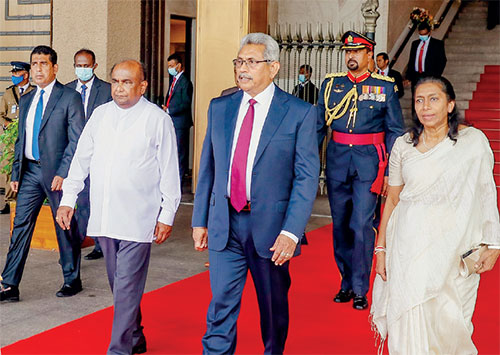
President Gotabaya Rajapaksa leaving parliament after delivering his policy speech. The President is accompanied by Speaker Mahinda Yapa Abeywardena and the First lady Ioma Rajapaksa.
-
19-A will be abolished, new Constitution framed
-
MPs and ministers will have to visit people
-
Unitary status of country will be retained
-
Underworld will be neutralised
-
Priority accorded to developing education
-
Electoral system to be changed
-
Land promised for the landless
President Gotabaya Rajapaksa yesterday said that the historic mandate received by SLPP had proved that people were impressed with the way the party had governed the country during the past nine months despite various obstacles.
Delivering his Policy Statement to commence the first session of the ninth parliament President Rajapaksa said: “I love my country. I am proud of my country. I have a vision for my country. Our ardent desire is to build a prosperous nation with a productive citizen, contented family and a righteous society. What we have done so far as well as the plans we propose to implement in future will be aimed to achieve this objective.”
In his 20-minute policy statement the President said that the nation had arrived at an important turning point in history.
“The people have given the current government a massive mandate. We have been given the responsibility to take the country towards prosperity while safeguarding the people and protecting the sovereignty of the country without succumbing to any force. The present generation must fulfill that responsibility for the sake of the future generations.”
“This is the motherland of all of us. Hence, the time has come for all of us to join hands for the sake of the country irrespective of race, religion or party differences.”
Full text of the policy statement:
The election held on August 5th marked a turning point in the history of Parliamentary Elections in Sri Lanka.
We asked the people to give us a two-thirds majority to form a stable government.
First of all, I would like to thank and extend my gratitude to all the patriotic Sri Lankans for giving Sri Lanka Podujana Peramuna and its allied parties a historic and resounding two-thirds majority for the first time in the history in an election held under the Proportional Representation System.
Universal suffrage is a democratic right that we must all respect and uphold. Therefore, I would like to take this opportunity to thank all Sri Lankan voters who exercised their voting right in this election.
During the presidential election held last November, over 6.9 million people gave me a decisive mandate, placing a very high confidence in me. So far through my actions, I have proved that I will uphold the promise that I will not violate the trust they placed on me.
The period between the Presidential Election and the Parliamentary Election has been very challenging for us. What we inherited was an economy that had collapsed. Since we did not have a majority in Parliament we were compelled to function with a minority government. In addition, we had to face the COVID-19 pandemic that disabled the entire world during that period. At a time when even the most powerful countries in the world were left helpless in the wake of COVID–19 catastrophe, we were able to successfully face the challenge. Even foreign nations praised our efforts to prevent the spreading of the pandemic.
The historic mandate received by Sri Lanka Podujana Peramuna has proven that people are impressed with the way we have governed the country during the past 9 months despite various obstacles.
People appreciate the change taking place in the political culture of this country.
As representatives of the people, we always respect the aspirations of the majority. It is only then that the sovereignty of the people can be safeguarded.
In accordance with the supreme Constitution of our country, I have pledged to protect the unitary status of the country and to protect and nurture the Buddha Sasana during my tenure. Accordingly, I have set up an advisory council comprising leading Buddhist monks to seek advice on governance. I have also established a Presidential Task Force to protect places of archeological importance and to preserve our Buddhist heritage.
While ensuring priority for Buddhism, it is now clear to the people that freedom of any citizen to practise the religion of his or her choice is better secured.
The government has paid special attention to the protection of national heritage, culture and our identity as well as the protection and promotion of performing arts and folk arts.
When we took over the government, the confidence of the people in the security of the country had been severely dented due to the Easter Sunday attacks that occurred in 2019. Establishing firmly that the prime policy of our government is national security, we have restructured the security apparatus and intelligence services, eliminating the fears of the people thereby restoring the security of the country. We have re-created an environment where any citizen can live freely without any fear for the safety of themselves and their families.
As I have pledged, the launch of the methodical mechanism to protect the people against social evils such as the activities of the underworld and the drug menace that have been a hindrance to the day-to-day lives of the people has also increased the confidence of the public.
Accordingly, a virtuous and law-abiding society is emerging as we promised.
We are working towards a significant transformation of the political culture of this country.
After I assumed office as the President, changing the existing system, a methodical procedure was introduced to appoint heads of government institutions whereby qualifications of prospective appointees were examined through a panel of experts. A well-experienced team of professionals, entrepreneurs and academics was appointed instead of relatives, acquaintances and followers. This policy will continue in the future as well.
We also took measures to build a production economy. Paddy farmers were given a higher guaranteed price for their products. We took steps to protect local farmers by halting importation of exportable produce for re-export as well as banning importation of crops that could have been grown locally. Farmers were provided with required fertilizer free of charge. People were encouraged to re-cultivate abandoned lands throughout the country. Through all these, we provided a new lease of life to the agricultural sector in this country.
After we assumed office, we provided tax concessions targeting local entrepreneurs. Interest rates were brought down to encourage businesses. Competitive imports were restricted in order to protect local entrepreneurs and industrialists.
It is clear that people enthusiastically supported us in this election due to the trust we have been able to build in them in this manner. We will continue to serve the people in a manner that affirms this trust.
It is equally important to precisely interpret the mandate given by the people. We respect the trust that the people have placed in me and the Prime Minister and the newly elected people’s representatives. We have a clear understanding of the expectations with which the people gave such a powerful mandate to the government. We will leave no room for such expectations to be dashed for any reason.
It should always be remembered that the prime responsibility of a people’s representative is to serve the public. We will be sensitive to fulfilling the needs of the people, keeping in mind that all these positions are responsibilities and not privileges.
I travelled all over the country to support every candidate who represented our group in this election. Instead of holding political rallies, I went to the people during these visits and listened to their grievances directly.
A large majority of issues presented by the general public were not personal, but they were common issues.
Even after 72 years of freedom, simple issues have not been resolved.
There are people who do not possess proper deeds for the lands on which they have lived for many years. We will provide them with legitimate deeds utilizing a swift and due process. I assure you that without a proper alternative we will not evict people from their ancestral homes or farmlands.
Human-Elephant conflict has become a major issue to the people. A group of experts has already been appointed to craft a feasible solution for this issue. A separate state ministry was established solely for this purpose because we are aware that this issue needs a sustainable solution.
An incredible percentage of people across the country suffer from a shortage of drinking water. We will take necessary steps to address these humane issues. As a national policy, we will enact procedures to provide drinking water to every part of the country.
Parents request for their children’s education suitable schools. The shortage of national schools was evident in every area. Most schools have significantly inadequate facilities. The shortage of teachers, laboratories, libraries and sports facilities was frequently mentioned. Although we request students to follow science and technical subjects in order to successfully contribute to the economy, their schools do not even have basic facilities to teach those subject streams.
Funds expended by the government for children to pursue their ambitions and to hone their skills are an investment for the future. We will accord priority to resolve these issues through the ministries which had been assigned with new responsibilities.
Both resources and facilities in rural hospitals are inadequate. There is a considerable shortage of doctors, nurses and other staff in these hospitals. Patients in some areas have to travel long distances to seek treatment. We will eliminate these discrepancies in the delivery of free healthcare facilities for people.
Both Ayurvedic and indigenous medicinal systems will be preserved and promoted.
Instead of spending large amounts of foreign exchange to import medicine, we have already commenced operations to manufacture medicines locally. We will also eradicate corruption which occurs in the importation of medicine. This is why we formed a separate state ministry to manufacture, supply and regulate medicine.
A large percentage of citizens of this country, earn their livelihood through self-employment. Also, a large number of people depend on agriculture. Their sole requests are for adequate water and fertilizer during their cultivation seasons. We should address these issues. Therefore we will implement a broad set of activities to rehabilitate the tanks and to develop the irrigation system across the country.
Another major social issue faced by the youth is unemployment. Both short term and long term solutions have been discussed to address this issue.
We have already commenced a programme to provide employment for 100,000 persons representing the most underprivileged families in the country. Simultaneously, we have set plans in motion to provide job opportunities to 50,000 graduates and train them to render their services efficiently.
When offering government job opportunities, we will accord priority to poorest of the households. Further, we will have to ensure equal distribution of job opportunities for every province.
Every appointee to the government should contribute productively to the country. Therefore, no unnecessary and arbitrary enrollment will be allowed to any ministry or institution.
Both ministries and state ministries will work in cooperation with the respective private sector establishments in the industry to generate job opportunities.
In addition, we will take necessary steps to promote self-employment and entrepreneurship in each industry as well.
Our duty and responsibility is not to distribute job opportunities but to generate them.
In order to overcome both local and global challenges and revive the economy, we will have to adopt new ways of thinking. Out of the box thinking is required in order to meet the economic challenges. This time, the ministries have been formed with this thought in mind.
We have ascertained the requirement for a people-centric economy for our economic revival. When forming ministries, special attention was given in assigning their subjects and tasks to cover fields such as agriculture, plantations, fisheries, traditional industries and promotion of self-employed job opportunities which affect most of the people in the country.
Our basic aims are to strengthen the local economy and to increase export income.
Currently the income from tea, coconut and rubber industries is not at a satisfactory level.
We will commence operations to develop tea plantations and at the same time, the government will assist the small and medium scale tea estate owners as well. Due to the shutting down of tea factories, tea estate owners have encountered a number of difficulties. We will restart these factories and eliminate existing irregularities simultaneously encouraging the export of high quality tea products. We will reclaim the global brand name we held for Ceylon Tea.
We will also encourage planting of new coconut saplings. In order to enact a reasonable price for rubber, local rubber industrialists will be encouraged to utilize local rubber. Plantation of palm oil trees will be stopped completely.
We promote the production of export crops such as pepper and cinnamon. We will provide opportunities to generate substantial foreign exchange by providing a stable price to the farmers through value addition to agricultural products and exporting them.
In assigning responsibilities to ministries, special attention was paid to the development of urban as well as rural infrastructure facilities and to find solutions to the issue of housing for the people.
We have taken measures to identify several sectors that can directly contribute to the development of the country and to appoint State Ministers responsible for these tasks and to assign them the relevant subjects and activities.
As human resource development has been identified as a priority, the subject of education has been brought under one Ministry and four State Ministers were appointed for different responsibilities therein. Separate State Ministries for Pre-School, Education Reforms, Skills Development as well as Dhamma School and Bhikku Education have been set up due to their importance.
In achieving our future objectives, special attention needs to be paid to technical education. We will pay special attention in education reforms in respect of Grade 6 to Grade 13.
We will increase the capacity of Universities enabling all students who pass the Advanced Level Examination to pursue university education. Further, we will take measures to improve the Open University network and Distance Learning methods. The curriculum will be revised to ensure that these degree subjects would directly contribute to the growth of the economy.
The cost of electricity is an important factor that impacts the economic development process of the country. Therefore, a separate State Ministry has been set up to promote renewable energy sources.
Focus of relevant ministries will be directed to assist entrepreneurs to use modern technology for value addition, to encourage innovation and to explore new market opportunities in a creative manner.
Although our country is rich in natural resources, the value adding industries are not yet on par with international standards. Measures are afoot to earn a large sum of foreign exchange by adding value to the export of natural resources such as gems and minerals.
Methodical development of our traditional industries such as Batik, local apparel, brass, cane, pottery, furniture, gem and jewellery will pave the way for the country to promote self-employment, to generate new employment opportunities as well as to build businesses and earn a large amount of foreign exchange.
One third of country’s population depends on agriculture, plantation and fisheries as their livelihood. We should raise the living standards of these people. The development of these industries requires a new approach based on technology that goes beyond traditional methods. This is why ministries directly targeting several sectors related to agriculture, plantation and fisheries have been set up to focus attention on this matter.
We will take measures to introduce high quality packaging as well as proper transport facilities to deliver the best quality produce, minimizing wastage while taking steps to produce high quality seeds locally with the aim of providing such seeds to the farming community. We will take necessary measures to develop dairy and poultry industries.
We will also target to increase the production of organic fertilizer locally with the aim of producing toxin free foods and in the next decade to ensure total organic farming in Sri Lanka.
We are targeting a massive progress in the fisheries sector. We should halt the importation of fish into our country as our motherland is surrounded by the ocean. We will introduce a comprehensive programme to provide new technology and equipment needed to enhance the fisheries sector. All the fishery harbours will be modernized to provide facilities for multi-day fishing boats that fish in deep seas. Similarly, we will take steps to build new harbours as per any necessity.
We will bring a halt to the plundering of our oceans by unlawful foreign fishing vessels.
It is part of our strategy to introduce new technology to develop the inland fresh water fisheries industry.
The scopes and responsibilities of each Ministry and State Ministry have been demarcated very clearly. Through this initiative it is expected that the relevant Ministers will implement policies for related fields as well as to take steps to monitor the functions, activities and efficiency of State Ministries. The State Ministers are able to fulfill their respective duties and responsibilities without any hindrance as the monetary provisions required to implement development projects and financial responsibility are directly placed with them.
People are of the view that they are not getting the expected service from the public service in an efficient manner. Therefore, I request all the Ministers and State Ministers to take steps to provide fast and efficient service to the public via Ministries, Departments and Institutions that come under their purview. During my recent visits to several State institutions, I observed that some institutional procedures of those institutions do not add any value to the government or to the public but only waste the time of the public. You should identify new methods to provide efficient, speedy and convenient service to the public instead of continuing with prevailing traditional methods. You need to re-engineer the processes for greater productivity and customer satisfaction. We should find new technological solutions in this regard.
In the National Policy Framework ‘Vistas of Prosperity and Splendour’, we promised the people that we would eradicate waste and corruption. This is a core responsibility of all of us. We will take steps to completely eradicate waste and corruption in all the Ministries and institutions. In future I will not hesitate to enforce the law against those who are involved in fraud and corrupt actions, irrespective of the status of any such perpetrators.
Constantly I will review the progress of the achievement of the goals of the government that are implemented through Ministries and the public sector. If I find any Ministry failing to achieve its set targets, I will not hesitate to effect necessary changes to implement policies of the government.
In the current political culture, most of the people’s representatives, after they get elected, neglect the prime duty of going to the people. When I travelled round the country in the recent past, this was confirmed by the people who voiced their grievance on this matter. Henceforth, ministers, state ministers as well as members of Parliament will fulfill this expectation of the people by visiting them often to understand their issues and find solutions to their issues.
The basis of the success of a democratic state is its constitution. Our Constitution, which has been amended 19 times, from its inception in 1978, has many ambiguities and uncertainties, presently resulting in confusion. As the people have given us the mandate we wanted for a constitutional amendment, our first task will be to remove the 19th Amendment to the Constitution. After that, all of us will get together to formulate a new Constitution suitable for the country. In this, the priority will be given to the concept of one country, one law for all the people.
An unstable Parliament that cannot take firm decisions and succumbs to extremist influences very often is not suitable for a country. While introducing a new constitution, it is essential to make changes to the current electoral system. While retaining the salutary aspects of the proportional representation system, these changes will be made to ensure stability of the Parliament and people’s direct representation.
I love my country. I am proud of my country. I have a vision for my country. Our ardent desire is to build a prosperous nation with a productive citizen, contented family and a righteous society. What we have done so far as well as the plans we propose to implement in future will be aimed to achieve this objective.
We have arrived at an important landmark in history. The people have given the current government a massive mandate. We have been given the responsibility to take the country towards prosperity while safeguarding the people and protecting the sovereignty of the country without succumbing to any force. The present generation must fulfill that responsibility for the sake of the future generations.
This is the Motherland of all of us. Hence, the time has come for all of us to join hands for the sake of the country irrespective of race, religion or party differences.
I extend my hand of friendship to everyone to join me in building the prosperous nation we promised to our people.
May the Noble Triple Gem bless you all!



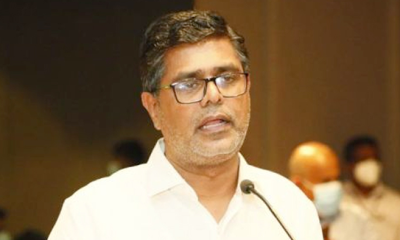
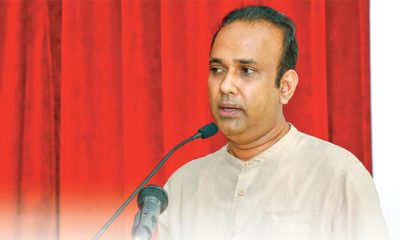




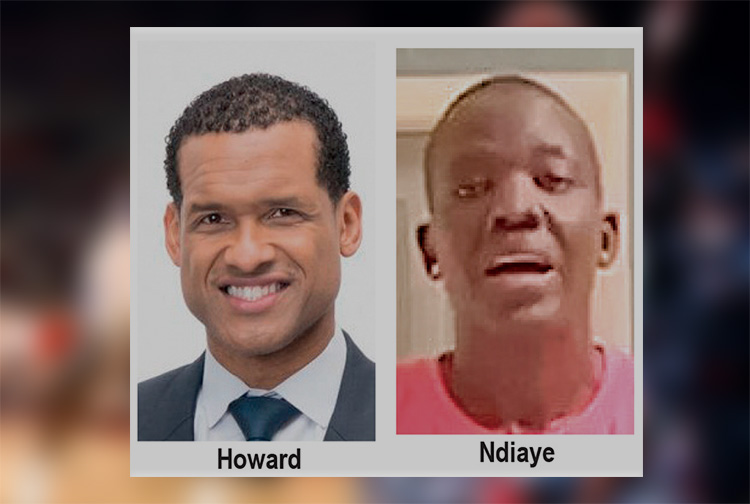
The U.S. Embassy in Colombo welcomed the U.S. Sports Envoys to Sri Lanka, former National Basketball Association (NBA) and Women’s National Basketball Association (WNBA) players Stephen Howard and Astou Ndiaye, from June 8 through 14.
The Public Diplomacy section of the U.S. Embassy said that it would launch a weeklong basketball program intended to harness the unifying power of sports, made possible through collaboration with Foundation of Goodness and IImpact Hoop Lab.
While in Sri Lanka, Howard and Ndiaye, both retired professional basketball players, will conduct a weeklong program, Hoops for Hope: Bridging Borders through Basketball. The Sports Envoys will lead basketball clinics and exhibition matches and engage in leadership sessions in Colombo and Southern Province for youth aged 14-18 from Northern, Uva, Eastern and Western Provinces, offering skills and leadership training both on and off the court. The U.S. Envoys will also share their expertise with the Sri Lanka Basketball Federation, national coaches, and players, furthering the development of basketball in the country. Beyond the clinics, they will collaborate with Sri Lankan schoolchildren to take part in a community service project in the Colombo area.
“We are so proud to welcome Stephen and Astou as our Sports Envoys to Sri Lanka, to build on the strong people-to-people connections between the United States and Sri Lanka,” said U.S. Ambassador Julie Chung. “The lessons that will be shared by our Sports Envoys – communication, teamwork, resilience, inclusion, and conflict resolution – are essential for leadership development, community building, equality, and peace. The U.S. Sports Envoy program is a testament to our belief that sports can be a powerful tool in promoting peace and unity.”
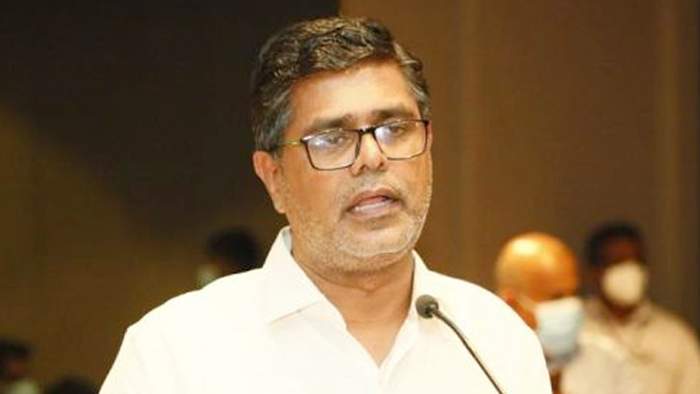
SJB Colombo District MP Mujibur Rahuman in parliament demanded to know from the government the reasons for CEB suspending the leave of all its employees until further notice from Thursday.
MP Rahuman said that the CEB has got an acting General Manager anew and the latter yesterday morning issued a circular suspending leave of all CEB employees with immediate effect until further notice.
“We demand that Minister Kanchana Wijesekera should explain this to the House. This circular was issued while this debate on the new Electricity Amendment Bill was pending. There are many who oppose this Bill. The Minister must tell parliament the reason for the urge to cancel the leave of CEB employees,” the MP said.However, Speaker Mahinda Yapa Abeywardena prevented Minister Wijesekera responding to the query and said that the matter raised by MP Rahuman was not relevant.
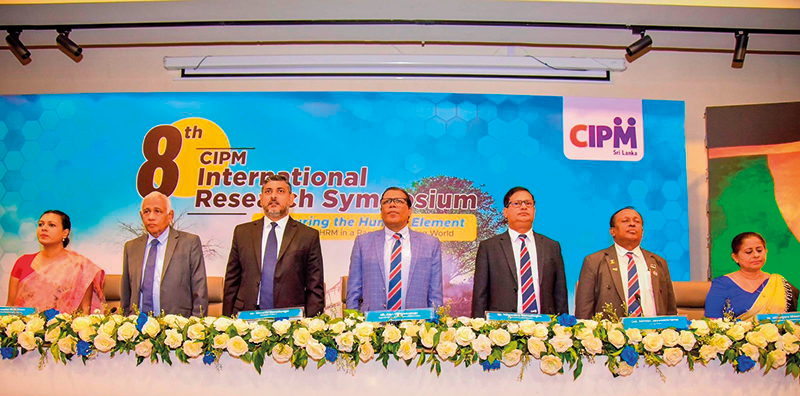
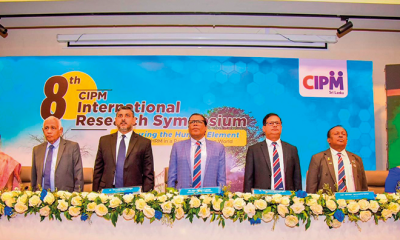
The Chartered Institute of Personnel Management (CIPM) successfully concluded the 8th Annual CIPM Symposium, which took place on 31st May 2024. Themed “Nurturing the Human Element—Redefining HRM in a Rapidly Changing World,” the symposium underscored the pivotal role of human resource management (HRM) in today’s dynamic global landscape. Since its inception in 1959, CIPM has been dedicated to advancing the HR profession through education, professional development, and advocacy, solidifying its position as Sri Lanka’s leading professional body for HRM.
Ken Vijayakumar, the President of the CIPM, graced the occasion as the chief guest. The symposium commenced with the welcome address by the Chairperson, Prof. Arosha Adikaram, followed by the Web Launch of the Symposium Proceedings and Abstract Book by the CIPM President. The event featured distinguished addresses, including a speech by Chief Guest Ken Vijayakumar, President of CIPM, and an address by Guest of Honor Shakthi Ranatunga, Chief Operating Officer of MAS Holdings Pvt. Ltd., Sri Lanka.
The symposium also featured an inspiring keynote address by Prof. Mario Fernando, Professor of Management and Director of the Centre for Cross Cultural Management (CCCM) at the University of Wollongong, Australia.
Vote of Thanks of the inauguration session was delivered by Dr. Dillanjani Weeratunga, Symposium Co-chair.
The symposium served as a comprehensive platform for researchers to present their findings across a wide range of critical topics in HRM. These included Cultural Diversity and Inclusion, Talent Development and Retention, Ethical Leadership and Corporate Social Responsibility, Adapting to Technological Advancements, Mental Health and Well-being at Work, Global Workforce Challenges, Employee Empowerment, and Reskilling and Upskilling.
The plenary session was led by Prof. Wasantha Rajapakse. Certificates were awarded to the best paper presenters during the valedictory session, followed by a vote of thanks delivered by Kamani Perera, Manager of Research and Development.
The annual symposium of CIPM was a truly inclusive event, attracting a diverse audience that spanned undergraduates, graduates, working professionals, research scholars and lecturers. This widespread interest highlights the symposium’s significance in the field of HRM, offering a unique opportunity for everyone to network and learn from scholarly brains.The CIPM International Research Symposium was sponsored by Hambantota International Port, Sri Lanka Institute of Information Technology (SLIIT), E B Creasy & Co. PLC, and Print Xcel Company.



US sports envoys to Lanka to champion youth development

Rahuman questions sudden cancellation of leave of CEB employees


