
News
Reluctance to celebrate republic day: Outcome of a strange Sri Lankan malady

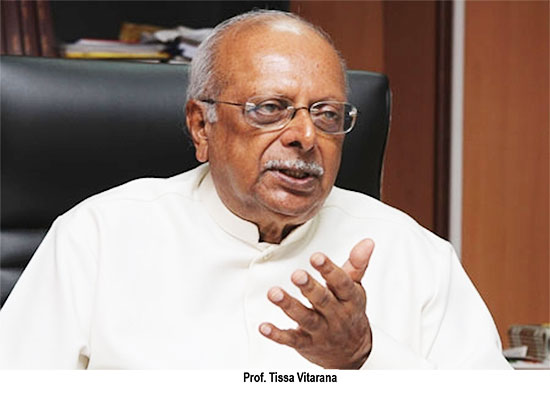
by Prof. Tissa vitarana
After suffering the ignominy and pain of having been colonized by three imperialist powers for 450 years, the last as a part of the British Empire for nearly 150 years, Sri Lanka (then Ceylon) became a completely independent and sovereign Republic only on May 22, 1972. This was the day when Parliament passed the Republican Constitution prepared by Dr. Colvin R. de Silva, at a special Constitutional Assembly.
But for some strange reason, when Sri Lanka should be proud of this fact and, like other such republics, it should celebrate that day every year, it does not do so. For example this is in complete contrast with our vast neighbor India, which celebrates its Republic Day on February 26 each year with even greater pomp and pageantry than it does for Independence Day which falls on August 15. In Sri Lanka We only celebrate Independence Day, which is only a formal mockery of independence, which falls on February 4, but not Republic Day which should fall today on May 22.
In fact Sri Lanka became a Republic only in 1972, as many as 24 long years of continuing shame, after we got Independence in 1948. In contrast India became a Republic in 1950, just three years after it got Independence in 1947. It was quick to cut the umbilical cord and become completely free, unlike in the case of Sri Lanka, which persisted in groveling at the feet of Britain, paying homage to its “Royal Family”.
As we all know, formal Independence from Britain was only partial, a mere mockery, but it appears to have satisfied the UNP rulers of that time. The British Queen remained the head of state, the British Army retained its military bases in Sri Lanka and power remained in their hands, and in the system of legal justice established in Sri Lanka, the final Court of Appeal was the British Privy Council, in London.
The UNP and other capitalist leaders of Sri Lanka were content to retain this colonial subservience for 24 years, while India rushed to sever it. The architect of the Indian Constitution, Dr. Ambedkar, a leader of the small Buddhist minority in India, was given full support by the Congress Party of India, led by Nehru and Gandhi, being true patriots, and he completed the task by 1950, in just three years.
The fact is that the UNP and other rulers of Sri Lanka were in no hurry to achieve true and full independence, and it was left to one of the leaders of the Lanka Sama Samaja Party (LSSP), Dr. Colvin R. de Silva, to accomplish this task in two years by drafting the Republican Constitution in 1972. In Sri Lanka it was the socialist Lanka Sama Samaja Party (LSSP) that made the achievement of complete independence its principle objective and continuously fought for its implementation.
In fact it was the LSSP, formed in 1935, that had as its main task the achievement of complete independence from rule by British imperialism. It continued the fight even through the period of the Second World War from 1939 to 1945, specially as the country was not directly involved in the war. The British rulers proscribed the LSSP and imprisoned its leaders, Dr.Colvin R de Silva, Dr.N.M.Perera, Philip Gunewardena, Leslie Goonewardena and Edmund Samarakkody.
They escaped from jail in Kandy and continued the fight against British imperialism as part of the Congress Socialist Party of India, and were jailed there as well. On their return the LSSP leaders were treated as heroes by the people. Mr. S.W.R.D. Bandaranaike, all along a leader of the UNP, in its Sinhala Maha Sabha wing, finally left the UNP and formed the SLFP in 1951, with Sinhala Buddhist revivalism as his main political plank. The LSSP that was the main opposition to the UNP came under racialist attack for its stand to make both Sinhala and Tamil as official languages in place of English, spoken mainly by the ruling elite.
A majority of the Sinhala supporters of the LSSP left to join the SLFP, and many of its Tamil leaders and supporters, such as MP Anandasangaree, left to join the Federal Party and the TULF. The LSSP was decimated further, when Philip Gunewardena together with the bulk of the Sinhala Buddhist supporters joined Bandaranaike to form the MEP.
In the 1970 General Election an SLFP, LSSP, CP Coalition Government came to power, with the LSSP getting 19 MPs and the CP six. Colvin was made the Minister of Plantation and Constitutional Affairs, and this gave him the opportunity to formulate the Republican Constitution. It was a difficult job well done, but unfortunately the large SLFP majority overcame Colvin’s plea for Tamil to be made an official language, along with Sinhala. Had that been done the nearly 30 years of disastrous internal war with the LTTE could have been averted, and the tragic deaths of our people and the damage prevented. Our economy would not be in such a bad state.
Another shortcoming in retrospect is the electoral system and big swings for the winning party. The Electoral Reform Committee set up in Parliament headed by Dinesh Gunewardena, of which I was a member, has offered a solution, the mixed system that has been a success in Germany and other countries. This along with further devolution to village level would rectify the short comings in Colvin’s Constitution.
But instead of being grateful to Colvin for his work, and to Dr. N.M.Perera for his overcoming a more severe economic crisis than what we face today, Mrs.Bandaranaike fell for the promise of USA led investment, now that economic stability had been restored, but she implemented their condition and got rid of the LSSP from the Coalition Government. The CP too was forced to leave the next year. I suspect that the desire not to celebrate Republic Day in Sri Lanka is due to the fear that the SLFP has that the credit of becoming a Republic would flow to the LSSP.
As the present General Secretary of the LSSP I too have been subject to this type of behavior from the SLFP. I give two instances to support my claim. One is the fact that though I possess a PhD from London University in the field of Virology, I have not been made a member of any committee set up to control the Covid-19 pandemic in Sri Lanka. The Health Consultative Committee met in Parliament only on one occasion since the outbreak of Covid-19. As a member I suggested that the control strategy based on cluster system required to be strengthened to defeat the community spreading of the infection which had just begun.
If quick action is taken by the Health Ministry the further spread of the pandemic could be prevented and or even eliminated. The Minister of Health, Pavithra Wanniarachchi, who was presiding refuse to accept my proposal which, if implemented may have prevented the spread of the epidemic and the more deaths that occurred in the country. The other example is that while I was the Governor in the North Central Province I was asked to resign immediately and come to the office of Basil Rajapaksa in Colombo to sign the National List as they had decided to make me a Cabinet Minister.
But when the new Government was formed I was not even a Minister, but only an ordinary member of Parliament. Consider my record as the Minister of Science and Technology when I set up 163 Vidatha Centres, one in each administrative division, and provided the technology for 12,637 entrepreneurs (SMEs) to arise. I also initiated action to set up Hi-tech Centers to promote Sri Lanka’s export industry. I set up the World’s 18th Nanotechnology Centre (SLINTEC) in Homagama and prepared plans for a Biotechnology Centre (SLIBTEC) which is now on going. It would appear that the good work done for the country and for the people by the LSSP is not appreciated, but even sabotaged.



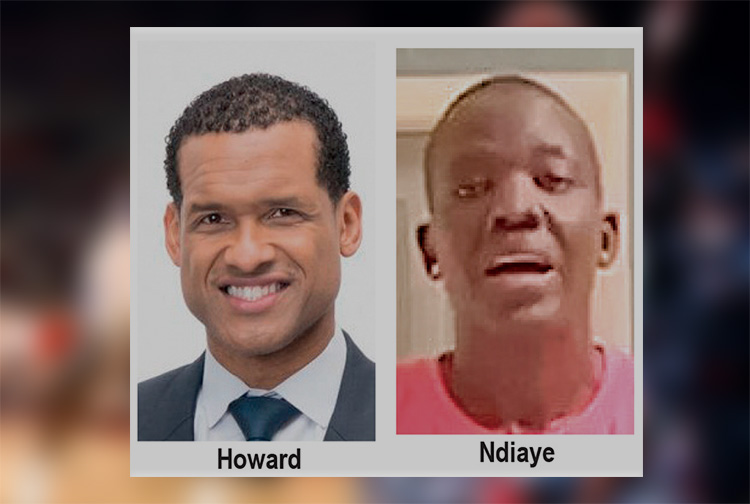
The U.S. Embassy in Colombo welcomed the U.S. Sports Envoys to Sri Lanka, former National Basketball Association (NBA) and Women’s National Basketball Association (WNBA) players Stephen Howard and Astou Ndiaye, from June 8 through 14.
The Public Diplomacy section of the U.S. Embassy said that it would launch a weeklong basketball program intended to harness the unifying power of sports, made possible through collaboration with Foundation of Goodness and IImpact Hoop Lab.
While in Sri Lanka, Howard and Ndiaye, both retired professional basketball players, will conduct a weeklong program, Hoops for Hope: Bridging Borders through Basketball. The Sports Envoys will lead basketball clinics and exhibition matches and engage in leadership sessions in Colombo and Southern Province for youth aged 14-18 from Northern, Uva, Eastern and Western Provinces, offering skills and leadership training both on and off the court. The U.S. Envoys will also share their expertise with the Sri Lanka Basketball Federation, national coaches, and players, furthering the development of basketball in the country. Beyond the clinics, they will collaborate with Sri Lankan schoolchildren to take part in a community service project in the Colombo area.
“We are so proud to welcome Stephen and Astou as our Sports Envoys to Sri Lanka, to build on the strong people-to-people connections between the United States and Sri Lanka,” said U.S. Ambassador Julie Chung. “The lessons that will be shared by our Sports Envoys – communication, teamwork, resilience, inclusion, and conflict resolution – are essential for leadership development, community building, equality, and peace. The U.S. Sports Envoy program is a testament to our belief that sports can be a powerful tool in promoting peace and unity.”
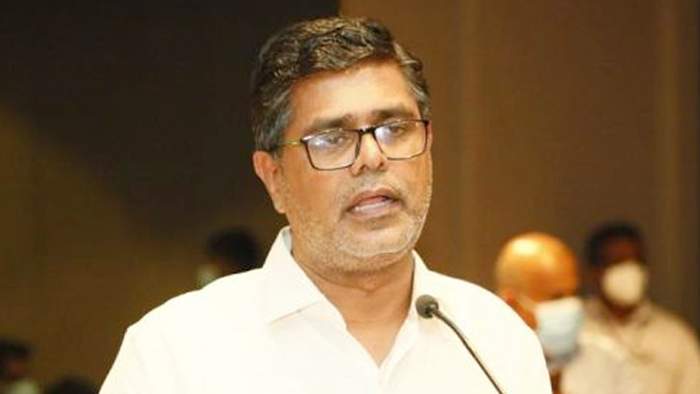
SJB Colombo District MP Mujibur Rahuman in parliament demanded to know from the government the reasons for CEB suspending the leave of all its employees until further notice from Thursday.
MP Rahuman said that the CEB has got an acting General Manager anew and the latter yesterday morning issued a circular suspending leave of all CEB employees with immediate effect until further notice.
“We demand that Minister Kanchana Wijesekera should explain this to the House. This circular was issued while this debate on the new Electricity Amendment Bill was pending. There are many who oppose this Bill. The Minister must tell parliament the reason for the urge to cancel the leave of CEB employees,” the MP said.However, Speaker Mahinda Yapa Abeywardena prevented Minister Wijesekera responding to the query and said that the matter raised by MP Rahuman was not relevant.
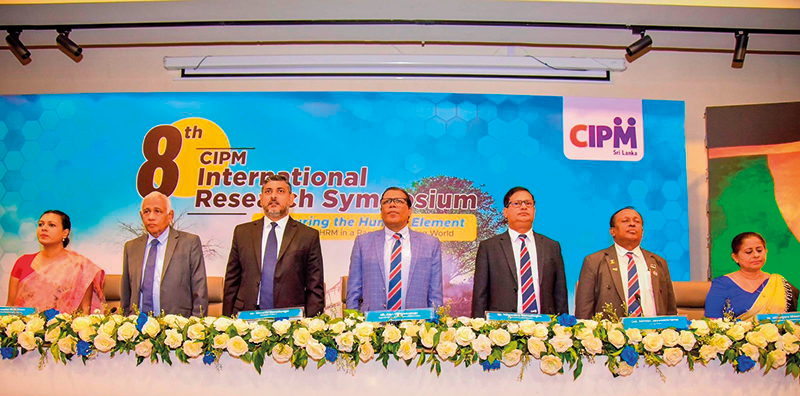
The Chartered Institute of Personnel Management (CIPM) successfully concluded the 8th Annual CIPM Symposium, which took place on 31st May 2024. Themed “Nurturing the Human Element—Redefining HRM in a Rapidly Changing World,” the symposium underscored the pivotal role of human resource management (HRM) in today’s dynamic global landscape. Since its inception in 1959, CIPM has been dedicated to advancing the HR profession through education, professional development, and advocacy, solidifying its position as Sri Lanka’s leading professional body for HRM.
Ken Vijayakumar, the President of the CIPM, graced the occasion as the chief guest. The symposium commenced with the welcome address by the Chairperson, Prof. Arosha Adikaram, followed by the Web Launch of the Symposium Proceedings and Abstract Book by the CIPM President. The event featured distinguished addresses, including a speech by Chief Guest Ken Vijayakumar, President of CIPM, and an address by Guest of Honor Shakthi Ranatunga, Chief Operating Officer of MAS Holdings Pvt. Ltd., Sri Lanka.
The symposium also featured an inspiring keynote address by Prof. Mario Fernando, Professor of Management and Director of the Centre for Cross Cultural Management (CCCM) at the University of Wollongong, Australia.
Vote of Thanks of the inauguration session was delivered by Dr. Dillanjani Weeratunga, Symposium Co-chair.
The symposium served as a comprehensive platform for researchers to present their findings across a wide range of critical topics in HRM. These included Cultural Diversity and Inclusion, Talent Development and Retention, Ethical Leadership and Corporate Social Responsibility, Adapting to Technological Advancements, Mental Health and Well-being at Work, Global Workforce Challenges, Employee Empowerment, and Reskilling and Upskilling.
The plenary session was led by Prof. Wasantha Rajapakse. Certificates were awarded to the best paper presenters during the valedictory session, followed by a vote of thanks delivered by Kamani Perera, Manager of Research and Development.
The annual symposium of CIPM was a truly inclusive event, attracting a diverse audience that spanned undergraduates, graduates, working professionals, research scholars and lecturers. This widespread interest highlights the symposium’s significance in the field of HRM, offering a unique opportunity for everyone to network and learn from scholarly brains.The CIPM International Research Symposium was sponsored by Hambantota International Port, Sri Lanka Institute of Information Technology (SLIIT), E B Creasy & Co. PLC, and Print Xcel Company.



US sports envoys to Lanka to champion youth development

Rahuman questions sudden cancellation of leave of CEB employees


