
Business
Reimagining the future of Sri Lanka’s apparel industry


By Shirendra Lawrence
The emergence of apparel and textiles as a significant contributor to Sri Lanka’s economy began post-Independence in 1948 when a few pioneering industrialists saw opportunities in its domestic market. Following the liberalization of the economy in the late 70’s, the industry ventured into exports, bringing in much needed foreign exchange, and before long, established Sri Lanka’s reputation as a manufacturer of quality products.
During the 90’s, facilitated by the 200 Garment Factories Program, manufacturing that had until then been located in free trade zones was expanded across Sri Lanka. This played a key role in the upliftment of the country’s rural economies.
The last decade has seen a further evolution, focused on end-to-end partnerships and complete customer solutions. However, an in-depth assessment of the sector’s strengths and competencies indicates that its full potential is yet to be realised.
With the pandemic causing significant disruption to Sri Lanka’s economy, our vision of elevating the country to a US$ 8 billion global apparel hub by 2025 is now perhaps more critical than ever. This growth is envisaged through value addition and further evolving from contracted apparel manufacturing for Buying Offices to end-to-end solutions for leading Global Brands and Retailers, spanning innovation to last-mile delivery.
With the pandemic gradually receding, apparel sector stakeholders have renewed collaborative efforts to achieve these goals.
Current status
In pre-pandemic 2019, the value of global apparel exports was estimated at $492 billion. Most would agree that with Sri Lanka’s contribution being just 1% of this, at $5.3 billion, the industry’s aspiration to grow it to $8 billion is not unreasonably ambitious.
Sri Lanka enjoys a reputation as a trusted partner within the supply chains of some of the world’s leading brands and retailers. The country’s apparel industry comprises a few large groups, supported by a strong ecosystem of Small and Medium Enterprises (SMEs). This is a symbiotic system; the larger players have developed meaningful Customer Partnerships, whilst the SMEs have created niches, including supporting the larger Groups to meet their supply chain requirements.
Despite its smaller scale and Sri Lanka’s apparel sector having relatively higher labour costs than some of its regional competitors, along with less preferential export market access, it has still progressed by leveraging other sources of competitive advantages. Sri Lanka ranks high in terms of reliability and product quality, which have elevated the country’s reputation and overall positioning. This is best reflected in the impressive list of global Brands and Retailers served by Sri Lankan manufacturers, including Victoria’s Secret, Marks & Spencer, Boss, NIKE, Calvin Klein, GAP, Levi’s, Ralph Lauren, lululemon, Calzedonia, Intimissimi and Tommy Hilfiger.
This elevated positioning also extends to talent attractiveness, with the country’s apparel sector appealing to the better professional talent, unlike some of our regional counterparts. A case in point is India, where professionals would often see other industries such as automobiles, electronics and IT as more attractive. Furthermore, the Island benefits from its strategic geographical location along major shipping routes as a regional logistics hub.
From an infrastructure standpoint, fabric manufacturers, who require process water, have established their factories within the BOI facilitated Free Trade Zones, which include advanced water treatment processes, whilst those in relatively labour-intensive apparel manufacturing have located themselves in rural areas across the country, providing direct and indirect employment to those communities, accelerating the development of those areas.
Leveraging on trade shifts
Whilst all of this progress has been well invested in, for the country to realise its apparel sector’s true potential, it is essential to fully leverage these strengths while understanding and aligning with the trade shifts that are taking place.
Studies indicate that the impact of increasing political and economic tensions between the Far East and the West will result in the movement of significant amounts of trade from China. Whilst these movements appeared to have commenced pre-pandemic, customers in western markets have delayed this process, not wanting to add additional dimensions of risk on top of pandemic-induced challenges. However, the shift is expected to gather momentum in 2022 and beyond.
Apart from direct business migration, opportunities would include potential FDI inflows from companies in the Far East seeking to augment their existing bases by establishing manufacturing locations in South Asia to mitigate their risk of losing customers. The industry and policymakers are mindful of potential opportunities that could arise as a result. The leadership of Sri Lankan apparel companies, with the support of the industry umbrella organisation, the Joint Apparel Association Forum (JAAF), and its constituent associations, including the Sri Lanka Apparel Exporters Association (SLAEA), are reimagining the sector’s future. These stakeholders are crafting strategic plans to facilitate the process of achieving the sector’s vision.
Maintaining competitive advantage
‘Doing the right thing’ has been the driving philosophy of Sri Lanka’s apparel industry, and this was key in attracting reputed Brands and private label retailers to Sri Lanka during the 80’s and 90’s. Marks & Spencer, in particular, saw Sri Lanka as a credible alternative for the migration of its western manufacturing bases at that time. This catalysed Sri Lankan manufacturers’ alignment with the expectations of the Ethical Trading Initiative (ETI), Worldwide Responsible Accredited Production (WRAP) and other organisations and standards focused on social responsibility and differentiated us from our competitors.
Moving to the present, what were competitive advantages have today become ‘hygiene factors’. Sri Lankan manufacturers have maintained their reputation for ethical manufacturing through environmentally responsible production, strong connections with existing and emerging organisations such as the Sustainable Apparel Coalition (SAC), and investments to reduce their Carbon Footprints. Significant strategic initiatives include the conversion of fossil-fuelled boilers to biomass and introducing other environmentally friendly energy sources such as solar. This also aligns the industry well with the Government’s efforts to increase renewable energy to 70% of Sri Lanka’s total requirement by 2030.
Sri Lankan apparel groups have also grown their businesses through geographic diversification. These efforts seek to minimise customer concerns of single country sourcing, leverage on bilateral and multilateral trade agreements and augment Asian manufacturing locations with a capacity closer to markets.
Improved trade access is vital
Greater preferential market access to existing and identified key export markets would substantially boost Sri Lanka’s apparel exports. However, it is vital to retain existing concessions under the EU and UK Generalized System of Preferences (GSP) Plus schemes while securing tariff reductions to other countries. Considering our success in penetrating key markets such as the USA, where tariffs for apparel exports are as much as, or in some cases even more than 30%, there is a significant opportunity to be had if the industry were provided with tariff waivers or even reductions.
Substantial opportunities also exist in large developing nations. Sri Lanka needs to increase its export quota of 8 million garment items per year to India, one of the fastest-growing regional economies. The Chinese market, too, presents vast potential.
Need for conducive policies
While recent initiatives to modernise trade facilitation, including the digitisation of customs clearance processes and administration of payments through online gateways, are welcomed, much more policy reform is needed. For example, if Sri Lanka is to evolve as an innovative apparel hub, a safe and conducive environment for innovation is required. This is only possible if Intellectual Property and data protection laws are given priority. Similarly, reforming colonial-era labour laws to reflect the very different world that we live in today is essential.
Favourable policies and incentives should be provided for investments related to backward integration and automation. The Eravur Fabric Processing Park is an important development in this regard, and the industry acknowledges the contributions of multiple state agencies in this initiative.
In conclusion, evolving Sri Lanka’s apparel industry will, without doubt, continue to bring benefits to the country – both directly and indirectly – increasing FDI, employment opportunities and export earnings whilst improving innovation and technology inflows.
With all stakeholders working in collaboration, the vision of making Sri Lanka a fully-fledged apparel hub is well within the country’s reach.
(Shirendra Lawrence is an apparel industry veteran and is the Deputy Chairman of the Sri Lanka Apparel Exporters’ Association. He is also an Executive Director of MAS Holdings. Shirendra holds a Mechanical Engineering (Honours) Degree from Imperial College, University of London, and is a Chartered Mechanical Engineer. He counts over 35 years of experience in manufacturing, business development and organisational leadership in the UK and Sri Lanka.)


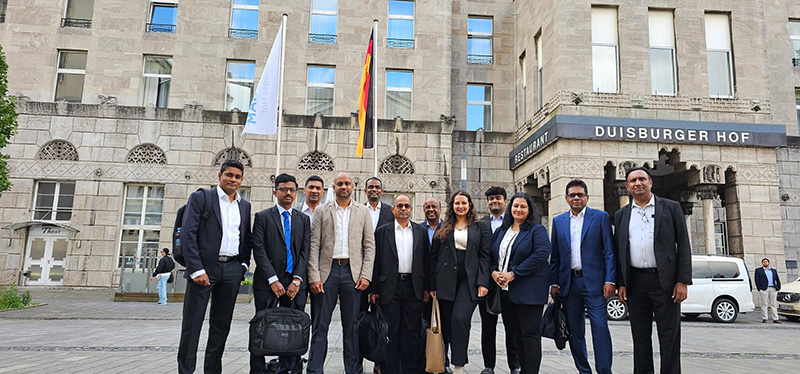
The Delegation of German Industry and Commerce in Sri Lanka (AHK Sri Lanka) proudly facilitated the first-ever Sri Lankan delegation’s participation at Drupa 2024, the world’s largest trade fair for the printing industry and technology. Held after an eight-year hiatus, Drupa 2024 was a landmark event, marking significant advancements and opportunities in the global printing industry.
AHK Sri Lanka played a pivotal role in organising and supporting the delegation, which comprised 17 members from the Sri Lanka Association for Printers (SLAP), representing eight companies from the commercial, newspaper, stationery printing, and packaging industries. This pioneering effort by AHK Sri Lanka not only showcased the diverse capabilities of Sri Lanka’s printing sector but also facilitated vital bilateral discussions with key stakeholders from the German printing industry.
Business
Unveiling Ayugiri: Browns Hotels & Resorts sets the stage for a new era in luxury Ayurveda Wellness

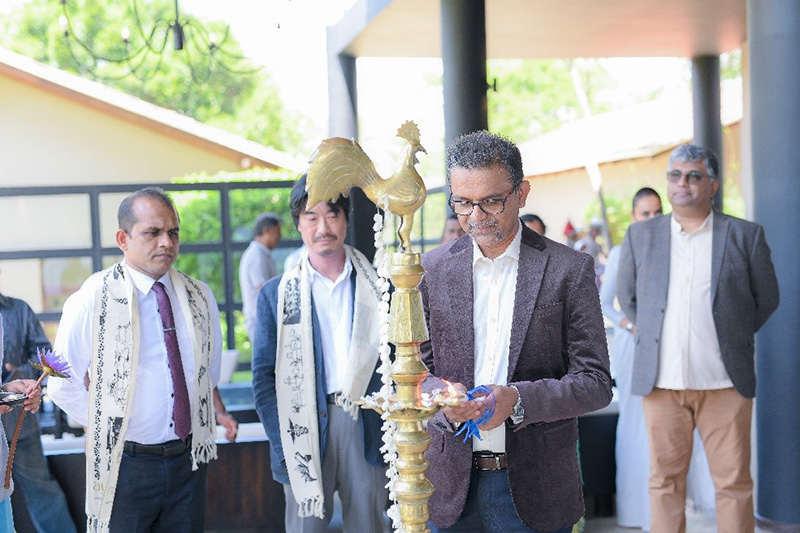
In a captivating reimagining of luxury wellness tourism, Browns Hotels & Resorts proudly unveiled the exquisite Ayugiri Ayurveda Wellness Resort Sigiriya. This momentous occasion, celebrated amidst a vibrant and serene grand opening on the 6th of June, heralds a new chapter in the Ayurveda wellness tourism landscape in Sri Lanka. Nestled amidst 54 acres of unspoiled natural splendour, Ayugiri features 22 exclusive suites and stands out as the only luxury Ayurveda wellness resort in the country offering plunge pools in every room, rendering it truly one-of-a-kind.
The grand opening of Ayugiri Ayurveda Wellness Resort was an enchanting event, where guests were captivated by the melodies of flutists and violinists resonating through Sigiriya’s lush landscapes. As traditional drummers and dancers infused the air with vibrant energy, Browns Hotels & Resorts’ CEO, Eksath Wijeratne, Kotaro Katsuki, Acting Ambassador for the Embassy of Japan and General Manager, Buwaneka Bandara, unveiled the resort’s new logo, marking a significant moment witnessed by distinguished guests from the French Embassy, Ayurveda and wellness enthusiasts along with officials from the Sigiriya area, LOLC Holdings and Browns Group.
“Our strategic expansion into wellness tourism with Ayugiri Ayurveda Wellness Resort Sigiriya symbolises a significant milestone for Browns Hotels & Resorts. Wellness tourism has consistently outperformed the overall tourism industry for over a decade, reflecting a growing global interest in travel that goes beyond leisure to offer rejuvenation and holistic well-being. By integrating the timeless wisdom of Ayurveda with modern luxury, we aim to set a new standard in luxury wellness tourism in Sri Lanka. Whether your goal is prevention, healing, or a deeper connection to inner harmony, Ayugiri offers a sanctuary for holistic well-being” stated Eksath Wijeratne.
Ayugiri encapsulates the essence of life, inspired by the lotus flower held by the graceful queens of the infamous Sigiriya frescoes. Just as the lotus emerges from the murky depths, untainted and serene,
Ayugiri invites guests on a journey of purity and rejuvenation, harmonised with a balance of mind, body and spirit, the essence of nature, echoes of culture and the wisdom of ancient Ayurvedic healing.

HNB General Insurance, one of Sri Lanka’s leading general insurance providers, has been honored as the Best General Bancassurance Provider in Sri Lanka 2024 by the prestigious Global Banking and Finance Review – UK.
The esteemed accolade underscores HNB General Insurance’s unwavering commitment to excellence and its outstanding performance in the field of bancassurance. Through dedication and hard work, the HNB General Insurance team has continuously endeavored to deliver innovative insurance solutions, cultivate strong relationships with banking partners, and provide unparalleled service to customers nationwide. This recognition is a testament to the team’s dedication and relentless pursuit of excellence in the bancassurance business.
“We are honored to receive this prestigious award, which reflects our team’s tireless efforts and dedication to delivering value-added insurance solutions and exceptional service through our bancassurance partnerships,” said Sithumina Jayasundara, CEO of HNB General Insurance. “This recognition reaffirms our position as a trusted insurance provider in Sri Lanka and motivates us to continue striving for excellence in serving our customers and communities.”



US sports envoys to Lanka to champion youth development

Rahuman questions sudden cancellation of leave of CEB employees


