
News
Referring SL to ICC futile exercise, UK tells pro-LTTE groups

UN Security Council support cannot be mustered for anti-SL move
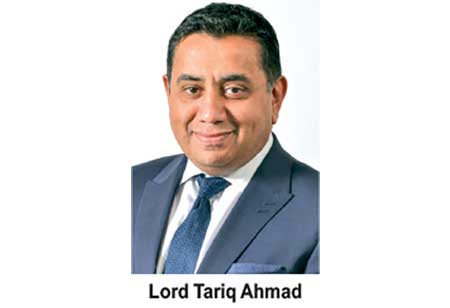
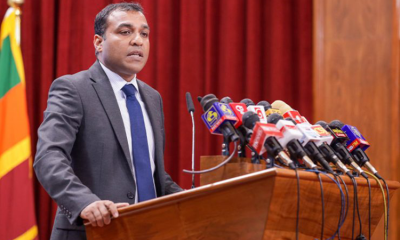
Minister of State for South Asia and the Commonwealth Lord Tariq Ahmad of Wimbeldon has told the UK-based pro-LTTE groups that the International Criminal Court (ICC) has no jurisdiction to investigate Sri Lanka. The ICC could only do so if Sri Lanka accepted its jurisidiction, or if the UN Security Council adopts a resolution to refer Sri Lanka to the ICC.
The UK didn not think such a step would have sufficient support among Security Council members and it would not help accountability in Sri Lanka for an ICC referral to fail to win Security Council support or be vetoed, Lord Ahmad said.
Ahmad is also the Prime Minister’s Special Representative on Preventing Sexual Violence in Conflict.
The following is the full text of Lord Ahmad’s letter to the pro-LTTE groups:
“Thank you for your correspondence of 1 March and petition regarding the UK’s approach to Sri Lanka at the 46th UN Human Rights Council (UNHRC), and for recommending amendments to the draft resolution.
“I recognise the points you have raised, and understand that achieving justice, peace and accountability is a priority for all Sri Lankans affected by the conflict. Please be assured that this is a long standing priority for the UK, and that we regularly raise the importance of justice and accountability with the government of Sri Lanka, both privately and publicly.
“We have highlighted our concerns about the lack of progress towards accountability and the wider human rights situation, including in our statements to the UNHRC in February, June and September 2020. As Minister of State for South Asia and Minister responsible for Human Rights, I set out our serious concerns about human rights in Sri Lanka in a statement at the UN Human Rights Council on 25 February.
“I have also raised the importance of accountability, justice and reconciliation on several occasions with the Sri Lankan High Commissioner and Sri Lankan Foreign Minister Dinesh Gunawardena, most recently during calls on 12 February and 22 January respectively.
“We will continue to press for a strong role for the UNHRC to help deliver accountability and reconciliation and ensure the protection of human rights in Sri Lanka. The UK is working hard to build support for the new resolution on Sri Lanka. The resolution will provide a continued framework for international engagement on human rights in Sri Lanka, and will highlight our serious concerns about the situation, including those detailed in the recent report of the Office of the High Commissioner for Human Rights (OHCHR).
“It will call on the government of Sri Lanka to make progress on accountability and human rights, and will stress the importance of a comprehensive accountability process for all violations and abuses committed in Sri Lanka. It will keep Sri Lanka firmly on the UNHRC agenda and will request continued and enhanced OHCHR reporting on the human rights situation and on accountability. Importantly, it will also strengthen the capacity of OHCHR to consolidate, preserve and analyse information and evidence to support future accountability processes.
“I take note of your request to make amendments to the draft resolution. We believe the resolution the UK has presented to the UNHRC is an ambitious one that can pass in the face of challenging UNHRC dynamics. Voting members of the Council change every year, and current voting members are not the same as those who voted on previous resolutions.
“The 2021 composition is particularly challenging for consideration of country resolutions. The risk of losing a vote is very serious, and tabling an unwinnable resolution would likely result in the end of any accountability process and would be a crushing blow to the victims and all those who have fought for justice and accountability. A failed resolution would also see Sri Lanka removed from the agenda of the UNHRC, making it more difficult to draw international attention to the human rights concerns identified in the recent report by OHCHR. While we will continue to consider amendments to our resolution during the course of negotiations, we strongly believe that it is the best way of achieving accountability and justice for all those affected by the conflict.
“In your email, you ask that Sri Lanka is referred to the International Criminal Court (ICC). Sri Lanka is not a party to the Rome Statute which established the ICC. As a result, the ICC has no jurisdiction to investigate Sri Lanka. It could only do so if Sri Lanka accepts the jurisdiction of the ICC, or if the UN Security Council refers Sri Lanka to the ICC through a resolution. We do not judge that this step would have sufficient support among Security Council members. Moreover, it would not help accountability in Sri Lanka for an ICC referral to fail to win Security Council support or be vetoed.
“In regards to establishing an International Independent Investigative Mechanism, we agree on the importance of preserving information and evidence gathered so far. Our draft resolution therefore requests OHCHR to consolidate, analyse and preserve this information so it can be used in future accountability processes. This will build on the work of previous resolutions, including the 2014 resolution which mandated a comprehensive OHCHR Investigation on Sri Lanka (OISL).
“On the question of appointing a Special Rapporteur, we do not believe this would prove beneficial in the current circumstances since, at present, the High Commissioner for Human Rights is herself at the forefront of the UN’s efforts. Our draft resolution will request enhanced reporting by OHCHR to ensure that both the UN and the Human Rights Council remain focused on the situation in Sri Lanka.
“On the question of a referendum to determine the aspirations of the Tamil people, we recognise your strength of feeling on this matter. The UK Government has long supported peace building and reconciliation in Sri Lanka, and called for the rights of all Sri Lankans to be respected. Through UK-funded programmes, we have supported a number of activities to benefit those in the north and east of the country, including demining, resettlement of internally displaced persons and interfaith dialogue. We continue to urge the Government of Sri Lanka to deliver on reconciliation and political inclusion for all Sri Lankans. However, we do not think it is realistic to include a reference to a referendum on Tamil self-determination in the draft UNHRC resolution. Please be assured that justice, accountability and human rights in Sri Lanka will remain a priority for the UK government.”








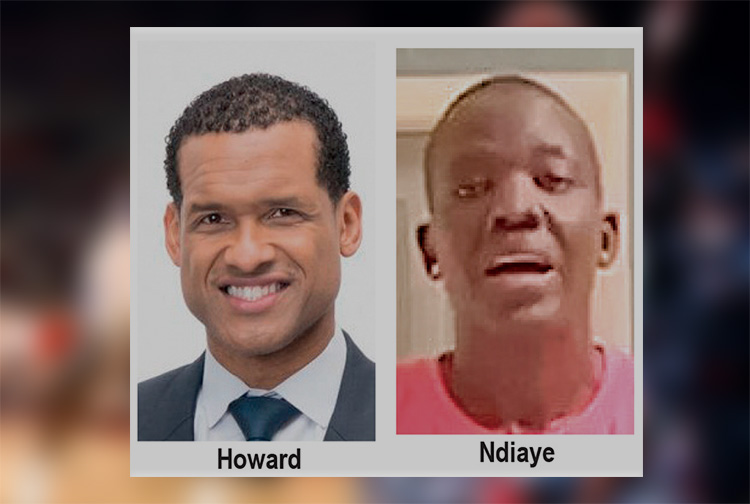
The U.S. Embassy in Colombo welcomed the U.S. Sports Envoys to Sri Lanka, former National Basketball Association (NBA) and Women’s National Basketball Association (WNBA) players Stephen Howard and Astou Ndiaye, from June 8 through 14.
The Public Diplomacy section of the U.S. Embassy said that it would launch a weeklong basketball program intended to harness the unifying power of sports, made possible through collaboration with Foundation of Goodness and IImpact Hoop Lab.
While in Sri Lanka, Howard and Ndiaye, both retired professional basketball players, will conduct a weeklong program, Hoops for Hope: Bridging Borders through Basketball. The Sports Envoys will lead basketball clinics and exhibition matches and engage in leadership sessions in Colombo and Southern Province for youth aged 14-18 from Northern, Uva, Eastern and Western Provinces, offering skills and leadership training both on and off the court. The U.S. Envoys will also share their expertise with the Sri Lanka Basketball Federation, national coaches, and players, furthering the development of basketball in the country. Beyond the clinics, they will collaborate with Sri Lankan schoolchildren to take part in a community service project in the Colombo area.
“We are so proud to welcome Stephen and Astou as our Sports Envoys to Sri Lanka, to build on the strong people-to-people connections between the United States and Sri Lanka,” said U.S. Ambassador Julie Chung. “The lessons that will be shared by our Sports Envoys – communication, teamwork, resilience, inclusion, and conflict resolution – are essential for leadership development, community building, equality, and peace. The U.S. Sports Envoy program is a testament to our belief that sports can be a powerful tool in promoting peace and unity.”
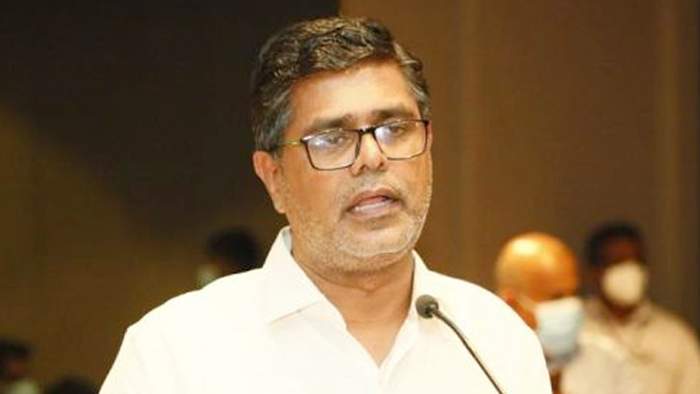
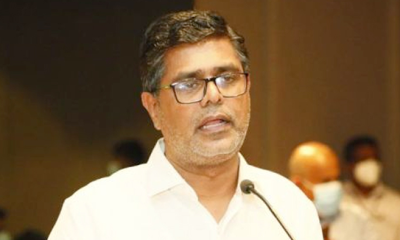
SJB Colombo District MP Mujibur Rahuman in parliament demanded to know from the government the reasons for CEB suspending the leave of all its employees until further notice from Thursday.
MP Rahuman said that the CEB has got an acting General Manager anew and the latter yesterday morning issued a circular suspending leave of all CEB employees with immediate effect until further notice.
“We demand that Minister Kanchana Wijesekera should explain this to the House. This circular was issued while this debate on the new Electricity Amendment Bill was pending. There are many who oppose this Bill. The Minister must tell parliament the reason for the urge to cancel the leave of CEB employees,” the MP said.However, Speaker Mahinda Yapa Abeywardena prevented Minister Wijesekera responding to the query and said that the matter raised by MP Rahuman was not relevant.
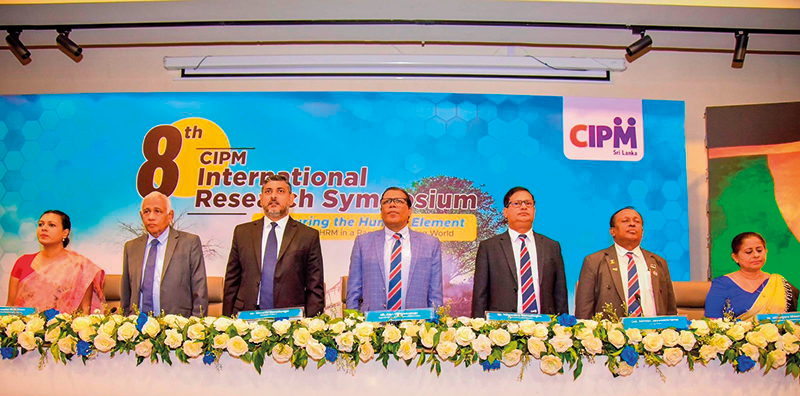
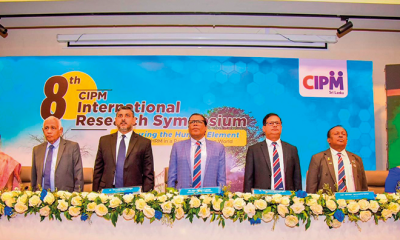
The Chartered Institute of Personnel Management (CIPM) successfully concluded the 8th Annual CIPM Symposium, which took place on 31st May 2024. Themed “Nurturing the Human Element—Redefining HRM in a Rapidly Changing World,” the symposium underscored the pivotal role of human resource management (HRM) in today’s dynamic global landscape. Since its inception in 1959, CIPM has been dedicated to advancing the HR profession through education, professional development, and advocacy, solidifying its position as Sri Lanka’s leading professional body for HRM.
Ken Vijayakumar, the President of the CIPM, graced the occasion as the chief guest. The symposium commenced with the welcome address by the Chairperson, Prof. Arosha Adikaram, followed by the Web Launch of the Symposium Proceedings and Abstract Book by the CIPM President. The event featured distinguished addresses, including a speech by Chief Guest Ken Vijayakumar, President of CIPM, and an address by Guest of Honor Shakthi Ranatunga, Chief Operating Officer of MAS Holdings Pvt. Ltd., Sri Lanka.
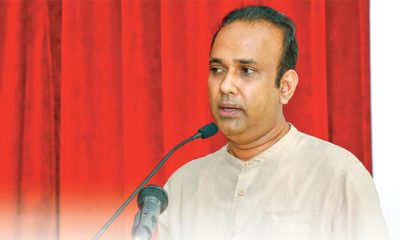
The symposium also featured an inspiring keynote address by Prof. Mario Fernando, Professor of Management and Director of the Centre for Cross Cultural Management (CCCM) at the University of Wollongong, Australia.
Vote of Thanks of the inauguration session was delivered by Dr. Dillanjani Weeratunga, Symposium Co-chair.
The symposium served as a comprehensive platform for researchers to present their findings across a wide range of critical topics in HRM. These included Cultural Diversity and Inclusion, Talent Development and Retention, Ethical Leadership and Corporate Social Responsibility, Adapting to Technological Advancements, Mental Health and Well-being at Work, Global Workforce Challenges, Employee Empowerment, and Reskilling and Upskilling.
The plenary session was led by Prof. Wasantha Rajapakse. Certificates were awarded to the best paper presenters during the valedictory session, followed by a vote of thanks delivered by Kamani Perera, Manager of Research and Development.
The annual symposium of CIPM was a truly inclusive event, attracting a diverse audience that spanned undergraduates, graduates, working professionals, research scholars and lecturers. This widespread interest highlights the symposium’s significance in the field of HRM, offering a unique opportunity for everyone to network and learn from scholarly brains.The CIPM International Research Symposium was sponsored by Hambantota International Port, Sri Lanka Institute of Information Technology (SLIIT), E B Creasy & Co. PLC, and Print Xcel Company.



US sports envoys to Lanka to champion youth development

Rahuman questions sudden cancellation of leave of CEB employees


