
Life style
Rasai ! Top Sri Lanka Food and Drink Experiences

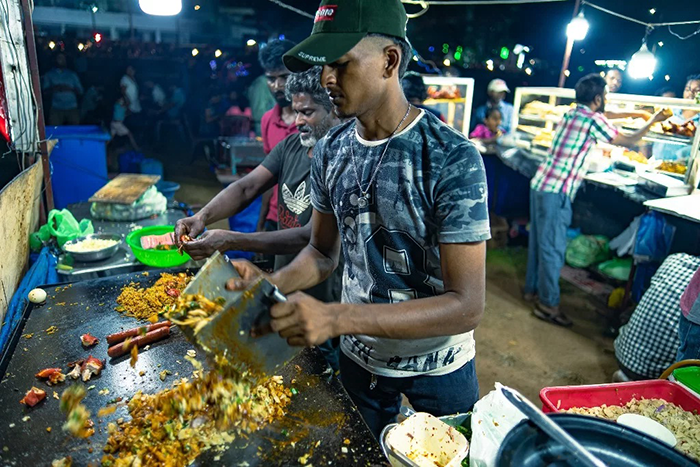
by Tim Russell
“Rasai” is Sinhalese for “delicious”, and if you’ve spent any time in Sri Lanka it’s no doubt a word you’ve heard a lot, for Sri Lankan cuisine is one of Asia’s most underrated.
Sri Lankan food is spicy, robust, filling and very, very tasty, whether you’re eating at an upscale restaurant like Colombo’s famous Curry Club, or stopping at one of the countless street stalls for a snack.
And Sri Lankans love a drink too! The country’s tea is world-famous, and you’ll also find fresh juice bars on practically every street. In the evening, bottles of the country’s famous liquor – arrack – are cracked open, and consumed neat, with soda or in cocktails, along with the local Lion Beer.
At Khiri we’ve scoured the country to find the best ways to introduce your clients to the best food and drink Sri Lanka has to offer, so here are our favourite Sri Lanka food & drink experiences…
Colombo Food and Drink Tours
Colombo, Sri Lanka’s capital, is an increasingly modern city but one that is still very much in touch with its heritage, with new skyscrapers towering over tastefully refurbished colonial buildings, and a street food culture that remains vibrant and traditional.
Khiri offers several food/drink-related tours including the Foodie Tour (an evening street food tour), Colombo Behind the Scenes, and the Arrack Adventure, where you can discover – and taste – the country’s local liquor.

My time in Colombo was limited so I did a combination of all three. My tour started at a Tamil restaurant where I tasted various Tamil delicacies including ghee roti accompanied by a fiery seeni sambal (onions, sugar and chilli), followed by snacks at a Muslim street food joint, before we moved onto classier surroundings with arrack cocktails at the stunning Galle Face Hotel.
We then had some street snacks down by the beach including isso vade (small shrimp cakes) and the ubiquitous kottu roti (a mix of chopped roti bread, chicken, vegetables and curry sauce). We then tried the egg hoppers (and more arrack) at the Curry Club, before rounding off the evening at a traditional Sri Lankan dive bar, for more arrack!
This is an excellent experience that really gives travelers a quick primer into the kind of dishes that they’ll encounter during their trip, and also a really fun way to learn more about the culture and history of Sri Lanka’s capital.
Markets of Sri Lanka
Like most Asians, Sri Lankans still do most of their shopping at fresh markets and every town has at least one bustling marketplace selling all manner of weird and wonderful fruit, veg, seafood and meat. They’re a great place to learn about local ingredients, chat to the friendly locals, and stop for a snack and a cup of Ceylon tea.
My personal favourite was Pettah Market in Colombo – less a market and more a maze of streets selling pretty much everything including food, electronics, clothing, shoes and much more besides. I could easily have spent hours trawling these streets and watching the apparent chaos unfold, especially in the wholesale fruit and veg district, a riot of trucks, porters and flying watermelons!
Kandy’s central market is also well worth a visit, especially the chaotic, yellow-walled vegetable hall which is a photographer’s dream, and the spice stalls selling dozens of different spices packed into plastic tubes.
And finally there’s Dambulla vegetable market, a huge wholesale market where growers from all over Sri Lanka come to sell their wares to the resident traders – expect lots of haggling, shouting and friendly smiles, and don’t miss the tea and spicy samosas at the workers’ cafe.

Old woman picking tea on a traditional plantation
A Sustainable Tea Plantation
Sri Lanka’s tea is world famous. Ever since the British introduced tea plantations in the 19th century, Ceylon tea has been a byword for quality. These days however, the industry is struggling. Outflanked by high-tech tea plantations in Japan and lower labour costs in Kenya and China, Sri Lankan tea is no longer as competitive as it was on the global market and the country has slipped to third place in the list of world tea exporters.
Add the fact that tea picking is a hard, unglamorous and poorly-paid job (on most traditional plantations pickers earn around $3 per day for picking 22kg of leaves), which makes it less appealing to younger Sri Lankans, and you have an industry that is in trouble.
So increasingly, growers are starting to realize that quality, rather than quantity is the way forward, and one such company is Amba, situated in the hills near the town of Ella. Amba specialises in high quality craft teas, hand-picked by tea ‘artisans’, who are responsible for their leaves from picking to drying. They are paid well, don’t have daily quotas to meet, are given protective clothing from the sun and rain, and are the way forward for the industry.
Watching them work there’s a clear difference from the traditional workers I encountered by the roadside – whereas the old model is to pick as many leaves as you can, Amba’s pickers take their time, sometimes going maybe half a minute without picking a single leaf – unthinkable on one of the old plantations.
The company exports its tea to high-end sellers worldwide (including London’s famous Fortnum & Mason), and offers tours of its facilities to visitors, finishing with a tasting of their different brews. A great way to learn about the history – and more importantly the future – of what is still Sri Lanka’s biggest export.
Discovering Buffalo Curd
The name ‘buffalo curd’ may not sound particularly appealing, but it is by far Sri Lanka’s most popular dessert and you will see covered clay pots of the stuff for sale along the roadside all over the country. It tastes just like natural yogurt, and is traditionally served with coconut syrup to sweeten it. Spend any time in Sri Lanka and you’ll quickly get a taste for it, whether at breakfast or as a dessert – and it’s fascinating to see how it’s made.
One of our newest experiences takes place in the village of Tissa near Yala. My day began with the sunrise as we arrived at a small buffalo farm near the lake to watch the whole process from start to finish. Mr Jinadasa, the grandfather of the family, is up early to milk the buffalo – he was particularly busy on the day I visited as there were several younger buffalo there which meant the mothers were producing more milk than usual, and the family were thus able to make a dozen pots of curd instead of the usual five or six.
Jinadasa’s wife and daughter then take turns to heat the milk to separate the curd. This is the hardest job of the lot as the milk is boiled over a wood fire in a poorly ventilated room – I could only stand the smoke for a couple of minutes! The curd is then poured into clay pots to set before being taken to sell by the roadside, earning the family a few dollars per day. Your clients’ visit helps support them in an economic climate where costs are rising dramatically but their income isn’t keeping pace.
The clay pots in which the curd is sold are unglazed so can only be used for food storage once – Sri Lankans then use them as flowerpots, building material or simply as ornaments and they can be seen in nearly every garden!
The tour continues with a simple breakfast – including some curd of course – before a visit to a local pottery to watch the pots being made and dried before being sold to the area’s buffalo farms.
Sri Lankan Family Dinner in Galle
Eating in restaurants or at street food stalls is great, but to find out how local people really live you can’t beat visiting a local family home and eating at their table, and that’s exactly what I did during my stay in Galle.
Our hostess Natasha and her husband Navi – a respected local hotel chef – welcomed us to their home in Galle where we began with arrack and passion fruit Mojitos and a game of carrom (one of Sri Lanka’s national sports – they were 2018 world cup winners!), before being presented with a table groaning with shrimp curry, grilled fish, salads, vegetable curries, and of course the ever-present dhal curry and rice.
In traditional Sri Lankan fashion the family didn’t actually eat with us – they sat and nervously watched us eat to make extra sure we were happy with the food, which of course we were as it was absolutely delicious. We finished with fresh fruit and some watalappan (a kind of custard made from coconut and cardamom) before heading home very full and very happy. It was a great way to spend my last full night in Sri Lanka and a fascinating insight into local home life.
Tim Russell joined the Khiri Core team in 2022, bringing decades of experience in the tourism industry into his role as Group Marketing Manager. Before moving to Bangkok in 2012 – where he now lives with his wife and their three rescue dogs – Tim spent almost ten years in Vietnam. When he is not overseeing Khiri’s marketing efforts, Tim can be found indulging in his passions for photography, live music, and street food. – Khiri Travel



Institute of Hospitality Sri Lanka
 The 32nd Annual General Meeting (AGM) of the UK-based Institute of Hospitality’s Sri Lanka Chapter was held recently at the Ramada Hotel Colombo,.The event provided an evening of camaraderie , reflection of the past and present achievements,setting new benchmarks for the future
The AGM had the presence of two distinguished guests, the Chief Guest Opposition Leader Sajith Premadasa, and the Guest of Honour British High Commissioner to Sri Lanka, Andrew Patrick. Their inspiring speeches were lauded by all hoteliers who were present at the occasion
A special thanks was extended to Robert Richardson, CEO of the Institute of Hospitality UK, along with his team, sponsors, committee members, and all attendees for making the event memorable.
Dr. Harsha Jayasingh, Past President of the Institute of Hospitality (UK) Sri Lanka Chapter, emphasised the Institute’s longstanding history and the strength of its Sri Lankan branch. “The Institute of Hospitality (IH) UK has a history of 86 years, and we are proud to be the Sri Lanka Branch. IH Sri Lanka is much stronger now with many members from all areas of the hospitality industry,” he stated.
Dr. Jayasingh highlighted the significant role of tourism in Sri Lanka’s economy,. He said tourism it is the third-largest source of revenue for the country. “Tourism accounts for about 13.3% of total foreign exchange earnings and employs 450,000 people directly and indirectly. The hospitality industry in this island of pearl holds tremendous potential for economic growth, job creations, and cultural exchange,” he added.
He also pointed out more women should be attracted to the industry and advocated for the use of technology in hospitality sector to attract the younger generation.
The newly appointed Chairman Ramesh Dassanayake spoke about the challenges faced by the industry, including the reluctance of youth to join the sector. . Dassanayake expressed concerns over the migration of staff between hotels and the overall ‘brain drain’ in the sector. ” We must maintain high standards in the hotel We must try to attract tourists to Sri Lanka, we must have with many facilities Hence, hotel schools and other professional institutions involved in skills development mustincrease their intakes,” he pointed out.
Chief Guest Sajith Premadasa emphasised the importance of eco tourism and said “We need to have an environmental policy related to tourism in place,” . .
The 32nd AGM of the Institute of Hospitality UK, Sri Lanka Chapter, was a testament to the strength and potential of Sri Lanka’s hospitality industry. The insights and commitments shared during the event set a new benchmark for the future.(ZC)


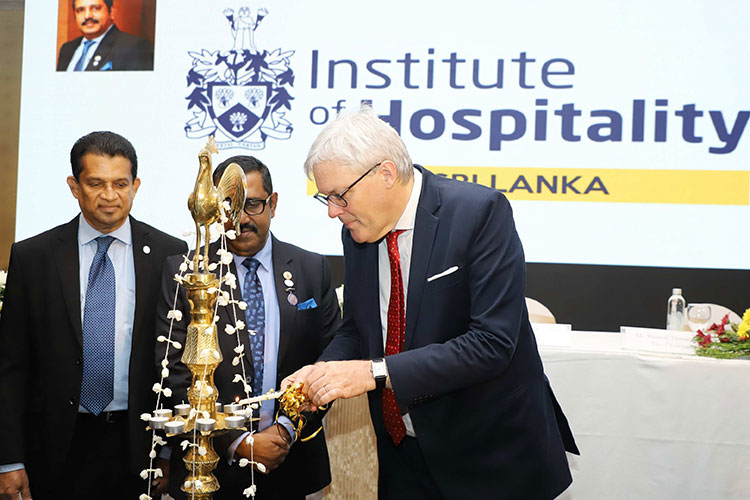
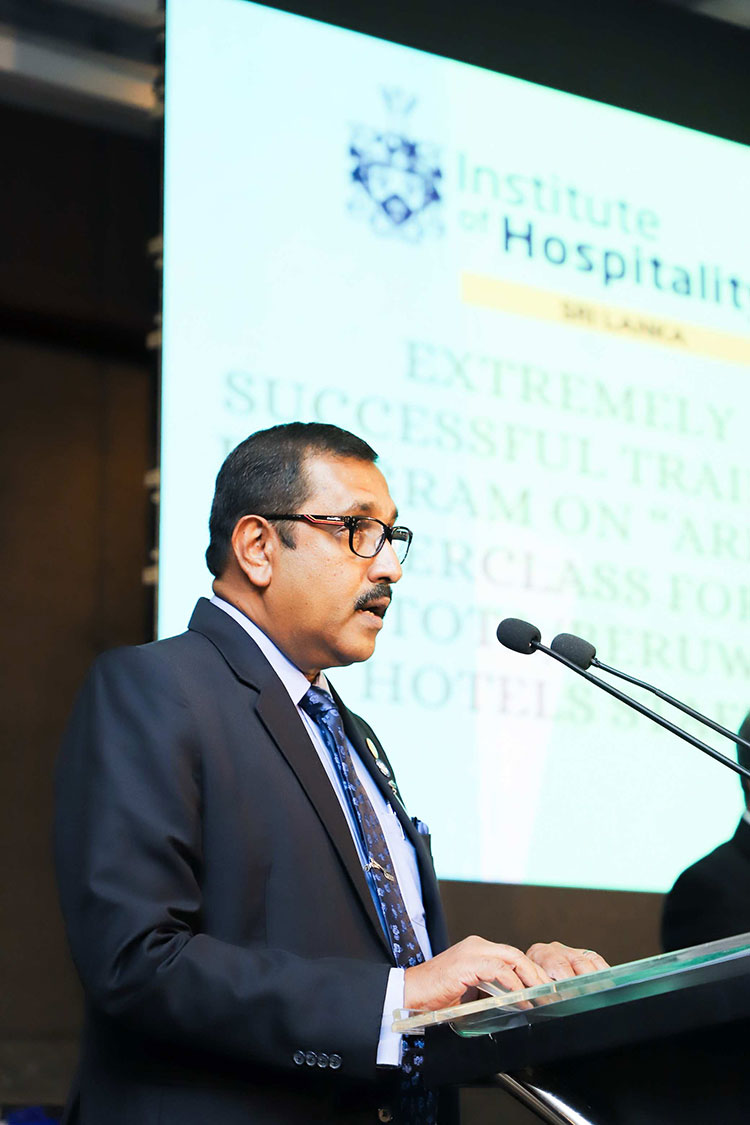

Pix by Thushara Attapathu
Life style
He recognizes human identity beyond boundaries of gender, race, nationality and religion.
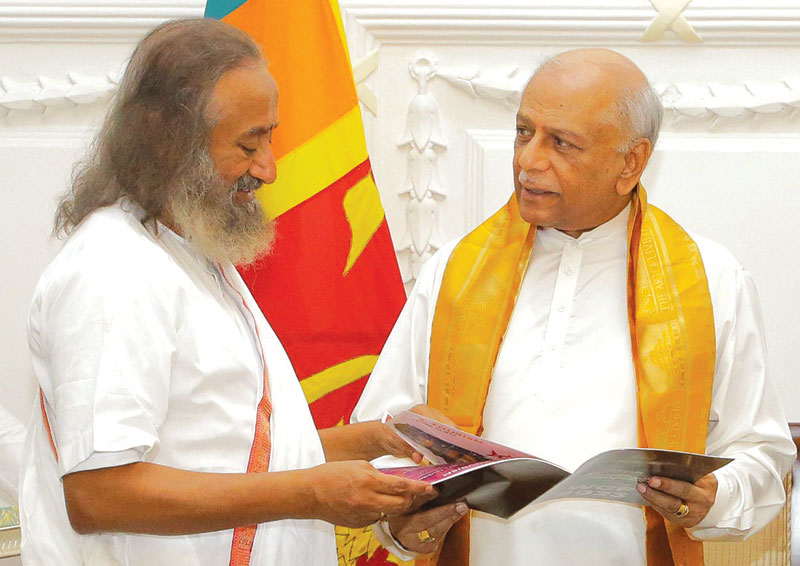
Visit of Sri Gurudev to Sri Lanka
Humanitarian, spiritual leader and Global Ambassador of Peace Gurudev Sri Sri Ravi Shankar (Sri Gurudev) was in Sri Lanka on a three day tour on the invitation of the Prime Minister of Sri Lanka Dinesh Gunewardene. Gurudev who inspired a wave of volunteerism and service to moot one of the largest volunteer-based organisations in the world – The Art of Living – visited the various projects under the aegis of the foundation and launched twelve vocational and technical centers around the island. He was accompanied by thousands of followers from Sri Lanka and around the world.
Gurudev who visited Sri Lanka for the sixth time also had a first day cover launched in honour of his visit. He is a strong proponent of spreading happiness, using the unique Sudarshan Kriya, yoga, meditation and practical wisdom to unite people, empower individuals and transform communities. His programmes provide techniques and tools to live a deeper, more joyous life, while his non-profit organisations recognize the human identity beyond the boundaries of gender, race, nationality and religion.
The Art of Living which has more than 30,000 teachers and over one million volunteers across 180 countries has touched in excess of five hundred million people around the world. CNN called it “Life Changing” and The Washington Post headlined it, “Fresh air to millions”.
In Trincomalee, Gurudev met with war victims and had a heartwarming engagement with the children from the children’s homes run by the Foundation. He also visited the Koneswara Temple in Trincomalee and graced the Kumbhabhishekam at Seetha ecogPnize the human identity beyond the boundaries of gender, race, nationality and religion. Amman temple at Nuwara Eliya. He held discussions with the trustees on the progress of the foundation’s social service projects, while also holding a special event – Ekamuthuwa – attended by a large number of dignitaries and his devotees from around the world.
His time with the Prime Minister was spent discussing the prospects of unity in diversity and uniting Sri Lanka by adding happiness into the formula of living. In addition he had discussions with the Speaker of the Parliament of Sri Lanka Mahinda Yapa Abeywardena, prominent business stewards and civil society leaders.
by Zanita Careem
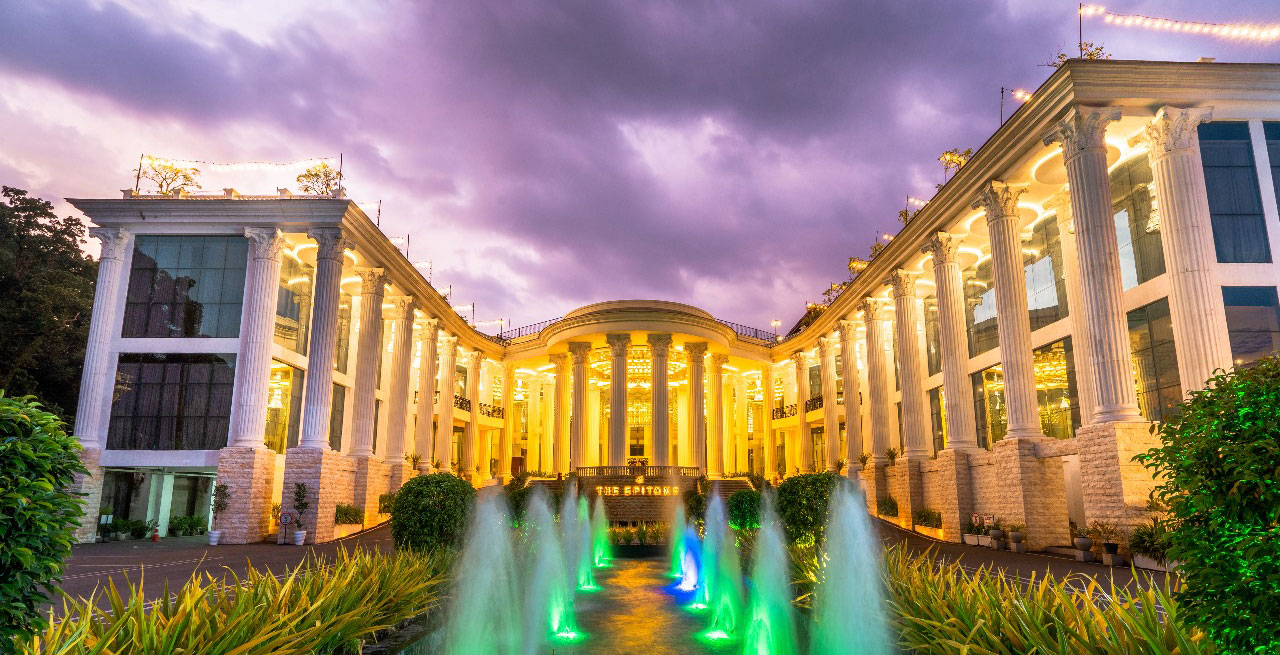
Envison your dream wedding day come to life at the Epitome Hotel, a prestigious city hotel in Kurunegala offering an unrivalled luxury rendors experience for weddings.
The venue is designed to embody opulence and luxury from all quarters for a spectacular wedding in kurunegala,Thier ballroom is the largest banquet facility in Sri Lanka It can be divided into six luxurious pillarless wedding halls on the ground floor and 25pax smaller banquet halls.
It can be easily named as a five star heaven in the heart of the city contributing to a myriad of immense experiences tailored to inspire and delight wedding experiences.
From opulent décor set up to exquisite table decor, lavish food, every detail is meticulously curated to spark your imagination and ignite creativity for a perfect wedding. The previous prestigious wedding shows season one and season two attracted large crowds
were unique events which gave the wedding vendors and potential clients had an opportunity to connect and interact with each other. Beyond being a showcase it was a chance for the wedding vendors to unite and contribute to the vibrancy of the wedding industry. The wedding show covered all area of the bridal industry providing a comprehensive variety of bridal supplies from Sri lanka and became the most popular bridal exhibitions in Kurunegala.This bridal exhibitions allowed brides and grooms to experience first hand the products and services available from suppliers in Sri Lanka
These wedding shows held at The Epitome created a benchmark and gave an opportunity for vendors to create connections to the utmost satisfaction said Harshan Lakshita Executive Director. of the magnificent Hotel
Our wedding shows featured experts and professionals in every field‘ It covered all areas of the bridal industry provided a comprehensive variety of bridal supplies from Sri lanka and became most popular bridal exhibition in this region.We are always open to everyone to join us at our wedding shows in the future. It is an opportunity to discover the incredible talent within our local wedding and bridal vendors to make meaningful relationships and plan thier special day at our breathtaking hotel The Epitome said General Manager Kavinda Caldera
The Epitome Hotel’s bridal show which will be held end of June will buzz with great ideas,advice and inspiration for all those who plan thier dream wedding
…….
The Hotel Epitome’s Wedding Season 3 will marked excellence, celebration and inspiration for those in the wedding industry. The exhibition halls will resonate with ideas on exquisite bridal wear to decor, florists , photography etc and showshowcase the rich tapestry of talent within the local wedding industry. .





US sports envoys to Lanka to champion youth development

Rahuman questions sudden cancellation of leave of CEB employees


