
Life style
Purest food on earth?

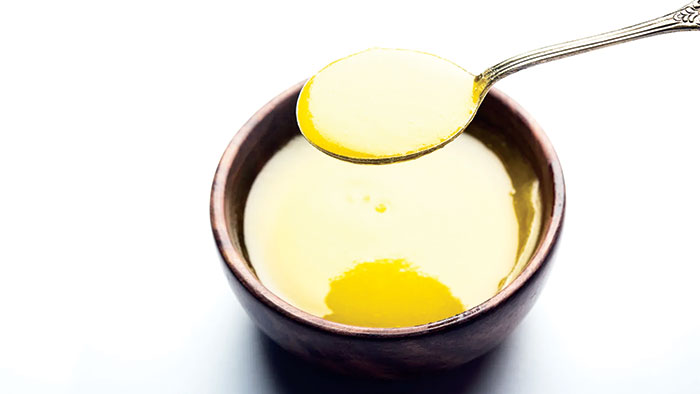
Ghee had fallen out of favour as saturated fats were considered unhealthy. But now, Indians are finding their way back to this ingredient that’s so integral to their cuisine.
Indian food author Kalyan Karmakar is making up for lost time. Today, he enjoys the subtle touch of ghee in many of his favourite Bengali dishes, adding it to steamed rice with fried kaatla fish (Indian carp) for ghee bhaat, and swirling it into phyaana bhaat, a one-pot rice dish cooked with its own starch, mashed potato and a boiled egg. Even his khichuri (also spelled khichdi), a comforting rice and lentil porridge Karmakar associates with rainy days, is incomplete without the ubiquitous fat.
But it wasn’t always like this.
“I belong to the set of people who grew up under the impression that ghee is unhealthy and [I am] now making up for it,” he said, “It’s [essentially] the purest food on Earth.”
For millennia, ghee has been a venerated staple of the subcontinental diet, but it fell out of favour a few decades ago when saturated fats were largely considered to be unhealthy. But more recently, as the thinking around saturated fats is shifting globally, Indians are finding their own way back to this ingredient that’s so integral to their cuisine.
For Karmakar, a renewed interest in ghee is emblematic of a return-to-basics movement in India, which was years in the making but fast-tracked during the pandemic, when “people started being more mindful about their food”, he explained. This movement is also part of an overall trend towards “slow food”. In keeping with the movement’s philosophy, ghee can be produced locally (even at home) and has inextricable cultural ties.
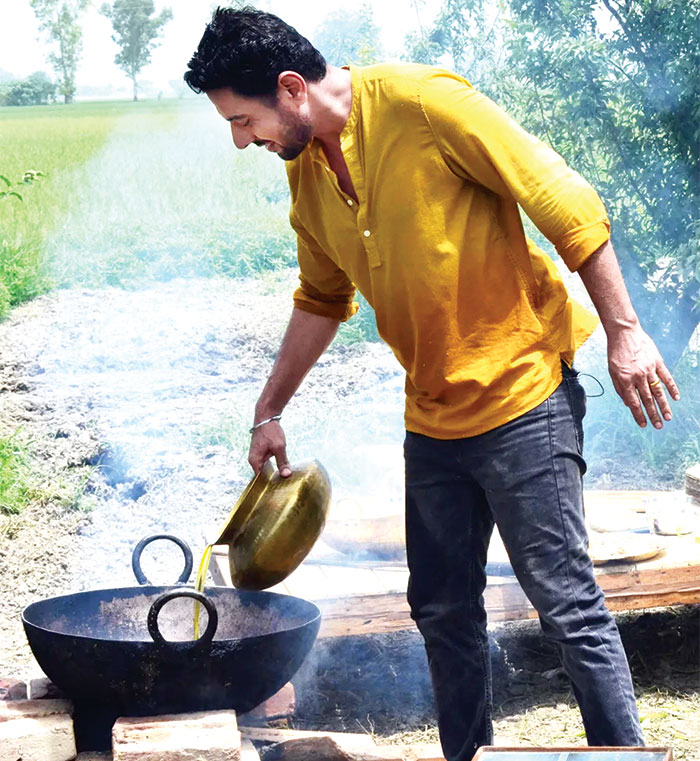
Making ghee is a labour of love for Nitin Ahir, co-founder of GirOrganic, a dairy farm and ghee producer in the city of Surat in the west Indian state of Gujarat. Instead of using imported cow breeds like Jersey, Holstein and Friesian like mass producers do, he gets his milk from his herd of Gir cows, an Indian-born breed native to the Gir hills and forests of the Kathiawar Peninsula. He allows his cows to graze openly on grass and makes sure that calves have their rightful first share of their mothers’ milk before milking.
His A2 ghee, a type of ghee that is considered nutritionally superior, is made via the “bilona method” in which a small motor-operated machine moves clockwise and anti-clockwise mimicking the traditional motion of a handheld wooden churner, a process that he admits “isn’t the most cost-effective and resists large scale production”. Nevertheless, he estimates he’s witnessed a 25-30% increase in demand for his ghee since the pandemic began.
At a basic level, ghee is a type of clarified butter believed to have originated in India as a way to preserve butter from going rancid in the hot climate. Churned cream or butter is simmered slowly until the moisture evaporates and any browned milk solids are removed, resulting in a sumptuously rich, fragrant and nutty fat.For many Indians, however, ghee is historically something more sacred than just a cooking fat.
“Ghee is the final and purest form of milk – the last extract,” said author and food historian Pritha Sen. “It was considered the purest offering to the gods and the medium by which prayers were carried to the heavens.”
Its history dates back millennia. “Paeans to ghee are found in the Rig Veda, a collection of ancient hymns and prayers dating back nearly 4,000 years,” explained Colleen Taylor Sen, a Chicago-based food historian and author of Feasts and Fasts: A History of Food in India. “According to legend, Prajapati, lord of the creatures, rubbed his hands together to create the first ghee, which he poured into flames to create his children.”
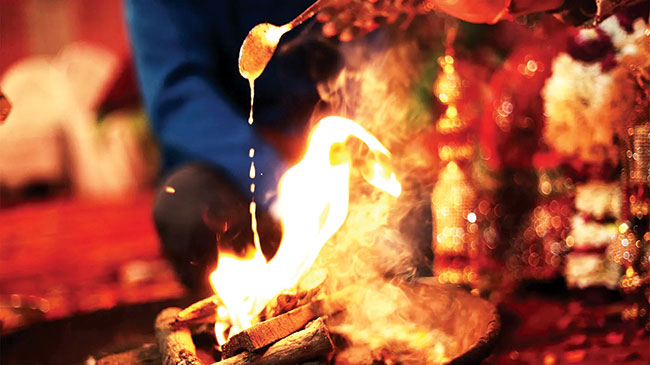
Ghee is also deeply woven into the fabric of Indian culture. Traditionally, Hindus pour ghee into fire at marriages, funerals and other ceremonies as it is believed to be auspicious. In Ayurveda, a traditional Indian system of medicine, Ghee is considered a virtual panacea. And its wholesome qualities have been embraced by generations of mothers and grandmothers.
For US-based food author Sandeepa Mukherjee Datta, who runs Bong Mom’s Cookbook, choosing ghee when it was time to introduce fat and oil to her babies was a no-brainer. “[It’s] good fat, to give the young bones and brain nourishment and vitamins,” she said.
Her mother took things a step further, insisting on nothing but homemade ghee. “She would make small jars of ghee and send it for her granddaughters with anyone who was flying across the Atlantic,” said Datta. “That ghee was pure and tasted like a gift from heaven.”
“That ghee was pure and tasted like a gift from heaven.”
“Ghee is not only a medium to cook and fry food,” said Datta. “Before the advent of fancy cereals and oats, every Bengali child was unified by the same breakfast dish on school mornings.” The dish, ghee-alu sheddho-bhaat (ghee-mashed potatoes-rice), she explained, is almost Bengal’s unofficial state food. “In those days, before carbs and fat got a bad rap, mothers felt this dish was the right balance to fortify their children throughout the day.”
That “bad rap” – due to claims that saturated fats are bad for heart health – affected ghee, which has up to 50-70% saturated fat. For a few decades, consuming ghee fell out of favour in India. In the 1980s, vegetable oils were heavily promoted by the industry, and as vegetable oil consumption went up, ghee consumption went down. “The advertising would really shake you up,” he said. “The urban and Western exposed population began looking down on traditional oils and using the vegetable oil.”
With time, the neutral flavour of refined vegetable oil became the norm – and ghee the exception.
“The whole fat conversation from the 1980s onwards was out to make saturated fats [the villain] – fortunately, we understand the fat and cholesterol space better now,” said celebrity chef Ranveer Brar, an author, restaurateur and MasterChef India judge.
While experts still advise against a high-fat diet, some have begun to mellow their stance on the overall risks of saturated fat. And thanks partly to the high fat keto diet craze, ghee’s popularity has soared in countries like the US.
However, the West’s newfound interest in ghee may be somewhat misguided. For one thing, much is made of ghee’s high smoke point, which passionate advocates extoll for its ability to withstand higher temperatures than butter. But according to Brar, the objective of cooking with ghee “isn’t to get to smoking temperature in the first place; [it’s] just to a point of extracting the flavours.”
Furthermore, in India, ghee is not consumed in copious amounts for a quick-fix or to help stick to lower carb macros (due to the fat’s satiating effect). Instead, the traditional approach to ghee is one of moderation, harmony and grace. Here, the pale yellow, crumbly fat isn’t just blitzed into coffee; it stars as a final touch to dishes, moving slowly as small dollops of it are transformed by heat into a molten gold liquid, settling into every mouthful.
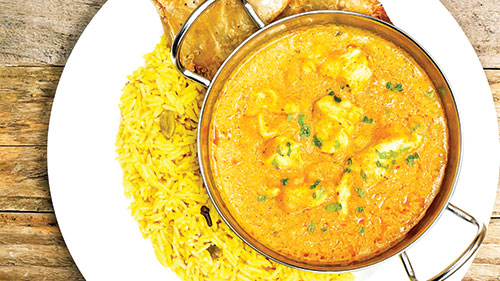
So how is ghee best used? Brar recommends using ghee with lentils or in dishes with pronounced lactic notes, such as yoghourt-based curries, like korma. “Start with a light smear on your soups in winter, on your pita or flatbread. [Then] you can use it for marinating and tempering. [Eventually], it becomes an essential part of the [overall] bouquet that you inhale,” Brar said.
Chef Manish Mehrotra, culinary director of Indian Accent restaurants and part of the Old World Hospitality group for the past 22 years, said it was important to him when setting a menu to include recipes paying homage to the unique flavour of ghee. He is confident the world is coming to understand his country’s cuisine and recognise its “authentic” tastes. One of Mehrotra’s signature dishes is ghee roast mutton boti (savoury chunks of flavourful meat), “The ghee imparts this smoky-sweet flavour. It’s one of our best-sellers,” he said.
Chef Nikita Rao of Mumbai’s Ekaa restaurant believes in celebrating the distinctive nature of each ingredient. “It’s ingredient-driven fine-dining,” she said. With such concerted focus on the food itself, she explained how the ethos behind using ghee in a recipe is allowing it to assimilate and let other components sing. Her Morning Glory salad with tamarind dressing, for instance, is topped with homemade creme fraiche and a tempering of ghee, curry leaves and fiery resham patti chillies. “The tempering is less than 10% of the entire salad, but people absolutely love it, and buffalo ghee complements the entire dish.”
Ultimately, understanding ghee means understanding a collective Indian identity, an approach to food that is cohesive, holistic and balanced – and one where ghee isn’t a piecemeal part or overpowering presence. And when ghee is understood for its true essence, good things are sure to follow.
Brar always has ghee within arm’s distance of his stovetop. As he said, “I’ve grown up with my grandma’s chunni [scarf or stole] and the whole house smelling of ghee. When I reach for ghee, I’m searching for more than just a fat. I’m reaching out for my childhood.” – BBC



Institute of Hospitality Sri Lanka
 The 32nd Annual General Meeting (AGM) of the UK-based Institute of Hospitality’s Sri Lanka Chapter was held recently at the Ramada Hotel Colombo,.The event provided an evening of camaraderie , reflection of the past and present achievements,setting new benchmarks for the future
The AGM had the presence of two distinguished guests, the Chief Guest Opposition Leader Sajith Premadasa, and the Guest of Honour British High Commissioner to Sri Lanka, Andrew Patrick. Their inspiring speeches were lauded by all hoteliers who were present at the occasion
A special thanks was extended to Robert Richardson, CEO of the Institute of Hospitality UK, along with his team, sponsors, committee members, and all attendees for making the event memorable.
Dr. Harsha Jayasingh, Past President of the Institute of Hospitality (UK) Sri Lanka Chapter, emphasised the Institute’s longstanding history and the strength of its Sri Lankan branch. “The Institute of Hospitality (IH) UK has a history of 86 years, and we are proud to be the Sri Lanka Branch. IH Sri Lanka is much stronger now with many members from all areas of the hospitality industry,” he stated.
Dr. Jayasingh highlighted the significant role of tourism in Sri Lanka’s economy,. He said tourism it is the third-largest source of revenue for the country. “Tourism accounts for about 13.3% of total foreign exchange earnings and employs 450,000 people directly and indirectly. The hospitality industry in this island of pearl holds tremendous potential for economic growth, job creations, and cultural exchange,” he added.
He also pointed out more women should be attracted to the industry and advocated for the use of technology in hospitality sector to attract the younger generation.
The newly appointed Chairman Ramesh Dassanayake spoke about the challenges faced by the industry, including the reluctance of youth to join the sector. . Dassanayake expressed concerns over the migration of staff between hotels and the overall ‘brain drain’ in the sector. ” We must maintain high standards in the hotel We must try to attract tourists to Sri Lanka, we must have with many facilities Hence, hotel schools and other professional institutions involved in skills development mustincrease their intakes,” he pointed out.
Chief Guest Sajith Premadasa emphasised the importance of eco tourism and said “We need to have an environmental policy related to tourism in place,” . .
The 32nd AGM of the Institute of Hospitality UK, Sri Lanka Chapter, was a testament to the strength and potential of Sri Lanka’s hospitality industry. The insights and commitments shared during the event set a new benchmark for the future.(ZC)


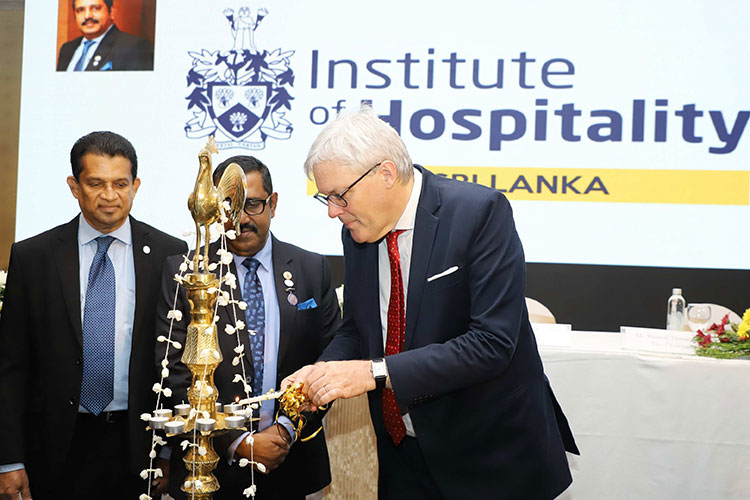
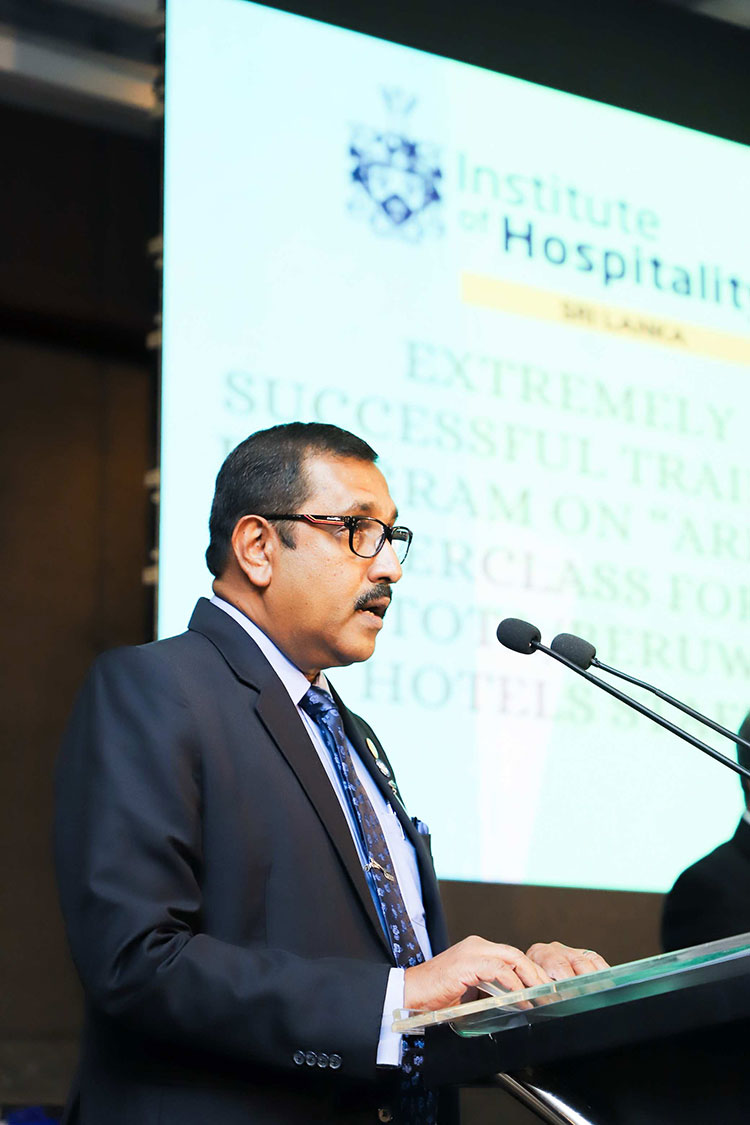

Pix by Thushara Attapathu
Life style
He recognizes human identity beyond boundaries of gender, race, nationality and religion.
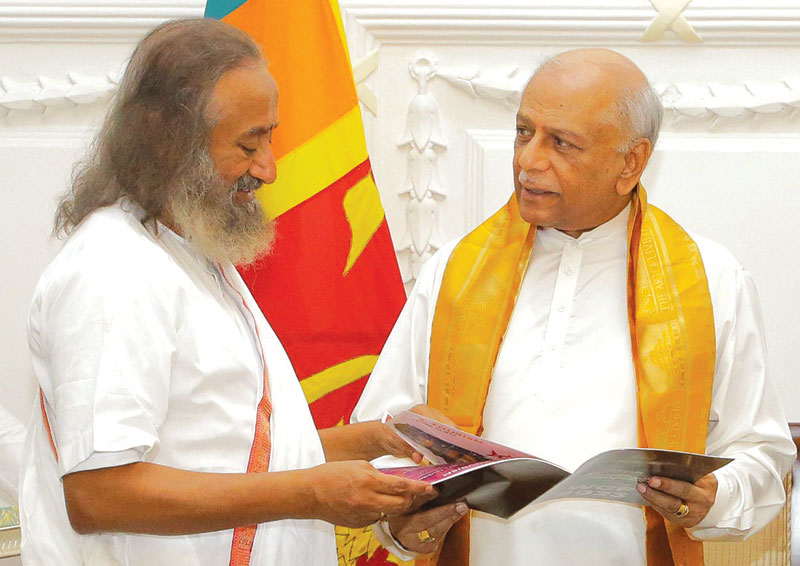
Visit of Sri Gurudev to Sri Lanka
Humanitarian, spiritual leader and Global Ambassador of Peace Gurudev Sri Sri Ravi Shankar (Sri Gurudev) was in Sri Lanka on a three day tour on the invitation of the Prime Minister of Sri Lanka Dinesh Gunewardene. Gurudev who inspired a wave of volunteerism and service to moot one of the largest volunteer-based organisations in the world – The Art of Living – visited the various projects under the aegis of the foundation and launched twelve vocational and technical centers around the island. He was accompanied by thousands of followers from Sri Lanka and around the world.
Gurudev who visited Sri Lanka for the sixth time also had a first day cover launched in honour of his visit. He is a strong proponent of spreading happiness, using the unique Sudarshan Kriya, yoga, meditation and practical wisdom to unite people, empower individuals and transform communities. His programmes provide techniques and tools to live a deeper, more joyous life, while his non-profit organisations recognize the human identity beyond the boundaries of gender, race, nationality and religion.
The Art of Living which has more than 30,000 teachers and over one million volunteers across 180 countries has touched in excess of five hundred million people around the world. CNN called it “Life Changing” and The Washington Post headlined it, “Fresh air to millions”.
In Trincomalee, Gurudev met with war victims and had a heartwarming engagement with the children from the children’s homes run by the Foundation. He also visited the Koneswara Temple in Trincomalee and graced the Kumbhabhishekam at Seetha ecogPnize the human identity beyond the boundaries of gender, race, nationality and religion. Amman temple at Nuwara Eliya. He held discussions with the trustees on the progress of the foundation’s social service projects, while also holding a special event – Ekamuthuwa – attended by a large number of dignitaries and his devotees from around the world.
His time with the Prime Minister was spent discussing the prospects of unity in diversity and uniting Sri Lanka by adding happiness into the formula of living. In addition he had discussions with the Speaker of the Parliament of Sri Lanka Mahinda Yapa Abeywardena, prominent business stewards and civil society leaders.
by Zanita Careem
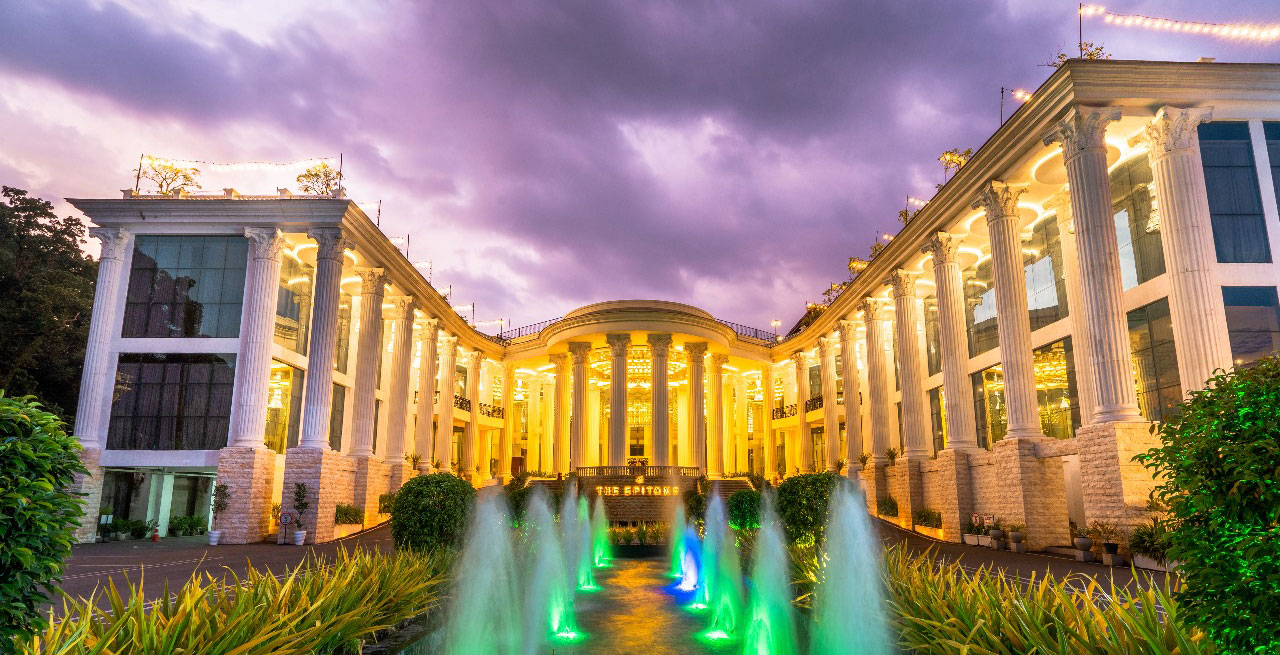
Envison your dream wedding day come to life at the Epitome Hotel, a prestigious city hotel in Kurunegala offering an unrivalled luxury rendors experience for weddings.
The venue is designed to embody opulence and luxury from all quarters for a spectacular wedding in kurunegala,Thier ballroom is the largest banquet facility in Sri Lanka It can be divided into six luxurious pillarless wedding halls on the ground floor and 25pax smaller banquet halls.
It can be easily named as a five star heaven in the heart of the city contributing to a myriad of immense experiences tailored to inspire and delight wedding experiences.
From opulent décor set up to exquisite table decor, lavish food, every detail is meticulously curated to spark your imagination and ignite creativity for a perfect wedding. The previous prestigious wedding shows season one and season two attracted large crowds
were unique events which gave the wedding vendors and potential clients had an opportunity to connect and interact with each other. Beyond being a showcase it was a chance for the wedding vendors to unite and contribute to the vibrancy of the wedding industry. The wedding show covered all area of the bridal industry providing a comprehensive variety of bridal supplies from Sri lanka and became the most popular bridal exhibitions in Kurunegala.This bridal exhibitions allowed brides and grooms to experience first hand the products and services available from suppliers in Sri Lanka
These wedding shows held at The Epitome created a benchmark and gave an opportunity for vendors to create connections to the utmost satisfaction said Harshan Lakshita Executive Director. of the magnificent Hotel
Our wedding shows featured experts and professionals in every field‘ It covered all areas of the bridal industry provided a comprehensive variety of bridal supplies from Sri lanka and became most popular bridal exhibition in this region.We are always open to everyone to join us at our wedding shows in the future. It is an opportunity to discover the incredible talent within our local wedding and bridal vendors to make meaningful relationships and plan thier special day at our breathtaking hotel The Epitome said General Manager Kavinda Caldera
The Epitome Hotel’s bridal show which will be held end of June will buzz with great ideas,advice and inspiration for all those who plan thier dream wedding
…….
The Hotel Epitome’s Wedding Season 3 will marked excellence, celebration and inspiration for those in the wedding industry. The exhibition halls will resonate with ideas on exquisite bridal wear to decor, florists , photography etc and showshowcase the rich tapestry of talent within the local wedding industry. .







US sports envoys to Lanka to champion youth development

Rahuman questions sudden cancellation of leave of CEB employees


