
News
PTA won’t be repealed -GL tells civil society

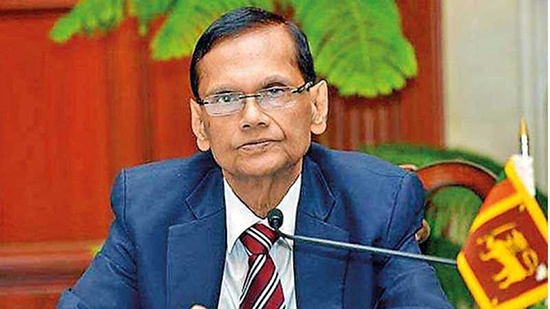
The Ministerial Subcommittee on amending the Prevention of Terrorism Act recently met members of the Sri Lankan Collective for Consensus (SLCC) to discuss the current state of their proposals. SLCC consists of individuals drawn from civil society organisations that have reconciliation, human rights and peace building aims as their objectives.
Chairman of the Subcommittee, Foreign Minister Prof G.L. Peiris said there was no draft legislation as yet to share but only a set of proposals which they wished to discuss with civil society and other groups. He stated that there would be no repeal of PTA as there was a continuing need for it due to security issues. He explained there was a need for balance between personal liberty and freedom and the need for national security.
The noteworthy amendments described in the verbal presentation made by Prof Peiris consisted of the following:
1. Detention orders: The period of validity of a detention order would be reduced from 18 months to 12 months
2. Restricted use of PTA: The IGP has issued clear instructions to police officers not to have recourse to the PTA as a regular mode of arrest or as a short cut. The norm should be to investigate with the use of the normal law. They should only use PTA in exceptional circumstances when adequate evidence is found in investigation and if national security issues arise in the process of investigations
3. Supervision by magistrates: It will be mandatory for magistrates to visit the place of detention and to personally ensure the welfare of detained persons. The Human Rights Commission should/ will be informed of such detention. Magistrates will be empowered to direct the IGP to investigate if any evidence of torture is found. In such a situation the Attorney General will institute criminal proceedings
4. Judicial oversight: The person detained will have access to judicial appeal through Article 126 of the constitution (Fundamental Rights jurisdiction of Supreme Court) and Article 140 (Writ jurisdiction of Appeal Court). This will be spelled out in the law so that there is no ambiguity. This will be the first time in the four decade long history of PTA that detention orders can be legally challenged
5. Access to lawyer: The person detained will have the right to access a lawyer and to visits by family members. This will be a statutory right so that there is no discretion in the matter
6. Repeal of Section 14 of PTA: This prohibits publication of any statement made by the detainee or with regard to the investigation
7. Speedy trial: Trials of PTA cases will take place on a daily basis until completed to avoid delays. The Chief Justice has already directed that PTA cases should be expedited
8. Advisory Board: This has been set up under Section 13 of the PTA. Chaired by retired Chief Justice Asoka de Silva it has already recommended the release of 26, 8 and 6 prisoners on three occasions. The Advisory Board is expected to make recommendations and advise the President on the investigation, release, granting of bail and future action related to the persons imprisoned over terrorist activities and detained under detention orders
Prof Peiris explained that the changes to PTA proposed were a result of consensus between the Ministries of Foreign Affairs, Justice and Defence and the Attorney General’s Department; these changes are not conceived as one-off ones, but as a part of a continuum, there being other changes contemplated that will be agreed on later. He also assured that changes in legislation will be rapid, and take place early next year.
No written documents were provided to the SLCC either before or during the meeting. However, SLCC presented a position paper of its own to the ministerial subcommittee which provides the principles underlying and restraining the PTA which they wished to have incorporated into the amended PTA (see attached).
SLCC highlighted the following areas of concern:
1. Arbitrary arrests need to be ended. An example was given from Batticaloa where 10 civilians including a mother of two had been taken under PTA for commemoration of their dead relatives.
2. The period prior to indictment should be considered under the normal law, and hence the judicial officers had power to bail out detainees, as decided in the Pathmanathan case by the Supreme Court and magistrates to be apprised accordingly
3. When detainees are sent to other districts on remand there is lack of communication and cross checking which can be rectified by video links for communication.
4. All actions with regard to detention need to be judicial rather than executive or administrative
“We were mindful that as we were being briefed by the Ministerial subcommittee on November 27, family members and others who sought to commemorate Martyrs Day of fallen LTTE cadres were being forcibly prevented by the security forces and arrests and assaults took place. SLCC therefore stresses the importance of national reconciliation taking place in a larger environment that is respectful of human rights. SLCC expressed appreciation of the subcommittee’s initiative to engage with a group of CSOs at this briefing session. We said we looked forward to further discussions once the government legislation had emerged in a draft form. We also requested the subcommittee to engage with other CSOs which had evinced much keenness to do so. Chairman of the subcommittee Prof G.L. Peiris invited interested CSOs to make written submissions without delay to the subcommittee for consideration,” SLCC said.



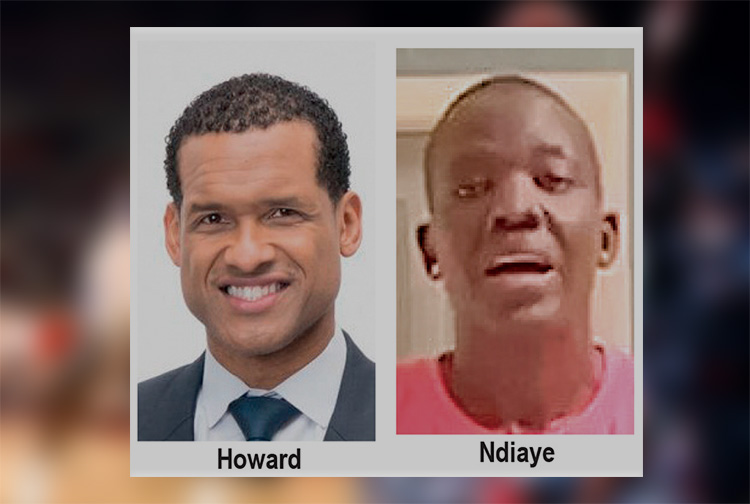
The U.S. Embassy in Colombo welcomed the U.S. Sports Envoys to Sri Lanka, former National Basketball Association (NBA) and Women’s National Basketball Association (WNBA) players Stephen Howard and Astou Ndiaye, from June 8 through 14.
The Public Diplomacy section of the U.S. Embassy said that it would launch a weeklong basketball program intended to harness the unifying power of sports, made possible through collaboration with Foundation of Goodness and IImpact Hoop Lab.
While in Sri Lanka, Howard and Ndiaye, both retired professional basketball players, will conduct a weeklong program, Hoops for Hope: Bridging Borders through Basketball. The Sports Envoys will lead basketball clinics and exhibition matches and engage in leadership sessions in Colombo and Southern Province for youth aged 14-18 from Northern, Uva, Eastern and Western Provinces, offering skills and leadership training both on and off the court. The U.S. Envoys will also share their expertise with the Sri Lanka Basketball Federation, national coaches, and players, furthering the development of basketball in the country. Beyond the clinics, they will collaborate with Sri Lankan schoolchildren to take part in a community service project in the Colombo area.
“We are so proud to welcome Stephen and Astou as our Sports Envoys to Sri Lanka, to build on the strong people-to-people connections between the United States and Sri Lanka,” said U.S. Ambassador Julie Chung. “The lessons that will be shared by our Sports Envoys – communication, teamwork, resilience, inclusion, and conflict resolution – are essential for leadership development, community building, equality, and peace. The U.S. Sports Envoy program is a testament to our belief that sports can be a powerful tool in promoting peace and unity.”
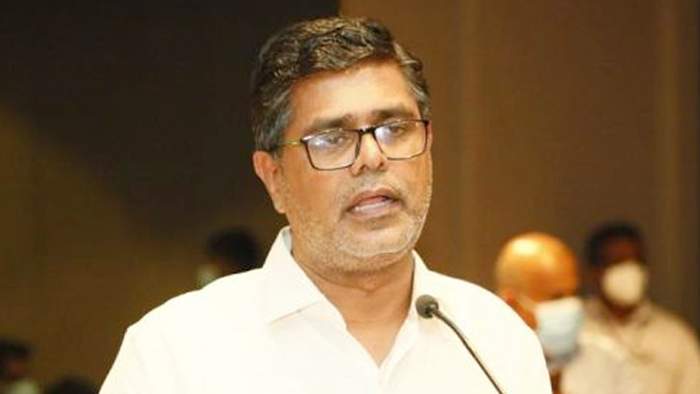
SJB Colombo District MP Mujibur Rahuman in parliament demanded to know from the government the reasons for CEB suspending the leave of all its employees until further notice from Thursday.
MP Rahuman said that the CEB has got an acting General Manager anew and the latter yesterday morning issued a circular suspending leave of all CEB employees with immediate effect until further notice.
“We demand that Minister Kanchana Wijesekera should explain this to the House. This circular was issued while this debate on the new Electricity Amendment Bill was pending. There are many who oppose this Bill. The Minister must tell parliament the reason for the urge to cancel the leave of CEB employees,” the MP said.However, Speaker Mahinda Yapa Abeywardena prevented Minister Wijesekera responding to the query and said that the matter raised by MP Rahuman was not relevant.
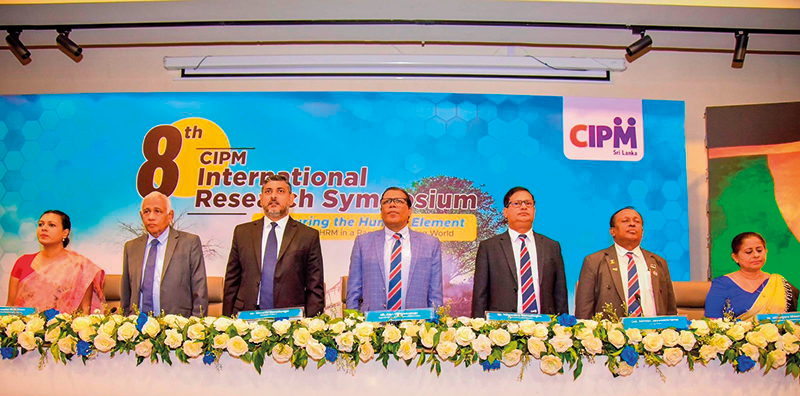
The Chartered Institute of Personnel Management (CIPM) successfully concluded the 8th Annual CIPM Symposium, which took place on 31st May 2024. Themed “Nurturing the Human Element—Redefining HRM in a Rapidly Changing World,” the symposium underscored the pivotal role of human resource management (HRM) in today’s dynamic global landscape. Since its inception in 1959, CIPM has been dedicated to advancing the HR profession through education, professional development, and advocacy, solidifying its position as Sri Lanka’s leading professional body for HRM.
Ken Vijayakumar, the President of the CIPM, graced the occasion as the chief guest. The symposium commenced with the welcome address by the Chairperson, Prof. Arosha Adikaram, followed by the Web Launch of the Symposium Proceedings and Abstract Book by the CIPM President. The event featured distinguished addresses, including a speech by Chief Guest Ken Vijayakumar, President of CIPM, and an address by Guest of Honor Shakthi Ranatunga, Chief Operating Officer of MAS Holdings Pvt. Ltd., Sri Lanka.
The symposium also featured an inspiring keynote address by Prof. Mario Fernando, Professor of Management and Director of the Centre for Cross Cultural Management (CCCM) at the University of Wollongong, Australia.
Vote of Thanks of the inauguration session was delivered by Dr. Dillanjani Weeratunga, Symposium Co-chair.
The symposium served as a comprehensive platform for researchers to present their findings across a wide range of critical topics in HRM. These included Cultural Diversity and Inclusion, Talent Development and Retention, Ethical Leadership and Corporate Social Responsibility, Adapting to Technological Advancements, Mental Health and Well-being at Work, Global Workforce Challenges, Employee Empowerment, and Reskilling and Upskilling.
The plenary session was led by Prof. Wasantha Rajapakse. Certificates were awarded to the best paper presenters during the valedictory session, followed by a vote of thanks delivered by Kamani Perera, Manager of Research and Development.
The annual symposium of CIPM was a truly inclusive event, attracting a diverse audience that spanned undergraduates, graduates, working professionals, research scholars and lecturers. This widespread interest highlights the symposium’s significance in the field of HRM, offering a unique opportunity for everyone to network and learn from scholarly brains.The CIPM International Research Symposium was sponsored by Hambantota International Port, Sri Lanka Institute of Information Technology (SLIIT), E B Creasy & Co. PLC, and Print Xcel Company.



US sports envoys to Lanka to champion youth development

Rahuman questions sudden cancellation of leave of CEB employees


