
News
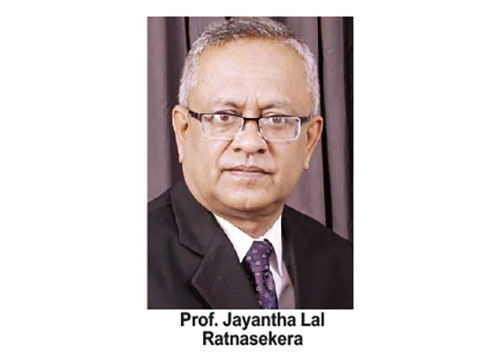
Prof. Ratnasekera: 33% increase in annual intake a daunting challenge

World Bank assistance sought to sustain significant University expansion
By Shamindra Ferdinando
Chairman of the Committee of Vice Chancellors and Directors, Prof. Jayantha Lal Ratnasekera says accommodating approximately 43,000 students––a staggering 33 per cent increase in the annual university intake–– would be a daunting task.
Prof. Ratnasekera, who is also the Vice Chancellor of the Uva Wellassa University, discussed ways and means of providing the basic facilities required by new entrants, especially at a time the State University system experienced severe difficulties caused by the continuing Covid-19 epidemic. The academic was appearing on Sirasa ‘Pethikada’ hosted by Asoka Dias recently.
Prof. Ratnasekera said that as they wouldn’t be able to upgrade the required facilities to 100 per cent, the undergraduates would have to bear the difficulties. Prof. Ratnasekera, who had graduated from the People’s Friendship University, Moscow, Russia with an honours degree in Chemistry in 1988 and subsequently obtained his PhD in Chemistry from the same university in 1993, explained efforts made by the authorities to accommodate an additional 11,000 students.
Explaining the difficulty in addressing the inevitable limitations especially at a time the country was struggling to cope up with the devastating pandemic; Prof. Ratnasekera said that the University Grants Commission (UGC) was engaged in discussions with the Treasury to secure the necessary funding. Prof. Ratnasekera said that the Treasury would provide funding though it was unlikely to meet their entire requirement.
Prof. Ratnasekera declared that the latest increase in the number of new entrants was the largest single surge ever in the State University system.
Pointing out that the annual intake had been raised to 43,000 from 32,000; the academic said that Uva Wellassa University recorded almost a 100 per cent increase. Providing required facilities sufficiently would be a huge task, the outspoken don said underscoring the need for adequate library and laboratory facilities in addition to a range of other necessities such as canteen and accommodation.
Responding to another question, Prof. Ratnasekera emphasized the responsibility on their part to provide the basic necessities. The academic explained how as part of their overall response to the significant expansion of the student intake, the UGC was going ahead with plans to increase what he called the teaching cadre by 500. Prof. Ratnasekera said his University would get 43 additional lecturers. The proposed staffing would be in addition to the filling of existing vacancies, he said, explaining the need for substantial external assistance to bring the project meant to accommodate an additional 11,000 undergraduates to a successful conclusion.
Referring to the World Bank funded ongoing Accelerating Higher Education Expansion and Development (AHEAD) project, Prof. Ratnasekera said that the UGC was in discussion with the WB in a bid to secure much needed financial assistance in support of the University expansion. Prof. Ratnasekera was of the opinion that the WB assistance might not be available immediately.
He explained the role played by the Committee of Vice Chancellors and Directors in overall UGC strategy and how it could assist the ongoing University expansion project. Reference was made to the moves to set up three new Universities, in addition to the 16 in operation now as the higher education sector underwent much needed reforms. The increase in the student intake should be examined against the backdrop of other relevant factors , such as the expansion of the University system, Prof. Ratnasekera said.
The senior academic however cautioned against expecting immediate results from investments made in research and related fields.
For want of proper understanding of what was offered by Universities, the undergraduates sometimes missed excellent opportunities to enhance their standing, Prof. Ratnasekera said, urging the student community to be aware of developments. The academic explained some exceptionally useful courses available at his Uva Wellassa University.
Prof. Ratnasekera called for a survey to find out the status of unemployed graduates. Assuring that he had absolutely no intention to undermine external degrees/external degree holders, he emphasized the need to examine the case of unemployed graduates. According to the vast majority of unemployed graduates they were those who obtained external degrees. Therefore a thorough examination of that issue and remedial measures were required.
Prof. Ratnasekera dismissed accusations pertaining to the alleged deterioration of the public sector University system. Contrary to those unsubstantiated allegations, the Universities, in spite of challenges faced were quite satisfied with the current status, the academic said, adding that other countries appreciated the Sri Lankan talent.
At the onset of the interview with Asoka Dias, Prof. Ratnasekera discussed how the Universities struggled to cope up with the Covid-19 rampage. The academic explained the difficulties associated with online classes and some of those chosen for Universities from 2018 Advance Level were yet to see the Universities due to the epidemic. Prof. Ratnasekera acknowledged the extreme difficulty in including the entire 160,000 University community in the ongoing vaccination programme. The Professor appreciated the inclusion of those in medical faculties et al in the vaccination programme.
Prof. Ratnasekera said that the entire University education couldn’t under any circumstances be conducted through online classes. Therefore, the need to resume classes at least on a staggered basis had to be recognised and tangible measures had to be taken in that regard, he said.



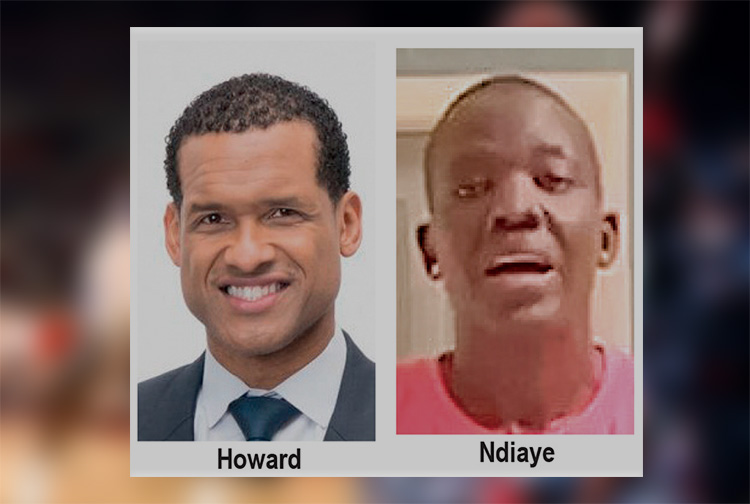
The U.S. Embassy in Colombo welcomed the U.S. Sports Envoys to Sri Lanka, former National Basketball Association (NBA) and Women’s National Basketball Association (WNBA) players Stephen Howard and Astou Ndiaye, from June 8 through 14.
The Public Diplomacy section of the U.S. Embassy said that it would launch a weeklong basketball program intended to harness the unifying power of sports, made possible through collaboration with Foundation of Goodness and IImpact Hoop Lab.
While in Sri Lanka, Howard and Ndiaye, both retired professional basketball players, will conduct a weeklong program, Hoops for Hope: Bridging Borders through Basketball. The Sports Envoys will lead basketball clinics and exhibition matches and engage in leadership sessions in Colombo and Southern Province for youth aged 14-18 from Northern, Uva, Eastern and Western Provinces, offering skills and leadership training both on and off the court. The U.S. Envoys will also share their expertise with the Sri Lanka Basketball Federation, national coaches, and players, furthering the development of basketball in the country. Beyond the clinics, they will collaborate with Sri Lankan schoolchildren to take part in a community service project in the Colombo area.
“We are so proud to welcome Stephen and Astou as our Sports Envoys to Sri Lanka, to build on the strong people-to-people connections between the United States and Sri Lanka,” said U.S. Ambassador Julie Chung. “The lessons that will be shared by our Sports Envoys – communication, teamwork, resilience, inclusion, and conflict resolution – are essential for leadership development, community building, equality, and peace. The U.S. Sports Envoy program is a testament to our belief that sports can be a powerful tool in promoting peace and unity.”
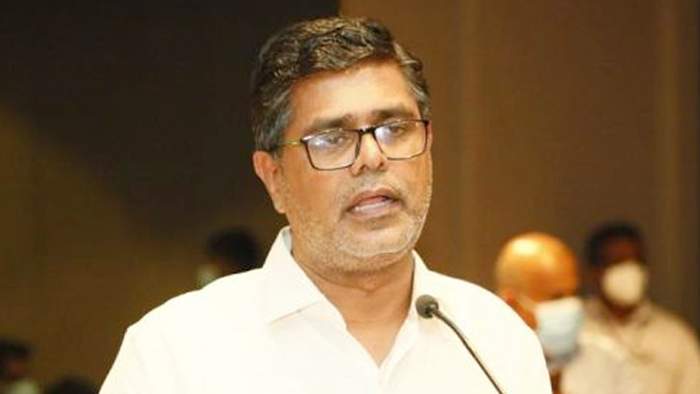
SJB Colombo District MP Mujibur Rahuman in parliament demanded to know from the government the reasons for CEB suspending the leave of all its employees until further notice from Thursday.
MP Rahuman said that the CEB has got an acting General Manager anew and the latter yesterday morning issued a circular suspending leave of all CEB employees with immediate effect until further notice.
“We demand that Minister Kanchana Wijesekera should explain this to the House. This circular was issued while this debate on the new Electricity Amendment Bill was pending. There are many who oppose this Bill. The Minister must tell parliament the reason for the urge to cancel the leave of CEB employees,” the MP said.However, Speaker Mahinda Yapa Abeywardena prevented Minister Wijesekera responding to the query and said that the matter raised by MP Rahuman was not relevant.
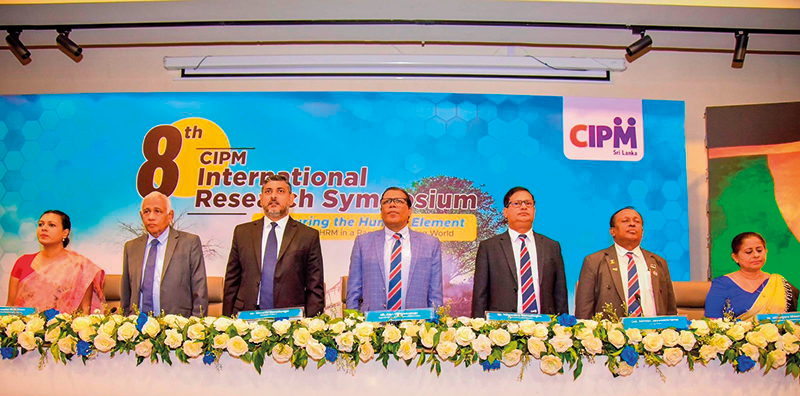
The Chartered Institute of Personnel Management (CIPM) successfully concluded the 8th Annual CIPM Symposium, which took place on 31st May 2024. Themed “Nurturing the Human Element—Redefining HRM in a Rapidly Changing World,” the symposium underscored the pivotal role of human resource management (HRM) in today’s dynamic global landscape. Since its inception in 1959, CIPM has been dedicated to advancing the HR profession through education, professional development, and advocacy, solidifying its position as Sri Lanka’s leading professional body for HRM.
Ken Vijayakumar, the President of the CIPM, graced the occasion as the chief guest. The symposium commenced with the welcome address by the Chairperson, Prof. Arosha Adikaram, followed by the Web Launch of the Symposium Proceedings and Abstract Book by the CIPM President. The event featured distinguished addresses, including a speech by Chief Guest Ken Vijayakumar, President of CIPM, and an address by Guest of Honor Shakthi Ranatunga, Chief Operating Officer of MAS Holdings Pvt. Ltd., Sri Lanka.
The symposium also featured an inspiring keynote address by Prof. Mario Fernando, Professor of Management and Director of the Centre for Cross Cultural Management (CCCM) at the University of Wollongong, Australia.
Vote of Thanks of the inauguration session was delivered by Dr. Dillanjani Weeratunga, Symposium Co-chair.
The symposium served as a comprehensive platform for researchers to present their findings across a wide range of critical topics in HRM. These included Cultural Diversity and Inclusion, Talent Development and Retention, Ethical Leadership and Corporate Social Responsibility, Adapting to Technological Advancements, Mental Health and Well-being at Work, Global Workforce Challenges, Employee Empowerment, and Reskilling and Upskilling.
The plenary session was led by Prof. Wasantha Rajapakse. Certificates were awarded to the best paper presenters during the valedictory session, followed by a vote of thanks delivered by Kamani Perera, Manager of Research and Development.
The annual symposium of CIPM was a truly inclusive event, attracting a diverse audience that spanned undergraduates, graduates, working professionals, research scholars and lecturers. This widespread interest highlights the symposium’s significance in the field of HRM, offering a unique opportunity for everyone to network and learn from scholarly brains.The CIPM International Research Symposium was sponsored by Hambantota International Port, Sri Lanka Institute of Information Technology (SLIIT), E B Creasy & Co. PLC, and Print Xcel Company.



US sports envoys to Lanka to champion youth development

Rahuman questions sudden cancellation of leave of CEB employees


