
News
Prez says he told AG perpetrators of Easter carnage and bond scams must be brought to justice

‘No escape for wrongdoers’
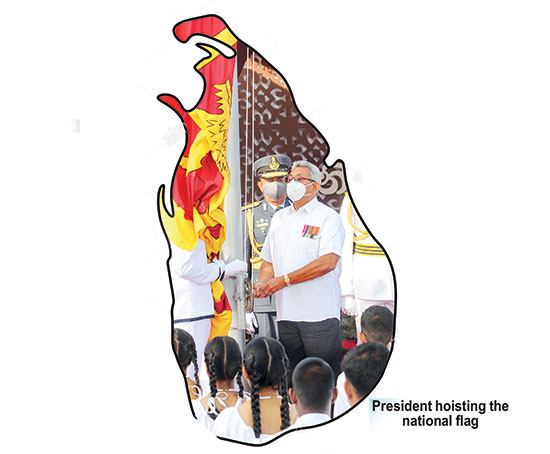
Steps had been taken to implement the recommendations of the Presidential Commission of Inquiry (PCoI) on the Easter Sunday attacks, President Gotabaya Rajapaksa said, yesterday, addressing the nation on the Independence Day.
Rajapaksa said that he would also take into consideration the recommendations of the previous Parliament’s Sectoral Oversight Committee on National Security, and action would be taken against all parties involved in the carnage.
“We will not allow those responsible for designing and enabling this tragedy to escape justice. We will never allow extremism to raise its head again in this country,” the President said.
President Rajapaksa also said that he had advised the Attorney General to take necessary action on the Treasury bond scams.
The President said that he had established a Presidential Deregulation Commission to change the outdated laws and regulations that negatively affected the general public as well as the domestic and foreign companies.
 For a long time the importance of simplifying outdated laws and regulations had been discussed but nothing to address it. Implementing the recommendations of this Commission would provide significant impetus to the country’s future economic development, he said.
“Vistas of Prosperity and Splendour” policy statement articulated the need for educational reforms to foster a knowledgeable and skilled future generation. Accordingly, a separate State Ministry had been created to undertake the reforms needed in the education sector.
Two task forces had been created to obtain specialist assistance for these reforms, and their recommendations were already being implemented, said President Rajapaksa.
“During the course of this year, the number of students gaining admission to universities will increase by 10,000, or 30 percent. Provisions have been made to double the number of students entering the state Technical Colleges from 100,000 to 200,000. Approval has been granted for the creation of a system of city universities catering to every district in order to increase the capacity of universities. We are acting quickly to implement recommendations for educational reforms. As a result, we anticipate that there will be an appreciable qualitative improvement in the education sector within the next few years,” he said.
President Rajapaksa said that he established a dedicated Ministry of Technology and brought it under his purview. Through that Ministry, steps would be taken to develop the policies and legal framework required to improve the technology sector, as well as to simplify the functioning of the state sector and markets through the use of information technology as a tool for broader digital governance. Action had already been taken to create five technology parks with all facilities in five identified districts in order to encourage entrepreneurs and start-ups in the technology sector.
 Rajapaksa said that a number of groups supported him when he ran for presidency and that he believed that a vast majority of those people did so not in search of personal benefits but because they expected him to serve the nation diligently.
“I am always prepared to fulfill the genuine expectations of the public that supported me with honest intent. However, I will never take decisions that will damage the country and to please those who seek gains for themselves personally or for their businesses”, the President said.
Given below are excerpts of the speech:
I have always loved and respected the environment. In the past, whilst serving as the Secretary to the Ministry of Urban Development, I strove to protect the environment when undertaking such activities as urban beautification, urban development, and the creation of walking paths and urban parks. Today, too, our Government has paid particular attention to preserving the environment for future generations. What the creation of urban forests, designing of green cities, promotion of green businesses, undertaking of nationwide tree planting programmes, reconstruction of irrigation tanks and canals, recultivating of fallow paddy fields, promoting the use of organic fertilizer, and limiting the use of plastics demonstrate is the implementation of this sustainable environmental management policy.
The foundation of our citizen centric economic policy is that the true potential of the economy cannot be unleashed without economic freedom. To achieve the Government’s aims of eliminating poverty, providing equal opportunity for improvement of all citizens, and developing domestic businesses, we require a clean and efficient public service.
The public service is a powerful, nationwide mechanism. This represents an opportunity that many countries in the world do not possess. Therefore, I expect this powerful mechanism to make a significant contribution to the national decision making process. However, I observe that weaknesses currently prevail in decision making at every level. Even on very simple institutional matters, I have observed that officials avoid making decisions and refer them to the Cabinet of Ministers. They expect advice from circulars for every activity. They avoid taking decisions even within the limits of their authority. If we do not change this situation, it will be extremely difficult for us to take this nation forward.
The legal reforms necessary to protect those in the public service who take correct decisions are currently being formulated. I therefore request all those in positions of authority to ease the limitations and practices that obstruct the general public through the state administration.
 I personally participate in the ‘Conversation with the Village’ programme because rural development is one of my Government’s priorities. The public administration system at both the District and Divisional level is extremely important to achieving the citizen centric economic development articulated in my vision statement “Vistas of Prosperity and Splendour”. There is a clear responsibility incumbent on everyone involved in this development process, from the Governors, District Secretaries, Divisional Secretaries and Public Health Officials, to officials such as Grama Niladharis, Samurdhi Officials, Agriculture Research and Production Assistants, Family Health Service Officials and Development Officials at the village level. They have all provided tremendous support in controlling the spread of the COVID-19 virus and in providing other essential services. Similarly, I look forward to the unstinted support of all public servants in successfully overcoming the challenges that confront us in terms of our economic development.
The political leadership has a grave responsibility not only on matters at the national level but also in rural development. We have instituted mechanisms to ensure the active participation of Cabinet and State Ministers, Members of Parliament, and Members of Urban and Municipal Councils in the development activities at District and Divisional levels.
Corruption and waste are significant obstacles to a nation’s development. We are setting an example to eradicate corruption and waste in the public administration. We will not be lenient on anyone who is found guilty of corruption or waste. However, one of the difficulties we face in preventing corruption is the indirect support given willingly or unwillingly by the public to such activities. I request the general public not to encourage corruption either directly or indirectly. If anyone is found to be engaging in corrupt practices, please inform the relevant authorities.
I invite everyone to join in a national effort to mobilize public opinion against corruption and waste. Our future generations too must be educated in this regard. I appreciate the support that is being extended by the media for this initiative.”








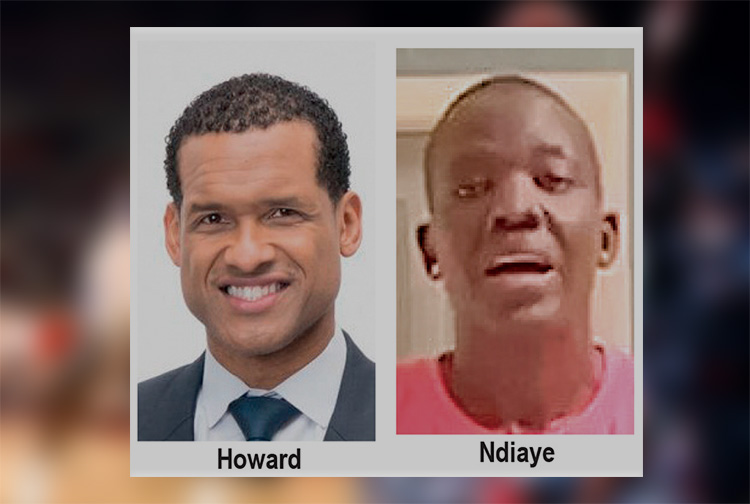
The U.S. Embassy in Colombo welcomed the U.S. Sports Envoys to Sri Lanka, former National Basketball Association (NBA) and Women’s National Basketball Association (WNBA) players Stephen Howard and Astou Ndiaye, from June 8 through 14.
The Public Diplomacy section of the U.S. Embassy said that it would launch a weeklong basketball program intended to harness the unifying power of sports, made possible through collaboration with Foundation of Goodness and IImpact Hoop Lab.
While in Sri Lanka, Howard and Ndiaye, both retired professional basketball players, will conduct a weeklong program, Hoops for Hope: Bridging Borders through Basketball. The Sports Envoys will lead basketball clinics and exhibition matches and engage in leadership sessions in Colombo and Southern Province for youth aged 14-18 from Northern, Uva, Eastern and Western Provinces, offering skills and leadership training both on and off the court. The U.S. Envoys will also share their expertise with the Sri Lanka Basketball Federation, national coaches, and players, furthering the development of basketball in the country. Beyond the clinics, they will collaborate with Sri Lankan schoolchildren to take part in a community service project in the Colombo area.
“We are so proud to welcome Stephen and Astou as our Sports Envoys to Sri Lanka, to build on the strong people-to-people connections between the United States and Sri Lanka,” said U.S. Ambassador Julie Chung. “The lessons that will be shared by our Sports Envoys – communication, teamwork, resilience, inclusion, and conflict resolution – are essential for leadership development, community building, equality, and peace. The U.S. Sports Envoy program is a testament to our belief that sports can be a powerful tool in promoting peace and unity.”
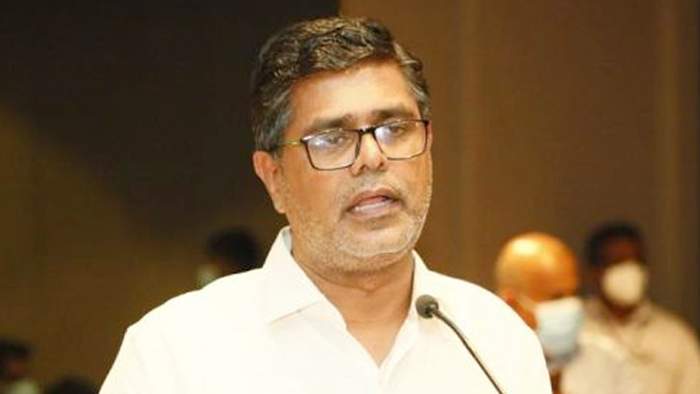
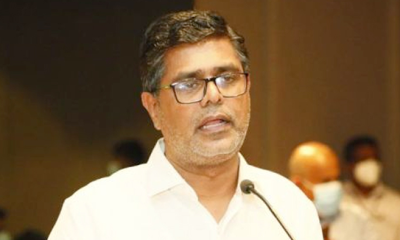
SJB Colombo District MP Mujibur Rahuman in parliament demanded to know from the government the reasons for CEB suspending the leave of all its employees until further notice from Thursday.
MP Rahuman said that the CEB has got an acting General Manager anew and the latter yesterday morning issued a circular suspending leave of all CEB employees with immediate effect until further notice.
“We demand that Minister Kanchana Wijesekera should explain this to the House. This circular was issued while this debate on the new Electricity Amendment Bill was pending. There are many who oppose this Bill. The Minister must tell parliament the reason for the urge to cancel the leave of CEB employees,” the MP said.However, Speaker Mahinda Yapa Abeywardena prevented Minister Wijesekera responding to the query and said that the matter raised by MP Rahuman was not relevant.
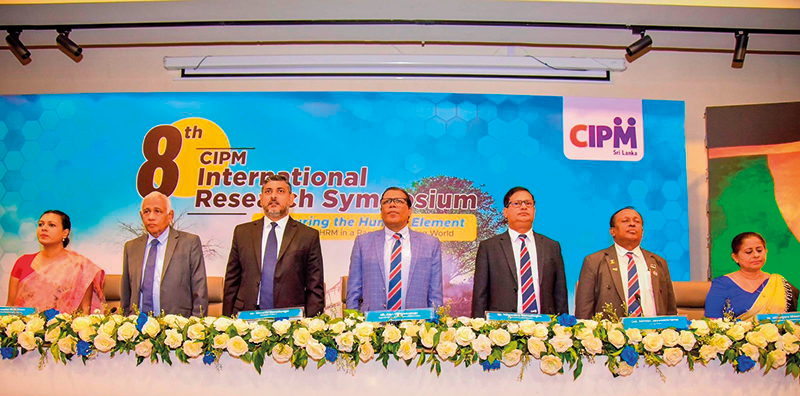
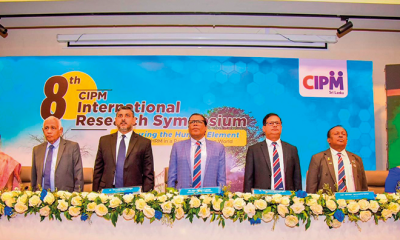
The Chartered Institute of Personnel Management (CIPM) successfully concluded the 8th Annual CIPM Symposium, which took place on 31st May 2024. Themed “Nurturing the Human Element—Redefining HRM in a Rapidly Changing World,” the symposium underscored the pivotal role of human resource management (HRM) in today’s dynamic global landscape. Since its inception in 1959, CIPM has been dedicated to advancing the HR profession through education, professional development, and advocacy, solidifying its position as Sri Lanka’s leading professional body for HRM.
Ken Vijayakumar, the President of the CIPM, graced the occasion as the chief guest. The symposium commenced with the welcome address by the Chairperson, Prof. Arosha Adikaram, followed by the Web Launch of the Symposium Proceedings and Abstract Book by the CIPM President. The event featured distinguished addresses, including a speech by Chief Guest Ken Vijayakumar, President of CIPM, and an address by Guest of Honor Shakthi Ranatunga, Chief Operating Officer of MAS Holdings Pvt. Ltd., Sri Lanka.
The symposium also featured an inspiring keynote address by Prof. Mario Fernando, Professor of Management and Director of the Centre for Cross Cultural Management (CCCM) at the University of Wollongong, Australia.
Vote of Thanks of the inauguration session was delivered by Dr. Dillanjani Weeratunga, Symposium Co-chair.
The symposium served as a comprehensive platform for researchers to present their findings across a wide range of critical topics in HRM. These included Cultural Diversity and Inclusion, Talent Development and Retention, Ethical Leadership and Corporate Social Responsibility, Adapting to Technological Advancements, Mental Health and Well-being at Work, Global Workforce Challenges, Employee Empowerment, and Reskilling and Upskilling.
The plenary session was led by Prof. Wasantha Rajapakse. Certificates were awarded to the best paper presenters during the valedictory session, followed by a vote of thanks delivered by Kamani Perera, Manager of Research and Development.
The annual symposium of CIPM was a truly inclusive event, attracting a diverse audience that spanned undergraduates, graduates, working professionals, research scholars and lecturers. This widespread interest highlights the symposium’s significance in the field of HRM, offering a unique opportunity for everyone to network and learn from scholarly brains.The CIPM International Research Symposium was sponsored by Hambantota International Port, Sri Lanka Institute of Information Technology (SLIIT), E B Creasy & Co. PLC, and Print Xcel Company.



US sports envoys to Lanka to champion youth development

Rahuman questions sudden cancellation of leave of CEB employees


