
News
Post-pandemic: Changing the way we view fitness in Sri Lanka

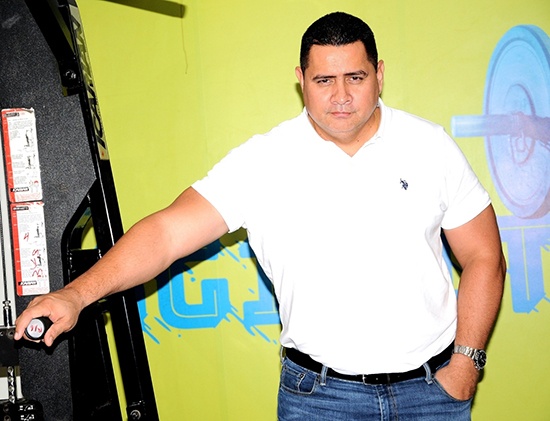
by Talavou Alalima
When the first Covid-19 wave hit Sri Lanka in March this year, people physically active realized how important exercises were for their health and well-being. The second corona surge, now sweeping across the country, has ensued a sharp decline in physical fitness with many people gaining weight and diets in disarray.
This has driven home the fundamental point that we need to organize, prepare and participate in various outdoor activities in uncrowded places. We need go out and be active to boost our immunity. Research shows that activities within open spaces pose a lower risk of the spread of the contagion.
One of the commendable factors is building walking tracks. This has motivated people to walk, jog or cycle. We need to change the mentality and get more and more people into fitness encompassing both nutritional and exercise aspects. This is where organized activity comes into play. One should discover a total physical transformation, and for this to happen, certain equipment with adequate facilities, coupled with guidance from those who understand the science, are imperative. That’s where gyms play a key role. I believe the state sector should invest substantially on such infrastructure and create more awareness by introducing programs at ground-level.
Today, many degenerative and non-communicable diseases are destroying lives primarily due to lack of knowledge and access to organized fundamental physical activity structures without paying a steep price. The conventional annual memberships are outdated and archaic. In this day and age, people look for access to any physical activity facility or service at their convenience to suit their budget and location.
We see many people talking about various topics related to fitness. Despite the many technological advances and awareness, there are no sufficient innovative solutions that have an absolute impact on an individual’s health and wellness.
We need to build a healthy Sri Lanka – a future generation which values healthy lifestyles, with parents still around to see their children grow up and produce grandchildren. If we don’t make this change today, we’ll continue to see a decline in the nation’s health and wellness standards. We have to strengthen our immunity to our best, beginning with changing the way we view exercise, fitness and activity.
I’ve seen a significant number of people coming into the gym for the first time. In this backdrop, those who have been into physical training from their young adult life have a higher level of appreciation for activities and trends that have evolved throughout. However, for the majority of the population there’s a long way to go as only less than a mere one percent is into active fitness and exercises.
My philosophy in life is about serving, uplifting and strengthening others, especially those who are disadvantaged, ignored, forgotten, helpless and are underprivileged. I recall never asking from my single parent mother for anything. I love to see the impact and contribution I make. So, I chose to build gyms to give access to quality facilities to those who cannot financially afford it.
The 1996 Cricket World Cup winning team benefited from working out at my gym, with Sanath Jayasuriya discovering his true gift here. From thereon, almost every Sri Lankan national team and clubs, including at school-level, have trained in my gyms free of charge.
In 2000, I pioneered the sports nutrition manufacturing industry. Later in 2007, I hosted the Edge Grand Prix, a series of Track and Field championships. I also launched, funded and backed the ‘Loin Warrior Sports High Performance Program’ for five years, training and sponsoring nutrition needs of over 40 Sri Lankan champion sportsmen. Today, we see the wisdom of performance, nutrition and training that must go hand-in-hand embedded in the fabric of all sports.
I donated fully-equipped gyms to the Welisara, Mahara and Bogambara prisons. I noticed that 80% of prisoners seemed to have begun their life of crime after they first stole food to feed their children. No child must be denied food to such an extent that a father must steal to feed them.
Seeing the devastating impact of the dengue epidemic on families during its peak, I took on the leadership to fight the viral disease by launching the ‘Death to Dengue’ campaign in association with the Colombo Municipal Council (CMC). The battle towards this end still continues.
I also hypothesized that, if the sporting talent of children could be predicted early enough with a high level of accuracy, the chances of them competing to become world champions across all sports when they reached their physically maturity are realistic. This gave birth to a first of its kind predictive algorithm-based system. Today, seven years later, testimonies of children confirmed the prediction was accurate.
Though technology has brought about convenience, one cannot take away the human touch. In my experience, I have seen that people are able to achieve higher levels of fitness because of another human being. The connection between two people encourages and motivates the way no technology could. For example, we have many fancy tracking devices, but this is only feedback.
What’s critical is what we should do with all that data and how to use it for yourself to achieve the desired outcome. Exercising is a discipline that is embedded into one’s lifestyle over time; it takes a lot of hard work and commitment.
I’ve seen many gym members joining with tremendous excitement but due to their demanding lifestyles, they are unable to sustain a continuous training regime to achieve their desired fitness goals. Times have changed and people look forward to experience and enjoy a full cross section of various exercises, recreations, adventure, sports, coaching among others.



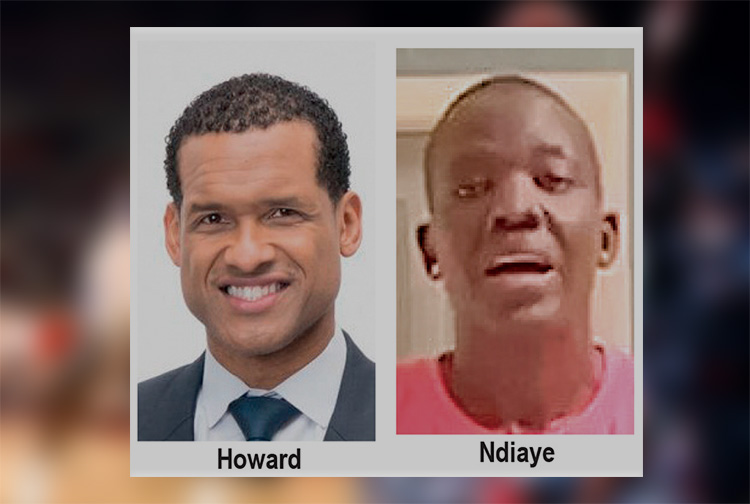
The U.S. Embassy in Colombo welcomed the U.S. Sports Envoys to Sri Lanka, former National Basketball Association (NBA) and Women’s National Basketball Association (WNBA) players Stephen Howard and Astou Ndiaye, from June 8 through 14.
The Public Diplomacy section of the U.S. Embassy said that it would launch a weeklong basketball program intended to harness the unifying power of sports, made possible through collaboration with Foundation of Goodness and IImpact Hoop Lab.
While in Sri Lanka, Howard and Ndiaye, both retired professional basketball players, will conduct a weeklong program, Hoops for Hope: Bridging Borders through Basketball. The Sports Envoys will lead basketball clinics and exhibition matches and engage in leadership sessions in Colombo and Southern Province for youth aged 14-18 from Northern, Uva, Eastern and Western Provinces, offering skills and leadership training both on and off the court. The U.S. Envoys will also share their expertise with the Sri Lanka Basketball Federation, national coaches, and players, furthering the development of basketball in the country. Beyond the clinics, they will collaborate with Sri Lankan schoolchildren to take part in a community service project in the Colombo area.
“We are so proud to welcome Stephen and Astou as our Sports Envoys to Sri Lanka, to build on the strong people-to-people connections between the United States and Sri Lanka,” said U.S. Ambassador Julie Chung. “The lessons that will be shared by our Sports Envoys – communication, teamwork, resilience, inclusion, and conflict resolution – are essential for leadership development, community building, equality, and peace. The U.S. Sports Envoy program is a testament to our belief that sports can be a powerful tool in promoting peace and unity.”
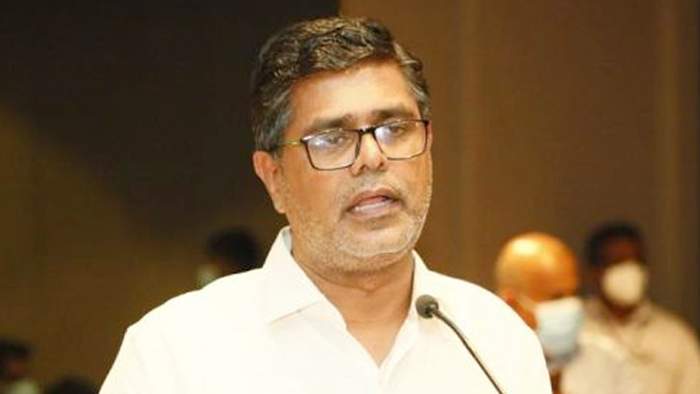
SJB Colombo District MP Mujibur Rahuman in parliament demanded to know from the government the reasons for CEB suspending the leave of all its employees until further notice from Thursday.
MP Rahuman said that the CEB has got an acting General Manager anew and the latter yesterday morning issued a circular suspending leave of all CEB employees with immediate effect until further notice.
“We demand that Minister Kanchana Wijesekera should explain this to the House. This circular was issued while this debate on the new Electricity Amendment Bill was pending. There are many who oppose this Bill. The Minister must tell parliament the reason for the urge to cancel the leave of CEB employees,” the MP said.However, Speaker Mahinda Yapa Abeywardena prevented Minister Wijesekera responding to the query and said that the matter raised by MP Rahuman was not relevant.
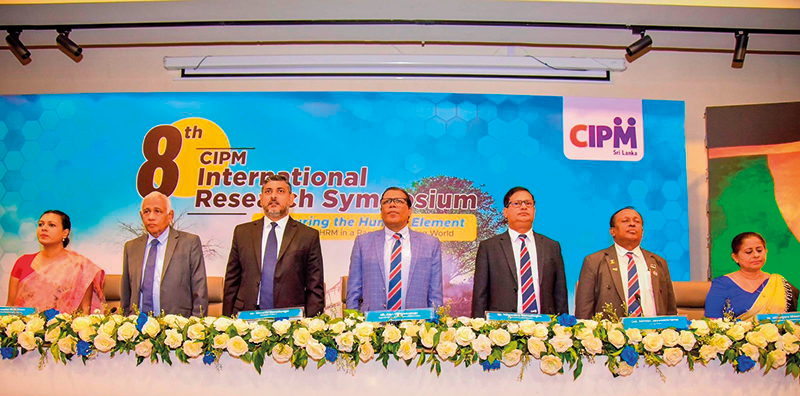
The Chartered Institute of Personnel Management (CIPM) successfully concluded the 8th Annual CIPM Symposium, which took place on 31st May 2024. Themed “Nurturing the Human Element—Redefining HRM in a Rapidly Changing World,” the symposium underscored the pivotal role of human resource management (HRM) in today’s dynamic global landscape. Since its inception in 1959, CIPM has been dedicated to advancing the HR profession through education, professional development, and advocacy, solidifying its position as Sri Lanka’s leading professional body for HRM.
Ken Vijayakumar, the President of the CIPM, graced the occasion as the chief guest. The symposium commenced with the welcome address by the Chairperson, Prof. Arosha Adikaram, followed by the Web Launch of the Symposium Proceedings and Abstract Book by the CIPM President. The event featured distinguished addresses, including a speech by Chief Guest Ken Vijayakumar, President of CIPM, and an address by Guest of Honor Shakthi Ranatunga, Chief Operating Officer of MAS Holdings Pvt. Ltd., Sri Lanka.
The symposium also featured an inspiring keynote address by Prof. Mario Fernando, Professor of Management and Director of the Centre for Cross Cultural Management (CCCM) at the University of Wollongong, Australia.
Vote of Thanks of the inauguration session was delivered by Dr. Dillanjani Weeratunga, Symposium Co-chair.
The symposium served as a comprehensive platform for researchers to present their findings across a wide range of critical topics in HRM. These included Cultural Diversity and Inclusion, Talent Development and Retention, Ethical Leadership and Corporate Social Responsibility, Adapting to Technological Advancements, Mental Health and Well-being at Work, Global Workforce Challenges, Employee Empowerment, and Reskilling and Upskilling.
The plenary session was led by Prof. Wasantha Rajapakse. Certificates were awarded to the best paper presenters during the valedictory session, followed by a vote of thanks delivered by Kamani Perera, Manager of Research and Development.
The annual symposium of CIPM was a truly inclusive event, attracting a diverse audience that spanned undergraduates, graduates, working professionals, research scholars and lecturers. This widespread interest highlights the symposium’s significance in the field of HRM, offering a unique opportunity for everyone to network and learn from scholarly brains.The CIPM International Research Symposium was sponsored by Hambantota International Port, Sri Lanka Institute of Information Technology (SLIIT), E B Creasy & Co. PLC, and Print Xcel Company.



US sports envoys to Lanka to champion youth development

Rahuman questions sudden cancellation of leave of CEB employees


