
Life style
Pop crackle, gulp and gasp

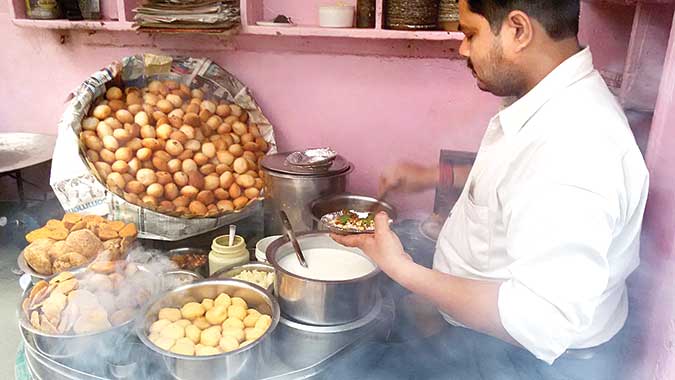
Pani Puri: India’s favourite street food now available in Sri Lanka
Pani puri occupies a special place in Indian hearts and stomachs, so it’s no wonder that the treat has been one of the country’s most poplar street snacks
On any normal evening in India, in the bustling markets and noisy main streets of big cities and small towns alike, there is a familiar sight: the corner pani puri wala (seller), surrounded by a gaggle of eager customers.
His hands seem to fly as they dip the puris (fried discs of dough) into various bowls of fillings and chutneys and passes them out to people waiting impatiently. The vendor’s customer base stretches across age groups and social strata, with people stepping out of plush cars or families walking over from their homes. For the love of pani puri, and indeed of all chaat (fried snacks), unites Indians in a way few other things do.
Chaat is a catchall word – from chaatna, meaning “to lick” – that covers a wide range of street snacks, where different ingredients are usually tossed together to create a sucker punch of tastes and textures. India loves these small, satisfying snacks because they fill the perfect hunger moment, that is to say early evening, when lunch is a distant memory and dinner has yet to be cooked. And of all chaat, pani puri occupies a special place in Indian hearts and stomachs.
At first glance, pani puri seems like nothing special. The word itself is a combination of pani (water, which in this case, refers to the diluted chutneys) and puri (the fried discs of dough). The crisp, thin puri, which is about the size of a circle made by your forefinger touching your thumb, puffs up upon frying to create a hollow core.
However, eating a pani puri requires much attention and no small amount of skill: poke a hole on the surface of the puri with your forefinger, load it up with your chosen filling – such as mashed potato, healthy sprouts, finely chopped onions or mushy peas – and then dunk the whole thing into sweet-and-sour tamarind and spicy green chutney waters (both often kept iced) in quick succession. Finally, pop the whole package into your mouth and wait for the explosion of flavours, as the puri – ever so slightly soggy by then – crumbles inside your mouth with the sauces flowing out, all while filling the soul and clearing the sinuses at the same time.
Indeed, to eat pani puri is to be prepared for liquid dribbling down the sides of your mouth and tears streaming out of your eyes – an experience that is far more pleasurable than it might sound.
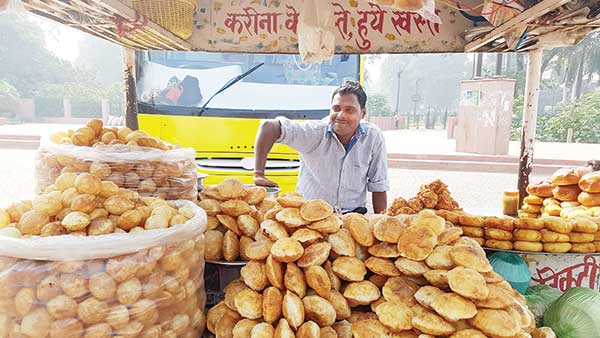
For those few moments, everything feels alright
It is no wonder that the pani puri is one of the street snacks that many indians love. Many home cooks have taken to recreating some of the magic at home, partly to satisfy chaat pangs and partly to feel the freedom of being able to walk the streets again
As education advisor Meeta Sengupta from Delhi exclaimed over email, “Pani puri is pure fun! Pop, crackle, gulp and gasp.”
Mumbai journalist Karishma Upadhya explained, “I think my craving came from a place of wanting something that made us feel happy and ‘normal’. When everything around is in such flux, it’s reassuring when you taste something that your mouth and mind instinctively know. When you put that pani puri in your mouth, you know you’ll get the perfect mix of cold, spicy, tart, sweet and crunchy. And, for those few moments, everything feels alright.”
While some brave cooks such as food blogger Amrita Kaur are making puri from scratch by kneading the dough to a perfect tight consistency, rolling out dozens of small discs, frying them in batches and preparing the fillings – most have used store-bought puris, purchasing them during careful grocery runs or utilising their pantry stocks.
There are many stories about the origins of pani puri. Culinary anthropologist Dr Kurush Dalal says that chaat (likely a predecessor of the modern pani puri) was first created in what is now the northern Indian region of Uttar Pradesh around the time of Emperor Shah Jahan’s rule in the late 17th Century. According to Dalal, royal doctors advised the general population to consume more fried and spicy snacks (and yoghurt) to balance the alkaline quality of the water from the Yamuna River, on the banks of which his new capital, Old Delhi, was built. The puri, which was to serve as “bite-sized containers of the chaat masala” (with fillings such as potato mash), spread to the rest of the country through migrant workers who moved to large cities like Mumbai and Delhi in the last century.
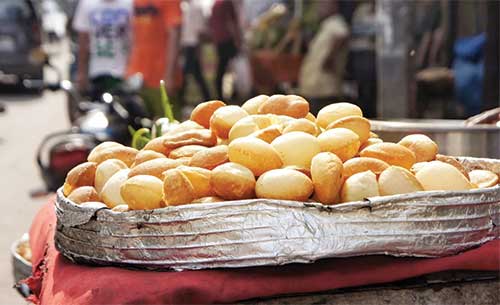
Like the most sublime chaats, pani puri is best enjoyed on the streets. And while upscale restaurants have started serving it in the last few years – with modern twists such as replacing the chutneys with spiced vodka shots and, shudder, guacamole fillings – their offerings rarely hit the spot. This is partly because street vendors know the palate of their customers and tailor each pani puri order accordingly – “Only the sweet-and-sour tamarind chutney”, “No sprouts please”, “Pile on the spice” – and each claims to have their own secret mixes of fillings and flavourings.
Food writer Anubhuti Krishna, who hails from Uttar Pradesh, loves pani puri but has not attempted to make it at home because, as she says, “I know I cannot replicate my favourite flavours at home, and they are sacrosanct for us UPwalas [people from Uttar Pradesh].”
Another reason could be that pani puri is best (or perhaps only) eaten by hand; there is no room for forks or finesse here. Kalyan Karmakar, culinary consultant and author of The Travelling Belly, a book on Indian street foods, describes eating pani puri as a “foodie adventure sport”, adding that “restaurants cannot recreate the thrill of standing on the pavement, unperturbed by people jostling past. Your eyes are focused on the pani puri wala. You have to be ready to pop it in [your mouth] when your turn comes.”
And even though pani puri is a perennial favourite across the country, it is by no means standardised or even similar everywhere. In fact, the name itself differs by place: pani puri is a Mumbai term, whereas in Delhi it is known as golgappa. In Kolkata, it goes by the name of puchka, and in Uttar Pradesh, it’s pani ke patashe (or batashe). The difference comes from the puri base ingredient – semolina, whole wheat or refined flour – as well as the fillings. And like with politics and cricket leagues, Indians like to argue about which kind is the best, and in each town, which pani puri wala makes it the most chatpata (lip-smacking).
Sengupta, who uses a ready-to-fry puri (a recent innovation found in stores), told me about her own Bengali-Punjabi household where the pani is “gingery sweet, with loads of hing (asafoetida) and pudina (mint)” and with “layered textures”. And Krishna, while noting that such food fights are silly, also adds that the Lucknow variety is her preferred version “because of how the softness and blandness of the matar (mashed peas) contrasts with the spicy water and the crisp and khasta (flaky) batasha.”
“It is [an] explosion in the mouth, yet it is soul food,” Sengupta said wistfully, perhaps summing up what millions of us Indians think of pani puri. – BBC



Institute of Hospitality Sri Lanka
 The 32nd Annual General Meeting (AGM) of the UK-based Institute of Hospitality’s Sri Lanka Chapter was held recently at the Ramada Hotel Colombo,.The event provided an evening of camaraderie , reflection of the past and present achievements,setting new benchmarks for the future
The AGM had the presence of two distinguished guests, the Chief Guest Opposition Leader Sajith Premadasa, and the Guest of Honour British High Commissioner to Sri Lanka, Andrew Patrick. Their inspiring speeches were lauded by all hoteliers who were present at the occasion
A special thanks was extended to Robert Richardson, CEO of the Institute of Hospitality UK, along with his team, sponsors, committee members, and all attendees for making the event memorable.
Dr. Harsha Jayasingh, Past President of the Institute of Hospitality (UK) Sri Lanka Chapter, emphasised the Institute’s longstanding history and the strength of its Sri Lankan branch. “The Institute of Hospitality (IH) UK has a history of 86 years, and we are proud to be the Sri Lanka Branch. IH Sri Lanka is much stronger now with many members from all areas of the hospitality industry,” he stated.
Dr. Jayasingh highlighted the significant role of tourism in Sri Lanka’s economy,. He said tourism it is the third-largest source of revenue for the country. “Tourism accounts for about 13.3% of total foreign exchange earnings and employs 450,000 people directly and indirectly. The hospitality industry in this island of pearl holds tremendous potential for economic growth, job creations, and cultural exchange,” he added.
He also pointed out more women should be attracted to the industry and advocated for the use of technology in hospitality sector to attract the younger generation.
The newly appointed Chairman Ramesh Dassanayake spoke about the challenges faced by the industry, including the reluctance of youth to join the sector. . Dassanayake expressed concerns over the migration of staff between hotels and the overall ‘brain drain’ in the sector. ” We must maintain high standards in the hotel We must try to attract tourists to Sri Lanka, we must have with many facilities Hence, hotel schools and other professional institutions involved in skills development mustincrease their intakes,” he pointed out.
Chief Guest Sajith Premadasa emphasised the importance of eco tourism and said “We need to have an environmental policy related to tourism in place,” . .
The 32nd AGM of the Institute of Hospitality UK, Sri Lanka Chapter, was a testament to the strength and potential of Sri Lanka’s hospitality industry. The insights and commitments shared during the event set a new benchmark for the future.(ZC)


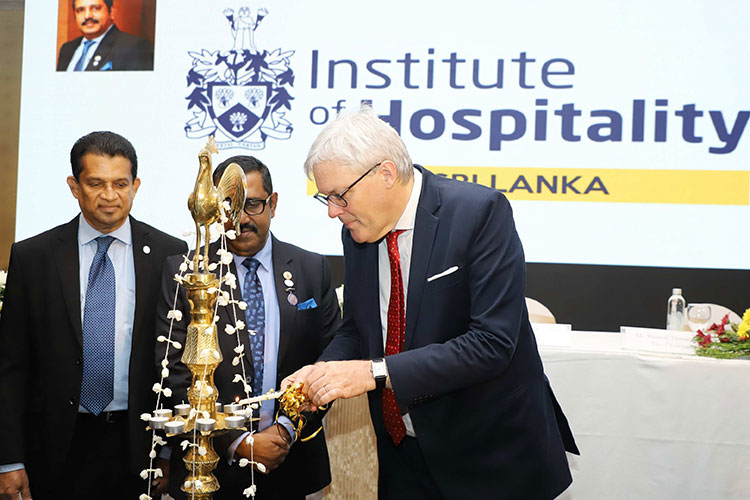
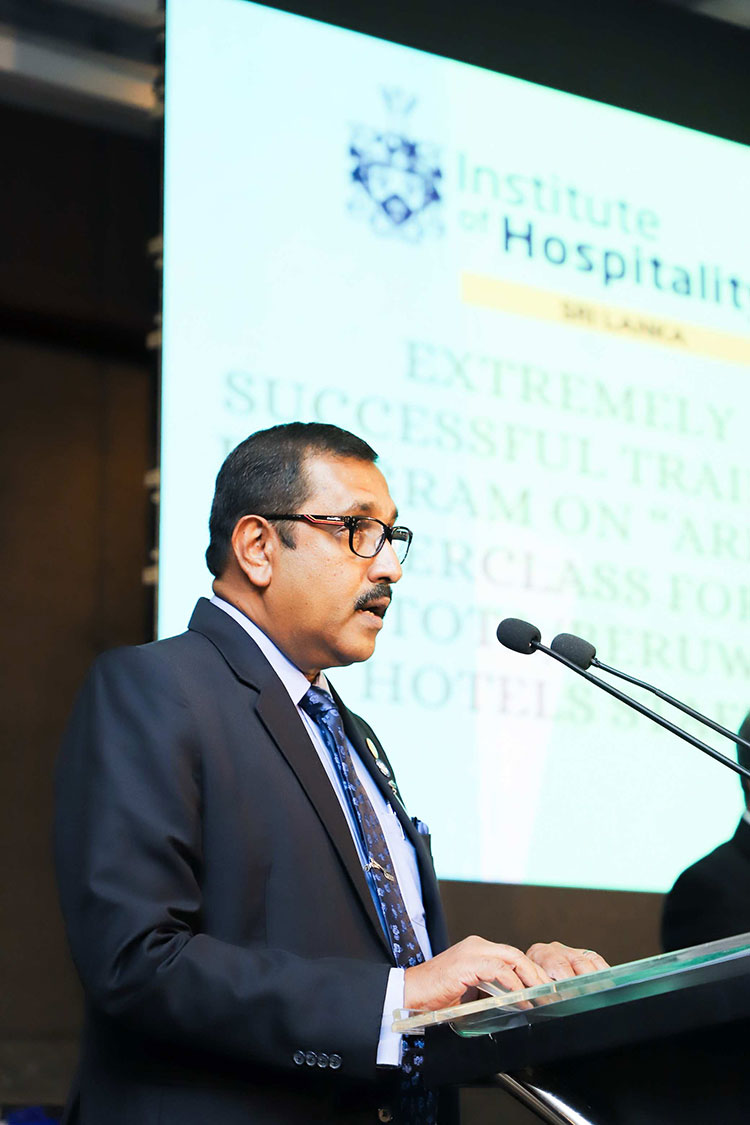

Pix by Thushara Attapathu
Life style
He recognizes human identity beyond boundaries of gender, race, nationality and religion.
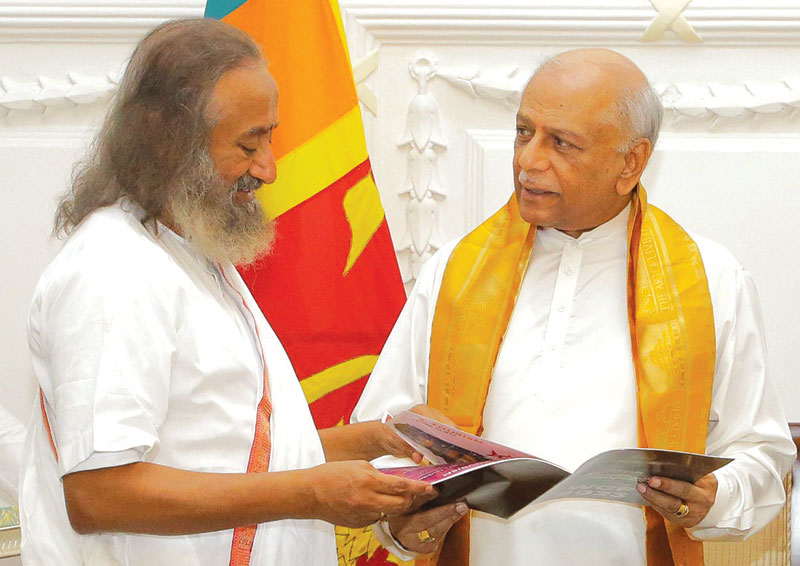
Visit of Sri Gurudev to Sri Lanka
Humanitarian, spiritual leader and Global Ambassador of Peace Gurudev Sri Sri Ravi Shankar (Sri Gurudev) was in Sri Lanka on a three day tour on the invitation of the Prime Minister of Sri Lanka Dinesh Gunewardene. Gurudev who inspired a wave of volunteerism and service to moot one of the largest volunteer-based organisations in the world – The Art of Living – visited the various projects under the aegis of the foundation and launched twelve vocational and technical centers around the island. He was accompanied by thousands of followers from Sri Lanka and around the world.
Gurudev who visited Sri Lanka for the sixth time also had a first day cover launched in honour of his visit. He is a strong proponent of spreading happiness, using the unique Sudarshan Kriya, yoga, meditation and practical wisdom to unite people, empower individuals and transform communities. His programmes provide techniques and tools to live a deeper, more joyous life, while his non-profit organisations recognize the human identity beyond the boundaries of gender, race, nationality and religion.
The Art of Living which has more than 30,000 teachers and over one million volunteers across 180 countries has touched in excess of five hundred million people around the world. CNN called it “Life Changing” and The Washington Post headlined it, “Fresh air to millions”.
In Trincomalee, Gurudev met with war victims and had a heartwarming engagement with the children from the children’s homes run by the Foundation. He also visited the Koneswara Temple in Trincomalee and graced the Kumbhabhishekam at Seetha ecogPnize the human identity beyond the boundaries of gender, race, nationality and religion. Amman temple at Nuwara Eliya. He held discussions with the trustees on the progress of the foundation’s social service projects, while also holding a special event – Ekamuthuwa – attended by a large number of dignitaries and his devotees from around the world.
His time with the Prime Minister was spent discussing the prospects of unity in diversity and uniting Sri Lanka by adding happiness into the formula of living. In addition he had discussions with the Speaker of the Parliament of Sri Lanka Mahinda Yapa Abeywardena, prominent business stewards and civil society leaders.
by Zanita Careem
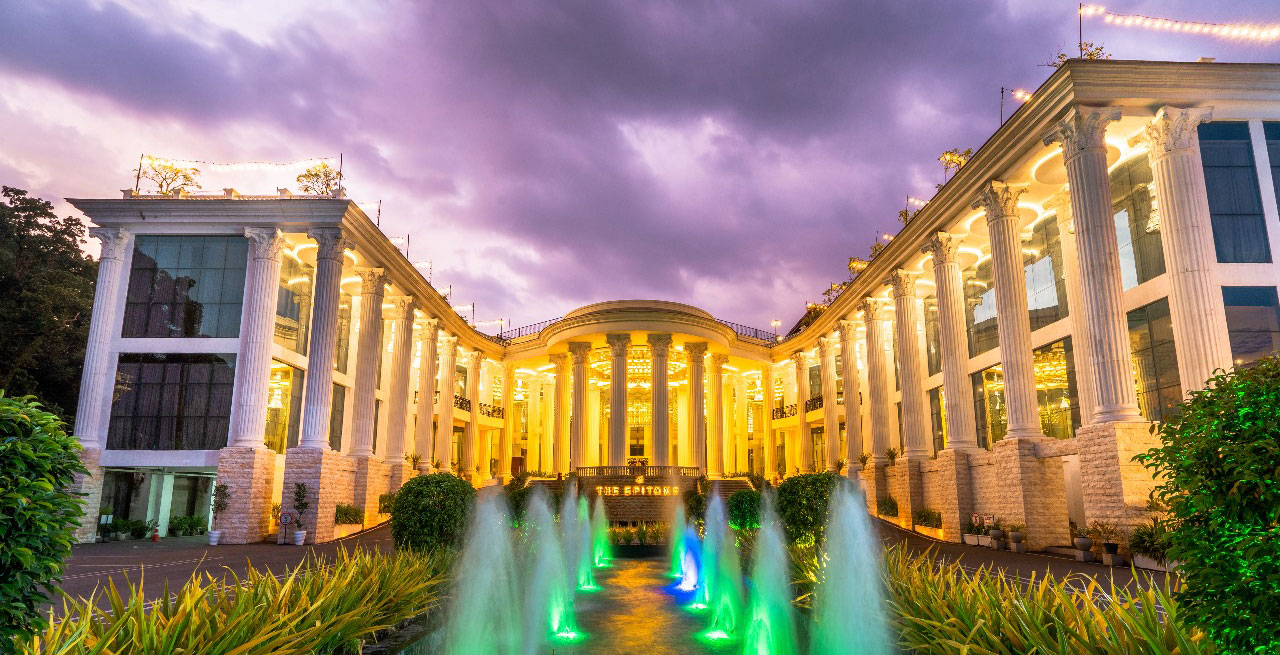
Envison your dream wedding day come to life at the Epitome Hotel, a prestigious city hotel in Kurunegala offering an unrivalled luxury rendors experience for weddings.
The venue is designed to embody opulence and luxury from all quarters for a spectacular wedding in kurunegala,Thier ballroom is the largest banquet facility in Sri Lanka It can be divided into six luxurious pillarless wedding halls on the ground floor and 25pax smaller banquet halls.
It can be easily named as a five star heaven in the heart of the city contributing to a myriad of immense experiences tailored to inspire and delight wedding experiences.
From opulent décor set up to exquisite table decor, lavish food, every detail is meticulously curated to spark your imagination and ignite creativity for a perfect wedding. The previous prestigious wedding shows season one and season two attracted large crowds
were unique events which gave the wedding vendors and potential clients had an opportunity to connect and interact with each other. Beyond being a showcase it was a chance for the wedding vendors to unite and contribute to the vibrancy of the wedding industry. The wedding show covered all area of the bridal industry providing a comprehensive variety of bridal supplies from Sri lanka and became the most popular bridal exhibitions in Kurunegala.This bridal exhibitions allowed brides and grooms to experience first hand the products and services available from suppliers in Sri Lanka
These wedding shows held at The Epitome created a benchmark and gave an opportunity for vendors to create connections to the utmost satisfaction said Harshan Lakshita Executive Director. of the magnificent Hotel
Our wedding shows featured experts and professionals in every field‘ It covered all areas of the bridal industry provided a comprehensive variety of bridal supplies from Sri lanka and became most popular bridal exhibition in this region.We are always open to everyone to join us at our wedding shows in the future. It is an opportunity to discover the incredible talent within our local wedding and bridal vendors to make meaningful relationships and plan thier special day at our breathtaking hotel The Epitome said General Manager Kavinda Caldera
The Epitome Hotel’s bridal show which will be held end of June will buzz with great ideas,advice and inspiration for all those who plan thier dream wedding
…….
The Hotel Epitome’s Wedding Season 3 will marked excellence, celebration and inspiration for those in the wedding industry. The exhibition halls will resonate with ideas on exquisite bridal wear to decor, florists , photography etc and showshowcase the rich tapestry of talent within the local wedding industry. .







US sports envoys to Lanka to champion youth development

Rahuman questions sudden cancellation of leave of CEB employees


