Features
Politics at its most primitive

By Uditha Devapriya
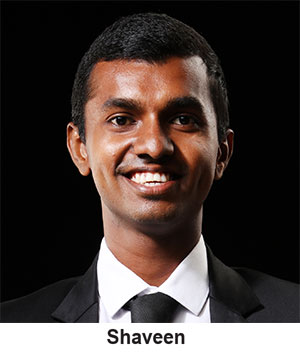
Review of Shaveen Bandaranayake’s Groundswell
Sarasavi Publications, 2021, 118 pages, Rs. 300
Half-way into Shaveen Bandaranayake’s novel, the Minister at the heart of the story tells us that the wealth he earned was people, not money. This is what politicians usually say. In the very least, it is what people who dislike politicians imagine they say.
Come to think of it, both amount to the same thing: we’ve turned politicians into objects of hate so much that we’ve come to love them for being who we think they are. Since we can’t control them in real life, we want to dominate them in popular fiction. The number of plays and films that poke fun at Presidents, Prime Ministers, and Ministers testify to how badly we want to be, not like them, but above them.
I am deeply suspicious of satire of that sort. In his excellent review of Pusswedilla, Hafeel Farisz tells us why political parody ends up serving the people and objects being parodied. This is not rocket science. At its best, political satire can move us to anger, disenchantment, and rebellion. At its worst, it can lull us into a sense of complacency with things as they are and as they seem. Farisz seemed to think that Pusswedilla epitomised the latter, reinforcing cultural stereotypes while offering no proper critique of the political establishment and the ruling class. I suppose you can say the same thing of Vijaya Nandasiri’s comedies: at his best, he makes us aware of the corruption of the political class; at his worst, he turns the corrupt into objects of love-hate, full of tropes and clichés but nothing substantive.
Shaveen Bandaranayake’s Groundswell reads as a political satire, though I have my doubts. Interweaving different stories and unfolding like a film, it goes back and forth. I won’t call its ending funny, but then how can any novel involving politics end on a funny note?

The plot is simple enough. A woman comes across a corpse of a man at the foot of a hill one fine morning. She informs the police. By the looks of it, he seems to have lost his grip and fallen to his death. The story then rewinds to a political rally at that most obtrusive site of political rallies, a temple, where we are introduced to Sarath Aluwihare, a Minister trying to win his next election. We are also introduced to Sunil, a young man endeavouring to land a job. Events will unfold in a way that will bring the two of them together.
We are told that Sarath hails from a family of politicians, and that this family has been in politics for over two generations. The surname tells us as much. Sunil, on the other hand, is so unobtrusive that Shaveen doesn’t grant him the privilege of a surname, which, after all, is the preserve of those who matter. Like other village youths lacking employment and in dire search of a patron from the ruling class, Sunil clearly is not important; even when he finds a job as Aluwihare’s driver, his status rises, but not so much as to protect him from the novel’s ending. He is as destined to his place in life as Aluwihare is to his.
There are other characters though, and they have surnames. There is the head priest of the temple, for instance, an unabashed admirer of Aluwihare who uses him to achieve his not so religious purposes. Then there is Dileepa Jayanetti, who rises “from rags to riches” and ends up becoming the owner of the country’s biggest media house. Dileepa finds his way up by befriending the daughter of another prominent politician, who introduces him to Aluwihare, who in turn becomes his biggest benefactor. You sense the pattern here.
Halfway through the story, Dileepa hires Lasantha Muthukumarana, a journalist who tries to stick to the tenets of his trade. Dileepa does this because he thinks that by hiring the honest, he can keep them from being honest. For someone who is so bright and manipulative, this is far from the most brilliant decision he could have taken: a few pages later, Muthukumarana is investigating a hit-and-run incident which may be connected to Aluwihare.
In Bandaranayake’s world, everyone seems to know everyone else. That is why it comes to no surprise that the man run down by a vehicle in the middle of the night should have been married to a woman Aluwihare just happened to hire at his Ministry, and that she should be rumoured to have formed the object of Aluwihare’s affections. That Lasantha thought for a moment that a news report linking all this to a prominent Minister would make it in a paper linked to and blessed by that Minister is, of course, intriguing. But he tries to get it published it anyway. When the predictable opprobrium follows and he finds he can’t get it in, the story moves to its inevitable and in many ways unsurprising conclusion.
In saying all this, I am by no means revealing the plot. In fact, surprising as it may seem, the plot is what least interests me about Bandaranayake’s novel. This is a narrative I have come across many times, in many forms. Bandaranayake takes great pains to make it all relevant to the immediate political situation, i.e. the one we are in, now. Those who manage to draw links between his characters and their “real-life counterparts” should, therefore, be forgiven for thinking that he has attempted political critique masquerading as satire. My interest in it, then, has less to do with the novel than the genre it belongs to.
If Groundswell can be called a satire, it is satirical only to the extent that his characters are caricatures. Yet, as I implied earlier, it is not a satire in the way that a work like Pusswedilla is. The characters fit into preconceived and familiar patterns, but that doesn’t make them the clichéd tropes they turn into elsewhere. These characters are more rounded, certainly more complex. Sarath Aluwihare, for instance, does not possess the overstuffed tummy his counterparts from countless parodies do, while Sunil doesn’t become a Renfield type figure hell bent on catering to his “Master.” Even though Bandaranayake can be facetious, and is pugnacious, he refuses to dabble in the kind of satirical humour which could have turned his story into a Vijaya Nandasiri style parody of politics in Sri Lanka.
Depending on how you view it, this may be the strongest point or the biggest weakness in Bandaranayake’s novel. Groundswell makes several important points, and they should be considered pertinent whether they be couched the language of satire or of serious political critique. The medium is hardly the message, contrary to what people might say, and the way you communicate your ideas should not really impact the importance of those ideas.
And yet, there are one or two episodes which reveal Bandaranayake’s funny side. It is here that the disjuncture between the satirical undertones and the ponderous overtones of the narrative, and the author’s voice, proves fatal to the development of the story.
Bandaranayake is at his best when he is setting up situations, and these situations are, all things considered, effective in setting up the plot. He tries to create atmosphere, and does a good job of laying the context. But when each and every point is prefaced by laboriously long explanations of social phenomena, such as the separation between temple and State in Sri Lanka, or the wretched fate encountered by a million or so menial workers in West Asia, you struggle to distinguish between the narrative and the commentary.
For local readers, these explanations will at best be passé. I suspect they will be for foreign readers as well. Groundswell is a novel, or more correctly a novella, which could have been shorter, tighter, and more effective without them. Not surprisingly, the story gains strength when Bandaranayake cuts to the chase, and loses track when he does not.
I have read this kind of story many times before. What makes this one interesting is that it is Bandaranayake’s first attempt at fiction, and that, for a first attempt, it’s damn good. Even within its limits, he has come up with something enjoyable. That I enjoyed the book, and of course the brilliant illustrations that more than just decorate it*, is why I wish it were leaner, shorter, and tighter. Less can be more. More often than not, it is.
* With one exception: the eighth drawing depicts a scene that, if you think about it carefully, is at odds with the text on the opposite page.
The writer can be reached at udakdev1@gmail.com