
News
‘Political leaders and corporate titans put profit and power ahead of people, betraying promises for fair recovery from pandemic’


From a human rights perspective, 2021 was largely a story of betrayal in the corridors of power, says Amnesty International.
Amnesty International’s annual report on the state of the world’s human rights in 2021, published in March 2022, shows that promises to “build back better” after the Covid-19 pandemic were little more than lip service. Hopes of global cooperation withered in the face of vaccine hoarding and corporate greed.
Governments suppressed independent and critical voices, with some even using the pandemic as a pretext to shrink further the civic space. New and unresolved conflicts erupted or persisted. Those forced to flee were subjected to a litany of abuses, including pushbacks by countries in the Global North.
But hopes for a better post-pandemic world were kept alive by courageous individuals, social movements and civil society organizations.
Wealthy states colluded with corporate giants in 2021 to dupe people with empty slogans and false promises of a fair recovery from the Covid-19 pandemic, in what amounts to one of the greatest betrayals of our times, said Amnesty International today, as it launched its annual assessment of human rights around the world.
The report finds that these states, alongside corporate titans, have in fact driven deeper global inequality. It details root causes including noxious corporate greed and brutal national selfishness, as well as neglect of health and public infrastructure by governments around the world.
“2021 should have been a year of healing and recuperation.?Instead, it became an incubator for deeper inequality and greater instability, a legacy caustic for years to come,”?said Agnès Callamard, Secretary General of Amnesty International.
“Leader after leader dangled promises to ‘build back better’ to address deep-seated inequalities that exacerbated the impact of the pandemic. Instead, they have performed a tragic fable of betrayal and greed in cahoots with corporate titans. Whilst this has played out around the world, the effects have been most damaging to the most marginalized communities, including those on the front lines of endemic poverty.”
The rapid roll-out of Covid-19 vaccines appeared to be a scientific silver bullet, offering hope of an end to the pandemic for all.
However, despite enough production to fully vaccinate the world in 2021, by year’s end less than 4% of those living in low-income countries had been fully vaccinated.
“At the G7, G20 and COP26 summits, grandstanding on a global stage, political and economic leaders paid lip service to policies that could generate a sea change in vaccine access, reverse under-investment in social protection, and tackle the impact of climate change. Heads of Big Pharma and Big Tech spun us lines about corporate responsibility. At this watershed movement, the stage was set for recovery, and genuine meaningful change for a more equal world,” said Agnès Callamard.
“However, they squandered the opportunity, reverting to type with policies and practice that drove further inequality. Members of the Rich Boys Club offered promises publicly that they reneged on privately.”
Wealthy states such as EU member states, the UK and the USA stockpiled more doses than needed, whilst turning a blind eye as Big Pharma put profits ahead of people, refusing to share their technology to enable wider distribution of vaccines. In 2021, Pfizer, BioNTech and Moderna projected eye-watering profits of up to US$54 billion yet supplied less than 2% of their vaccines to low-income countries.
Big Pharma were not the only corporate giants to undermine pandemic recovery for profit. Social media companies such as Facebook, Instagram and Twitter provided fertile ground for Covid-19 misinformation, allowing vaccine hesitancy to flourish. Some political leaders also acted as super-spreaders of misinformation, breeding distrust and fear for their own political gain.
“Social media companies’ allowed their lucrative algorithms to spread harmful misinformation about the pandemic, prioritizing the sensationalist and the discriminatory over truth,” said Agnès Callamard.
“The extent of their profiteering from that misinformation and the impact of that on the lives of millions mean those companies have a serious case to answer.”



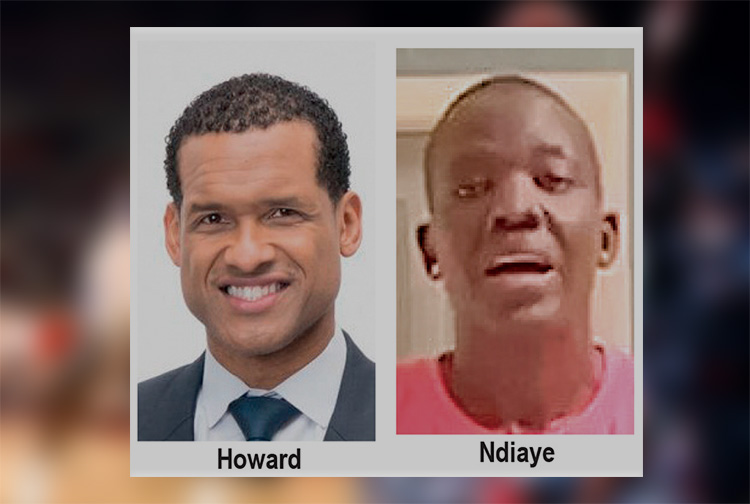
The U.S. Embassy in Colombo welcomed the U.S. Sports Envoys to Sri Lanka, former National Basketball Association (NBA) and Women’s National Basketball Association (WNBA) players Stephen Howard and Astou Ndiaye, from June 8 through 14.
The Public Diplomacy section of the U.S. Embassy said that it would launch a weeklong basketball program intended to harness the unifying power of sports, made possible through collaboration with Foundation of Goodness and IImpact Hoop Lab.
While in Sri Lanka, Howard and Ndiaye, both retired professional basketball players, will conduct a weeklong program, Hoops for Hope: Bridging Borders through Basketball. The Sports Envoys will lead basketball clinics and exhibition matches and engage in leadership sessions in Colombo and Southern Province for youth aged 14-18 from Northern, Uva, Eastern and Western Provinces, offering skills and leadership training both on and off the court. The U.S. Envoys will also share their expertise with the Sri Lanka Basketball Federation, national coaches, and players, furthering the development of basketball in the country. Beyond the clinics, they will collaborate with Sri Lankan schoolchildren to take part in a community service project in the Colombo area.
“We are so proud to welcome Stephen and Astou as our Sports Envoys to Sri Lanka, to build on the strong people-to-people connections between the United States and Sri Lanka,” said U.S. Ambassador Julie Chung. “The lessons that will be shared by our Sports Envoys – communication, teamwork, resilience, inclusion, and conflict resolution – are essential for leadership development, community building, equality, and peace. The U.S. Sports Envoy program is a testament to our belief that sports can be a powerful tool in promoting peace and unity.”
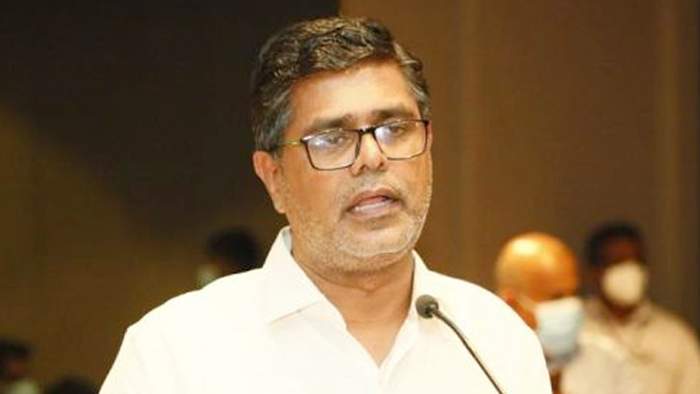
SJB Colombo District MP Mujibur Rahuman in parliament demanded to know from the government the reasons for CEB suspending the leave of all its employees until further notice from Thursday.
MP Rahuman said that the CEB has got an acting General Manager anew and the latter yesterday morning issued a circular suspending leave of all CEB employees with immediate effect until further notice.
“We demand that Minister Kanchana Wijesekera should explain this to the House. This circular was issued while this debate on the new Electricity Amendment Bill was pending. There are many who oppose this Bill. The Minister must tell parliament the reason for the urge to cancel the leave of CEB employees,” the MP said.However, Speaker Mahinda Yapa Abeywardena prevented Minister Wijesekera responding to the query and said that the matter raised by MP Rahuman was not relevant.
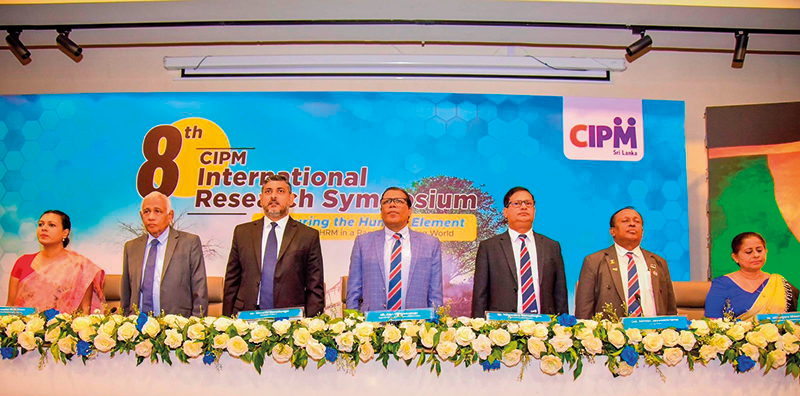
The Chartered Institute of Personnel Management (CIPM) successfully concluded the 8th Annual CIPM Symposium, which took place on 31st May 2024. Themed “Nurturing the Human Element—Redefining HRM in a Rapidly Changing World,” the symposium underscored the pivotal role of human resource management (HRM) in today’s dynamic global landscape. Since its inception in 1959, CIPM has been dedicated to advancing the HR profession through education, professional development, and advocacy, solidifying its position as Sri Lanka’s leading professional body for HRM.
Ken Vijayakumar, the President of the CIPM, graced the occasion as the chief guest. The symposium commenced with the welcome address by the Chairperson, Prof. Arosha Adikaram, followed by the Web Launch of the Symposium Proceedings and Abstract Book by the CIPM President. The event featured distinguished addresses, including a speech by Chief Guest Ken Vijayakumar, President of CIPM, and an address by Guest of Honor Shakthi Ranatunga, Chief Operating Officer of MAS Holdings Pvt. Ltd., Sri Lanka.
The symposium also featured an inspiring keynote address by Prof. Mario Fernando, Professor of Management and Director of the Centre for Cross Cultural Management (CCCM) at the University of Wollongong, Australia.
Vote of Thanks of the inauguration session was delivered by Dr. Dillanjani Weeratunga, Symposium Co-chair.
The symposium served as a comprehensive platform for researchers to present their findings across a wide range of critical topics in HRM. These included Cultural Diversity and Inclusion, Talent Development and Retention, Ethical Leadership and Corporate Social Responsibility, Adapting to Technological Advancements, Mental Health and Well-being at Work, Global Workforce Challenges, Employee Empowerment, and Reskilling and Upskilling.
The plenary session was led by Prof. Wasantha Rajapakse. Certificates were awarded to the best paper presenters during the valedictory session, followed by a vote of thanks delivered by Kamani Perera, Manager of Research and Development.
The annual symposium of CIPM was a truly inclusive event, attracting a diverse audience that spanned undergraduates, graduates, working professionals, research scholars and lecturers. This widespread interest highlights the symposium’s significance in the field of HRM, offering a unique opportunity for everyone to network and learn from scholarly brains.The CIPM International Research Symposium was sponsored by Hambantota International Port, Sri Lanka Institute of Information Technology (SLIIT), E B Creasy & Co. PLC, and Print Xcel Company.



US sports envoys to Lanka to champion youth development

Rahuman questions sudden cancellation of leave of CEB employees


