Features
Pleasant and poignant memories that linger

Book Review
Title – Fragrance Still Lingers
(‘The Life I saw in the 1950s and 60s’)
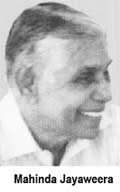
Author – Mahinda Jayaweera
(jmmjayaweera37@gmail.com)
An author publication
The ‘crunch years’ for Sri Lanka came in the mid-seventies. Observers cannot be accused of overstating the case when they say that the relaxing of economic controls in those years by an ultra-rightist government opened the floodgates to a multiplicity of social and economic ills. These evils have been weighing Sri Lanka down to date but a searching look at the 50s and 60s decades reveals a comparatively pleasant and peaceful Sri Lanka. To be sure, those decades had their blemishes but worse was to follow and the latter phase is a harrowing story to relate, as is known.
However, the 50s and 60s decades were times characterized by comparative calm and peace and it is a description of these more untroubled years that our author Mahinda Jayaweera presents to us with supreme lyricism in this charming and unforgettable novel, ‘Fragrance Still Lingers’. It brings to mind another poetic novel Jayaweera brought out a few years back: ‘A Decade in the Village’. ‘Fragrance Still Lingers’ cannot be mechanically categorized as ‘a period piece’ and thrust onto the shelf of abstract historical memoirs on two counts.

Second, at the heart of this novel is a poignant account of unrequited love that further enhances its universality. Needless to say, this is a subject that most humans anywhere could easily relate to. The story of disappointed love runs through this multi-faceted novel like a golden thread and gives it notable coherence.
While the story of disappointed love is absorbing in itself, the other thematic dimensions of the novel which encompass Sri Lankan social life in the past, the country’s cultural and religious heritage in its pristine beauty and Sri Lanka’s natural and physical splendour render ‘Fragrance Still Lingers’ a notable local literary endeavour and a ‘must read’. The book’s value is enhanced by the fact that Amazon Books have come out with an e-edition of it.
Put briefly, the story line relating to the theme of disappointed love is as follows: Ananda, a youth from the provinces, falls in love with Seedevi, a girl from the Kandyan aristocracy, while they were attached to the University of Peradeniya in different capacities. Ananda was working as a researcher in a project launched by the Social Sciences Faculty of the university, while Seedevi was an undergraduate. Ananda’s attachment blooms within himself but he doesn’t find Seedevi’s conduct towards him sufficiently encouraging to compel him to declare his love. Seedevi’s conduct, on the other hand, was enigmatic. But the reader has no reason to believe that she had any notable interest in Ananda.
Time passes and though our protagonists interact with each other, Ananda continues to fail to declare his love for Seedevi. The latter, meanwhile, bows to her mother’s wishes and marries a well-to-do man, 17 years older to her, and migrates abroad. Ananda is broken-hearted but gets the opportunity to meet her some 35 years later on the occasion of Seedevi’s husband being felicitated in Sri Lanka for his services to his country. Ananda meets Seedevi a couple of days after the event and brings out his unrequited love for her and she too owns up to repressed love for him, but it is, of course, all in vain since events had relentlessly overtaken them.
Jayaweera’s creative capabilities are reflected in his ability to pack into this absorbing story line the bigger picture of the Sri Lanka of yesteryear. We have within the pages of ‘Fragrance Still lingers’ the veritable totality of Sri Lanka in all its dimensions. Amply detailed for us as integral parts of the main story, for example, are local cultural and religious practices and traditions, the plural ethnic identity of the country, the denizens of its numerous social strata and its comparatively unblemished public life. The novel could be described as a paean to a relatively unsullied Sri Lankan past.
– Lynn Ockersz