
News
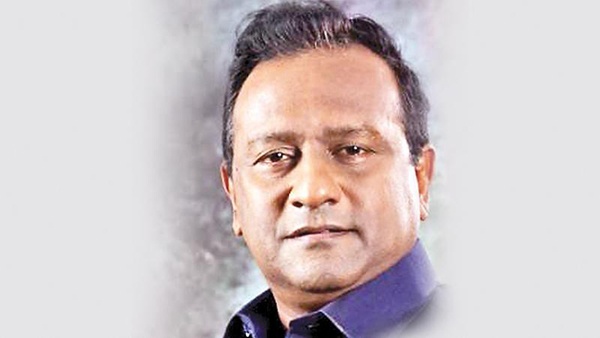
PC Minister Weerasekera opposes full implementation of 13 A

By Saman Indrajith
India had no moral right to ask for the full implementation of the 13th amendment to the Constitution, Local Government and Provincial Councils Minister Sarath Weerasekera told Parliament yesterday.
Participating in a debate at the time of adjournment of the House on foreign agreements of Sri Lanka, the Minister said that the amendment had been interpreted as an outcome of Indo-Lanka Accord, of which the role and commitment of India as a party to the agreement was in question because India did not fulfil its commitments.
“Indian Prime Minister Narendra Modi has asked our Prime Minister to implement the 13th Amendment although the amendment is an internal affair of this country. When foreign governments adversely commented on India’s abrogation of Article 370 from its Constitution, accusing India of scrapping the special status given to people in troubled Jammu and Kashmir region there, our prime minister Mahinda Rajapaksa when asked to comment said that it was an internal matter of India.”
“Knowing that the 13th Amendment is an internal matter of Sri Lanka, Prime Minister Modi is asking for its implementation does not show the same reciprocation. Some interpret that PM Modi is asking so on the mandate of Indo-Lanka Accord. But the question is whether India has adhered to its own commitments specified in the Indo-Lanka Accord. The 13A is not even mentioned in the Accord. The Accord is something forced down on us by India.
“I have my reservations about the Accord. As per the agreement India is to enable the return of the Sinhalese and Muslims to vote. Thousands of Sinhala and Muslim Lankans are still unable to return.
“India also promised in the agreement to ensure within 48 hours cessation of violence and all arms of the terrorist groups in Lanka would be surrendered to authorities. We know that it had been done only as a token because the LTTE handed over few firearms but there were no cessation of hostilities. Even the Indian army, one of the largest armies in the world, had to withdraw after suffering heavy casualties at the hands of the LTTE.
“It was the Lankan forces under proper political leadership who defeated the LTTE. So, India did not fulfill her commitments in the agreement.
“It should also be asked whether the agreement was signed under duress, or whether contents of the agreement compromised Sri Lanka’s sovereignty. When our forces were about to crush the LTTE and capture LTTE leader Prabhakaran at Vadamarachchi, India violated our airspace and dropped food and medicine in Jaffna famously known as dhal dropping operation of India.
“Also it mentions Trincomalee Harbour and Oil Tank Farm. The Sri Lankan courts have nullified the merger of the northern and eastern provinces which was one of the clauses of the Accord.
“So, there is a serious concern about the validity of the agreement and if it is not valid, India has no moral right to interfere in our internal affairs.
“Let India be reminded that soon after its Independence there was a separatist movement by the Dravidians. EVR Periyar advocated Nazi style anti Brahmanism. That is why Jawahar Lal Nehru broke India into 28 linguistic states.
“Ambedkar expressed that ‘linguistic states and political entities will become a stepping stone for creation of separate states’. He further said that the road between an independent nationality and independent state is very narrow. If this happens, modern India will cease to exist.
“Here, we talk about devolution of power with the province as the unit with provisions for mergering two provinces.
“So India should be cognizant of the fact that granting self-determination to the North or the merged North and East could be utilised as a stepping stone for a Dravidistan or if not they could link up with Tamil Nadu. So Balkanization of Sri Lanka into provincial governments through 13 A will invariably affects the existing unity of India. The promoter will then become the victim.
In the North, Tamil account for 99% of the population. The LTTE resorted to ethnic cleansing and all Sinhala and Muslim people who lived in the North were either massacred or chased out. Now, the separatist politicians seek self-determination.
“That is why the experts say power should never be devolved on the basis of ethnicity. The 13 Amendment provides for ethnic enclaves. We know the devolution of power as opposed to decentralisation and result in the division of our nation.
“So, we do not believe in the devolution of power but of course in decentralisation up to the lowest levels. The centre must retain the power. Our culture of governance was centered with the ruling king. It has not fundamentally changed. Raja Bhavatu Dhammiko is the theme of governance by a virtuous ruler that we recognise, respect and expect.
“India and Sri Lanka have a very long history of friendship and we recognize the importance of nurturing that friendship.”



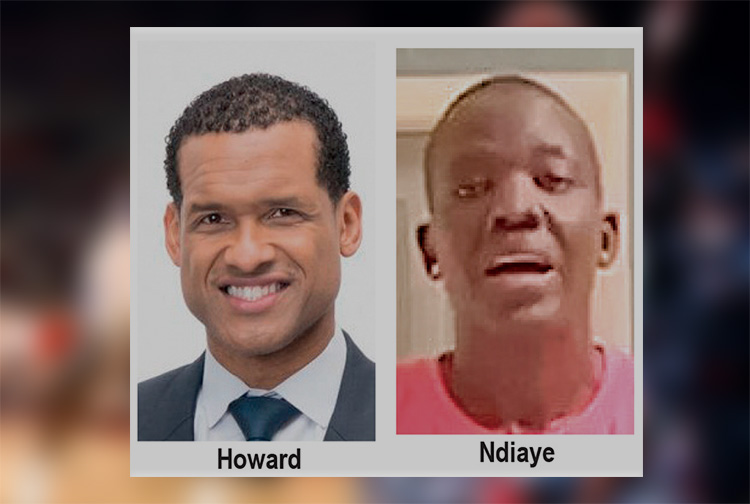
The U.S. Embassy in Colombo welcomed the U.S. Sports Envoys to Sri Lanka, former National Basketball Association (NBA) and Women’s National Basketball Association (WNBA) players Stephen Howard and Astou Ndiaye, from June 8 through 14.
The Public Diplomacy section of the U.S. Embassy said that it would launch a weeklong basketball program intended to harness the unifying power of sports, made possible through collaboration with Foundation of Goodness and IImpact Hoop Lab.
While in Sri Lanka, Howard and Ndiaye, both retired professional basketball players, will conduct a weeklong program, Hoops for Hope: Bridging Borders through Basketball. The Sports Envoys will lead basketball clinics and exhibition matches and engage in leadership sessions in Colombo and Southern Province for youth aged 14-18 from Northern, Uva, Eastern and Western Provinces, offering skills and leadership training both on and off the court. The U.S. Envoys will also share their expertise with the Sri Lanka Basketball Federation, national coaches, and players, furthering the development of basketball in the country. Beyond the clinics, they will collaborate with Sri Lankan schoolchildren to take part in a community service project in the Colombo area.
“We are so proud to welcome Stephen and Astou as our Sports Envoys to Sri Lanka, to build on the strong people-to-people connections between the United States and Sri Lanka,” said U.S. Ambassador Julie Chung. “The lessons that will be shared by our Sports Envoys – communication, teamwork, resilience, inclusion, and conflict resolution – are essential for leadership development, community building, equality, and peace. The U.S. Sports Envoy program is a testament to our belief that sports can be a powerful tool in promoting peace and unity.”
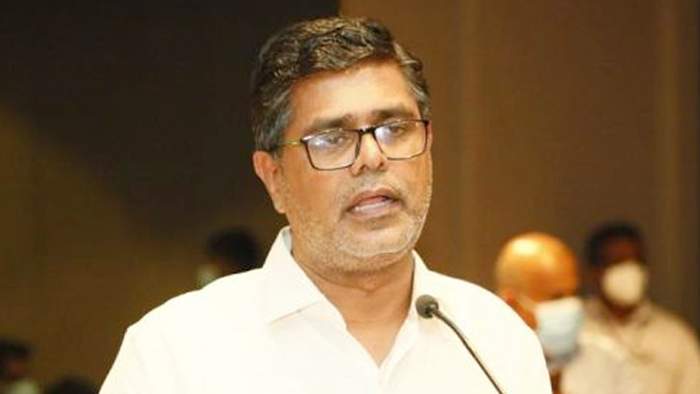
SJB Colombo District MP Mujibur Rahuman in parliament demanded to know from the government the reasons for CEB suspending the leave of all its employees until further notice from Thursday.
MP Rahuman said that the CEB has got an acting General Manager anew and the latter yesterday morning issued a circular suspending leave of all CEB employees with immediate effect until further notice.
“We demand that Minister Kanchana Wijesekera should explain this to the House. This circular was issued while this debate on the new Electricity Amendment Bill was pending. There are many who oppose this Bill. The Minister must tell parliament the reason for the urge to cancel the leave of CEB employees,” the MP said.However, Speaker Mahinda Yapa Abeywardena prevented Minister Wijesekera responding to the query and said that the matter raised by MP Rahuman was not relevant.
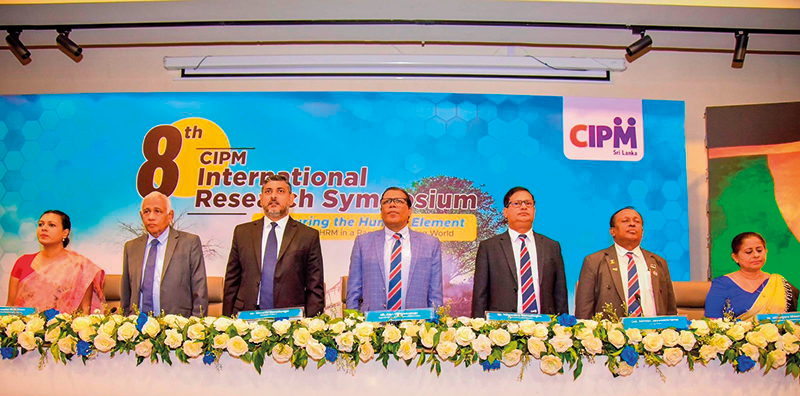
The Chartered Institute of Personnel Management (CIPM) successfully concluded the 8th Annual CIPM Symposium, which took place on 31st May 2024. Themed “Nurturing the Human Element—Redefining HRM in a Rapidly Changing World,” the symposium underscored the pivotal role of human resource management (HRM) in today’s dynamic global landscape. Since its inception in 1959, CIPM has been dedicated to advancing the HR profession through education, professional development, and advocacy, solidifying its position as Sri Lanka’s leading professional body for HRM.
Ken Vijayakumar, the President of the CIPM, graced the occasion as the chief guest. The symposium commenced with the welcome address by the Chairperson, Prof. Arosha Adikaram, followed by the Web Launch of the Symposium Proceedings and Abstract Book by the CIPM President. The event featured distinguished addresses, including a speech by Chief Guest Ken Vijayakumar, President of CIPM, and an address by Guest of Honor Shakthi Ranatunga, Chief Operating Officer of MAS Holdings Pvt. Ltd., Sri Lanka.
The symposium also featured an inspiring keynote address by Prof. Mario Fernando, Professor of Management and Director of the Centre for Cross Cultural Management (CCCM) at the University of Wollongong, Australia.
Vote of Thanks of the inauguration session was delivered by Dr. Dillanjani Weeratunga, Symposium Co-chair.
The symposium served as a comprehensive platform for researchers to present their findings across a wide range of critical topics in HRM. These included Cultural Diversity and Inclusion, Talent Development and Retention, Ethical Leadership and Corporate Social Responsibility, Adapting to Technological Advancements, Mental Health and Well-being at Work, Global Workforce Challenges, Employee Empowerment, and Reskilling and Upskilling.
The plenary session was led by Prof. Wasantha Rajapakse. Certificates were awarded to the best paper presenters during the valedictory session, followed by a vote of thanks delivered by Kamani Perera, Manager of Research and Development.
The annual symposium of CIPM was a truly inclusive event, attracting a diverse audience that spanned undergraduates, graduates, working professionals, research scholars and lecturers. This widespread interest highlights the symposium’s significance in the field of HRM, offering a unique opportunity for everyone to network and learn from scholarly brains.The CIPM International Research Symposium was sponsored by Hambantota International Port, Sri Lanka Institute of Information Technology (SLIIT), E B Creasy & Co. PLC, and Print Xcel Company.



US sports envoys to Lanka to champion youth development

Rahuman questions sudden cancellation of leave of CEB employees


