
Life style
Pakistan experience of how fashion became a battleground

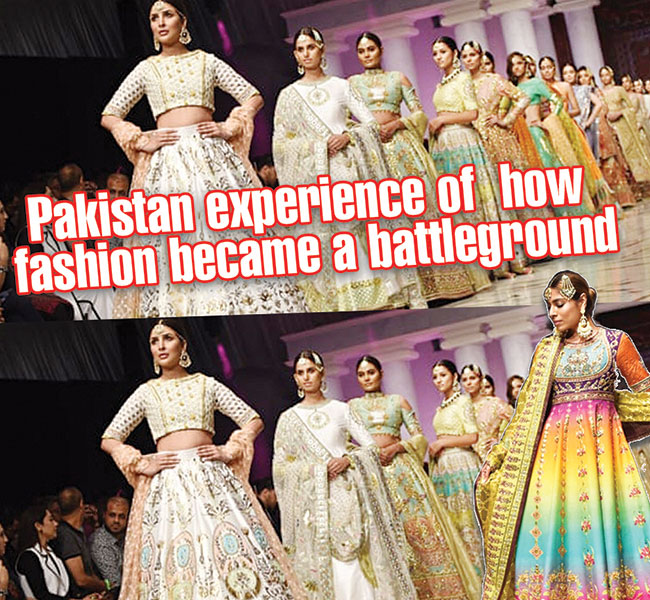
The renaissance of fashion is a sign of women’s growing independence, and has fueled the religious right’s ire, a recent article in the Guardian revealed. Excerpts:
In the luxurious surroundings of a top hotel, a parade of glamorous, impossibly slim women walk with gazelle-like grace down the catwalk. Bare midriffs and legs are proudly displayed in intricately embroidered golden fabrics, and there isn’t a veil in sight. This is Pakistan Fashion Week, the jewel in the country’s haute couture crown and an unrivalled glimpse into a creative industry that has surged in recent years. There’s just one thing that’s not quite as you might expect: Pakistan Fashion Week is not in Karachi or Islamabad but in London.
“The religious identity that is given to our country to some extent precedes the cultural identity. Many things that are beautiful in our culture are often suppressed and not prominent to their full extent at times,” says the fashion designer Fahad Hussayn. “There is a clash between the religious right and the cosmopolitan youth.”
In Pakistan itself, the location of fashion shows is rarely publicized in advance and they are subject to strict security measures, meaning that they tend to be held in Europe and Dubai.
 The industry has become a battleground between the religious right, desperate to maintain its influence, and the growing strength of young people, particularly the burgeoning middle classes, with women at the forefront of the battle for Pakistan’s cultural identity.
“It’s sad to see the kind of image that Pakistan has in the west. It’s a country that’s full of art, music and creativity and there are lots of talented people here that nobody gets to hear about.
“All we hear about is the political turmoil and the religious issues. Everyone thinks it’s all bombs and burqas,” says Adnan Ansari, the celebrity make-up artist and fashion entrepreneur who eight years ago set up Pakistan Fashion Week (in fact just a weekend, held at the London Hilton on Park Lane).
“People think the women are very oppressed, but we have a very strong cultural identity which is represented by our clothes. It’s not so much about projecting a positive image, but more a case of projecting a real image of what we are.”
The renaissance of Pakistani fashion in the past five years has been the result of a seismic cultural shift where women are becoming more educated and independent with increased access to opportunities in the work place, and many are expressing their new-found socio-cultural freedom and economic power through fashion.
Much of this has been fuelled by the boom in social media – to the chagrin of the religious conservatives who feel they are being influenced more by the Kardashians than the Qur’an.
Fashion accounts for nearly 20% of the country’s exports, and with social media influencers hungry for the next big thing western stars are looking east for inspiration: the supermodel Gigi Hadid hit the headlines in August when she posted a picture of herself on Instagram wearing a traditional Pakistani outfit from the brand Almirah.
“Young women in Pakistan are more educated, well-travelled and independent than ever before,” says Ansari. “Middle-class women are very career-orientated and their spending power is very strong. They are very influenced by western media like Netflix and what they see online.”
The liberal attitude has filtered from the catwalk into colleges via Instagram with many young women choosing to forgo the traditional Pakistani shalwar kameez consisting of tunic and loose trousers for jeans and western styles. Consequently the fashion industry has attracted the ire of the increasingly vocal religious conservatives who see this cultural shift as a threat to their authority.
“Fashion is criticized in our part of the world, where some parts of society are more conservative,” says the designer, Asim Jofa, who is considered the Pakistani equivalent of Gianni Versace, thanks to his regal and geometric embroidery. “Society is becoming more liberal and women are driving this. This change is reflected in our fashion, but it is going to be contentious for some conservatives because it shows their power is waning.”
Sometimes the clash in visions proves more than just contentious. Qandeel Baloch, a model who was regularly targeted for her controversial fashion choices, was murdered by her brother in 2016. Her death came after she revealed that she had a flirtatious meeting with a cleric.
“People want change to come because the religious extremists don’t allow you to feel safe. It is very scary and painful and there is a real divide. Everyone is sick of it,” says the model, Hira Shah, 25. “Pakistan is changing a lot though and if we are going to change mindsets, we have to be strong.”
The trend towards more cosmopolitan fashion is part of a cycle. “Pakistani fashion was very liberal in the 60s and early 70s, but there was a real crackdown on women under General Zia, who stamped a very Islamic-focused identity on Pakistan. Women’s bodies were policed through Sharia law and through the media. This started to change in the 90s, but even today there is still the tension between the religious conservatives and the image of women,” said Amina Yaqin, a senior lecturer in post-colonial studies at SOAS.
“The tension you see now is that women are taking a stance and want the freedom to wear what they want, but it is not freely available to all women because of a complex network of systems such as class, economic mobility and honour issues.
“The new generation from the middle classes are fed up and don’t want to be restricted, and as they become more visible it starts to matter to them. The question is whether this power is real or just being offered for consumption by the fashion industry.”(Guardian)



Institute of Hospitality Sri Lanka
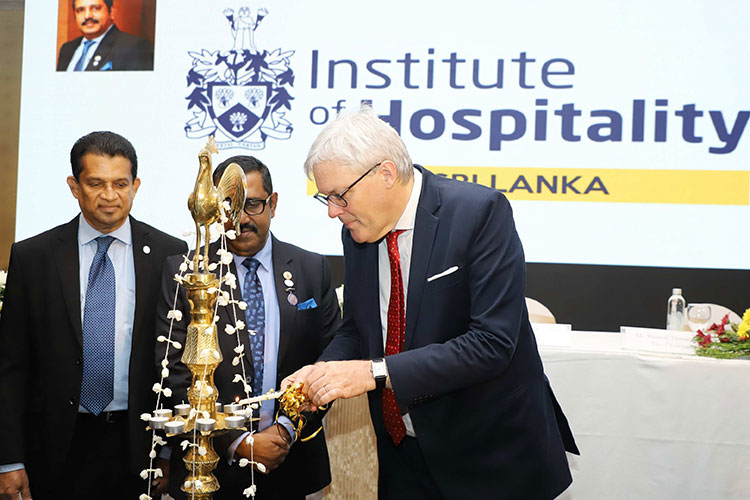
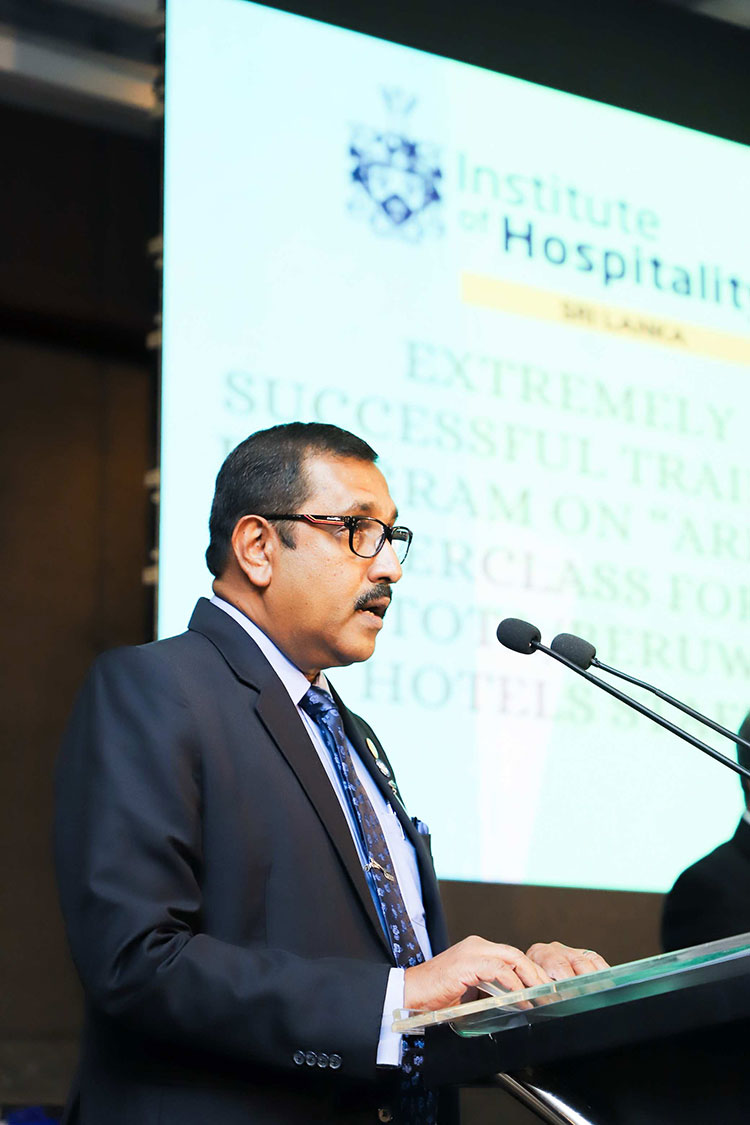
 The 32nd Annual General Meeting (AGM) of the UK-based Institute of Hospitality’s Sri Lanka Chapter was held recently at the Ramada Hotel Colombo,.The event provided an evening of camaraderie , reflection of the past and present achievements,setting new benchmarks for the future
The AGM had the presence of two distinguished guests, the Chief Guest Opposition Leader Sajith Premadasa, and the Guest of Honour British High Commissioner to Sri Lanka, Andrew Patrick. Their inspiring speeches were lauded by all hoteliers who were present at the occasion
A special thanks was extended to Robert Richardson, CEO of the Institute of Hospitality UK, along with his team, sponsors, committee members, and all attendees for making the event memorable.
Dr. Harsha Jayasingh, Past President of the Institute of Hospitality (UK) Sri Lanka Chapter, emphasised the Institute’s longstanding history and the strength of its Sri Lankan branch. “The Institute of Hospitality (IH) UK has a history of 86 years, and we are proud to be the Sri Lanka Branch. IH Sri Lanka is much stronger now with many members from all areas of the hospitality industry,” he stated.
Dr. Jayasingh highlighted the significant role of tourism in Sri Lanka’s economy,. He said tourism it is the third-largest source of revenue for the country. “Tourism accounts for about 13.3% of total foreign exchange earnings and employs 450,000 people directly and indirectly. The hospitality industry in this island of pearl holds tremendous potential for economic growth, job creations, and cultural exchange,” he added.
He also pointed out more women should be attracted to the industry and advocated for the use of technology in hospitality sector to attract the younger generation.
The newly appointed Chairman Ramesh Dassanayake spoke about the challenges faced by the industry, including the reluctance of youth to join the sector. . Dassanayake expressed concerns over the migration of staff between hotels and the overall ‘brain drain’ in the sector. ” We must maintain high standards in the hotel We must try to attract tourists to Sri Lanka, we must have with many facilities Hence, hotel schools and other professional institutions involved in skills development mustincrease their intakes,” he pointed out.
Chief Guest Sajith Premadasa emphasised the importance of eco tourism and said “We need to have an environmental policy related to tourism in place,” . .
The 32nd AGM of the Institute of Hospitality UK, Sri Lanka Chapter, was a testament to the strength and potential of Sri Lanka’s hospitality industry. The insights and commitments shared during the event set a new benchmark for the future.(ZC)



Pix by Thushara Attapathu
Life style
He recognizes human identity beyond boundaries of gender, race, nationality and religion.

Visit of Sri Gurudev to Sri Lanka
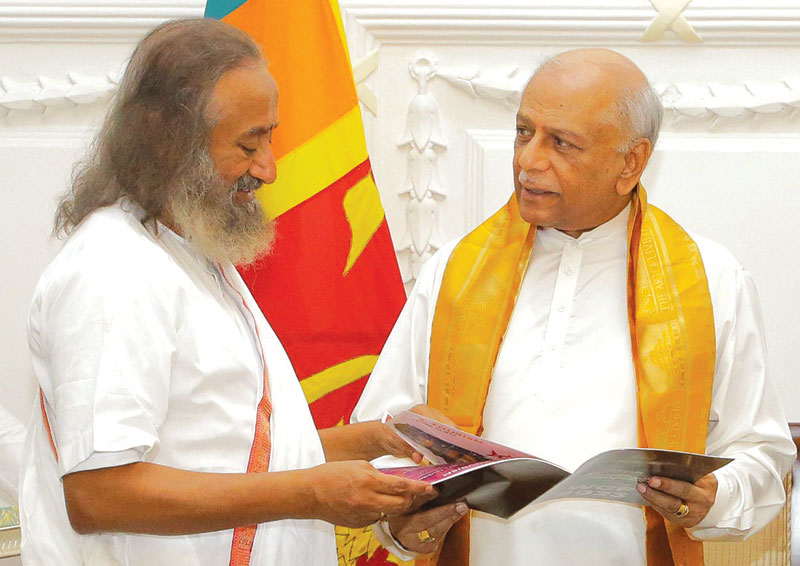
Humanitarian, spiritual leader and Global Ambassador of Peace Gurudev Sri Sri Ravi Shankar (Sri Gurudev) was in Sri Lanka on a three day tour on the invitation of the Prime Minister of Sri Lanka Dinesh Gunewardene. Gurudev who inspired a wave of volunteerism and service to moot one of the largest volunteer-based organisations in the world – The Art of Living – visited the various projects under the aegis of the foundation and launched twelve vocational and technical centers around the island. He was accompanied by thousands of followers from Sri Lanka and around the world.
Gurudev who visited Sri Lanka for the sixth time also had a first day cover launched in honour of his visit. He is a strong proponent of spreading happiness, using the unique Sudarshan Kriya, yoga, meditation and practical wisdom to unite people, empower individuals and transform communities. His programmes provide techniques and tools to live a deeper, more joyous life, while his non-profit organisations recognize the human identity beyond the boundaries of gender, race, nationality and religion.
The Art of Living which has more than 30,000 teachers and over one million volunteers across 180 countries has touched in excess of five hundred million people around the world. CNN called it “Life Changing” and The Washington Post headlined it, “Fresh air to millions”.
In Trincomalee, Gurudev met with war victims and had a heartwarming engagement with the children from the children’s homes run by the Foundation. He also visited the Koneswara Temple in Trincomalee and graced the Kumbhabhishekam at Seetha ecogPnize the human identity beyond the boundaries of gender, race, nationality and religion. Amman temple at Nuwara Eliya. He held discussions with the trustees on the progress of the foundation’s social service projects, while also holding a special event – Ekamuthuwa – attended by a large number of dignitaries and his devotees from around the world.
His time with the Prime Minister was spent discussing the prospects of unity in diversity and uniting Sri Lanka by adding happiness into the formula of living. In addition he had discussions with the Speaker of the Parliament of Sri Lanka Mahinda Yapa Abeywardena, prominent business stewards and civil society leaders.
by Zanita Careem
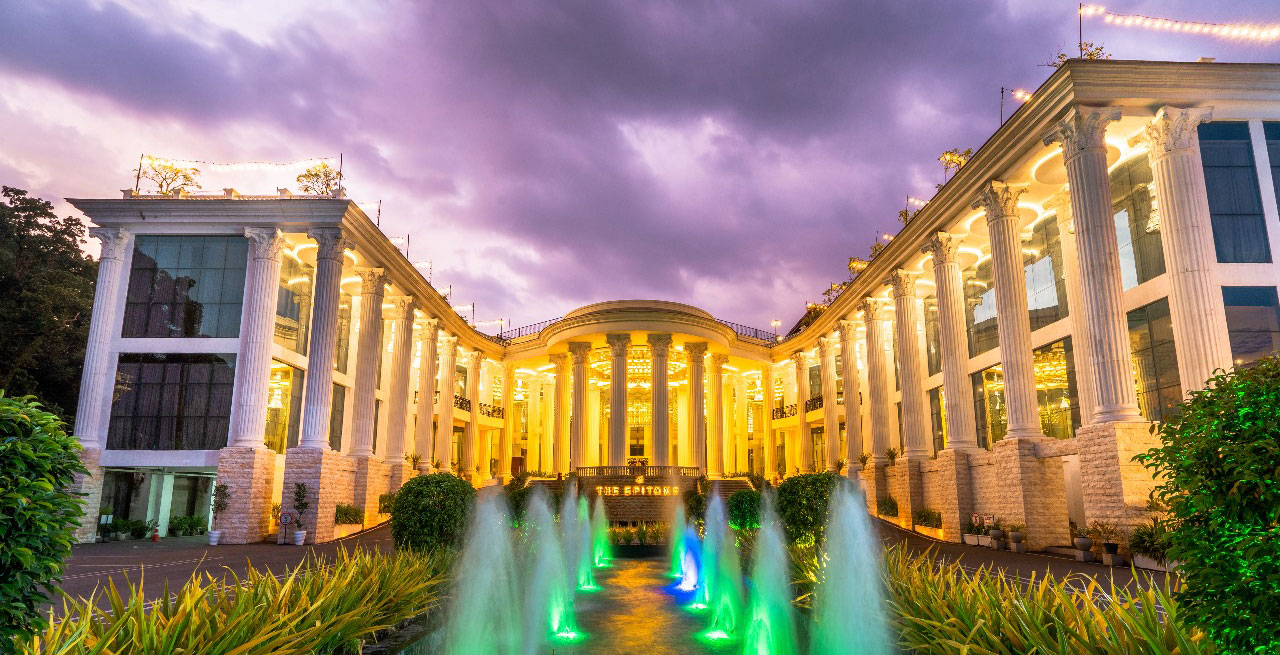
Envison your dream wedding day come to life at the Epitome Hotel, a prestigious city hotel in Kurunegala offering an unrivalled luxury rendors experience for weddings.
The venue is designed to embody opulence and luxury from all quarters for a spectacular wedding in kurunegala,Thier ballroom is the largest banquet facility in Sri Lanka It can be divided into six luxurious pillarless wedding halls on the ground floor and 25pax smaller banquet halls.
It can be easily named as a five star heaven in the heart of the city contributing to a myriad of immense experiences tailored to inspire and delight wedding experiences.
From opulent décor set up to exquisite table decor, lavish food, every detail is meticulously curated to spark your imagination and ignite creativity for a perfect wedding. The previous prestigious wedding shows season one and season two attracted large crowds
were unique events which gave the wedding vendors and potential clients had an opportunity to connect and interact with each other. Beyond being a showcase it was a chance for the wedding vendors to unite and contribute to the vibrancy of the wedding industry. The wedding show covered all area of the bridal industry providing a comprehensive variety of bridal supplies from Sri lanka and became the most popular bridal exhibitions in Kurunegala.This bridal exhibitions allowed brides and grooms to experience first hand the products and services available from suppliers in Sri Lanka
These wedding shows held at The Epitome created a benchmark and gave an opportunity for vendors to create connections to the utmost satisfaction said Harshan Lakshita Executive Director. of the magnificent Hotel
Our wedding shows featured experts and professionals in every field‘ It covered all areas of the bridal industry provided a comprehensive variety of bridal supplies from Sri lanka and became most popular bridal exhibition in this region.We are always open to everyone to join us at our wedding shows in the future. It is an opportunity to discover the incredible talent within our local wedding and bridal vendors to make meaningful relationships and plan thier special day at our breathtaking hotel The Epitome said General Manager Kavinda Caldera
The Epitome Hotel’s bridal show which will be held end of June will buzz with great ideas,advice and inspiration for all those who plan thier dream wedding
…….
The Hotel Epitome’s Wedding Season 3 will marked excellence, celebration and inspiration for those in the wedding industry. The exhibition halls will resonate with ideas on exquisite bridal wear to decor, florists , photography etc and showshowcase the rich tapestry of talent within the local wedding industry. .





US sports envoys to Lanka to champion youth development

Rahuman questions sudden cancellation of leave of CEB employees


