
News
Oscar Pistorius released on parole 11 years after killing Reeva Steenkamp

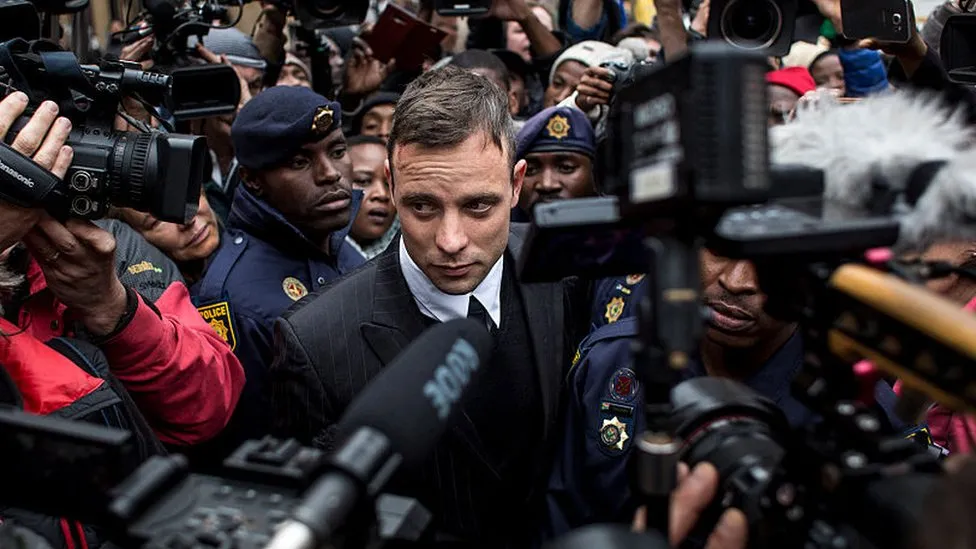
Paralympian Oscar Pistorius has been freed on parole from a South African jail, nearly 11 years after murdering his girlfriend Reeva Steenkamp.
Officials confirmed Pistorius was “at home” on Friday morning, having served half of his more than 13-year sentence.
Ms Steenkamp’s mother said she accepted the decision to release the former athlete – but added her family was the one “serving a life sentence”.
Pistorius, now 37, shot Ms Steenkamp multiple times in 2013 through a door. The double amputee later claimed he had mistaken her for a burglar.
Pistorius was eventually convicted of murder in 2015 after an appeal court overturned an earlier verdict of culpable homicide.
Parole conditions
Under South African law, all offenders are entitled to be considered for parole, meaning early release under certain conditions, once they have served half their total sentence, which for Pistorius was finally set at 13 years and five months.
Until his sentence expires in 2029, he will live under strict rules – confining him to the home for certain hours of the day, as well as banning him from drinking alcohol. He is also not permitted to speak to the media.
In addition, Pistorius will be required to have therapy to help deal with issues around gender-based violence and anger.
He is believed to have gone to live at the home of his uncle Arnold Pistorius in an upmarket suburb of the capital, Pretoria.
While in prison, Pistorius drove a tractor in the grounds, worked in the library and cleaned inmates’ cells, according to legal documents cited by South African journalist Karyn Maughan.
Social workers and psychologists also wrote positive reports about him, she told the BBC’s Newsday programme.

June Steenkamp said in a statement that the family had “always known that parole is part of the South African legal system” and had “always said that the law must take its course”. Mrs Steenkamp said she welcomed the conditions imposed by the parole board, which “affirmed Barry and my belief in the South African justice system,” referring to her late husband.
But, she asked: “Has there been justice for Reeva? Has Oscar served enough time? There can never be justice if your loved one is never coming back, and no amount of time served will bring Reeva back. We, who remain behind, are the ones serving a life sentence.”
She added: “My only desire is that I will be allowed to live my last years in peace with my focus remaining on the Reeva Rebecca Steenkamp Foundation, to continue Reeva’s legacy.”
Pistorius first went to prison in October 2014, shortly after his initial conviction. There was a period between 2015 and 2016 when he was released under house arrest before his conviction was changed and sentenced lengthened.
Pistorius’s lower legs were amputated when he was less than a year old. He subsequently relied on prosthetics and became a world-renowned athlete known as the “blade runner”. He had a successful career on the track, first at the Paralympics, winning multiple golds, and then cementing his reputation after competing against non-disabled athletes at the London Olympics in 2012. The murder of Ms Steenkamp just six months later, and the subsequent trials, dominated headlines around the world.
South Africa’s department of correctional services said that despite his high public profile, the former star will be treated like anyone else on parole.
Ms Steenkamp, who was 29 when she died, was a law graduate and successful model who also worked as a TV presenter and appeared in a reality show called Tropika Island of Treasure. She had planned to start a law firm to help abused women after graduating.
Ms Steenkamp was three months into her relationship with Pistorius when he fired four shots with a pistol through the door of a toilet cubicle at his house in Pretoria in the early hours of 14 February 2013. She died almost instantly.
The state charged Pistorius with murder but he was convicted in 2014 of the lesser offence of culpable homicide, or manslaughter.
The following year, judges at the Supreme Court of Appeal changed his conviction to murder, saying that his version of events was inconsistent and improbable and that he had “fired without having a rational or genuine fear that his life was in danger”.
The trials of Oscar Pistorius
- August 2012: Competes in London Olympics and Paralympics, where he won a gold medal
- February 2013: Shoots dead his girlfriend Reeva Steenkamp
- March 2014: Trial begins
- September 2014: Judge finds Pistorius guilty of culpable homicide
- October 2014: Begins five-year sentence
- October 2015: Transferred to house arrest
- December 2015: Appeal court changes verdict to murder
- July 2016: Returns to prison after being sentenced to six years for murder
- November 2017: Appeal court increases sentence to 13 years and five months
- June 2022: Meets Ms Steenkamp’s father, Barry, as part of a restorative justice programme
- November 2023: Parole board agrees Pistorius should be released
- January 2024: Freed from prison under parole conditions
(BBC)









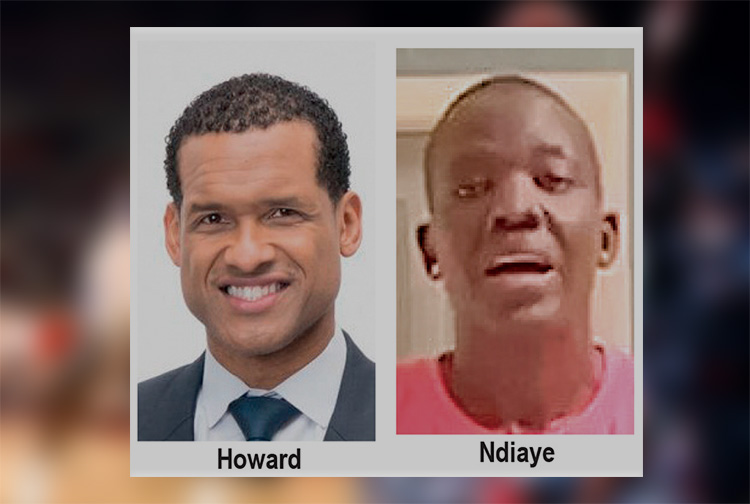
The U.S. Embassy in Colombo welcomed the U.S. Sports Envoys to Sri Lanka, former National Basketball Association (NBA) and Women’s National Basketball Association (WNBA) players Stephen Howard and Astou Ndiaye, from June 8 through 14.
The Public Diplomacy section of the U.S. Embassy said that it would launch a weeklong basketball program intended to harness the unifying power of sports, made possible through collaboration with Foundation of Goodness and IImpact Hoop Lab.
While in Sri Lanka, Howard and Ndiaye, both retired professional basketball players, will conduct a weeklong program, Hoops for Hope: Bridging Borders through Basketball. The Sports Envoys will lead basketball clinics and exhibition matches and engage in leadership sessions in Colombo and Southern Province for youth aged 14-18 from Northern, Uva, Eastern and Western Provinces, offering skills and leadership training both on and off the court. The U.S. Envoys will also share their expertise with the Sri Lanka Basketball Federation, national coaches, and players, furthering the development of basketball in the country. Beyond the clinics, they will collaborate with Sri Lankan schoolchildren to take part in a community service project in the Colombo area.
“We are so proud to welcome Stephen and Astou as our Sports Envoys to Sri Lanka, to build on the strong people-to-people connections between the United States and Sri Lanka,” said U.S. Ambassador Julie Chung. “The lessons that will be shared by our Sports Envoys – communication, teamwork, resilience, inclusion, and conflict resolution – are essential for leadership development, community building, equality, and peace. The U.S. Sports Envoy program is a testament to our belief that sports can be a powerful tool in promoting peace and unity.”
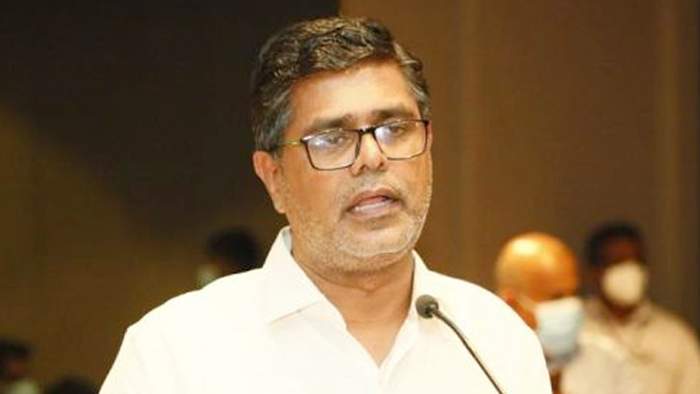
SJB Colombo District MP Mujibur Rahuman in parliament demanded to know from the government the reasons for CEB suspending the leave of all its employees until further notice from Thursday.
MP Rahuman said that the CEB has got an acting General Manager anew and the latter yesterday morning issued a circular suspending leave of all CEB employees with immediate effect until further notice.
“We demand that Minister Kanchana Wijesekera should explain this to the House. This circular was issued while this debate on the new Electricity Amendment Bill was pending. There are many who oppose this Bill. The Minister must tell parliament the reason for the urge to cancel the leave of CEB employees,” the MP said.However, Speaker Mahinda Yapa Abeywardena prevented Minister Wijesekera responding to the query and said that the matter raised by MP Rahuman was not relevant.
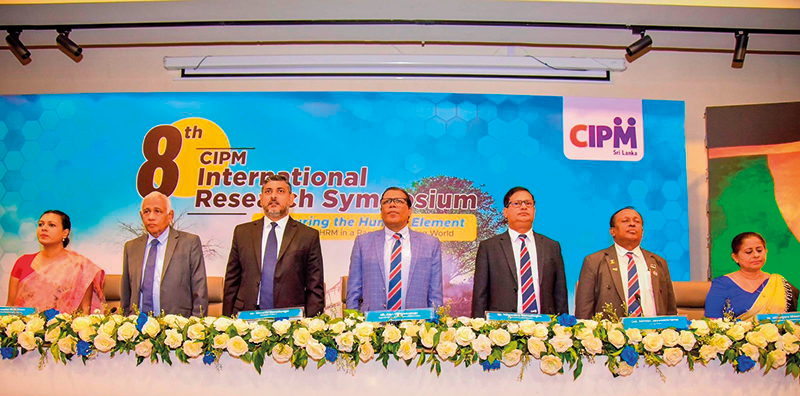
The Chartered Institute of Personnel Management (CIPM) successfully concluded the 8th Annual CIPM Symposium, which took place on 31st May 2024. Themed “Nurturing the Human Element—Redefining HRM in a Rapidly Changing World,” the symposium underscored the pivotal role of human resource management (HRM) in today’s dynamic global landscape. Since its inception in 1959, CIPM has been dedicated to advancing the HR profession through education, professional development, and advocacy, solidifying its position as Sri Lanka’s leading professional body for HRM.
Ken Vijayakumar, the President of the CIPM, graced the occasion as the chief guest. The symposium commenced with the welcome address by the Chairperson, Prof. Arosha Adikaram, followed by the Web Launch of the Symposium Proceedings and Abstract Book by the CIPM President. The event featured distinguished addresses, including a speech by Chief Guest Ken Vijayakumar, President of CIPM, and an address by Guest of Honor Shakthi Ranatunga, Chief Operating Officer of MAS Holdings Pvt. Ltd., Sri Lanka.
The symposium also featured an inspiring keynote address by Prof. Mario Fernando, Professor of Management and Director of the Centre for Cross Cultural Management (CCCM) at the University of Wollongong, Australia.
Vote of Thanks of the inauguration session was delivered by Dr. Dillanjani Weeratunga, Symposium Co-chair.
The symposium served as a comprehensive platform for researchers to present their findings across a wide range of critical topics in HRM. These included Cultural Diversity and Inclusion, Talent Development and Retention, Ethical Leadership and Corporate Social Responsibility, Adapting to Technological Advancements, Mental Health and Well-being at Work, Global Workforce Challenges, Employee Empowerment, and Reskilling and Upskilling.
The plenary session was led by Prof. Wasantha Rajapakse. Certificates were awarded to the best paper presenters during the valedictory session, followed by a vote of thanks delivered by Kamani Perera, Manager of Research and Development.
The annual symposium of CIPM was a truly inclusive event, attracting a diverse audience that spanned undergraduates, graduates, working professionals, research scholars and lecturers. This widespread interest highlights the symposium’s significance in the field of HRM, offering a unique opportunity for everyone to network and learn from scholarly brains.The CIPM International Research Symposium was sponsored by Hambantota International Port, Sri Lanka Institute of Information Technology (SLIIT), E B Creasy & Co. PLC, and Print Xcel Company.



US sports envoys to Lanka to champion youth development

Rahuman questions sudden cancellation of leave of CEB employees


